What Is Select Wood? The Real Meaning of This Lumber Grade
“Select” wood confuses buyers for a reasonable reason: two separate lumber industries use the same word for two different grades, and neither meaning matches the common assumption that “select” is a species or just marketing shorthand for “good wood.” In hardwood, Select is an official National Hardwood Lumber Association (NHLA) grade with a specific two-face rule – one face has to clear FAS (Firsts and Seconds), the top grade, while the other face only needs to meet the much lower No. 1 Common bar. In softwood, “Select” is a different system entirely: an appearance grade (C Select, D Select) applied to finish boards, which is exactly what is behind the “Select Pine Board” label stacked at Home Depot or Lowe’s. Knowing which system you are shopping in is the only way to know what you are actually paying for.
What Does “Select” Actually Mean as a Lumber Grade?
Recommended Reference for Grading & Buying Lumber
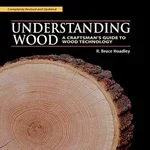 |
Understanding Wood: A Craftsman’s Guide to Wood Technology – $36 Before you pay a premium for a Select-grade board, this is the reference that explains how grain, grading, and wood movement actually work.
|
Grading exists so a buyer can trust a stack of lumber without inspecting every board by eye, and “Select” carries two distinct, unrelated definitions depending on which category you are buying in.
- Hardwood Select (NHLA): An official NHLA grade, sometimes labeled F1F (“FAS one face”). One face of the board must meet FAS – at least 83-1/3% clear, defect-free cuttings – while the reverse face only has to meet No. 1 Common, a much lower bar. Mills combine FAS and Select into a single “FAS & Selects” bundle when shipping, because both grades guarantee the same clean show face.
- Softwood Select (C Select / D Select): Not a structural grade at all – it’s an appearance grade under the Factory & Shop / Boards category from agencies like the Western Wood Products Association. C Select is nearly clear on both faces; D Select allows a few more small, tight knots. This is the grading behind the “Select Pine Board” you see racked at a home center for trim, shelving, and paint- or stain-grade projects.
There is a third trap: “Select Structural” is a completely different softwood category that has nothing to do with appearance. It’s the highest structural strength grade for dimension lumber used in engineered framing – rated for load, not looks. A board stamped “Select Structural” and a board sold as a “Select Pine” finish board share a name but serve opposite purposes, so don’t assume one implies the other.
How Select Compares to Other Lumber Grades
The table below lines up hardwood and softwood grading side by side, since “Select” means something different in each column.
| Grade | System | What It Guarantees | Typical Use |
|---|---|---|---|
| FAS | Hardwood (NHLA) | At least 83-1/3% clear cuttings on both faces | Fine furniture, veneer-matched panels |
| Select (F1F) | Hardwood (NHLA) | One face grades FAS; the reverse face only needs No. 1 Common | Tabletops, drawer fronts, panels where only one face shows |
| No. 1 Common | Hardwood (NHLA) | At least 66-2/3% clear cuttings | Cabinet parts, shorter cuttings, mixed-use shop stock |
| “Prime” | Hardwood (dealer term) | Informal supplier label for FAS-or-better stock | See our Prime wood guide for the full breakdown |
| Select Structural | Softwood structural (WWPA/NLGA) | Highest rated bending/load strength for dimension lumber | Engineered framing, high-load beams and headers |
| C Select / D Select | Softwood appearance (WWPA) | Clear to near-clear finish boards, minimal tight knots | Interior trim, shelving, “Select Pine” paint-grade boards |
Notice that hardwood Select only guarantees one clean face – the back can legally show No. 1 Common-level defects. That single rule is the most common source of buyer disappointment: a board can be genuinely, correctly graded Select and still have knots or streaks on the face you didn’t check before buying.
Where Select Wood Is Actually Used
Because “Select” covers two different products, where it shows up depends entirely on which category you’re shopping in.
Hardwood Select is chosen when only one face of a board will ever be visible: drawer fronts, one-sided panels, the show face of a tabletop that sits against a wall, or shop stock where the piece will be cut down and the clean face preserved for the final part. It’s a cost-effective step down from FAS when a customer doesn’t need both faces perfect. Softwood Select – the C Select and D Select boards sold at lumberyards and home centers – goes into interior trim, baseboard, shelving, paneling, and any paint- or stain-grade project where a tight, mostly clear surface matters but structural rating doesn’t (that’s what Select Structural framing lumber is for, a separate category entirely).
What Drives the Cost of Select Wood
Select-grade material sits in the middle of the price ladder, and the premium comes from yield and sorting labor, not from any special property of the wood itself. Hardwood Select costs less than FAS because a mill only needs one clean face instead of two – that lower bar on the back face means more boards qualify, which keeps the price below true FAS while still commanding more than No. 1 Common, where both faces can show real defects. Softwood C Select and D Select cost more than construction-grade boards of the same species because sorting for a clear or near-clear finish face is an extra inspection pass at the mill, on top of the base cost of the lumber. Species, board width, length, and local supply move the price further in both systems – a wide, long, straight-grained board commands more than a short, narrow one of the identical grade.
What to Check Before You Buy Select Wood
- Confirm which system the grade refers to. “Select” on a hardwood invoice and “Select” on a softwood trim board tag are unrelated grading systems – ask which one applies before comparing prices between suppliers.
- Flip the board over. Hardwood Select only guarantees one face. Check the back face yourself if it will be visible in your project at all.
- Don’t confuse it with Select Structural. If you need a rated structural beam or header, a “Select Pine” finish board at a home center is the wrong product – look for a Select Structural stamp from a structural supplier instead.
- Check moisture content. A correctly graded board that was stored wet can still cup or crack after installation – kiln-dried (KD) lumber in the 6-9% range is standard for interior furniture work.
Frequently Asked Questions
What Does “Select” Mean as a Lumber Grade?
“Select” means different things depending on the lumber category. In hardwood, it’s an official NHLA grade (also called F1F) where one face must meet FAS quality while the reverse face only needs No. 1 Common. In softwood, “Select” (C Select or D Select) is an appearance grade for finish boards like trim and shelving, unrelated to structural strength.
Is Select the Same as FAS Grade Hardwood?
No. FAS (Firsts and Seconds) requires both faces of a board to be clear. Select only requires the better face to meet FAS – the reverse face can drop all the way down to No. 1 Common quality. That single-face rule is why Select typically costs less than FAS for the same species and size.
What Is the Difference Between Select and Select Structural?
They’re unrelated despite the shared name. Softwood “Select” (C Select/D Select) is an appearance grade for finish boards like trim and shelving. “Select Structural” is a separate structural strength grade for dimension lumber used in engineered framing, rated for load-bearing capacity rather than looks.
Where Is Select Wood Used?
Hardwood Select is used for furniture parts and panels where only one face will be visible, such as drawer fronts or a tabletop’s show face. Softwood Select (C Select/D Select) is used for interior trim, baseboard, shelving, and paint- or stain-grade finish carpentry.
Bottom Line
“Select” is not a species, and it isn’t a single universal grade – it’s a term that means one specific thing in hardwood grading and a completely different thing in softwood appearance grading, with a third unrelated meaning in softwood structural grading. Knowing which system applies to the board in front of you is what lets you compare prices fairly and avoid assuming a “Select” stamp promises more than it actually does. For the hardwood dealer term that gets confused with this grade most often, see our guide on what “Prime” wood actually means.
Sponsored / affiliate links. As an Amazon Associate I earn from qualifying purchases. I may earn additional commission from eligible campaigns.