What Is Prime Wood? The Real Meaning of This Lumber Grade
“Prime wood” is a term buyers hear from two very different corners of the lumber world, and the mismatch causes real confusion. In hardwood retail, “Prime” is usually an informal marketing label a supplier uses for boards that grade at or above FAS (Firsts and Seconds), the top official National Hardwood Lumber Association grade. In structural softwood lumber, “Prime” is an actual industry modifier – most often seen as “#2 Prime” – applied to a standard strength grade like #2 to tighten up appearance limits on wane, knots, and bark without changing the board’s rated strength at all. Neither meaning matches the old idea that “Prime” is its own top-tier species or a universal best grade – it is a grading term, and what it promises depends on which lumber category you are buying in.
What Does “Prime” Actually Mean as a Lumber Grade?
Recommended Reference for Grading & Buying Lumber
 |
Understanding Wood: A Craftsman’s Guide to Wood Technology – $36 Before you pay a premium for Prime-grade lumber, this is the reference that explains why grading rules exist and how wood actually behaves.
|
Grading exists so a buyer can trust a stack of lumber without inspecting every board by eye. Two separate systems use the word “Prime,” and they are not interchangeable.
- Hardwood “Prime”: Not an official National Hardwood Lumber Association (NHLA) category. Some hardwood dealers use “Prime” as a house label for stock that meets or beats FAS – wide, long boards yielding at least 83-1/3% clear, defect-free material on both faces. Because it is not standardized, “Prime” from one supplier can mean something slightly different from “Prime” at another; always ask which NHLA grade it corresponds to.
- Softwood “Prime”: An official modifier under grading rules from agencies like the Western Wood Products Association and the National Lumber Grades Authority. A board stamped “#2 Prime,” for example, still carries the strength rating of standard #2 lumber – the “Prime” designation only tightens the appearance requirements (less wane, fewer or smaller knots, cleaner edges) for framing lumber that will actually be seen, such as an exposed deck joist or a patio cover beam.
The practical takeaway: Prime-grade softwood is not “stronger” than standard-grade softwood of the same number – it just looks better. Prime-labeled hardwood is a supplier’s promise of high visual quality, but it is worth confirming against the NHLA grade it is based on before paying a premium.
How Prime Compares to Other Lumber Grades
The table below lines up hardwood and softwood grading side by side, since the two systems get mixed together constantly.
| Grade | System | What It Guarantees | Typical Use |
|---|---|---|---|
| FAS / “Prime” hardwood | Hardwood (NHLA / dealer label) | At least 83-1/3% clear material on both faces; minimal knots or defects | Fine furniture, cabinetry, high-end millwork |
| Select | Hardwood (NHLA) | One face grades FAS; the other only needs No. 1 Common | Tabletops, visible panels where one face matters |
| No. 1 Common | Hardwood (NHLA) | At least 66-2/3% clear cuttings | Cabinet shops, mixed-use projects |
| #2 Prime | Softwood structural (WWPA / NLGA) | Full #2 strength rating, tighter limits on wane and knot placement | Visible framing – decks, patio covers, porch beams |
| #2 & Better | Softwood structural (WWPA / NLGA) | Standard #2 strength rating, no extra appearance limits | Interior framing, sheathing, general construction |
Notice that strength does not change between a “Prime” softwood board and its plain #2 counterpart – the grade only restricts how much bark, wane, and knot clustering is allowed on the faces that will be seen.
Where Prime Wood Is Actually Used
Because “Prime” covers two different products, where it shows up depends on which category you are shopping in.
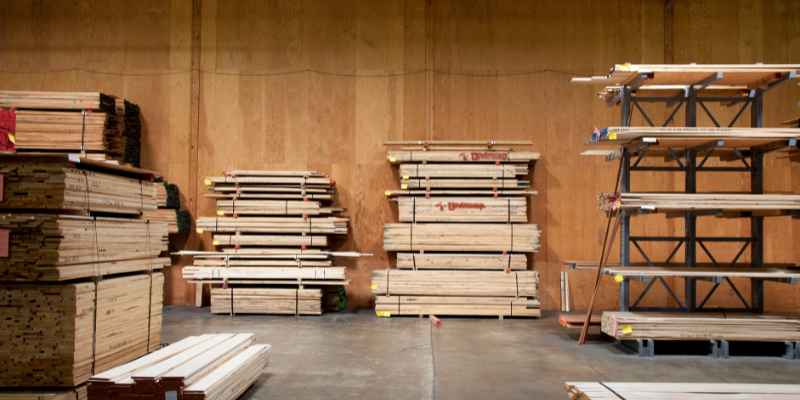
Prime-grade hardwood goes into furniture making, cabinetry, architectural millwork, and any project where a clean, consistent face matters – a dining table top, a set of kitchen doors, or veneer-matched panels. Prime-grade softwood shows up almost entirely outdoors and in visible framing: deck joists and beams, patio cover rafters, porch posts, and pergola framing, where the lumber is structural but also seen every day. It is rarely specified for lumber that will be buried inside a wall, since there is no visual reason to pay extra for a cleaner face nobody will see.
What Drives the Cost of Prime Wood
Prime-grade material costs more than the next grade down, but the premium comes from yield, not from any magic property of the wood itself. A mill gets fewer clear, defect-free cuttings out of a log when it is sorting for FAS or Prime hardwood, so the price per board foot rises to cover that lower yield. For softwood, the “Prime” modifier adds an extra inspection and sorting pass at the mill, which adds labor cost even though the strength grade underneath is unchanged. Species, board width and length, and local supply also move the price – a wide, long, straight-grained board in either system commands more than a short, narrow one of the same grade.
What to Check Before You Buy Prime Wood
- Ask which system the grade refers to. “Prime” on a hardwood invoice and “#2 Prime” on a softwood tag mean different things – confirm the underlying NHLA or WWPA/NLGA grade before comparing prices between suppliers.
- Inspect the faces you will actually see. Grade rules apply to specific faces and cutting sizes; sight down the board for cup, bow, or twist regardless of the grade stamp, since warp is checked separately from grade.
- Check moisture content. A correctly graded board that was stored wet can still cup or crack after installation – kiln-dried (KD) lumber in the 6-9% range is standard for interior furniture work.
- Confirm the stamp matches the invoice. Mixed loads happen; a quick check of the grade stamp on a sample of boards against what you were billed for is a normal, expected request at any lumberyard.
Frequently Asked Questions
What Does “Prime” Mean as a Lumber Grade?
“Prime” means different things depending on the lumber category. In softwood structural lumber, it is an official modifier (such as “#2 Prime”) that tightens appearance limits on a standard strength grade without changing its rated strength. In hardwood, “Prime” is an informal supplier label, not an NHLA grade, usually used for stock at or above FAS quality.
Is Prime Wood the Same as FAS Grade Hardwood?
Not officially. FAS (Firsts and Seconds) is a real NHLA grade with defined clear-cutting requirements. “Prime” is a dealer term that many suppliers use to describe FAS-or-better stock, but because it is not standardized, two suppliers’ “Prime” boards are not guaranteed to be identical – always ask for the underlying NHLA grade.
Where Is Prime Wood Used?
Prime-grade hardwood is used in furniture, cabinetry, and millwork where a clean, consistent face matters. Prime-grade softwood is used in visible outdoor framing, such as deck joists, patio covers, and porch beams, where the lumber needs to look clean but is not buried inside a wall.
How Much Does Prime Wood Cost?
Prime wood typically costs more per board foot than the next grade down because mills get lower yield sorting for it, and softwood Prime grading adds an extra inspection pass. Exact pricing depends on species, board size, and local supply, so it is worth comparing per-board-foot prices between suppliers rather than assuming one flat premium.
Bottom Line
“Prime” is not a single, universal lumber grade – it is a term that means one thing in hardwood retail and something more specific and official in softwood structural grading. Knowing which system you are buying from lets you compare prices accurately and avoid paying a “Prime” premium for a promise that does not actually apply to your project. For care once your Prime-grade material is installed, see our guide on refinishing and resurfacing wood furniture.
Sponsored / affiliate links. As an Amazon Associate I earn from qualifying purchases. I may earn additional commission from eligible campaigns.