Woodworking Apron Buying Guide: Fabric, Pockets and Safety
The best woodworking apron for most shops is a bib-style apron in 10 to 14 oz canvas, with padded cross-back straps, pockets sized to your tools, a quick-release buckle and no loose ties or dangling loops near spinning tools. Fabric, strap design and fit matter more than the number of pockets.
An apron does two jobs in a shop: it keeps sawdust, glue and finish off your clothes, and it puts your pencil, tape and square where your hand can find them. What it does not do is protect you from a blade or a kickback, and picking one that hangs loose near a machine can add a hazard instead of removing one. Below is how to judge each feature, with real numbers where they exist, plus a quick match of apron type to the kind of shop you run. If you are still deciding whether you need one at all, our guide on why wear a shop apron covers that side.
What to Look for in a Woodworking Apron, in Order of Importance
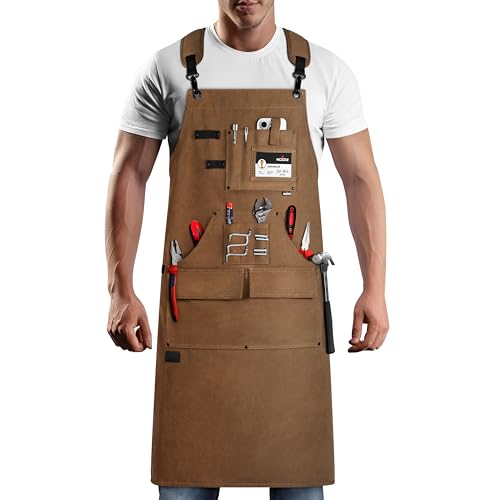
Best Cross-Back Waxed Canvas Pick
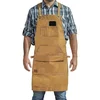 |
Hudson Durable Goods Woodworking Edition Waxed Canvas Apron, $44.99 A full-coverage bib apron that ticks the boxes in this guide: padded cross-back straps, a quick-release buckle and dust flaps over the tool pockets.
|
Rank the features like this before you compare prices:
- Fit and coverage: a bib that covers chest to knee, sized to your height and waist.
- Strap design: cross-back or padded straps that spread weight, with a quick-release buckle.
- Fabric weight: heavy enough to resist abrasion, light enough to wear for hours.
- Pocket layout: big enough for your square, shallow enough that tools do not fall out when you bend.
- Loose parts: as few dangling ties, loops and straps as possible.
Fabric Weight: Why Heavier Is Not Always Better
Canvas is graded in ounces per square yard. One duck canvas supplier lists the tiers this way: 7 oz is thin and flexible, 10 oz is a general-purpose weight, 12 oz has a more substantial feel and better abrasion resistance, 14 oz is a medium-heavy workwear weight, and 18 oz and 24 oz are aimed at heavy tarps and industrial covers. For aprons that guide recommends 10 to 14 oz. Waxed canvas is sold in similar weights; suppliers list waxed army duck at 13.5 oz, 13.7 oz and 14 oz, and a 16 oz waxed duck also exists.
| Fabric | Typical strengths | Trade-offs | Fits best |
|---|---|---|---|
| Light canvas (7 to 10 oz) | Cool, flexible, cheap to replace | Wears through faster at the pockets and edges | Occasional weekend work |
| Mid canvas (12 to 14 oz) | Sturdy without being stiff, washable in most cases | Takes a little breaking in | Most home shops and pro cabinet shops |
| Waxed canvas (about 13.5 to 16 oz) | Sheds light spills and glue drips better than plain cotton | Follow the maker care label, and expect a stiffer feel at first | Finishing, glue-ups, damp garages |
| Denim | Soft from day one, familiar fit | Weight varies by maker, so check the listing | Light shop use |
| Leather | Wipes clean, resists abrasion | Heavier and hotter, needs conditioning, costs more | Hot work, heavy abrasion, long-term buy-it-once |
If you are leaning toward leather, our leather woodworking apron comparison ranks specific models by grade and price. This page is the buying-criteria guide, and that page is the shortlist.
Myth Check: What an Apron Will and Will Not Protect You From
A common claim is that a sturdy apron gives you cut resistance. Ordinary canvas or denim will not stop a chisel that slips, let alone a moving blade. Treat an apron as protection for your clothes and a convenience for your tools. Real protection at the machine comes from guards, push sticks, eye and hearing protection, and a clear stance out of the line of kickback.
The second myth is that more pockets always beat fewer. Every extra pocket is somewhere for a tool to fall out when you lean over a bench, and a fully loaded front weighs more than it looks. A short list of tools you reach for constantly usually earns you a better layout than a dozen pockets.
Pockets and Loops: Match Them to the Tools You Carry
Lay out what you actually reach for in a normal session: a pencil, tape measure, marking knife, combination square and your phone. Then check the pocket sizes in the listing. The Hudson apron above lists front tool pockets of 8 x 6.5 inches that fit a carpenter’s square, plus a chest pocket for a phone or pencil and dual hammer loops. Those are manufacturer-stated numbers, so measure your own square before you buy anything.
- Dust flaps: a flap over a large pocket keeps sawdust from packing into it, which is one reason woodworking-specific aprons cost more than general work aprons.
- Chest pocket: good for a pencil and phone, but only if it is deep enough that they do not fall out when you bend.
- Hammer loops: handy on assembly days, but they are also something that can hang out from the apron, so I would skip them if you spend most of your time at the router table or lathe.
- Pocket depth: deep enough to hold a tool by its handle, not so deep that you have to dig for a pencil.
Straps and Fit: Cross-Back Versus Neck Loop
A basic apron hangs from a single loop around the neck, so every ounce in the pockets pulls on your neck and upper back. A cross-back design crosses the straps behind you so the load rides on both shoulders, and padded straps make that more comfortable over a full day. Size still decides everything. The Hudson listing gives the bib as 27 inches wide by 34 inches tall with an adjustment range up to a 50 inch waist and a recommended minimum height of 5 ft 2 in, which is a good example of the specifics to look for. If a listing does not tell you the bib size, waist range and strap type, keep looking.
Also look at the fastener. A quick-release buckle lets you shed the apron fast if something snags it, which matters more than it sounds when the apron is near a spinning tool.
Length and Coverage: Bib, Waist or Split-Leg
- Full bib (about 34 inches tall): chest to knee. Best all-rounder for glue, finish and dust.
- Waist apron: tools within reach and less heat, but nothing protecting your shirt. Good if you only want a pocket rig.
- Split-leg leather: ties each side around the leg for hot or messy work. Worth a look only if that is your kind of work.
Safety: Keep Loose Strings Away From Rotating Tools
This is the part most apron guides skip. The same features that make an apron convenient can catch on a rotating part: a long neck loop, a dangling waist tie, an unbuttoned hem, a hanging hammer loop. Wood turners face the sharpest version of the problem, and the American Association of Woodturners guidance, as summarized in our lathe safety guide, is to avoid loose clothing or objects that can catch on rotating parts.
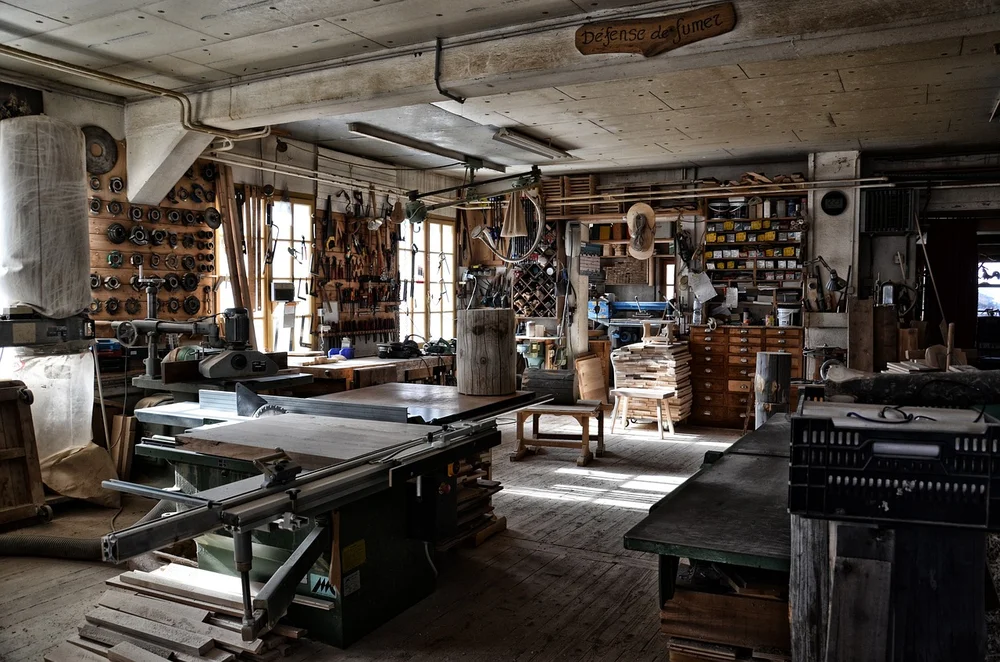
Here is what I would check on any apron before wearing it near a machine. This is general shop-safety reasoning, not a test result:
- Shorten and tuck waist ties, or wrap them and tie them at the back so no long tail hangs loose.
- Prefer a buckle you can pop open with one hand over a knot you would have to untie.
- Snug the neck and cross-back straps so the bib does not swing away from your body when you bend over a machine.
- Roll or button sleeves under the apron, and remove drawstrings or dangling jewelry.
- Take the apron off entirely for tasks where it does not help, such as running a piece past a spinning cutter head.
Which Apron Fits Which Shop
| If you mostly… | Look for |
|---|---|
| Do weekend projects | Mid canvas bib, adjustable straps, two large pockets |
| Spend the day at a bench with hand tools | Padded cross-back straps, wide tool pockets with flaps, full bib |
| Turn on a lathe | Close-fitting bib, quick-release buckle, no loops or long ties |
| Finish or glue up a lot | Waxed canvas or wipe-clean surface, full bib |
| Work hot or messy jobs | Leather bib or split-leg leather, see our leather apron comparison |
Care and Maintenance
Follow the care label from the maker because waxed, washed and leather aprons differ. In general, shake or brush off dust before you wash anything, and let canvas air dry rather than putting it in a hot dryer. Store the apron on a hook in a dry spot so it does not stay damp or pick up mildew.
Frequently Asked Questions
What features should a woodworking apron have?
Look for medium-heavy fabric (roughly 10 to 14 oz canvas), padded cross-back straps that spread the load across both shoulders, pockets sized for the tools you actually carry, a quick-release buckle, and a hem that stops around the knee. Nothing should dangle loose near spinning tools.
What weight of canvas is best for a woodworking apron?
One canvas supplier’s guide recommends 10 to 14 oz duck canvas for aprons as the balance between protection and comfort. Heavier 18 oz and 24 oz canvas is sold mainly for tarps and industrial covers and is stiffer than most people want to wear all day.
Is a leather or canvas woodworking apron better?
Neither is better in every shop. Canvas is lighter, cooler and cheaper, and most can be washed. Leather is stiffer and hotter but wipes clean and suits hot-work or heavy-abrasion jobs. For general woodworking, most people are happy in canvas.
Can a woodworking apron be dangerous around machines?
It can be if it has loose ties, a dangling neck loop or a long hem near a lathe, drill press or other rotating part. Choose a close-fitting apron with a quick-release buckle, keep tie ends short and tucked, and follow the loose-clothing guidance in our lathe safety guide.
Conclusion
Choose the fit and straps first, the fabric weight second, and the pocket layout third. A 10 to 14 oz canvas bib with padded cross-back straps and a quick-release buckle is a sensible default for most shops, and a leather bib makes sense when the work is hot or abrasive. Whatever you choose, keep loose parts short and out of the way of rotating tools.
Sponsored / affiliate links. As an Amazon Associate I earn from qualifying purchases. I may earn additional commission from eligible campaigns.