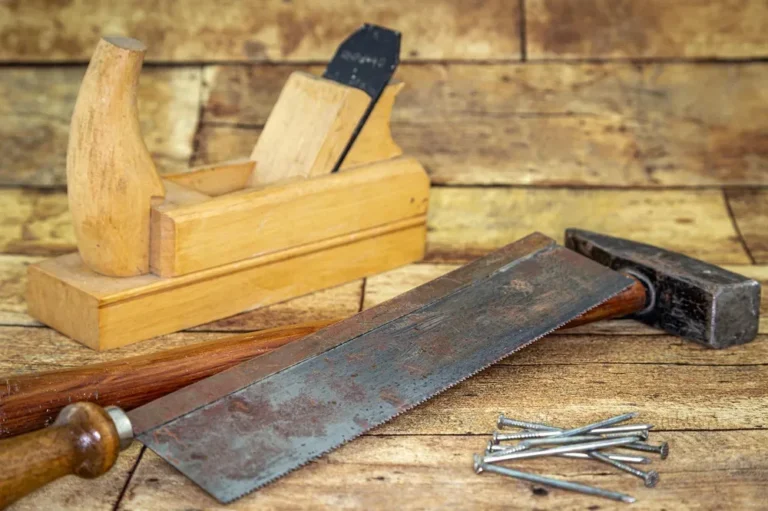
Woodworking Fasteners and Project Basics Tips
A practical way to choose woodworking fasteners is to check the joint type, the material, the load direction, and moisture exposure; for many indoor furniture and cabinet jobs, glue plus coarse-thread screws that penetrate the second piece by roughly 1/2 to 2/3 its thickness is a common starting point. Pick poorly and joints loosen, parts split, hardware rusts, and repairs usually take longer than building it right the first time. This guide matches screws, nails, bolts, confirmat screws, pocket screws, and exterior-rated options to furniture, cabinets, trim, casework, and basic shop builds.
Author and editorial note: This article was prepared by the GAW Editorial Team and updated for accuracy against manufacturer installation literature, the USDA Forest Products Laboratory’s Wood Handbook, APA guidance for plywood and panel products, and corrosion guidance used for treated lumber and exterior connectors. The examples below are original shop-style scenarios based on common cabinet, furniture, trim, and outdoor assemblies rather than lab testing.
Related reading: wood screws, nails for woodworking, pilot holes for screws, and cabinet joinery.
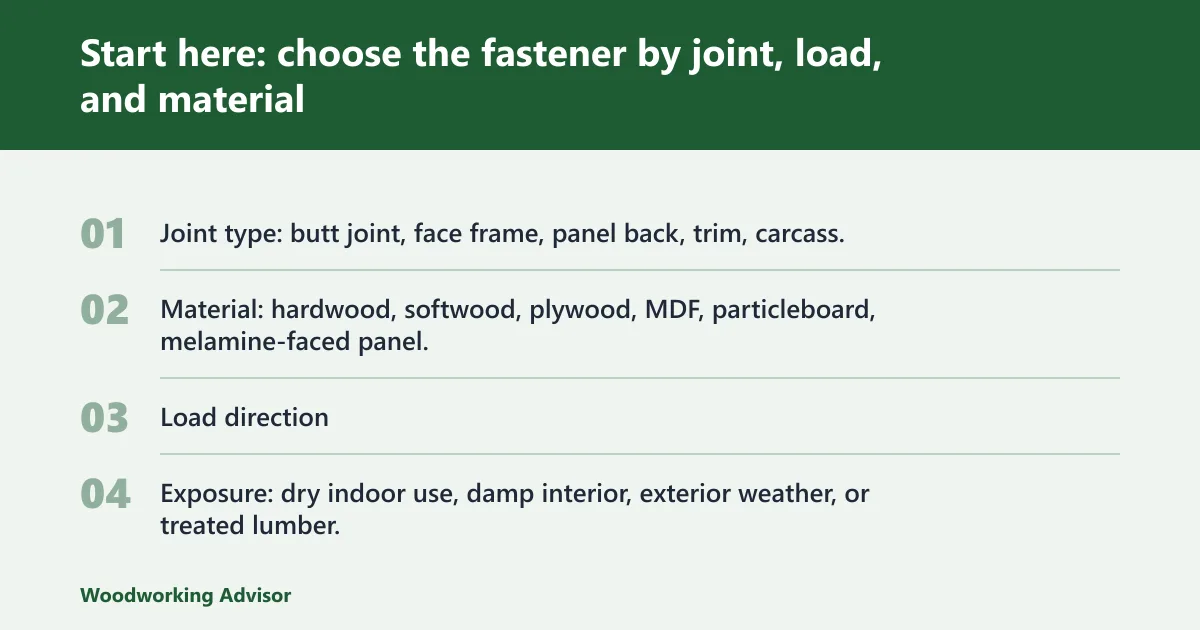
Start here: choose the fastener by joint, load, and material


What the joint must resist
Think about failure before brand or fastener type. A shelf cleat loaded straight down mainly asks the fastener to resist shear. A hook screwed into a panel asks for withdrawal resistance. A cabinet carcass pushed side to side asks the corner joints to resist racking. A tabletop also moves seasonally, so a rigid through-fastener can split wood or trap the panel too tightly.
Screws usually make more sense when you need clamp force, removability, and better withdrawal resistance. Nails often make more sense when the load is mostly shear, the parts are thin, or speed matters. Neither wins every job.
Material changes the answer
Solid wood, plywood, MDF, particleboard, and heavy timber do not behave the same way. Hardwood is more likely to split without pilot holes. Softwood takes screws more easily but can crush under small heads. Plywood holds screws fairly well in its face plies but less well near weak edges. MDF and particleboard can strip easily and often do better with confirmat screws or specialized hardware. Heavy timber pushes the choice toward structural screws or lag screws.
If a 3/4-inch MDF cabinet side gets a standard wood screw driven near its edge without a pilot hole, it can swell, mushroom, and strip. The threads often swell the panel, the face can mushroom, and the screw may strip before the joint closes. A confirmat screw is built for that job. That general behavior is consistent with panel-product fastening guidance published by major hardware makers and composite-panel references, and with the USDA Forest Products Laboratory’s discussion of lower screw-holding performance in fiber-based panels compared with many solid woods.
Appearance, reversibility, and period accuracy
Visible hardware changes the choice. Flat-head screws sit flush in countersinks. Round-head and oval-head screws stay visible and are often chosen for traditional or decorative work. Trim-head screws leave a smaller witness mark. Slotted wood screws belong in period-correct furniture and visible traditional hardware, not because they hold better, but because they look right.
Start with screws and nails because they cover most furniture, cabinet, trim, and casework jobs beginners actually build. Then add structural and specialty fasteners for the projects that truly need them.
The four checks before you pick a fastener
- Joint type: butt joint, face frame, panel back, trim, carcass, heavy structural connection.
- Material: hardwood, softwood, plywood, MDF, particleboard, melamine-faced panel, or heavy timber.
- Load direction: withdrawal, shear, racking, or movement across the grain.
- Exposure: dry indoor use, damp interior, exterior weather, or treated lumber.
What fasteners should you use for woodworking?
Use the fastener that matches the joint’s likely failure. For indoor furniture, wood screws, pocket hole screws, and occasional nails cover most work. For sheet-good cabinets, confirmat screws are often the better fit. For trim and traditional details, nails usually make more sense. For wet or heavy structural work, switch to exterior-coated, stainless, or structural fasteners.
Furniture and face frames
General furniture work usually starts with standard wood screws, often hidden, plus glue. Pocket hole screws are a common woodworking screw type and are often paired with drill guides and clamps. They work well for face frames, aprons, web frames, and knock-together utility furniture.
Traditional wood screws still matter. Slotted wood screws remain a traditional furniture fastener, especially where the head stays visible. Brass wood screws and stainless steel wood screws also belong in specialty and historical work, each for different reasons: brass for appearance, stainless for corrosion resistance.
Cabinets and casework
Cabinets need better choices for plywood, MDF, and melamine-faced panels. Confirmat screws are often used for cabinet construction and modern casework because their shape suits engineered sheet goods. Standard wood screws can work in plywood carcasses, especially with pilot and clearance holes, but they are a weaker choice in MDF edges.
For shop cabinets and utility casework, construction screws may be acceptable if the heads are hidden and the joint design suits them. They are a general modern screw category, but they are not a default pick for fine visible furniture.
Trim, backs, and light-duty panels
Thin backs, light trim, and applied moldings often point to nails. Small nails hold well enough in shear, leave less hardware to hide, and go in faster. Decorative upholstery nails and tacks belong here too when the fastener itself is part of the design.
Outdoor projects and heavy structural work
Deck screws are among the common modern woodworking screws for outdoor projects, but exposure changes everything. Use exterior-coated fasteners outdoors for general weather exposure, use stainless fasteners where moisture or corrosion risk stays high, and move to structural screws or lag screws for pergolas, workbenches, or timber connections. Lag screws or lag bolts are generally used for larger-diameter structural fastening, often with washers and pilot holes.
Choosing wood fence panels for yard privacy
The right wood fence panel depends on where it will fail first: at the base, under wind load, or at the installation points. Matching your yard exposure, soil conditions, and screening goal before comparing prices prevents costly replacements.
Options range from cedar privacy screens that balance durability to budget fir pickets and no-dig vinyl kits for fast installs. Freestanding screens also work well for patios or hiding equipment without permanent posts. Evaluating these choices by airflow needs and partial versus full coverage ensures the fence performs in your specific climate. For a detailed breakdown of materials and configurations, review the guide to wood fence privacy panels.
How to Pick Wood Fence Panels for Privacy and Longevity
Not all wood fence panels deliver equal privacy or durability. The best choice depends on your yard’s exposure, soil conditions, and how much screening you need—each panel fails differently, whether at the base, under wind, or during installation. A comparison of top options highlights cedar’s balance of durability and natural resistance, budget-friendly fir for cost-sensitive projects, or airflow-focused designs for partial privacy.
For a breakdown of the best wood fence panels for privacy—ranked by performance, cost, and installation ease—see privacy fence panels guide.
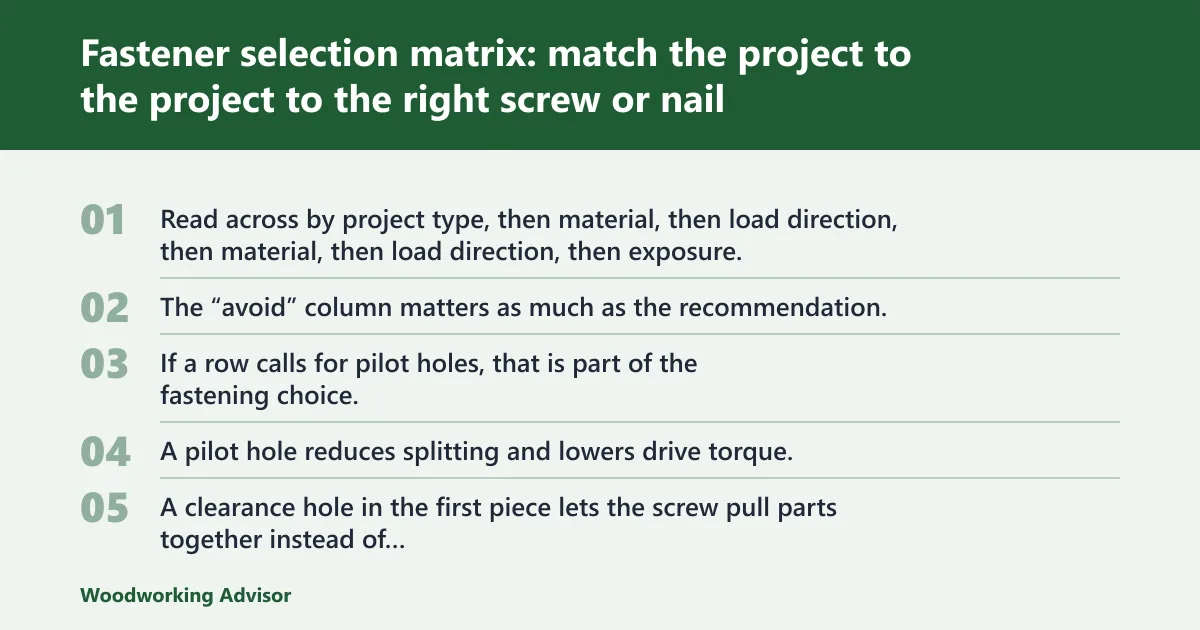
Fastener selection matrix: match the project to the right screw or nail
How to read the matrix
Read across by project type, then material, then load direction, then exposure. The “avoid” column matters as much as the recommendation. If a row calls for pilot holes, that is part of the fastening choice, not an optional extra.
| Project type | Material | Main load | Exposure | Recommended fastener | Pilot / prep | Avoid |
|---|---|---|---|---|---|---|
| Face frame to cabinet box | Hardwood to plywood | Clamp force, light shear | Indoor | Pocket hole screws or flat-head wood screws | Pocket-hole guide and clamp; pilot in hardwood | Finish nails alone for structural alignment |
| Cabinet carcass | MDF or melamine-faced panel | Racking, withdrawal at edges | Indoor | Confirmat screws | Use the correct stepped pilot pattern; clamp parts square | Ordinary wood screws near panel edges |
| Cabinet carcass | Plywood | Racking | Indoor | Flat-head wood screws or confirmat-style cabinet screws | Clearance hole in first piece; pilot near edges | Lag screws |
| Table apron to leg | Hardwood | Racking | Indoor | Wood screws as hidden assembly aids, or pocket hole screws where appropriate | Pilot and countersink in hardwood | Visible construction screws in finished furniture |
| Drawer runner or web frame | Hardwood or softwood | Shear | Indoor | Flat-head or round-head wood screws | Pilot near ends; use oval or round head if hardware stays visible | Nails where later adjustment may be needed |
| Back panel | Thin plywood to solid-wood case | Light shear | Indoor | Small nails or clout nails for traditional work | Pre-drill brittle moldings if needed | Long screws that telegraph through the case side |
| Traditional chest or case detail | Solid wood | Light shear | Indoor | Cut nails, rosehead nails, or slotted screws | Orient cut nail wedge across the grain to reduce splitting | Torx construction screws if period appearance matters |
| Outdoor bench or planter | Softwood or hardwood | Withdrawal and weather | Outdoor | Exterior-coated deck screws or stainless steel wood screws | Pilot in hardwood and near board ends | Plain steel or basic zinc indoors-only screws |
| Pergola, timber base, heavy workbench | Heavy timber | High shear and withdrawal | Indoor or outdoor | Structural screws or lag screws / lag bolts with washers | Pilot holes usually required; tighten without crushing fibers | Cabinet screws or finish nails |
When the matrix points to pilot holes, clearance holes, or countersinks
A pilot hole reduces splitting and lowers drive torque. A clearance hole in the first piece lets the screw pull parts together instead of jacking them apart. Countersinks match flat heads; counterbores can hide heads under plugs. Trim-head screws usually need less countersink depth but also offer less bearing area. The USDA Forest Products Laboratory and many fastener manufacturers both note that pilot size should track screw diameter and wood density, which is why hardwood and large lag screws usually need more deliberate prep than softwood trim work.
When the matrix says avoid that fastener entirely
Avoid ordinary wood screws in MDF edges when a confirmat screw is available. Avoid plain steel outdoors. Avoid lag screws in routine cabinet work. Avoid nails when the joint needs repeated disassembly or exact clamp pressure. Fastener choice often starts by ruling out bad fits before picking a good one.
How do wood screws differ from wood nails?
Wood screws usually hold better against pull-out and let parts be tightened, adjusted, and removed. Wood nails usually go in faster, often behave well in shear, and can be better for thin stock or traditional visible work. The right choice depends on whether the joint is likely to pull apart, slide, rack, or need later access.
Withdrawal strength versus shear performance
Threads give screws an edge in withdrawal resistance. Nails rely more on friction and shank shape, so they can pull loose more easily when loaded straight out. In shear, nails can work surprisingly well because the shank can bend slightly without snapping, especially in thin assemblies.
Assembly speed, disassembly, and alignment control
Screws pull joints closed and hold alignment while glue cures. They also come apart with less damage. Nails are faster in repetitive work, especially for backs, trim, and applied parts. That speed matters less in a single side table and more in a room full of panel backs.
Flat-head screws disappear into countersinks. Round-head and oval-head screws stay visible by design. Nails leave tiny heads or become a decorative feature, depending on type. Rosehead nails, clout nails, and upholstery tacks are chosen because the hardware should be seen.
Typical failure modes for each
Screws fail by splitting stock near ends, stripping heads or threads, or breaking from over-torque. Nails fail by withdrawal, panel looseness, or gradual creep in joints that keep moving. Outdoors, both can corrode and stain surrounding wood if the coating or metal is wrong.
Which woodworking screws are used in furniture and cabinet building?
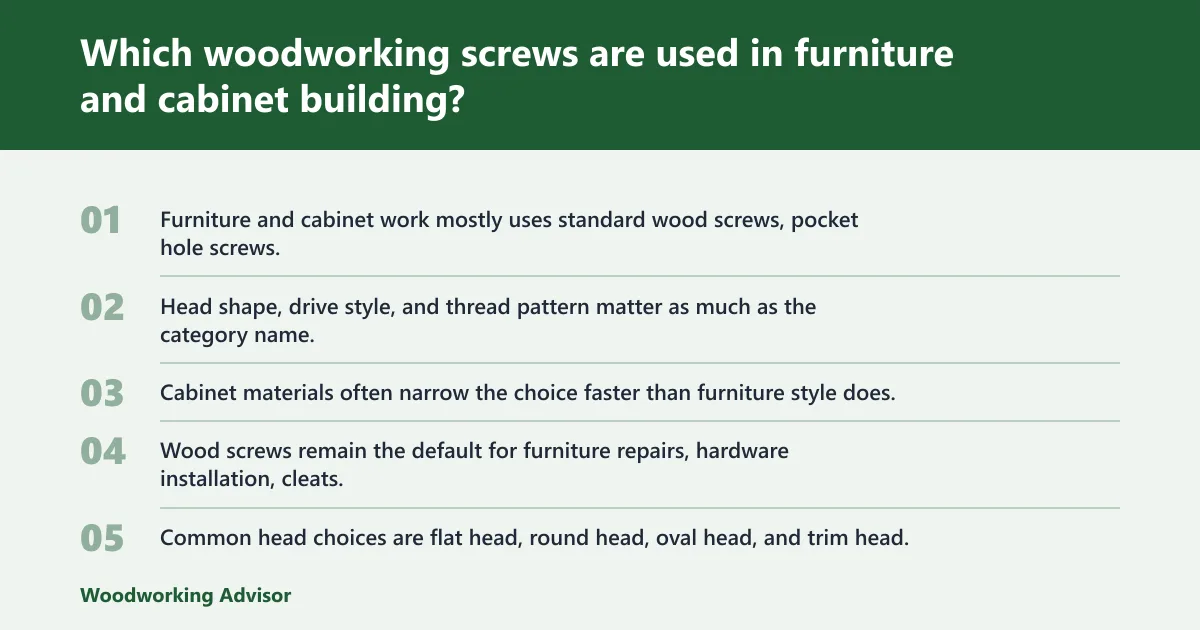
Furniture and cabinet work mostly uses standard wood screws, pocket hole screws, confirmat screws, and a smaller number of construction or structural screws where the project is more utilitarian. Head shape, drive style, and thread pattern matter as much as the category name. Cabinet materials often narrow the choice faster than furniture style does.
Wood screws: common uses and where they still fit
Wood screws remain the default for furniture repairs, hardware installation, cleats, runners, mounting blocks, and hidden assembly aids. Common head choices are flat head, round head, oval head, and trim head. Flat heads suit flush countersunk work. Round and oval heads suit exposed hardware. Trim heads suit small visible holes.
Modern drive styles include square-drive screws, Phillips, and Torx or star. Square-drive, often called Robertson, is common in woodworking because it is less likely to cam out in practice than slotted or Phillips. Slotted screws remain mainly for traditional furniture appearance.
Pocket hole screws for guided joinery
Pocket hole screws are a common modern woodworking screw type. They are used for pocket-hole joinery and are typically paired with drill guides and clamps. They work best where the screw enters at an angle into solid wood or plywood and the pocket stays hidden or gets plugged.
Choose thread style based on the material; coarser threads often suit softwood and plywood better, while finer threads are often preferred in hardwood. Coarser threads generally suit softwood and plywood better; finer threads are often preferred in hardwood. The joint still needs clamping during assembly so the screw pulls the mating part tight instead of skating it out of position.
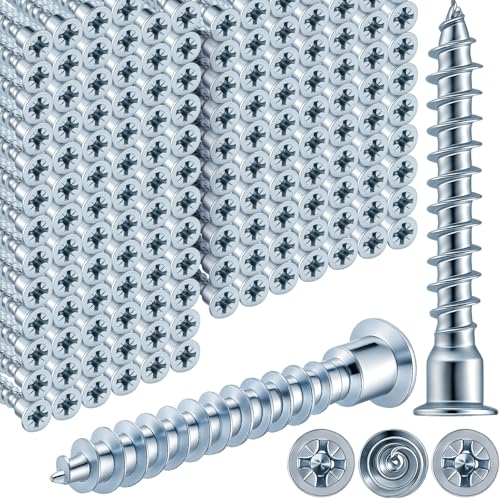
Confirmat screws for cabinets and sheet goods
Confirmat screws are designed for engineered sheet goods and are common in modern casework. They work very well in MDF, particleboard, and melamine-faced panels where ordinary wood screws can strip or blow out edges. Their larger body and specialized pilot pattern spread load better in weaker panel cores. Hardware suppliers such as Häfele and FastenMaster publish confirmat-specific drilling patterns for this reason: the screw is not just larger, it is meant to work with a prepared hole geometry in panel products.
Construction screws and lag screws: where structural categories belong
Construction screws are a general-purpose structural fastening category used beyond fine furniture. They fit shop cabinets, jigs, outdoor utility builds, and some subassemblies where speed matters more than delicate appearance. They are usually a poor visual fit for visible furniture parts.
Lag screws or lag bolts are for heavy timber and other high-load connections. Use washers under the head. Most manufacturers list pilot-hole guidance by wood species and fastener diameter, and that guidance matters because overdriving can crush fibers or split the member. For actual structural design, the American Wood Council’s National Design Specification and connector makers such as Simpson Strong-Tie are better references than rule-of-thumb cabinet practice.
Which nail types belong in woodworking projects?
Woodworking nails belong in more projects than beginners often expect. They handle backs, moldings, applied trim, upholstery, and many traditional details well. Historical furniture and flooring also rely on older nail forms. The useful question is not “are nails rough carpentry,” but “do their speed, look, and shear behavior fit the job?”
Cut nails and wrought nails for traditional work
Cut nails are a traditional and decorative woodworking nail. Their wedge shape can help reduce splitting when oriented correctly, with the broad faces set across the grain rather than in a way that tends to open the board. They suit period-style casework, flooring, and thin stock where screws would look wrong.
Wrought nails are another traditional nail type, mainly chosen today for restoration, historical reproductions, and visible decorative fastening. They are about appearance and authenticity, not convenience.
Clout nails and rosehead nails
Clout nails suit light visible fastening such as thin backs or traditional detailing. Rosehead nails are strongly tied to historical or rustic visible hardware. Their heads are meant to be seen, so they work where a modern countersunk screw would look out of place.
Decorative upholstery nails and tacks
Decorative upholstery nails and tacks belong on seats, panels, and trim where the fastener becomes part of the edge treatment. They add almost no structural value compared with screws or proper joinery. Treat them as finish hardware.
When nails make more sense than screws
Picture a thin 1/4-inch back on a painted cupboard. Small nails along the perimeter hold it quickly without dozens of countersunk holes to fill. A screw that is too long can break through the show face, and a screw that is too short adds work without adding much strength.
Are slotted screws better for furniture projects?
Slotted screws are better for furniture projects only when visible hardware needs a traditional look or period accuracy. They are not mechanically stronger than modern drive types and are usually slower to install cleanly. For everyday furniture assembly, square-drive, Phillips, or Torx heads are generally easier to drive without slipping.
Historical appearance versus modern drive performance
Slotted wood screws belong in historical furniture use, restorations, and reproductions. Their single slot matches older hardware language. Modern drive types focus on easier installation. Square-drive screws are a strong woodworking option, and Torx or star drives also resist cam-out well.
Drive styles compared in use
Slotted heads are easiest to mar with a slipping driver. Phillips helps self-centering but can cam out under higher torque. Square-drive grips the bit well. Torx or star also transmits torque cleanly. For hidden joinery, modern drives usually save time and reduce damaged heads.
What the head shape changes
Flat-head screws are for flush countersunk work. Round-head screws sit proud and show more metal. Oval-head screws give a softer traditional look in visible hardware. Trim-head screws minimize surface disruption, especially in narrow moldings and face work.
When period-correct hardware is worth the extra effort
Use slotted screws when the head will remain visible on reproduction furniture, campaign-style hardware, or restored antiques. Skip them inside a cabinet carcass or under a tabletop where no one sees the slot and installation control matters more than appearance.
How do you size fasteners and avoid common failures?
Size fasteners by stock thickness, required penetration, and how close the fastener sits to an edge. A common rule of thumb is to drive a screw so it penetrates the second piece by about 1/2 to 2/3 that piece’s thickness. Longer is not always better; too much length increases splitting and breakthrough risk.
Screw length, diameter, and thread reach
For a butt joint in 3/4-inch stock, many woodworkers start by checking whether the screw can pass through the first piece and still bite deeply enough into the second without exiting the far face. Clearance holes in the first piece help the screw act as a clamp.
Choose thicker screws for heavier loads and thicker stock, but match the diameter to the wood. Large-diameter screws in narrow hardwood parts often split ends unless the pilot hole is right. In softwood, overly fine screws may hold less well in withdrawal.
Nail length and holding rules
Nails should pass through the first piece and still embed solidly into the second. For trim and light panels, the goal is enough embedment to resist vibration and handling without punching through the show face. Thin stock quickly limits nail length.
Pilot holes in hardwood, softwood, plywood, and MDF
Hardwood usually needs pilot holes, especially near ends. Softwood is more forgiving but still benefits from pilots in narrow parts. Plywood needs care near edges to avoid splitting veneers. MDF and particleboard often need very deliberate drilling, because once the fibers strip, the hole is permanently weaker. The USDA Wood Handbook explains that denser species generally require more careful lead-hole sizing, while panel-product manufacturers and cabinet-hardware makers routinely specify dedicated drilling patterns for MDF and particleboard fasteners.
Common failure patterns beginners should recognize
A common first-timer mistake is driving a large screw 3/8 inch from the end of a hard maple rail with no pilot hole. The end splits before the head seats, the joint opens, and tightening more only strips the head. The fix is not a longer screw, it is a pilot, clearance hole, and often a different diameter.
Other common failures are thread stripping in MDF, joints creeping because the screw never clamped the parts fully, and black staining outdoors from incompatible fasteners. If a screw spins without tightening, the threads have likely failed in the receiving material.
What fasteners work best for outdoor, treated-lumber, and high-load projects?
Outdoor, treated-lumber, and high-load projects need fasteners chosen first by corrosion risk, then by load. Exterior-coated deck screws fit many outdoor assemblies, stainless wood screws fit wet or corrosive settings, and structural screws or lag screws fit heavy members. Plain indoor screws are the wrong economy here because failure often starts with rust and staining.
Zinc, exterior-coated, and stainless fasteners
Plain steel rusts quickly. Basic zinc plating is better indoors than outside. Exterior-coated screws are made for weather exposure but vary by manufacturer. Stainless steel wood screws are the safer pick for high-moisture conditions, coastal exposure, or projects where rust streaks would ruin the piece. Fastener corrosion guidance from Simpson Strong-Tie, GRK, and similar manufacturers consistently distinguishes interior zinc from exterior-rated coatings and stainless, especially where water remains trapped around the fastener.
Why treated lumber changes the recommendation
Treated lumber can be hard on unsuitable fasteners. Use hardware specifically rated for treated wood or move to stainless where the environment is severe. Mixing the wrong metal with wet preservative-treated stock can shorten fastener life and stain the surrounding wood. That recommendation aligns with treated-wood guidance from the American Wood Protection Association and connector manufacturers that publish compatibility tables for preservatives, coatings, and stainless grades.
When to step up to structural screws or lag screws
Use structural screws or lag screws when the connection carries real structural load: timber bases, pergolas, swings, and heavy bench frames. Lag screws need washers, and pilot holes are typically part of the system. These are not ordinary cabinet fasteners. Structural screw makers and the American Wood Council both treat these as engineered connections, not decorative or convenience fasteners.
Fasteners to avoid in wet or corrosive conditions
Avoid plain steel, interior-only zinc screws, brass in high-load structural roles, and decorative nails where water can sit around the head. Corrosion is a structural problem first and a cosmetic problem second.
Beginner toolkit: the small fastener set that covers most projects
Core screw types and sizes to keep on hand
For a starter kit, sort the field into five types of woodworking fasteners: standard wood screws, pocket hole screws, confirmat screws, nails, and structural fasteners. That matches how beginners actually choose.
- Flat-head wood screws in a few useful lengths for general indoor furniture and hardware.
- Square-drive screws as a modern woodworking screw option for routine assembly.
- Pocket hole screws for guided joinery.
- Confirmat screws for MDF, particleboard, and cabinet casework.
- A small box of exterior-coated deck screws and a small set of structural screws for outdoor or shop builds.
A practical starter set of nails and tacks
- Small finish-style nails for backs and light trim.
- Cut nails for traditional details and selected flooring or case parts.
- A few decorative upholstery nails or tacks only if upholstery or visible trim is planned.
Bits, countersinks, pilot drills, and clamps that matter
Keep matching driver bits, a countersink, pilot drills, a combination square, and at least a couple of clamps. Pocket-hole joinery also needs a drill guide and clamp. Many stripped heads blamed on “bad screws” start with worn bits or poor alignment.
What to buy later, not first
Rosehead nails, wrought-style nails, brass screws, and lag hardware are specialized. Buy them when a project calls for historical appearance, restoration, or heavy timber capacity. A basic indoor kit does not need every fastener category on day one.
Frequently asked questions
What fasteners should I use for woodworking?
Use screws for most indoor furniture and cabinets, nails for thin backs, trim, and some traditional details, confirmat screws for MDF or melamine casework, and structural screws or lag screws for heavy members. Start by checking joint type, material, load direction, and moisture exposure before choosing a category.
What is the difference between wood screws and wood nails?
Wood screws give better pull-out resistance, stronger clamping, and easier disassembly. Wood nails go in faster, often handle shear loads well, and suit thin stock or visible traditional work. Screws are easier to adjust; nails are often better when the hardware should stay small or look historical.
Are slotted screws better for furniture projects?
Only for visible traditional work. Slotted screws fit period-correct furniture, reproductions, and restorations because the slot looks right. They are not stronger than square-drive, Phillips, or Torx options, and they are easier to slip and mar during installation in routine furniture assembly.
When should I use cut nails instead of screws?
Use cut nails when the project wants a traditional look, when thin stock would look clumsy with screw heads, or when historical methods matter. They also suit certain flooring and case details. Orient the wedge correctly to reduce splitting, and avoid treating them as a replacement for cabinet screws.
What fasteners are best for historical or traditional furniture?
Slotted wood screws, cut nails, rosehead nails, and wrought-style nails are the usual starting points. Brass wood screws may suit visible hardware on traditional pieces. The best choice depends on whether the hardware is seen, whether the piece must read as period-correct, and whether removal is expected later.
Which woodworking fastener holds best in wood?
For withdrawal, screws usually hold best because threads resist pull-out. For shear, nails can perform very well, especially in thinner assemblies. The material changes the answer: plywood, MDF, solid hardwood, softwood, and heavy timber do not grip the same fastener the same way, so there is no single winner.
Do I always need a pilot hole?
No, but hardwood, narrow parts, locations near board ends, and most large-diameter screws strongly favor pilot holes. Lag screws, confirmat screws, and many structural fasteners also come with specific pilot-hole guidance. If driving torque climbs sharply or the joint starts to spread, stop and drill the pilot and clearance holes.
Are confirmat screws better than wood screws for MDF?
Usually yes for casework edges and repeated cabinet-style assembly. Confirmat screws are designed for composite panels and use a matching drilled hole pattern, while ordinary wood screws are more likely to bulge, strip, or split MDF and particleboard near edges.
Sources
- USDA Forest Products Laboratory, Wood Handbook: Wood as an Engineering Material — guidance on wood properties, fastener behavior, screw lead holes, and species density effects.
- American Wood Council, National Design Specification (NDS) for Wood Construction — structural fastener design principles, including lag screw applications.
- APA – The Engineered Wood Association — panel-product guidance relevant to plywood edge fastening and panel behavior.
- Simpson Strong-Tie corrosion and fastener compatibility literature — exterior fastener coatings, stainless options, and treated-lumber compatibility.
- American Wood Protection Association (AWPA) — treated-wood standards and fastener compatibility considerations.
- Häfele and other cabinet-hardware manufacturers’ confirmat screw installation guidance — stepped pilot-hole patterns and panel-product use.
Takeaway
The safest shortcut is to choose the fastener by material first, then by load and exposure. For most indoor furniture, standard wood screws or pocket hole screws work well; for MDF and particleboard cabinets, confirmat screws are usually the better answer; for trim and thin backs, nails often win; and for exterior or heavy timber work, corrosion-rated structural fasteners matter as much as size.