Why Wear a Shop Apron for Woodworking (Leather vs. Canvas)
A shop apron is one of the cheapest pieces of safety and convenience gear a woodworker never buys until after they ruin a good shirt with glue, stain, or a hot splinter of hardwood.
Sawdust gets everywhere, wood glue does not wash out of cotton once it cures, and a lap full of hot shavings off a hand plane is not a fun surprise. A shop apron solves all three, plus it gives you somewhere to hang a pencil, tape measure, and chisel so you are not walking back to the bench every two minutes. This guide covers what an apron actually protects you from in a woodworking shop, which material holds up best, and how to pick one that will not get in the way at the table saw.
Why Woodworkers Wear A Shop Apron
Best Shop Apron Pick
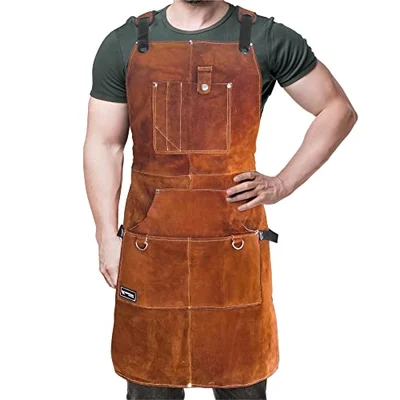
FIGHTECH Leather Work Apron with 11 Tool Pockets
Full-grain leather built for woodworkers, blacksmiths, and carpenters — heavy-duty enough for turning and torch-adjacent work.
- Best for: woodturning, heavier chisel work, anyone wanting maximum cut/heat resistance
- Why we picked it: 11 pockets cover pencils, tape measure, and hand tools without extra gear
- Main drawback: heavier and warmer than a canvas apron for long summer sessions
Prefer waxed canvas? Compare these
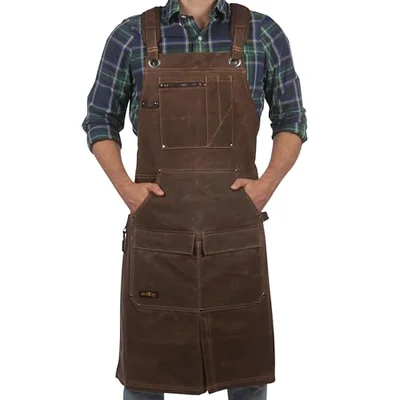 Option 1 ecoZen 16oz Waxed Canvas Work Apron
|
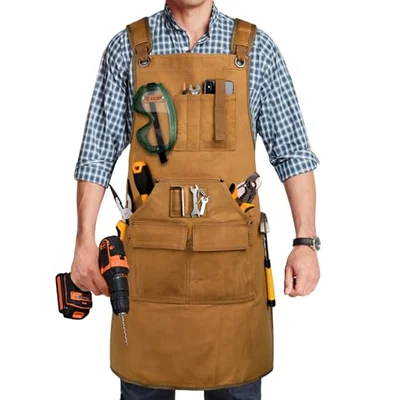 Option 2 20oz Canvas Shop Apron, 9 Tool Pockets
|
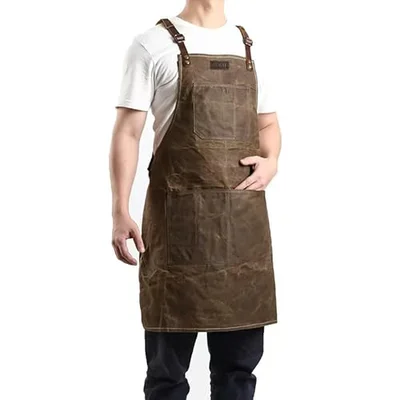 Option 3 Midkit 8oz Waxed Canvas Apron
|
As an Amazon Associate we earn from qualifying purchases.
Aprons have protected tradespeople for centuries — blacksmiths, cobblers, and woodworkers all wore a version of the same idea long before “workwear” was a marketing term. In a modern shop, the apron’s job hasn’t changed: keep glue, stain, finish, and sawdust off your clothes, and keep small tools within reach so you’re not setting down a chisel on the bench every time you need a pencil.
- Glue and finish protection: wood glue and oil-based finishes don’t wash out of cotton once cured — an apron takes the hit instead of your shirt.
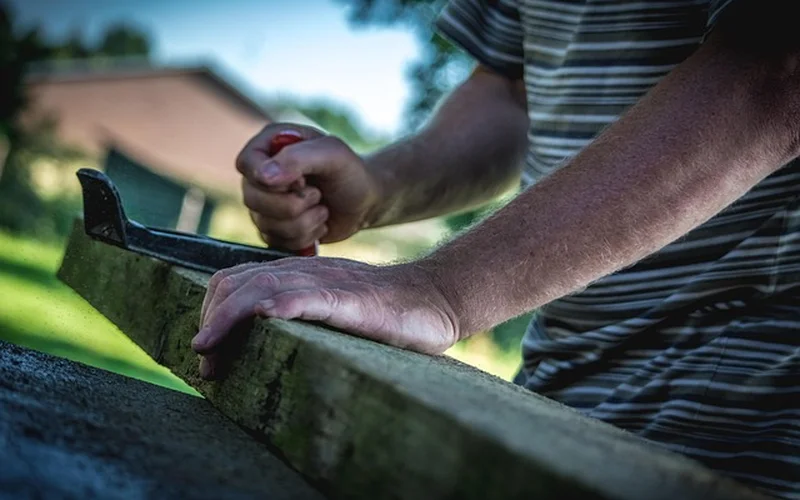
- Splinter and shaving barrier: hand-planing and chiseling throw hot curls and sharp splinters straight into your lap.
- Tool access: pockets and loops hold a pencil, tape measure, and small chisel so you’re not walking back to the bench constantly.
- Cut and abrasion resistance: a heavier canvas or leather apron adds a layer between your torso and a slipped chisel or utility knife.
Leather Vs. Waxed Canvas: Which Material Holds Up In A Shop
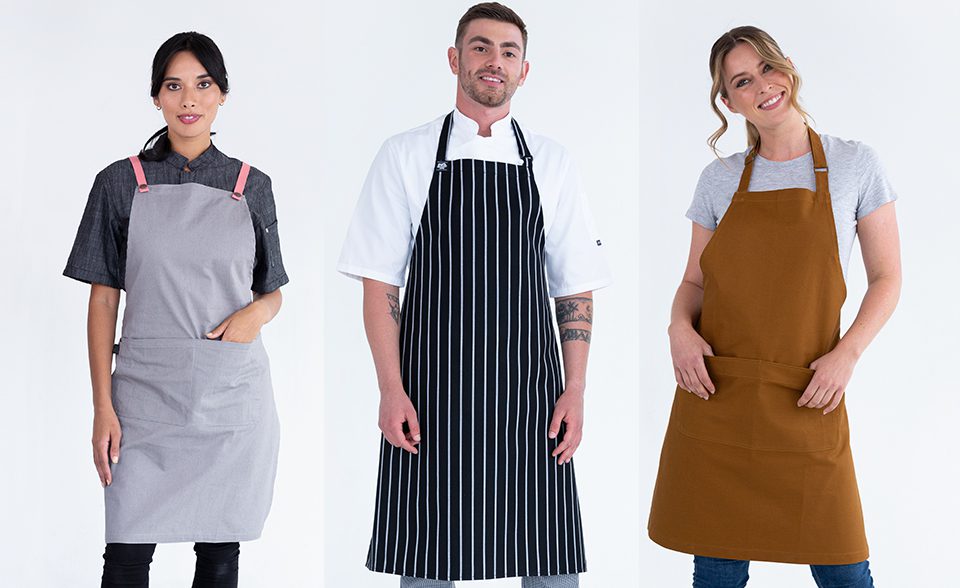
The two materials that dominate real woodworking shops are full-grain leather and waxed canvas, and they suit different kinds of work. Leather is heavier, resists heat and sharp edges better, and holds up best for woodturning or metalworking-adjacent tasks where hot chips or sparks are a real risk. Waxed canvas is lighter, more breathable for long shop sessions, and still resists spills and stains thanks to the wax coating — most woodworkers doing bench work, assembly, and finishing find it more comfortable for all-day wear.
| Material | Best For | Trade-off |
|---|---|---|
| Full-Grain Leather | Woodturning, torch work, heavy chisel use | Heavier, more expensive, needs occasional conditioning |
| Waxed Canvas (16-20oz) | Bench work, assembly, general shop use, all-day comfort | Less heat/spark resistance than leather |
| Unwaxed Cotton/Denim | Light dusting, quick tasks | Absorbs glue and stain permanently, offers little cut resistance |
What To Look For In A Shop Apron
A good shop apron should cover from mid-chest to at least mid-thigh, since most spills and shavings land below the waist. Look for a cross-back or adjustable neck strap rather than a single loop — a loop that only goes around the neck puts all the weight on one spot and gets uncomfortable fast during long sessions. Pockets matter more than people expect: a dedicated pencil slot, a tape measure loop, and at least one deep tool pocket cover most needs without weighing the apron down.
Data point: Woodworking apron comparisons (e.g., Droppe) consistently find waxed canvas lighter and cheaper for general bench work, while leather lasts longer and handles heat and sharp edges better for turning and heavier shop tasks — match the material to the kind of work you actually do most.
Caring For A Shop Apron
Scrape off dried glue and finish before it builds up stiff patches. Waxed canvas should be spot-cleaned rather than machine washed, since washing strips the wax coating that makes it water- and stain-resistant; re-wax it once or twice a year with a canvas wax product if it starts absorbing spills again instead of beading them. Leather aprons need an occasional leather conditioner to keep the material from drying out and cracking, especially if used near heat sources. Hang both types rather than folding them for storage, so pockets keep their shape.
Frequently Asked Questions
Do I Really Need An Apron For Woodworking?
You don’t strictly need one, but most woodworkers end up wishing they’d bought one after ruining a shirt with glue or stain, or getting a hot shaving down their collar. An apron is inexpensive compared to replacing clothes and adds real convenience with built-in tool storage.
Leather Or Waxed Canvas: Which Should I Buy First?
If you do a lot of woodturning or work near heat, leather holds up better. For general bench work, assembly, and finishing, waxed canvas is lighter, cheaper, and more comfortable for long sessions.
Can I Wash A Waxed Canvas Shop Apron?
Avoid machine washing waxed canvas, since it strips the wax coating that gives the fabric its water and stain resistance. Spot-clean spills instead, and re-wax the apron periodically with a canvas wax product to maintain protection.
What Pockets Does A Good Shop Apron Need?
At minimum, look for a pencil slot, a tape measure loop, and one deep pocket for a chisel or small hand tool. Too many pockets can add unnecessary weight, so match pocket count to how many tools you actually carry while working.
Conclusion
A shop apron earns its cost the first time it takes a glue spill or a hot shaving instead of your shirt. Match the material to how you work — leather for turning and heat-adjacent tasks, waxed canvas for everyday bench comfort — and look for cross-back straps and a couple of well-placed pockets over a pile of extra features you won’t use.
Sponsored / affiliate links. As an Amazon Associate I earn from qualifying purchases. I may earn additional commission from eligible campaigns.