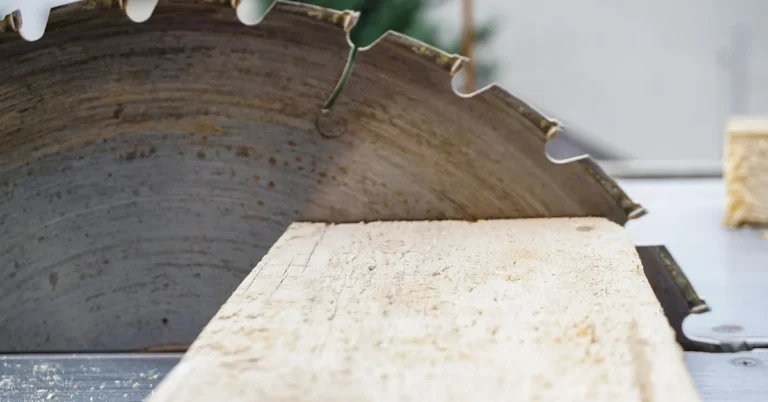
Which Way Should a Circular Saw Blade Face? (Never Backward)
A circular saw blade’s teeth must point in the direction of rotation — upward and into the cut at the back of the blade — matching the arrow stamped on the blade guard, next to the motor housing. There’s no legitimate way to run a blade the opposite direction; a reversed blade is an installation mistake, not a technique, and it sharply raises the risk of kickback. This guide covers how blade rotation actually works, how to check your install in seconds, and what happens if you get it wrong.
Choosing The Right Circular Saw Blade
Choosing the right circular saw blade is crucial for achieving clean, precise cuts in your woodworking projects. Understanding the key factors to consider, such as blade material, size, and number of teeth, can help you select the perfect blade for your cutting needs.
Blade Material
The material of the blade determines its durability and the types of materials it can cut effectively. Common blade materials include high-speed steel (HSS), carbide-tipped, and diamond-tipped.
Blade Size
The size of the blade refers to its diameter, and it directly influences the depth and width of the cut. Standard circular saw blades range from 6.5 to 10 inches in diameter, with smaller blades suitable for fine cuts and larger blades ideal for heavy-duty applications.
Number Of Teeth
The number of teeth on a circular saw blade determines the quality and speed of the cut. Blades with more teeth deliver smoother cuts on materials like plywood and melamine, while blades with fewer teeth are better suited for faster cuts on softer woods.
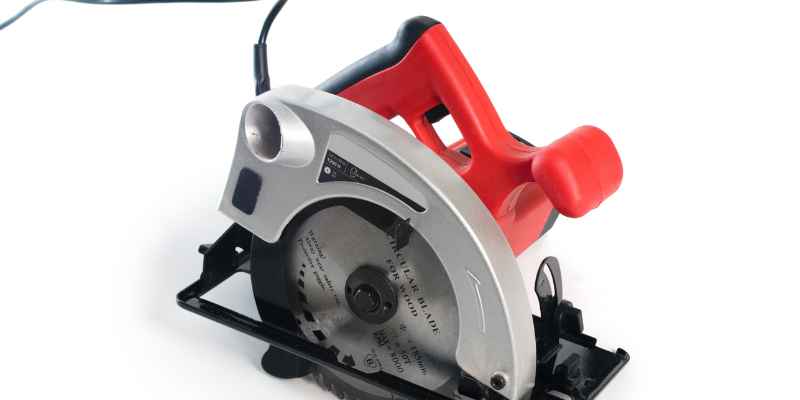
How Circular Saw Blade Rotation Actually Works
A circular saw blade spins so its teeth point upward and into the material at the back of the blade — the point where the teeth are exiting the cut on top of the workpiece. Cutting on this upward stroke pulls the saw down and flat against the material instead of lifting it, which is what keeps the saw stable and under control. It’s also why sawdust gets thrown up and away from the blade rather than back at the operator.
📊 Installing a blade backward doesn’t just cut poorly — it makes the saw fight the material instead of riding on top of it, sharply increasing kickback risk, along with excess heat, smoke, and vibration. — Source: House Digest
How To Check If Your Blade Is Installed Correctly
Checking blade direction takes about ten seconds and should be part of every blade change, not just something you do when a cut feels wrong:
- Unplug the saw or remove the battery first. Never check or adjust a blade while the saw can power on.
- Find the rotation arrow on the blade guard. It’s usually stamped or printed near the arbor, on the metal guard that covers the top of the blade.
- Find the arrow on the blade itself. Most blades have a directional arrow stamped near the center, close to the arbor hole.
- Match the two arrows. If they point the same direction, the blade is installed correctly. If they don’t, remove the blade and flip it.
- No arrow on the blade? Check the tooth shape instead — the top edge (hook) of each tooth should angle upward and forward, in the direction the blade will spin when cutting.
What Happens If You Install A Circular Saw Blade Backward
According to Luigi Caler, writing for House Digest, a backward-mounted blade attacks the material from the wrong angle, so the motor works harder to compensate, cut quality suffers, and the added strain can generate enough heat and smoke to stress the saw itself — on top of the sharply increased kickback risk.
- Rough, splintered cuts instead of a clean edge, since the teeth are no longer slicing into the material the way they’re shaped to.
- Excess heat, smoke, and vibration as the motor and blade fight the material instead of cutting through it efficiently.
- Higher kickback risk — the blade can grab and bind instead of feeding smoothly, which is what throws the saw back toward the operator.
- Faster blade wear from teeth repeatedly striking material at the wrong angle.
If a saw suddenly cuts rough, vibrates more than usual, or seems to fight the material after a blade change, checking the two arrows described above is the fastest way to rule out a backward install before assuming something else is wrong with the saw.
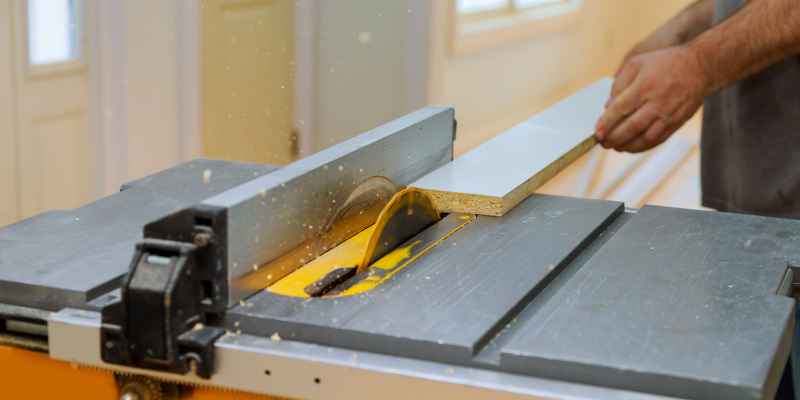
Best Replacement Blade Pick
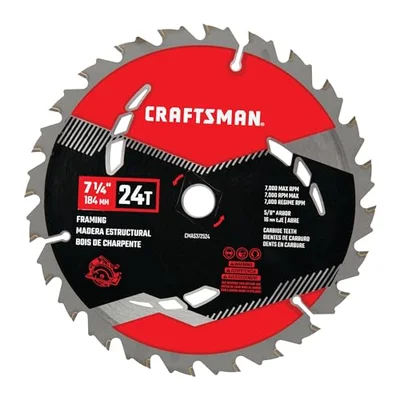
CRAFTSMAN 7-1/4" 24T Carbide Framing Blade
A general-purpose replacement blade with a clearly stamped rotation arrow, so there’s no guesswork at install time.
- Best for: everyday framing and general wood cutting
- Why we picked it: clearly marked arrow makes correct installation fast to verify
- Main drawback: 24-tooth count leaves a rougher edge than a finish blade
Round out your blade kit
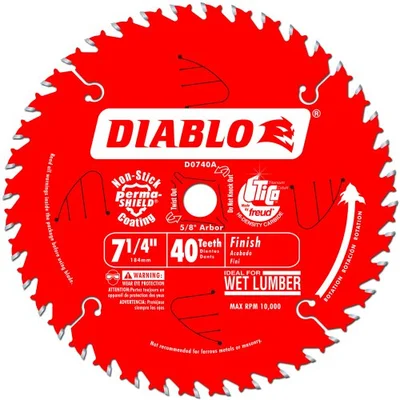 Option 1 Diablo 40T Finish Blade
|
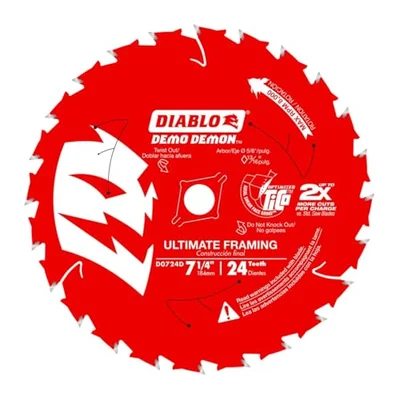 Option 2 Diablo Demo Demon Blade
|
 Option 3 Sili Blade Storage Sleeve
|
As an Amazon Associate we earn from qualifying purchases.
Tips For Using Circular Saw Blade
When using a circular saw blade, it is important to pay attention to the direction of the blade for safe and efficient cutting. Understanding the correct direction of the blade will help you achieve clean and accurate cuts in your woodworking projects.
Remember to always read the manufacturer’s instructions and follow proper safety protocols when using power tools.
Follow Safety Guidelines
Using a circular saw blade requires caution and adherence to safety guidelines to prevent accidents and injuries. It is essential to wear protective gear, including safety glasses, gloves, and ear protection, to shield yourself from flying debris and excessive noise. Ensure that the work area is clean, well-lit, and free from clutter. Keep your fingers away from the blade, and never stick your hands underneath the material you are cutting.
Maintain The Blade
Regular blade maintenance is crucial to ensure optimal performance and longevity. Before using a circular saw blade, check for any damage or dullness. If the blade is damaged or worn out, replace it immediately to avoid accidents during cutting. Cleaning the blade after each use prevents debris buildup and ensures smoother operation. Use a brush or compressed air to remove sawdust, resin, or other particles that may be stuck on the blade.
Consider The Type Of Cut
Understanding the type of cut you need is essential in choosing the right circular saw blade. Different blades are designed for specific purposes, such as rip cuts, crosscuts, or even specialty cuts like laminate or metal cutting. Consider the thickness and nature of the material you will be cutting to select the appropriate blade. Using the wrong blade can result in poor cuts, excessive heat, or even blade damage.
Practice Proper Cutting Techniques
To achieve precise and safe cuts, it is essential to practice proper cutting techniques. Maintain a steady grip on the saw and position yourself in a stable stance. Apply smooth and consistent pressure to guide the blade through the material, avoiding excessive force that could lead to kickbacks. Take your time and let the blade do the work, rather than forcing it through the material.
Choose The Appropriate Blade For The Material
Selecting the right circular saw blade for the material is crucial for achieving clean and efficient cuts. Consider the material’s density, hardness, and composition before choosing a blade. For example, a plywood cutting blade might not be suitable for cutting through metal or hardwood. Using the appropriate blade increases cutting speed and reduces strain on the saw motor. Always refer to the manufacturer’s recommendations or consult experts to ensure you have the right blade for the job.
Incorporating these tips for using circular saw blades will not only enhance your cutting experience but also ensure safety and efficient results. Remember to follow safety guidelines, maintain the blade regularly, consider the type of cut, practice proper cutting techniques, and choose the right blade for the material at hand. By doing so, you can enjoy precise and effortless cuts while preserving the integrity of your equipment.
Frequently Asked Questions
Can You Install A Circular Saw Blade Backward On Purpose?
No. There’s no legitimate technique that calls for a backward-mounted circular saw blade. Reversing it increases kickback risk, causes rough and splintered cuts, and puts extra strain on the motor from teeth attacking the material at the wrong angle.
How Do I Know Which Way A Circular Saw Blade Should Face?
Match the rotation arrow on the blade guard, near the arbor, to the directional arrow stamped on the blade itself. If the blade has no arrow, the teeth’s hook angle should point upward and forward, in the direction the blade spins.
What Are The Signs A Circular Saw Blade Is Installed Backward?
Rough or splintered cuts, unusual vibration, excess heat or smoke near the blade, the saw struggling to feed through material it normally cuts easily, and a noticeably higher risk of kickback are all signs of a backward-mounted blade.
Is It Safe To Keep Using A Saw If The Blade Was Installed Backward?
No. Stop immediately, unplug the saw or remove the battery, and correct the blade direction before cutting again. Continuing to cut with a backward blade raises the risk of kickback and can damage both the blade and the saw’s motor.
Conclusion
There’s only one correct direction for a circular saw blade — teeth pointing upward and into the cut, matching the rotation arrow on the blade guard. Checking that match every time you change a blade takes seconds and rules out the rough cuts, excess heat, and kickback risk that come with a backward install.