Birch vs Maple Hardwood: Janka Hardness & Cost Compared
Hard maple beats birch on the Janka hardness scale (1,450 vs 1,260) and holds up better under daily foot traffic, but birch costs less and finishes more evenly without extra prep. Buy the wrong one and you either overpay for hardness you do not need or refinish a birch floor early after it dents under kitchen chairs. This guide compares hardness, cost, grain, and staining — including why “soft maple” can score softer than birch despite the name.
Quick Answer
Hard maple (Janka 1,450) is harder and more scratch-resistant than birch (Janka 1,260), making it the better choice for high-traffic floors and butcher blocks. Birch costs less and finishes more evenly. Watch for “soft maple” — red and silver maple drop to 700-950 on the Janka scale, softer than birch despite the maple name.
Birch vs Maple at a Glance
Birch and maple are both pale, closed-grain hardwoods used for flooring, cabinets, and furniture, but they are not interchangeable once you factor in hardness, cost, and how each takes a finish. The table below compares them on the points that actually change a buying decision.
| Attribute | Birch | Maple | Best For |
|---|---|---|---|
| Janka Hardness | ~1,260 lbf (yellow birch) | ~1,450 lbf (hard/sugar maple) | Maple for high-traffic floors |
| Color and Grain | Pale yellow to reddish-brown, fine grain, occasional streaks | Creamy white to light red, tight uniform grain | Maple for a bright, clean look |
| Rough Lumber Cost | About $3-5 per board foot | About $6-12 per board foot (hard maple) | Birch for budget projects |
| Staining | Blotches without a pre-stain conditioner | Blotches more easily — dense, closed-pore grain | Both need conditioner or gel stain |
| Typical Uses | Plywood, cabinets, interior trim, painted furniture | Flooring, butcher blocks, cutting boards, instruments | – |
Appearance and Grain
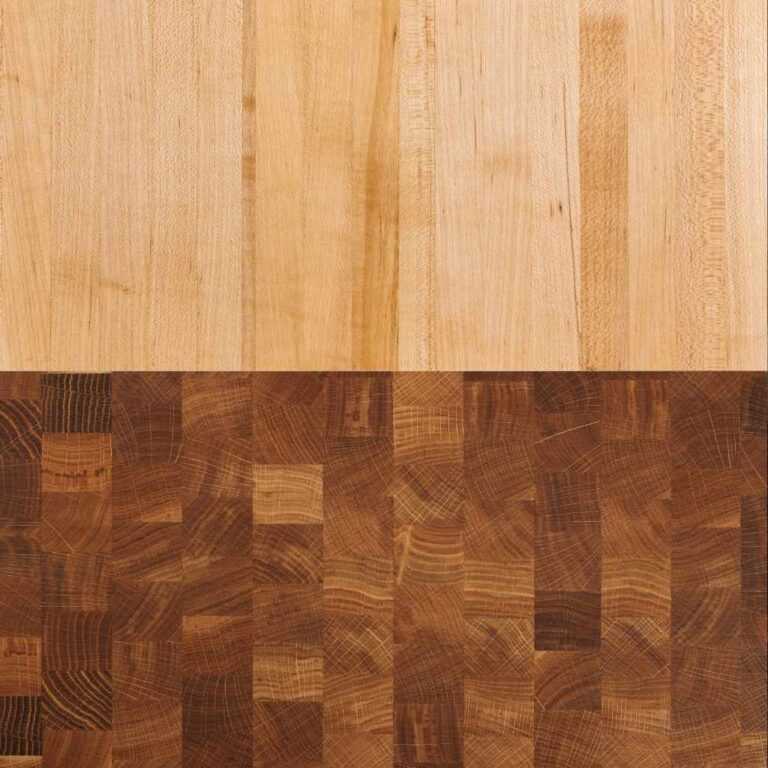
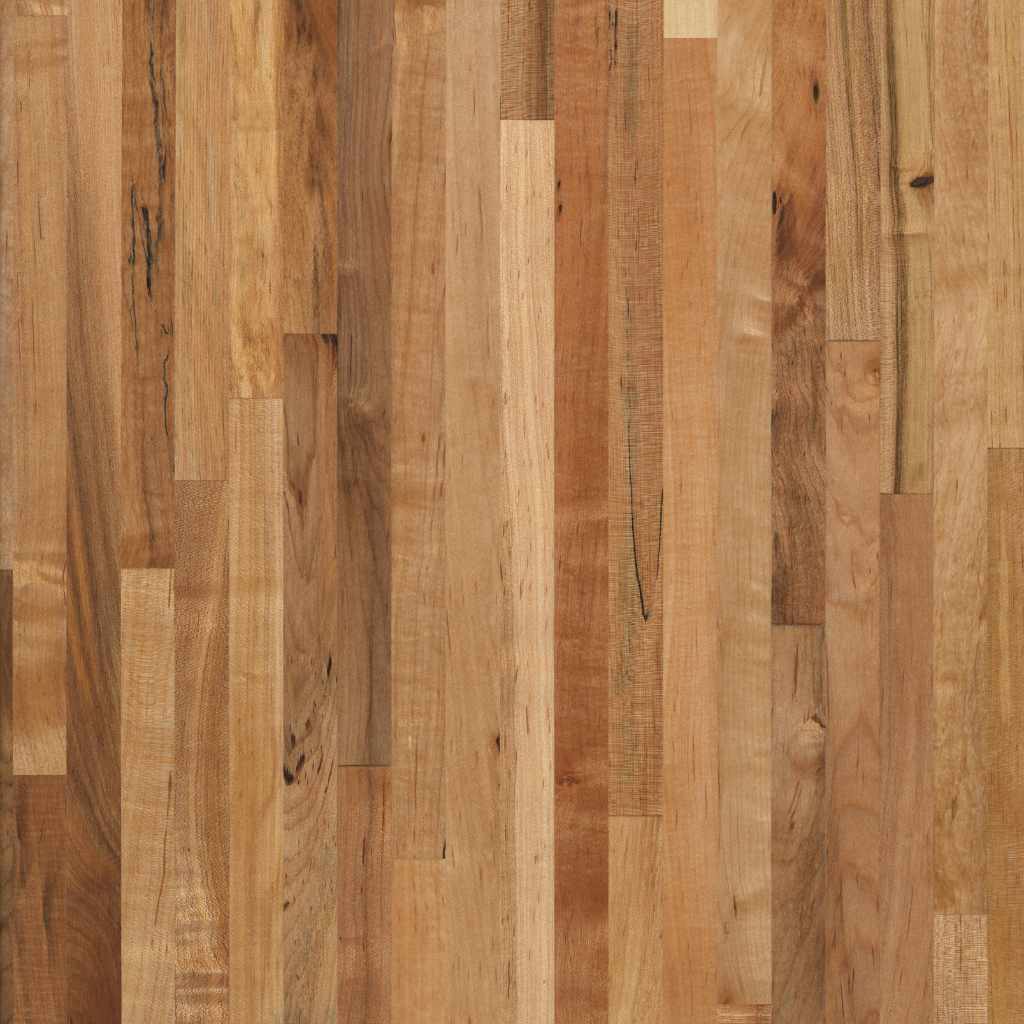
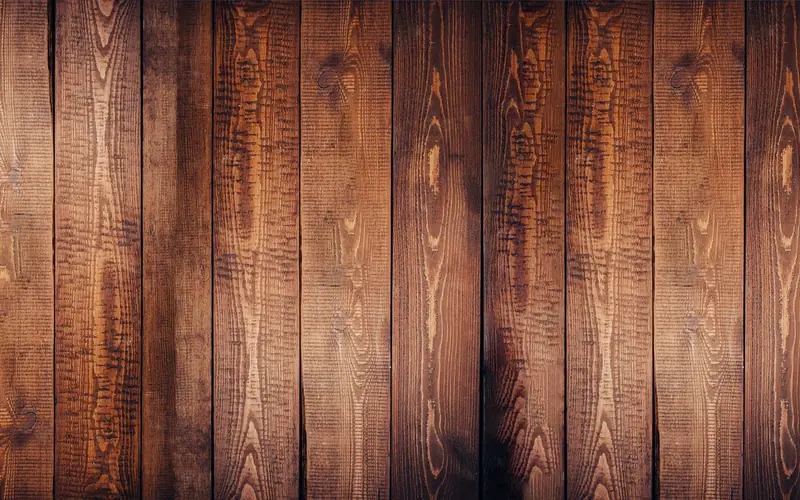
Birch runs pale yellow to white with occasional reddish-brown streaks and a fine, even grain that sometimes shows small knots. Maple leans creamy white to light red or gold, with a straighter, tighter grain that reads as more uniform. Both take a natural (unstained) clear finish well, which is why so much unstained Scandinavian- and mid-century-style furniture uses one or the other.
Specialty figured grades exist in both species — birdseye maple and curly (tiger) maple show a rippled or spotted figure prized for cutting boards, gunstocks, and instrument backs, and cost significantly more than plain-sawn lumber. Birch rarely shows this kind of figure, so if you specifically want a curly or birdseye look, maple is the only realistic option.
The Species Trap: Why “Maple” Is Not One Hardness Number
Most articles compare birch and maple as if each name means a single hardness. It does not. “Hard maple” (sugar maple and black maple) scores 1,180-1,450 on the Janka scale. “Soft maple” — red maple, silver maple, and box elder, all sold generically as “maple” at many lumberyards and home centers — scores only 700-950. That is softer than yellow birch (1,260) and, in the case of box elder, softer than paper birch (910) too.
| Species | Janka Hardness (lbf) |
|---|---|
| Sweet Birch | 1,470 |
| Hard (Sugar) Maple | 1,450 |
| Yellow Birch | 1,260 |
| Black Maple | 1,180 |
| Red (Soft) Maple | 950 |
| Paper Birch | 910 |
| Silver / Bigleaf Maple | 800 |
| Box Elder (Soft Maple) | 700 |
Birch has the same trap in reverse: sweet birch actually scores 1,470, edging out even hard maple, while paper (white) birch drops to 910 — softer than red maple. In the shop, I treat every board sold simply as “maple” as soft maple until the grading stamp or receipt says otherwise, because home centers rarely distinguish and a board that dents under a coffee mug is not hard maple no matter what the sign says.
Hardness and Durability in Real Use
That roughly 200-point Janka gap between yellow birch and hard maple is a big reason maple holds up slightly better under years of heavy foot traffic, and why hard maple has long been the standard for bowling alley lanes and basketball courts — surfaces that need both hardness and shock absorption. Birch is still a genuine hardwood and holds up fine under normal household use; it just shows dents and wear a bit sooner in high-traffic spots like an entryway or a kitchen work triangle.
Neither wood is rated for exterior or high-moisture use without a protective finish and regular maintenance — both belong indoors, on furniture, flooring, cabinets, and millwork, not on an uncovered deck or fence.
Cost and Availability
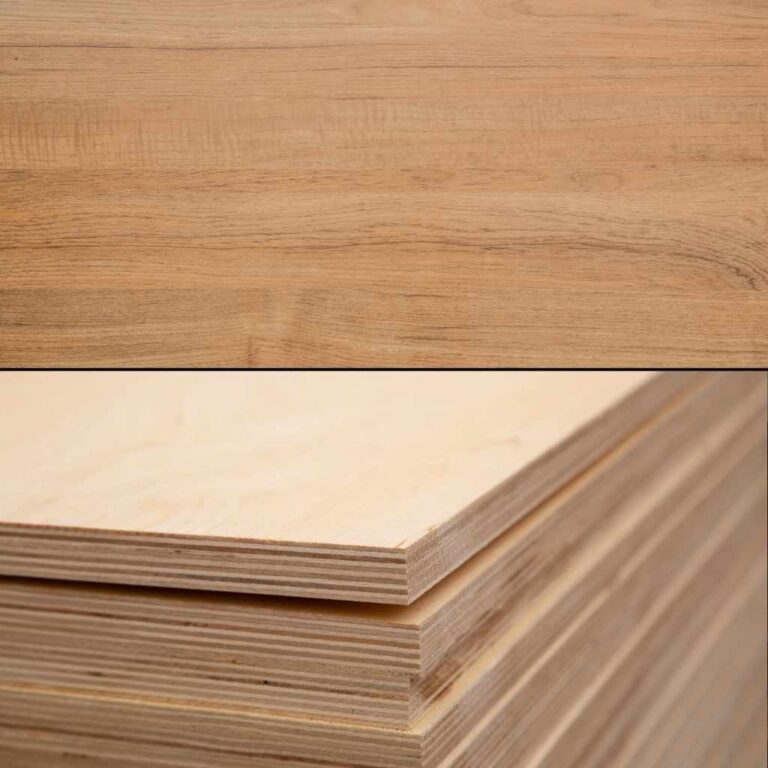
Rough birch lumber typically runs about $3-5 per board foot, while hard maple often runs $6-12 per board foot depending on grade and figure — premium figured boards (birdseye, curly) can run well past that. The gap holds in sheet goods too: birch plywood is the industry-standard affordable option for cabinet boxes and shop projects, while maple plywood costs more for a harder, more even face veneer. Prices swing 20-30% by region, so treat these as a starting point for comparing quotes, not a fixed price.
How to Stain Birch and Maple Without Blotching
Both woods have tight, closed-pore grain that soaks up penetrating stain unevenly, leaving dark blotches wherever the grain runs slightly differently. The fix is the same four-step prep for either species:
- Sand progressively to 220-grit: Work up through the grits on bare wood and stop at 220-grit. Stopping at a coarser grit leaves scratches that show through the stain unevenly on both birch and maple.
- Apply a pre-stain wood conditioner: Brush on a water-based or oil-based conditioner that matches your stain type, then let it penetrate 5 to 15 minutes before wiping off the excess with a clean rag.
- Apply stain within the recommended window: Wipe on stain within about 2 hours of conditioning — most conditioners lose their effect after that. If you are staining more than a day later, use a gel stain instead.
- Test on an offcut first: Always test the conditioner-plus-stain combination on a scrap piece from the same board. Birch and maple can vary color noticeably even within a single plank.
If you would rather skip conditioning altogether, a gel stain sits on the surface instead of soaking into the grain, which sidesteps the blotching problem entirely — useful on maple’s especially dense, closed grain. See our full guide to finishing maple for grit-by-grit detail.
Best Wood Conditioner Pick
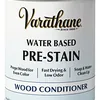
Varathane Pre-Stain Wood Conditioner
Water-based pre-stain conditioner that prevents blotchy color on bare birch or maple before staining.
- Best for: Preventing blotchy stain on bare birch or maple before an oil- or water-based stain
- Why we picked it: Dries in about 30 minutes so you can stain the same day, and it’s the product most cited for birch/maple blotch control
- Main drawback: Only works within the same-day window — wait too long after applying and the conditioner stops helping
Compare more wood conditioner and stain options
 Option 1 General Finishes Oil-Based Pre-Stain Wood Conditioner
|
 Option 2 Minwax Gel Stain, Interior Wood, Quart
|
 Option 3 Furniture Clinic Water-Based Pre-Stain Wood Conditioner
|
As an Amazon Associate we earn from qualifying purchases.
Best Uses for Birch vs Maple
Birch fits plywood, cabinet boxes, interior trim, toys, and painted furniture — anywhere its lower cost and easy machining matter more than top-end hardness. Maple fits flooring, butcher blocks, cutting boards, workbench tops, and musical instrument necks and bodies, where its density and shock resistance earn the higher price. For stain-grade furniture where color consistency matters most, birch conditioned properly can actually finish more predictably than hard maple’s denser grain.
Frequently Asked Questions
Is birch or maple better for flooring?
Maple is generally the better flooring choice because hard maple scores about 1,450 on the Janka hardness scale versus roughly 1,260 for birch, so it resists dents and wear better in high-traffic rooms. Birch still works well in bedrooms or low-traffic spaces where its lower cost and warmer tone are a better fit.
Is all maple harder than birch?
No. That is true only for hard maple (sugar maple), which scores around 1,450 on the Janka scale. Soft maple species like red and silver maple measure just 700 to 950, which is softer than yellow birch (1,260) and even paper birch (910) in some cases. Always check whether a board is labeled hard maple or soft maple before assuming it is the tougher wood.
Is birch cheaper than maple?
Yes, in most markets. Rough birch lumber typically runs about $3 to $5 per board foot, while hard maple often costs $6 to $12 per board foot depending on grade. Birch plywood is also the standard affordable option for cabinet boxes, while maple plywood commands a premium for its harder, more even face veneer.
Do birch and maple need a pre-stain conditioner?
Yes, both blotch without one. Their tight, diffuse-porous grain absorbs stain unevenly, so pockets of softer grain soak up more pigment than the surrounding wood. A water- or oil-based pre-stain conditioner, or a gel stain instead of a penetrating stain, evens out the color on both species.
Is maple good for cutting boards?
Yes — hard maple is one of the top choices for cutting boards because its closed, tight grain resists knife scarring and holds up to repeated washing better than open-grained woods. Birch works as a budget cutting board option too, though it is slightly softer and shows knife marks a bit sooner.
Conclusion
Pick hard maple when hardness matters most — flooring, butcher blocks, anything that takes daily impact — and confirm it is actually hard (sugar) maple rather than a softer red or silver maple sold under the same generic label. Pick birch when budget and easy machining matter more than the last 200 Janka points, and plan on a pre-stain conditioner or gel stain either way to avoid blotching. Check our full birch wood guide hub for species-specific deep dives on hardness, plywood grades, and more comparisons.