Why Is My Nail Drill Not Spinning? Fix It in 4 Steps
Most of the time a nail drill that won’t spin comes down to one of four things: a bit that isn’t seated and locked in the collet, a dead or loose power connection, a worn-out carbon brush on an older corded motor, or dust and acrylic/gel debris jammed inside the housing. Work through them in that order — it’s fastest to slowest to check.
Check the Bit and Collet First
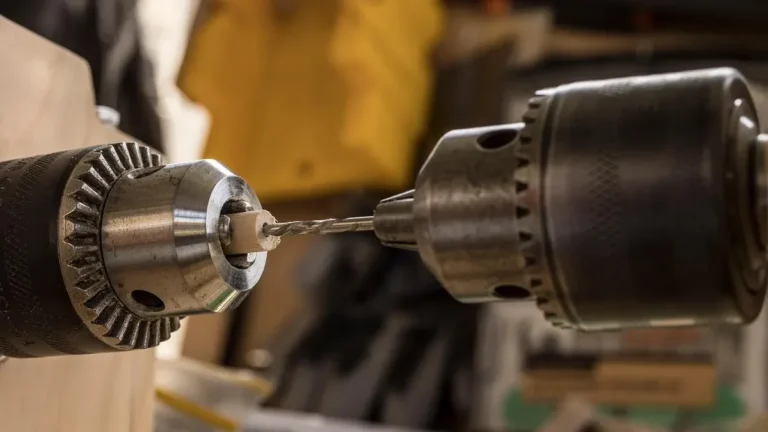
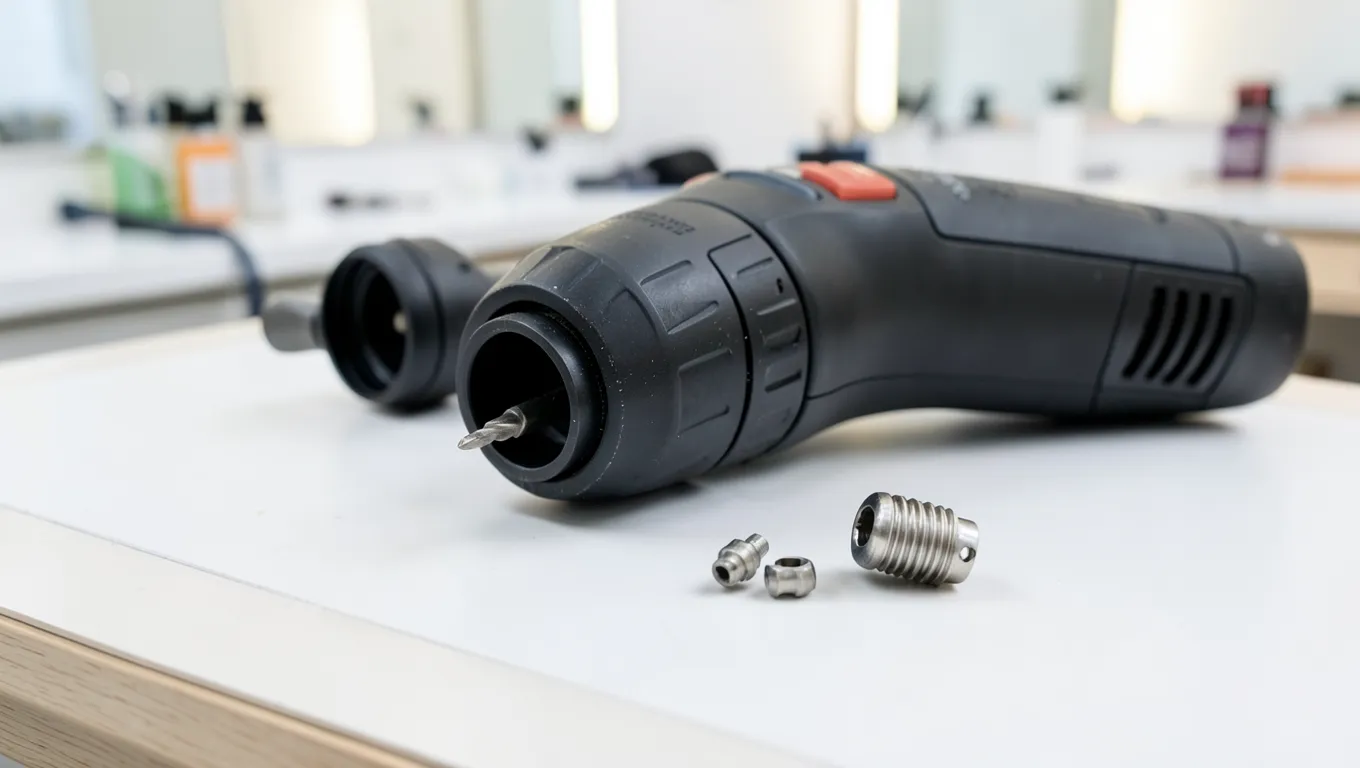
This is the single most common cause and the easiest to fix. The collet (the small chuck that grips the bit) has to fully clamp around the bit shaft for the motor to transfer any spin to it. If the bit isn’t pushed in all the way, or the collet nut/sleeve isn’t tightened, the motor can run while the bit itself stays still or just wobbles. Remove the bit, check it for a bent or damaged shaft, reinsert it fully, and tighten the collet according to your model (most e-files use a twist-lock collet, some corded units use a chuck key). If it spins freely with no bit inserted but won’t turn a bit, the collet is almost always the problem.
Test Power Before You Assume the Motor Is Dead
Corded units: check the outlet with a different device, inspect the cord for cuts or fraying, and confirm the plug is fully seated. Cordless/rechargeable units: check that it’s actually charged (a battery that reads “charging” on the light but never finishes is often a bad charging port or a battery nearing end of life), and check the charging contacts for gunk or gel residue — a common problem on units used daily in a salon setting.
If your unit has a foot pedal, that’s a separate failure point: the pedal is a variable-speed rheostat, and it can fail independently of the motor. Try the drill’s on-body speed control (if it has one) without the pedal plugged in, or swap in a known-working pedal if you have access to one, before assuming the motor itself failed.
Replace It If the Motor’s Actually Gone
Best Replacement Nail Drill
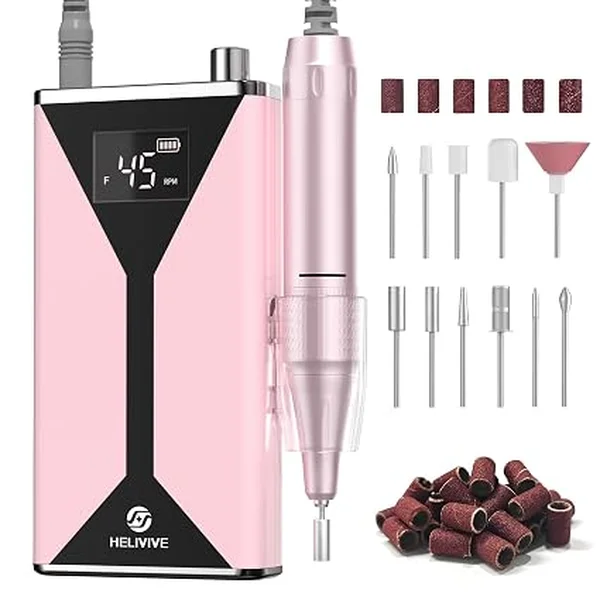 |
HELIVIVE Professional Electric Nail Drill, 45000 RPM – $28.89 If your old unit’s motor or brushes are actually shot, a full replacement at this price is often cheaper than parts and repair labor.
|
If you hear grinding, rattling, or smell something burning, that’s internal damage — either worn carbon brushes (on older brushed-motor corded units, these are a wear item and are sometimes user-replaceable) or a failed motor winding, which isn’t economical to repair on a consumer-grade unit. A burning smell in particular means stop using it immediately rather than troubleshooting further; that’s a fire and burn hazard, not just a performance issue.
Clean Out Dust and Debris
Acrylic and gel dust is fine and gets everywhere, and it’s genuinely one of the more common reasons a drill slows down or seizes over time, especially around the collet and any ventilation slots on the housing. Remove the bit, brush out the collet opening with a small stiff brush, and use a can of compressed air on the vent slots (unplug/power off first). Do this after every few uses if you’re doing acrylics regularly — it’s the single easiest thing you can do to prevent this whole problem in the first place.
Quick Diagnostic Table
| Symptom | Most Likely Cause |
| Motor runs (you can hear/feel it) but bit doesn’t turn | Bit not seated, or collet not tightened |
| Nothing happens at all, no sound | Power/battery/cord/outlet, or a failed switch |
| Runs then suddenly stops mid-use | Overheating shutoff, or debris jam |
| Spins slower than it used to | Worn motor brushes, low battery, or debris buildup |
| Grinding noise, burning smell | Internal motor/bearing damage — stop using it |
| Foot pedal doesn’t respond | Pedal (rheostat) failure, separate from the motor |
Frequently Asked Questions
Why is my nail drill not spinning?
The most common causes are a bit that isn’t fully seated or tightened in the collet, a power problem (dead battery, bad cord, faulty outlet), worn motor brushes on an older corded unit, or debris jammed inside the housing.
How can I fix a stuck nail drill?
Remove the bit and check the collet for debris or damage, clean out any acrylic/gel dust with a brush and compressed air, and reinsert the bit fully before tightening. If it still won’t turn, test the power source next.
What causes nail drill overheating?
Extended continuous use without breaks, a clogged vent restricting airflow to the motor, or using too high a speed setting for the task all cause overheating. Let it cool fully before using it again, and clean the vents.
Why does my nail drill slow down?
A slowing drill usually means a low or aging battery, worn motor brushes on a corded unit, or debris buildup creating friction inside the housing. Clean it first, then check the battery or brushes if cleaning doesn’t help.
Bottom Line
Check the bit and collet first — it’s the fix more often than not. If that’s not it, work through power, then debris, then the motor itself. A burning smell or grinding noise means stop and replace rather than keep troubleshooting.
Editor’s note: this page addresses electric nail drills used for manicures and pedicures, not woodworking rotary tools — we’re keeping it live and useful for readers who land here searching this exact question.
Sponsored / affiliate links. As an Amazon Associate I earn from qualifying purchases. I may earn additional commission from eligible campaigns.