Why Is My Wood Stain Still Tacky? 6 Causes + the Fix
Wood stain stays tacky when pigment and binder sit on the surface instead of soaking in, so the fix is to wipe it off with the right solvent, not to wait. Maker wipe-off windows are short: 2-3 minutes for Varathane water-based, 5-10 for Varathane fast-dry oil, up to 5 for darker Sherwin-Williams colors. This guide covers six causes, the wipe-off fix, and what changes on teak, pine and deck stain.
Causes of Tacky Wood Stain: What’s Actually Happening
Best Tacky-Stain Wipe-Off Pick
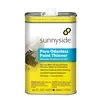 |
Sunnyside Pure Odorless Paint Thinner (Mineral Spirits), 1 Quart: $10.29 Step 3 below wipes the surface with a cloth dampened with mineral spirits, the fix Minwax’s own FAQ gives for tacky oil-based stain.
|
As an Amazon Associate we earn from qualifying purchases.
A penetrating stain is meant to soak in while you wipe the rest away. Whatever pigment and binder is left standing on the surface is what stays sticky. Varathane’s data sheet for its Premium Fast Dry stain (VAR-09) calls removal of all excess essential for proper dry time and for topcoat adhesion, and the Minwax FAQ lists unwiped excess as the first thing to check on a tacky stain. These are the six causes, with what each maker’s paperwork says about it.
| Cause | What the makers say | How to spot it |
|---|---|---|
| 1. Excess stain left on the surface | VAR-09 and Minwax: all excess must come off, wiping with the grain | Glossy, wet-looking patches; tacky in corners, low spots and where you stopped wiping |
| 2. Waited too long to wipe | Varathane water-based (VAR-89): wipe after 2-3 minutes and do not let it dry first. VAR-09: 5-10 minutes. Sherwin-Williams: up to 5 minutes for darker color | Lap marks and sticky streaks where one section sat while you worked on the next |
| 3. Cold or damp air | Varathane oil: 60-90°F, humidity under 85%. Varathane water-based: not below 55°F. Sherwin-Williams: above 50°F, humidity under 85% | Surface feels cool and slightly damp; garage, basement or fall weather |
| 4. Oily or resinous wood | Flexner (Popular Woodworking): resins in teak, rosewood, cocobolo and ebony keep oil finishes from crosslinking | Tacky only on certain boards, or around knots |
| 5. Topcoat or second coat too soon | Minwax: do not topcoat until the stain is no longer tacky and has dried at least as long as the label says | Gummy or dull clear coat; fingerprints stay in the finish |
| 6. Thinned, contaminated or old stain | VAR-09 says do not dilute, Sherwin-Williams says do not reduce, Behr says do not thin. Unopened shelf life is 3 years (Varathane) and 2 years (Behr) | Stain stays soft however carefully you wipe |
If your stain has not set after a few days and you are also seeing wet spots or layering problems, the broader diagnosis is in our guide on why a stain is not drying. This page is about the sticky, tacky surface itself and how to remove it.
How to Fix Tacky Stain on Wood: Step-by-Step
Fire safety before you wipe
The Minwax Wood Finish label warns that rags, steel wool and other waste soaked with the product may spontaneously catch fire if discarded improperly, and tells you to place them immediately in a sealed, water-filled metal container. The Varathane VAR-09 and Sherwin-Williams Wood Classics sheets carry the same warning, so wet rags never go in a pile or a trash bag. The Klean-Strip mineral spirits safety data sheet classes the solvent as a flammable liquid and calls for open windows, doors and cross ventilation.
- Stop adding anything. No second coat and no clear finish. Minwax says to wait until the stain is no longer tacky and has dried at least as long as the label recommends before topcoating.
- Read the can. Oil-based stain cleans up with mineral spirits; water-based stain, such as Varathane Classic Water Based, cleans up with soap and water.
- Oil-based stain: scrub with mineral spirits. Dampen a clean cloth with mineral spirits and scrub the piece down with the grain. This is the fix Minwax gives for tacky stain. Wet a section with one rag and dry it with a second, a method Bob Flexner describes in Popular Woodworking, so dissolved stain is lifted off instead of smeared back in. Turn to a clean part of the rag often.
- Water-based stain: wipe with soapy water. No maker sheet I read gives a tacky-fix for water-based stain. The VAR-89 sheet specifies soap and water for clean-up, so use a cloth dampened with water and a few drops of dish soap, then a plain damp cloth, then a dry one, while the stain is still uncured.
- Fix the room. Bring the space into the label range (60-90°F for VAR-09, not below 55°F for VAR-89, above 50°F for Sherwin-Williams) and keep air moving; VAR-09 asks for adequate ventilation at all times and more time at cooler temperatures.
- Give it the label time, then test a low-profile spot. Numbers for each stain type are in our oil-based vs water-based stain comparison.
- Still tacky? Strip and restart. Flexner notes that oil or varnish that never dried usually strips easily with naphtha or lacquer thinner. Then sand to bare wood the way the VAR-09 sheet lays out (#120, then #150, #180 and #220), and follow our how to restain wood steps with one thin coat wiped inside the window.
Will Tacky Stain Eventually Dry?
Sometimes, but only if what is left is a thin film. Earlier versions of this page said stain still tacky at 12 hours never dries. No data sheet I read says that, so that cutoff is gone. What the sheets do give is a full-cure time: 24 hours for Varathane Premium Fast Dry, 48 hours for Varathane Classic Water Based, 24 to 48 hours for Minwax Gel Stain and 72 hours for Behr’s semi-transparent deck stain, all at about 70-77°F and 50% humidity.
So the honest rule is to wait out your product’s full-cure window at proper temperature before judging it. If it is still tacky after that, the problem is a thick surface layer or a resin issue, and none of the sources I read say time alone fixes either one. They all prescribe removing the stain. Once it is truly dry and hard, our guide on when it is safe to seal wood after staining covers the topcoat step.
Gel Stain Still Tacky: What to Do
Gel stain is applied liberally and sits closer to the surface, so it is easy to leave too much behind. Minwax Gel Stain’s data sheet says to apply a liberal amount, wait 3 minutes, wipe the excess off with a clean rag along the grain, and allow 8 to 10 hours to dry. Stir it until the texture is creamy rather than shaking it. Unlike a penetrating stain, gel that is skipped in the wiping step has nowhere to go.
- Wait the full 8 to 10 hours at room temperature before deciding it is a problem.
- Scrub with a cloth dampened with mineral spirits, the same Minwax FAQ fix used for other oil-based stains, working with the grain and changing to clean rag often.
- If it will not lift, strip and sand to bare wood and reapply, wiping at 3 minutes. Our comparison of gel stain vs oil stain explains why gel behaves differently.
Oily and Resinous Woods: Teak, Rosewood and Pine Pitch
This is the cause most guides skip. Bob Flexner, writing in Popular Woodworking, names teak, rosewood, cocobolo and ebony as woods whose natural resins mix into a wet oil or varnish finish and keep its molecules apart so they cannot crosslink. The stain stays soft because it chemically cannot harden, which is why wiping harder does not always help.
- Before staining: wipe the bare wood with acetone, naphtha or mineral spirits. Acetone is the most effective at removing the oily resin but can lift color and smear it when several species are in one project. Naphtha and mineral spirits do not smear color but remove less resin. Wet the wood with one rag, then dry it with another.
- After a failure: strip the uncured stain with naphtha or lacquer thinner and start over after the wood has been wiped.
- Pine knots and pitch pockets: resinous spots in softwood are the likely cause when tackiness is limited to one patch. I did not find a maker data sheet that covers this, so treat it as a diagnosis to test, not a rule: wipe the spot with mineral spirits and see if the stain behaves.
Cold, Humid or Damp Conditions: What the Labels Actually Allow
You will see “keep humidity under 70%” repeated online. I did not find that figure on any label I read. The two oil-stain sheets that give a ceiling set it at 85%, but their dry times are measured at 50% humidity, so a day at 75-80% is inside the limit and still slower than the label. Varathane says outright to allow longer dry times on damp, humid days. Minwax says temperatures below the mid-70s°F can lengthen dry times and calls humidity the number one cause of that.
| Product (data sheet) | Wipe-off window | Application limits |
|---|---|---|
| Minwax Wood Finish (oil-based, rev 9/1/2026) | Wipe excess; the longer you wait the darker. FAQ: up to 15 minutes for darker color, never past the label time | Interior only. Times quoted at 77°F and 50% humidity; below the mid-70s°F dries slower |
| Varathane Premium Fast Dry (VAR-09, oil-based) | 5-10 minutes | 60-90°F, humidity under 85% |
| Varathane Classic Water Based (VAR-89) | 2-3 minutes, do not let it dry first | Not below 55°F; times quoted at 77°F and 50% humidity |
| Sherwin-Williams Wood Classics Interior Oil Stain 250 | Wipe quickly for light color; up to 5 minutes for darker | Above 50°F, humidity under 85% |
| Minwax Gel Stain | Wait 3 minutes, then wipe | Dries 8-10 hours |
| Behr Premium Semi-Transparent Waterproofing Stain and Sealer (No. 5077) | Work small sections and back-brush to remove puddles and excess | 35-90°F; avoid direct sun and hot surfaces |
Notice how little overlap there is: a 10-minute wipe that suits VAR-09 is far too long for water-based VAR-89, which is a common reason stain turns tacky after switching products.
Advanced Tips: Behr Deck Stain and Oil-Based Stains
Behr deck stain tacky on day 2 is usually a timing and thickness question. The Behr Premium Semi-Transparent Waterproofing Stain and Sealer (No. 5077) data sheet gives 1-2 hours to recoat, 24-48 hours for light foot traffic and 72 hours to full cure at 77°F and 50% humidity. A shaded, cool or damp deck will run behind those numbers. The same sheet says to avoid direct sunlight and hot surfaces, to back-brush or pad out puddles and excess, and warns that over-application leads to surface failure.
The product is a water-cleanup acrylic, so the mineral spirits fix above is for oil-based stains, not for this one. Behr’s sheet gives no tacky-surface fix and lists a support line (1-800-854-0133 ext. 2). The practical move is to check the thick spots, deck board gaps and end grain first, since those are where excess collects, and to compare your timeline with the 72-hour full-cure figure. Our Behr vs Cabot deck stain comparison covers how the two brands differ.
How to Prevent Tacky Stain Next Time
- Set a timer from your can, not from habit. The wipe-off windows range from 2-3 minutes to 10, so use the table above.
- Stain and wipe one section at a time so no area sits past its window while you work on another.
- Check temperature and humidity first. Use the label range for your product, and plan for longer when it is cool or damp.
- Never thin or dilute the stain. VAR-09, Sherwin-Williams and Behr all say not to.
- Pre-wipe oily woods with acetone, naphtha or mineral spirits.
- Wait before the clear coat. Follow the label time and see our after-staining finishing guide for what comes next.
- Put stain rags in a sealed, water-filled metal container the moment you finish.
Frequently Asked Questions
Why Is My Stain Still Tacky?
Most often because excess stain was left on the surface. Varathane’s data sheet calls removing all excess essential for proper dry time, and Minwax’s FAQ gives unwiped excess as the first thing to check. Cold or humid air, oily wood, a topcoat applied too soon, or thinned stain are the other usual causes.
How Can I Fix A Tacky Stain?
For oil-based stain, scrub the surface with a cloth dampened with mineral spirits, as the Minwax FAQ describes, working with the grain and swapping to a clean section of rag often. Let the wood dry at label temperatures with air moving. If it stays tacky, strip the uncured finish with naphtha or lacquer thinner, sand to bare wood, and restain in thin coats.
Will Tacky Stain Eventually Dry?
Sometimes, but only a thin film. Makers quote full cure at 24 hours for Varathane fast-dry oil stain and 48 hours for Varathane water-based stain at room temperature, so judge after that window. A thick surface layer, or stain on oily wood, will not reliably resolve by waiting, and the sources I read all prescribe removing it.
What Causes Stain To Remain Sticky?
Excess left on the wood, waiting too long to wipe (2-3 minutes for Varathane water-based, 5-10 for Varathane fast-dry oil, up to 5 for darker Sherwin-Williams colors), cold or damp conditions, oily or resinous wood, topcoating too soon, and thinned or degraded stain.
Can Humidity Affect Stain Drying?
Yes. Varathane and Sherwin-Williams both set a ceiling of 85% relative humidity, and their quoted dry times are measured at 50% humidity. Varathane tells you to allow longer dry times on damp, humid days, so a 75-80% day will take longer than the label even though it is under the limit.
Why Is My Stain Tacky On Teak Or Other Oily Wood?
Teak, rosewood, cocobolo and ebony contain natural resins that mix into the wet finish and keep it from crosslinking, according to Popular Woodworking’s Bob Flexner. Wipe the bare wood with acetone, naphtha or mineral spirits before staining, and strip the stain with naphtha or lacquer thinner if it has already stayed soft.
What Should I Do With The Rags After Wiping Tacky Stain?
Put them straight into a sealed metal container filled with water. The Minwax, Varathane and Sherwin-Williams labels all warn that rags soaked with oil-based stain can spontaneously catch fire if left in a pile or thrown away dry.
Sponsored / affiliate links. As an Amazon Associate I earn from qualifying purchases. I may earn additional commission from eligible campaigns.