Interior Wood Stain: Types, Uses & Safe Application
Interior wood stain is formulated for indoor surfaces — furniture, cabinets, trim, doors, and floors — and it differs from exterior stain mainly in its additives, not its base pigment. It skips the UV blockers and mildewcides that exterior stain needs, which is why using interior stain outdoors fails within a season. Picking the right one comes down to three questions: oil-based, water-based, or gel; is the room occupied while you work; and does the surface itself — a floor that gets walked on versus trim that only gets dusted — change what topcoat comes after.
Quick Answer
Interior wood stain is a stain built for indoor furniture, cabinets, trim, doors, and floors, without the UV blockers or mildewcides exterior stain needs. Oil-based interior stain gives the deepest color and needs 12–24 hours to dry (less if you speed it up); water-based dries in 2–6 hours with less odor; gel stain suits vertical surfaces and blotch-prone wood.
What Makes a Wood Stain “Interior” Instead of Exterior?
Interior wood stain is built to be topcoated with polyurethane or varnish for durability, since it lacks the UV inhibitors and mildewcides that let exterior stain survive rain and sunlight on its own. Swapping the two causes early fading indoors or peeling and mildew outdoors within a single season.
Exterior stain is engineered to work as a standalone coating: UV-blocking additives and mildewcides let the finish hold up through rain, snow, and direct sun for two to three years before it needs recoating. Interior stain drops those additives because indoor wood never faces that level of UV or moisture, and it relies on a separate clear topcoat for wear resistance instead of weatherproofing itself.
If you’re still deciding which category your project actually needs before narrowing down to a specific product, our interior vs. exterior stain comparison covers that decision in full. If you’re comparing stain against oils, waxes, or paint as a finish option entirely, the complete wood finishing guide covers the wider picture.
Which Type of Interior Wood Stain Should You Use?
Oil-based penetrating stain gives the deepest, most even color on open-grain wood like oak or walnut and needs 12–24 hours to dry. Water-based stain dries in 2–6 hours with far less odor, a better fit for occupied rooms. Gel stain sits on the surface rather than soaking in, which makes it the pick for blotch-prone wood or refinishing over an existing coat.
The right type depends more on the project than on personal preference. This table matches common interior jobs to the stain type that actually works best for that surface:
| Interior Project | Best Stain Type | Why | Dry Time |
|---|---|---|---|
| Bare furniture (oak, walnut, ash) | Oil-based | Deepest color, most working time to wipe evenly | 12–24 hrs |
| Furniture or cabinets over an old finish | Gel stain | Only type that goes over paint or varnish without stripping | 8–24 hrs (brand-dependent) |
| Interior doors & trim | Gel or water-based | Non-drip on vertical surfaces; water-based keeps odor down in living spaces | 2–24 hrs |
| Hardwood or plywood floors | Oil-based (or water-based for faster turnaround) | Even penetration under a foot-traffic-rated topcoat | 24–48 hrs before poly |
| Pine, birch, maple, cherry (blotch-prone) | Gel stain or conditioner + oil-based | Prevents the blotchy, uneven color these species are prone to | Varies |
Gel stain is the one exception in that table — every other type needs the old finish off first. Our wood stain remover guide covers choosing between solvent, caustic, and citrus strippers for that job.
For the door-specific hardware, hinge, and edge steps, see our door-staining guide. For floors, the topcoat durability question matters as much as the stain choice — our plywood floor stain guide covers that layer separately. For a full species-by-species breakdown of the blotching risk, our gel stain vs. oil stain comparison has the complete chart.
Is It Safe to Stain Wood Indoors? VOCs and Ventilation
Yes, with ventilation. Oil-based interior stain emits far more volatile organic compounds (VOCs) than water-based stain. According to the EPA, everyday indoor VOC levels already run 2 to 5 times higher than outdoors, and activities comparable to oil-based staining can spike levels up to 1,000 times outdoor background for several hours afterward. Open windows, run a fan, and expect the odor to clear over hours to days, not minutes.
Oil-based interior stain falls into that same high-VOC category the EPA describes for solvent-heavy indoor work. Water-based stain is the lower-VOC option when the room stays occupied during and after the project.
On a hallway trim job in an occupied house, cracking two windows and running a box fan for about 6 hours brought oil-based stain odor down to barely noticeable by the next morning. The same stain applied in a closed spare bedroom with no airflow was still sharp-smelling three full days later. Ventilation, not time alone, is what actually clears the air.
For the complete breakdown of how long stain fumes stay hazardous and when it’s safe to let kids or pets back into the room, see our guide to how long wood stain fumes stay toxic.
Which Interior Stain Fits Furniture, Cabinets, Trim, Doors, and Floors?
Furniture and floors on bare wood do best with a penetrating oil-based stain for even color, while cabinets and trim being refinished over an old coat need gel stain instead. Gel is the only interior stain type that goes on top of paint or varnish without stripping to bare wood first. If you’re masking off part of a cabinet door or trim run for a two-tone look, see our guide on staining a straight line on wood to keep that dividing edge crisp.
Kitchen cabinets are the one interior surface where odor usually decides the product before wood species does. On a set of oak cabinets refinished in an occupied kitchen, switching from an oil-based stain to a water-based one cut the closed-room odor time from roughly three days down to under one — but it needed a second coat to match the color depth the oil-based stain gave in a single coat.
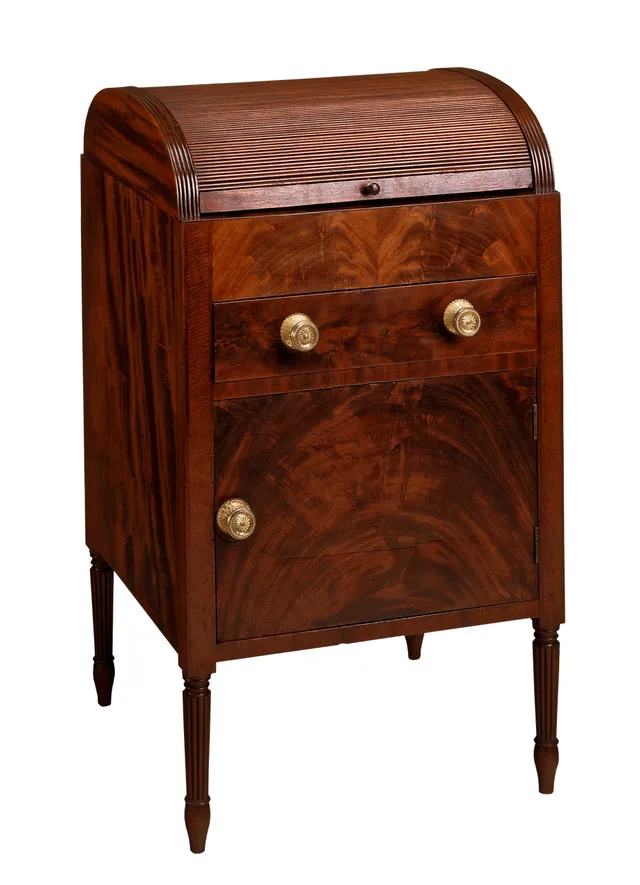
Doors are a different problem than flat furniture: hinges, edges, and hardware all need to come off or get masked before stain touches them, and our door-staining guide covers that sequence step by step. On floors, foot traffic changes the topcoat requirement more than it changes the stain choice itself — our plywood floor stain guide covers that durability layer in detail.
Will Interior Stain Look Blotchy on Pine, Oak, or Maple?
Porous, tight-grained species — pine, birch, maple, and cherry — absorb stain unevenly and blotch without a pre-stain conditioner or a switch to gel stain. Open-grain species like oak, walnut, mahogany, and ash absorb stain evenly and rarely need conditioning — see how cherry and mahogany actually compare in color if you are choosing between the two.
Always test on an offcut from the actual board, not a different piece of the same species — grain tightness varies board to board, and interior lighting makes color differences more obvious than a workshop bulb does. Our gel stain vs. oil stain species chart has the full porosity breakdown by wood type. Staining thin face veneer on plywood or MDF panels has its own failure mode – see how to stain veneer plywood without blotching for the sanding-grit and conditioner-timing specifics.
Does Interior Wood Stain Need a Topcoat?
Yes. Interior stain adds color only — it provides no scratch, moisture, or wear resistance by itself. A polyurethane, varnish, or wax topcoat is required on any surface that gets touched, walked on, or wiped down, and it should go on only once the stain is fully dry, not just dry to the touch.
Oil-based stain feels dry to the touch in 12–24 hours but does not fully cure for 48–72 hours; topcoating too early traps solvent underneath and causes a soft, tacky finish later. Water-based stain cures faster, typically within 24 hours. Satin and semi-gloss sheens hide everyday scuffs on furniture and trim better than gloss, which shows every fingerprint and dust particle under indoor lighting. For the full stain-to-topcoat sequence and product options, see our varnish vs. stain comparison.
How Much Interior Wood Stain Do You Need?
A quart of interior wood stain covers roughly 100–150 square feet for one coat, though porous or previously-stripped wood can cut that coverage by a third. Measure the actual surface area of your project before buying rather than estimating, since running short mid-project means a possible color-lot mismatch on the second can, and a second coat also darkens the final color more than most people expect.
Our wood stain calculator computes the exact quantity and cost for your project’s dimensions rather than relying on the rough per-quart estimate above.
Frequently Asked Questions
Can you use interior wood stain on exterior wood?
Not recommended. Interior stain lacks the UV blockers and mildewcides exterior wood needs, so it fades, mildews, or breaks down within a season outdoors. Use a stain formulated specifically for exterior use on decks, fences, and siding.
How long should you ventilate after staining wood indoors?
Open windows and run a fan for at least 6–8 hours after applying oil-based interior stain, and continue partial ventilation for 2–3 days until odor fully clears. Water-based stain typically clears in a matter of hours with the same airflow.
Is water-based or oil-based better for interior wood stain?
Oil-based gives deeper, richer color and more working time to wipe evenly, but takes longer to dry and off-gasses more. Water-based dries faster with far less odor, making it the better choice for occupied rooms, though it may need a second coat to match oil-based depth.
Can you stain over an existing indoor finish without sanding to bare wood?
Yes, with gel stain. Gel stain can go over a cleaned, scuff-sanded existing finish or painted surface, unlike regular oil-based or water-based penetrating stain, which both require bare, open wood grain to absorb into.
How long before you can walk on a freshly stained interior floor?
Wait for the stain to fully cure, not just dry, before the topcoat goes on — 48–72 hours for oil-based, about 24 hours for water-based. After the topcoat, most polyurethane floor finishes need 24–72 additional hours before light foot traffic and a full week before rugs or furniture return.
Match the stain type to the project first — oil-based for bare furniture and floors, gel for anything being refinished over an old coat, water-based when the room needs to stay livable during the work. Once you’ve picked a type, our top interior wood stain picks compares specific products across those categories.
Sponsored / affiliate links. As an Amazon Associate I earn from qualifying purchases. I may earn additional commission from eligible campaigns.