Why Is Plywood So Expensive? Tariffs, Grades, and Real Sheet Prices
Plywood is expensive right now mostly because of trade policy and grade, not because of a shortage. Duties on Canadian softwood lumber have stacked up since 2025, a new 50 percent tariff on certain Canadian plywood took effect on August 22, 2026, and a sheet’s price swings by tens of dollars depending on face veneer and core quality.
Most articles on this topic still blame the pandemic or a housing shortage. The pandemic spike was real, but it ended years ago. Below you will find what is driving prices today, dated price ranges per sheet converted to cost per square foot, and practical ways to spend less without buying junk.
Prices in this guide are ranges from a published August 2026 price guide, not a live quote. Your local price will differ, so check your store before you plan a budget.
Quick Answer: Why Plywood Costs What It Does
Best Sheet-Saving Cut Guide Pick
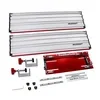 |
Milescraft 1409 Track Saw Guide At current prices a miscut sheet is real money. A guide rail turns the circular saw you already own into a straight, repeatable cutter.
|
As an Amazon Associate we earn from qualifying purchases.
- Trade policy: Canadian softwood lumber faces stacked duties, and certain Canadian plywood now faces a separate 50 percent tariff.
- Grade and species: a shop-grade CDX sheet and a void-free birch sheet are different products at very different prices.
- Region and freight: the same sheet costs more the farther it travels from the mill.
- Not the cause anymore: the 2020 to 2021 pandemic shortage is over.
What the 2021 Spike Actually Was
The last time plywood prices made headlines was 2021. A widely shared claim said 3/4 inch plywood went from $37.98 to $95.98 a sheet between March 2020 and April 2021, a rise of about 252 percent. PolitiFact checked it and found it substantially accurate: industry tracker Random Lengths showed 23/32 inch plywood up 287 percent year over year in the Northwest and 230 percent in the South.
The reported causes were pandemic mill closures, supply that could not keep up with demand, weather-related shutdowns in Texas and Louisiana, resin shortages and staffing problems. Those were one-time shocks. If an article today still explains plywood prices with the pandemic, it is out of date.
What Is Pushing Prices Up in 2026
1. Stacked duties on Canadian softwood lumber
Canada supplies a large share of the softwood lumber the U.S. uses, and most of it now carries two layers of cost. As of mid-2026, reports put the combined burden on most Canadian softwood lumber at about 34.83 percent: preliminary antidumping and countervailing duties of 24.83 percent plus a 10 percent Section 232 tariff. That is down from a peak of about 45.16 percent in 2025, when the antidumping and countervailing duties alone were 35.16 percent. A final determination on the duty rates was expected in late August 2026, so check the current figure before you quote it.
Lumber is not plywood, but it sets the mood of the whole structural wood market. When framing lumber gets more expensive, sheathing panels tend to be quoted higher along with it.
2. A separate 50 percent tariff on certain Canadian plywood
On August 22, 2026, tariffs under Section 338 of the Tariff Act of 1930 took effect at 50 percent on roughly $20 billion of Canadian goods, including certain plywood and veneered panel classifications (numerous HTS 4412 codes). Softwood lumber itself was left out because it is already covered by other measures. One legal analysis noted that Canadian-origin hardwood plywood represented roughly $197 million in customs value in 2025, so the effect lands hardest on hardwood-faced panels. There is no statutory expiration date, and the tariff can be changed or removed at any time.
How much of this reaches the price tag at your local store is not yet clear. I have not seen retail price data since the tariff took effect, so treat any exact figure you read as a guess. The direction is what matters: imported panels cost more, and domestic mills can charge more when imports do.
3. Fewer mills making the panels that compete with plywood
Oriented strand board (OSB) is the main alternative to plywood for sheathing and subfloors, and its capacity is shrinking. West Fraser announced an indefinite curtailment of its High Level, Alberta OSB mill in spring 2026, and LP Building Solutions said it will indefinitely curtail its Jasper, Texas OSB mill from October 2026. Together with an earlier cut, that removed about 1.8 billion square feet of annual OSB capacity within nine months. Less OSB supply means more builders lean on plywood, which supports its price.
See how the two products compare on cost in our CDX plywood vs OSB guide.
What a Sheet Costs by Type: Real Ranges, Converted to Cost per Square Foot
A 4×8 sheet covers 32 square feet, so dividing the sheet price by 32 gives a number you can compare across types and thicknesses. The sheet ranges below come from a published price guide dated August 7, 2026. The per-square-foot column is my own arithmetic on those ranges.
| Plywood type | Price per 4×8 sheet | Approx. cost per sq ft |
|---|---|---|
| CDX or sheathing softwood | $35 to $65 | $1.09 to $2.03 |
| Sanded pine or utility | $45 to $80 | $1.41 to $2.50 |
| Cabinet hardwood (birch or maple) | $55 to $110 | $1.72 to $3.44 |
| Premium hardwood face | $90 to $180+ | $2.81 to $5.62+ |
| Baltic birch | $70 to $140+ | $2.19 to $4.38+ |
| Marine or exterior specialty | $80 to $200+ | $2.50 to $6.25+ |
| Prefinished | $90 to $160+ | $2.81 to $5.00+ |
| Thin plywood (1/4 inch) | $25 to $55 | $0.78 to $1.72 |
A plus sign means the source gave an open-ended top end. The lesson in this table is that the swing between grades is bigger than the market swing everyone talks about: the cheapest and most expensive sheets in the same store can differ by several times.
Why Two Sheets With the Same Name Cost Different Amounts
The price guide names the same drivers over and over, and they explain most of the sticker shock people feel when they move from a construction project to a furniture project.
- Face veneer and grade: an A face costs more than shop grade because fewer knots and patches are allowed.
- Core construction: void-free multi-ply cores cost more than patched utility cores, but they hold screws and edges better.
- Region and freight: the distance from the mill changes the price, so the same sheet can cost noticeably more in one state than another.
- Condition: a warped bargain sheet is not a bargain if you cannot get a flat cut out of it.
If your price surprise came from birch, our birch plywood price guide breaks down what you are paying for.
How to Spend Less Without Buying the Wrong Sheet
- Match the grade to the job: use CDX for subfloors, sheds and shop storage and save cabinet grade for what will be seen.
- Check flatness before you pay: sight down the edge of the sheet and choose a flat one from the stack.
- Plan your cuts on paper: a cut list that nests parts on the sheet is the cheapest saving there is, and it avoids buying an extra sheet for leftovers.
- Have the store break it down: many stores cut sheets to size, which makes a full sheet easier to carry home. See plywood cut to size: store costs and DIY accuracy.
- Compare store prices: our Home Depot plywood price guide shows how one retailer prices common types.
- Consider the cheaper panel: if you only need a flat base, see how MDF compares with plywood on price.
Will Plywood Prices Come Down?
Nobody can promise a date. Lumber and panel prices move with housing demand, mill output and trade policy, and the trade-policy pressure is currently pushing up. What can bring prices down is a change in duties, more mill output or weaker construction demand. What will not bring them down is waiting for the pandemic to pass: that part is finished.
If your project is not urgent, watch the local price of the specific sheet you need rather than the headlines. If it is urgent, buy the right grade once and cut carefully. A guide rail costs less than the sheet you save with it.
Frequently Asked Questions
Why is plywood so expensive right now?
Duties on Canadian softwood lumber, a new 50 percent tariff on certain Canadian plywood that took effect on August 22, 2026, shrinking OSB capacity and normal differences in grade and freight all push prices up. The pandemic shortage is over.
Are plywood prices still high because of COVID?
No. The 2020 to 2021 spike came from pandemic mill closures, weather shutdowns, resin shortages and staffing problems. Today the main drivers are trade policy, supply and the grade you choose.
How much does a sheet of plywood cost in 2026?
According to an August 2026 price guide, CDX or sheathing plywood runs about $35 to $65 per 4×8 sheet, cabinet hardwood plywood about $55 to $110, and Baltic birch about $70 to $140 or more. Your local price will vary.
Why is birch plywood so much more than CDX?
Birch plywood has a cleaner face veneer and usually a void-free core, while CDX is a construction grade that allows knots and patched voids. You pay for the appearance and the consistency.
Will plywood prices go down?
There is no reliable forecast. Changes in duties, mill output and housing demand all matter, and the current direction of trade policy is toward higher costs.
Conclusion
Plywood is expensive because trade policy has piled costs onto Canadian wood, mill capacity has shrunk, and grades differ widely in price. Convert sheet prices to cost per square foot, match the grade to the job, and cut carefully so that you do not pay for the same sheet twice.
Sponsored / affiliate links. As an Amazon Associate I earn from qualifying purchases. I may earn additional commission from eligible campaigns.
 Baltic Birch Plywood Sheets Box of 45 - Laser Engraving Cutting, Scroll Saw Nature Veneer Color, Stronger Than Basswood, A/A Grade,12 x 12 x 1/8”, 3mm Thickness Perfect for Wood Burning
 Baltic Birch Plywood 1/8'' x 12'' x 18'', 6 Pack, B/BB Grade, Void-Free Core, Laser Cutting Ready, Flat Sheets for CNC, Engraving, DIY Crafts, Art Painting, Wood Burning, Staining