Wood-Burning Backpacking Stoves: A Complete Buying and Safety Guide
Wood-burning backpacking stoves let you cook in the backcountry without carrying fuel canisters or fuel bottles. Instead of packing propane or white gas, you gather dry twigs, pine cones, or bark at your campsite and burn those. That trade cuts pack weight and eliminates the ongoing cost of buying fuel canisters, which is why the category has a loyal following among ultralight and long-distance hikers.
It’s not a free lunch, though. A wood stove only works as well as the fuel you can find at your site, and unlike a canister stove, it isn’t legal to use everywhere. This guide covers how these stoves work, the two main designs, a well-reviewed pick, and the fire-regulation and safety details that most buying guides skip entirely.
What Are Wood-Burning Backpacking Stoves?
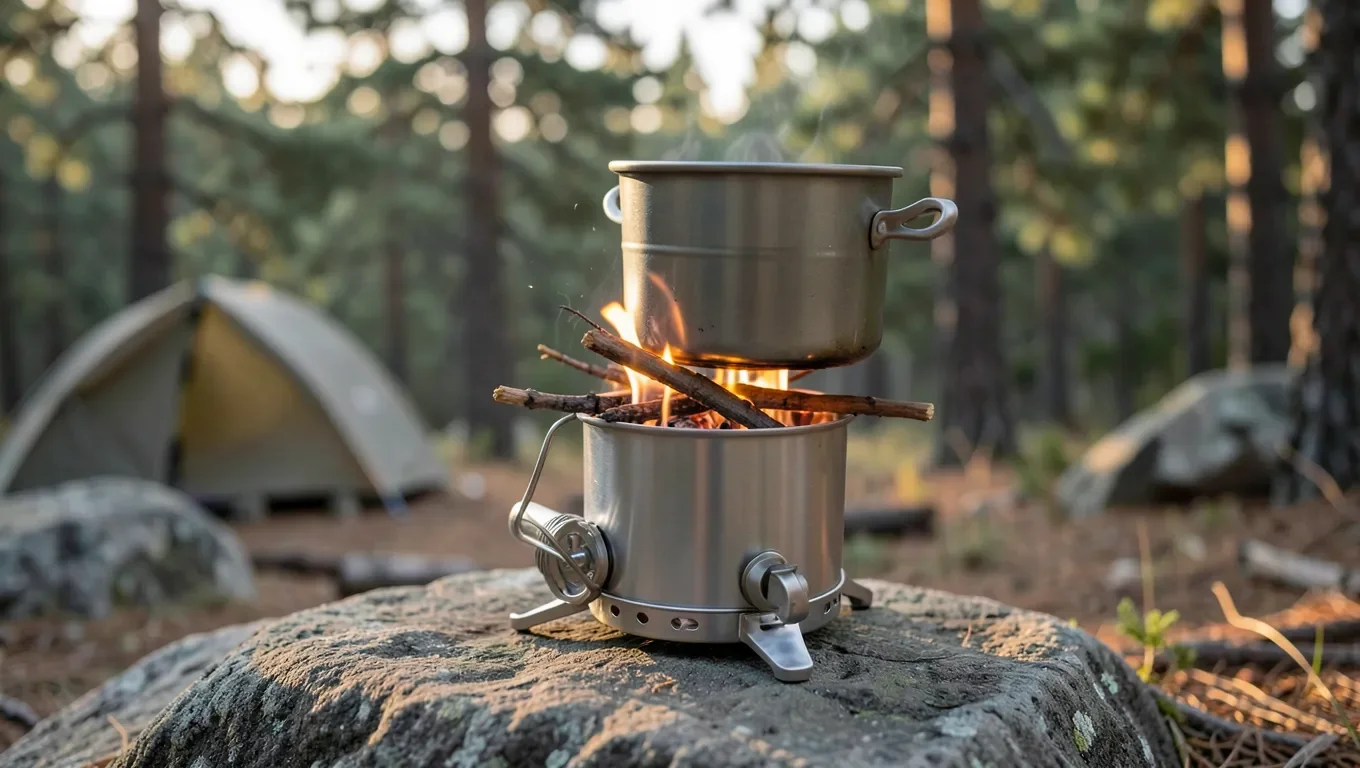
A wood-burning backpacking stove is a small, lightweight cooking device, usually stainless steel or titanium, that burns twigs, dry leaves, bark, or pine cones instead of a pressurized fuel canister or liquid fuel. Because the fuel is free and gathered on-site, these stoves eliminate one of the heaviest items in a canister-stove setup: the fuel itself. They fall into two broad categories: can-based (gasifier) stoves, which are cylindrical and use a double-wall design to burn more efficiently, and folding stoves, which collapse flat into thin panels for packing.
Well-Reviewed Folding Wood Stove
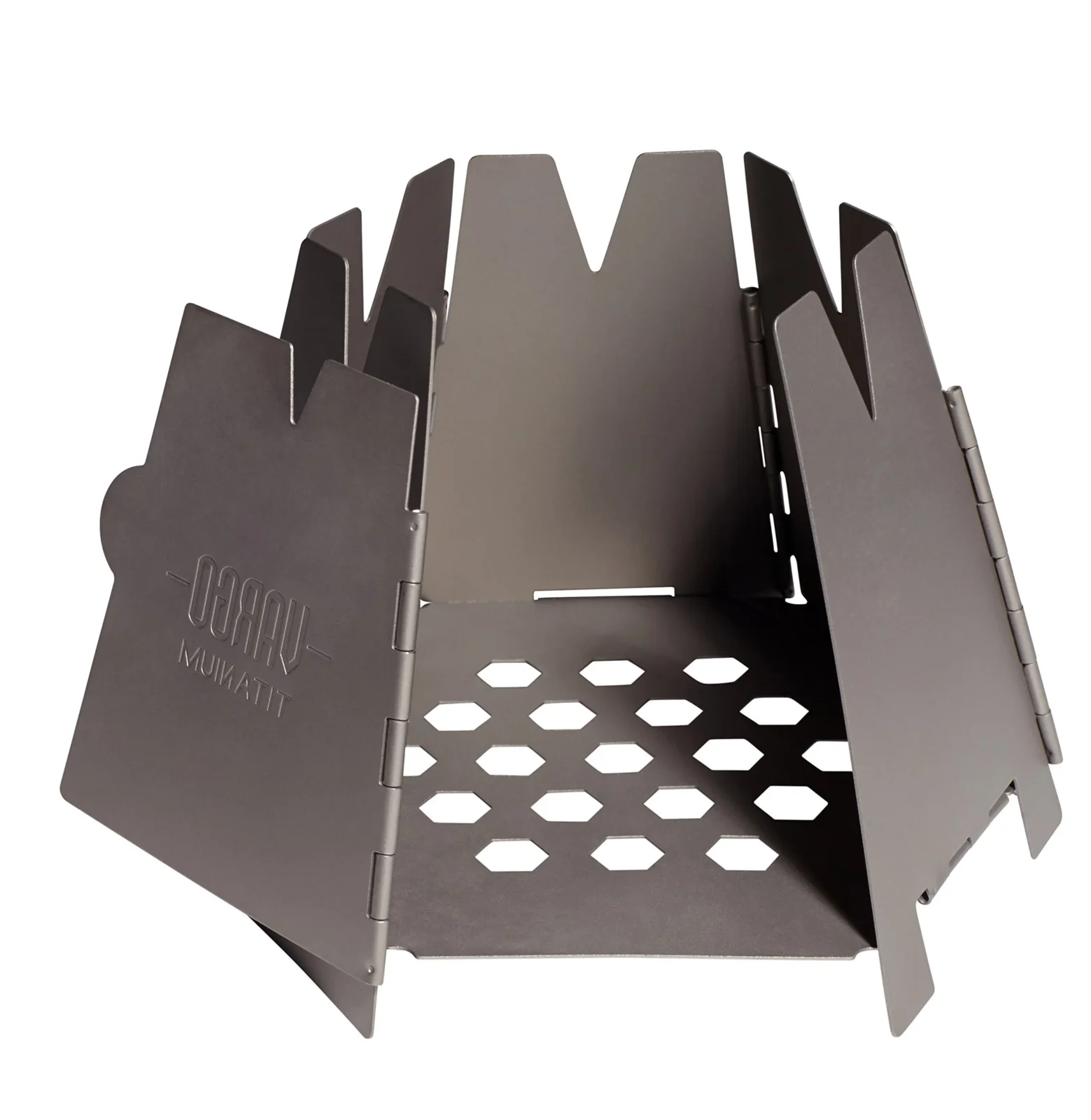 |
Vargo Hexagon Backpacking Wood Stove – $39.95 A stainless steel folding stove that collapses flat for packing and needs no fuel canister – just twigs gathered at camp.
|
The two designs perform differently. Can-based stoves use a gasification effect – wood partially converts to gas before it combusts – giving a hotter, cleaner flame with less smoke, but they’re bulkier and get sooty inside. Folding stoves collapse into flat panels that slide into a pack pocket, but most need more attention to keep a steady flame since they don’t gasify as efficiently.
Why Choose a Wood-Burning Stove – and the Real Tradeoff
The pitch is straightforward: no fuel weight, no fuel cost, and a genuinely lower environmental footprint than burning canister propane. Here’s what that actually gets you:
- Lightweight and packable: Most wood-burning stoves weigh 2–9 ounces; titanium folding models can be as light as 1 ounce.
- No recurring fuel cost: After the purchase price, your fuel is free twigs and bark instead of $8–$10 canisters.
- Lower environmental footprint: No fossil fuel burned, no empty canisters to pack out or land in a landfill.
- Multi-fuel flexibility: Several models (Littlbug, Solo Stove Lite) can also burn alcohol or solid fuel tablets as a backup if wood is scarce.
The honest tradeoff is fuel dependency, not weight. A canister or liquid-fuel stove carries its own guaranteed fuel supply with it – it works identically whether you’re in a rainforest or a scree field. A wood stove only works if you can find dry, burnable material where you’re camping. That’s a real limitation above the treeline, in deserts, in wet coastal climates after days of rain, and anywhere fire restrictions are in effect (more on that below). Boiling time is also slower – typically 5–10 minutes versus 2–3 minutes for a canister stove – because you’re managing a live fire instead of a metered gas valve.
Can-Based vs. Folding Stoves
Here’s a direct comparison to help you decide which design fits your trips:
| Feature | Can-Based (Gasifier) Stoves | Folding Stoves |
|---|---|---|
| Weight | 4–9 oz | 1–6 oz |
| Packability | Bulkier, keeps its shape | Collapses flat, slides into a pocket |
| Burn efficiency | High – gasification means hotter, cleaner burn | Moderate – needs more tending and feeding |
| Cleanup | Gets sooty inside the can; pack it in a bag | Less internal soot buildup |
| Best for | Longer boils, base-camp cooking | Ultralight trips, fast pack-up |
How to Choose the Right One
A few factors matter more than brand name when picking a wood-burning stove:
- Weight and size: Ultralight hikers should look at titanium folding stoves in the 3–5 oz range. Group trips can justify a slightly heavier can-based stove for the efficiency gain.
- Material: Titanium is lighter and more corrosion-resistant but costs more. Stainless steel is heavier but tougher against dents and cheaper up front.
- Fuel availability on your usual routes: If you regularly hike above treeline, in deserts, or in wet coastal regions, a wood-only stove will let you down. Consider a multi-fuel model that can also burn alcohol or Esbit tablets as a backup.
- Stability: A narrow base is easy to tip. Check reviews for stability complaints, especially if you’ll be balancing a full pot on it.
- Price: Decent stoves run $20–$50; premium titanium gasifier models can run $70 or more.
Fire Regulations: Check Before You Rely on One
This is the part most buying guides skip, and it matters. Wood-burning stoves are more contained than an open campfire, but they are still an open flame burning wood, and many land managers treat them exactly like a campfire for regulatory purposes.
- Stage 1 fire restrictions, common across national forests during dry summer months, typically prohibit wood, wood-stove, and charcoal fires forest-wide, including in wilderness areas – a wood-burning backpacking stove is banned right along with a campfire ring.
- Some wilderness areas ban wood fires year-round, independent of drought conditions. California’s Desolation Wilderness, for example, only permits pressurized gas stoves – wood stoves aren’t allowed at any time of year.
- Elevation-based bans exist in places like Yosemite, where wood fires (including stoves) are restricted above roughly 9,600 feet regardless of the season.
- Rules change seasonally and by agency, so a route that allowed wood stoves last year may not this year. Check the specific national forest, park, or wilderness area’s current fire restriction page (or call the local ranger station) before you go – don’t assume a “no open fires” sign only means campfire rings.
If wood stoves are restricted on your route, a canister or liquid-fuel stove is the accepted fallback almost everywhere, since it doesn’t burn found fuel or produce embers the same way.
Safety Basics
Even where wood stoves are permitted, you’re still managing a small open fire. The core rules are simple but worth repeating, because skipping them is how campsites and gear get damaged:
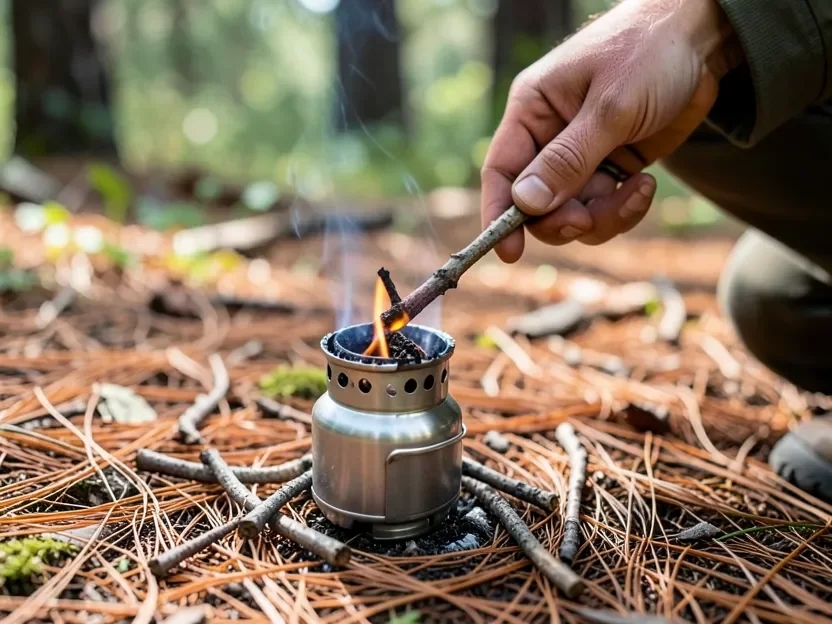
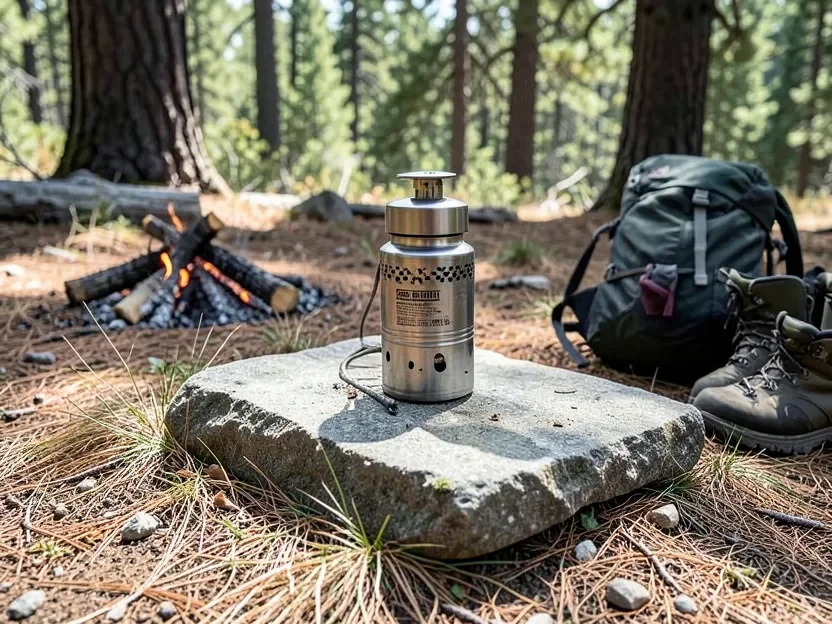
- Set up on stable, non-flammable ground: A bare rock slab, gravel, or an existing fire ring. Clear away dry grass, leaf litter, and pine needles in a wide radius first – sparks travel further than you’d expect in wind.
- Never leave it unattended while lit: A gust of wind can turn a contained twig fire into a spot fire in seconds. Stay within arm’s reach the entire time it’s burning.
- Keep water or dirt within reach to smother a stray ember or an out-of-control flame immediately.
- Let ash and embers go fully cold before leaving: Stir them, add water or dirt, and confirm there’s no residual heat by hand before you break camp or pack the stove – this is standard wildfire-prevention practice, not optional.
- Let the stove itself cool before packing it: Titanium and thin stainless steel hold heat longer than they look like they would.
Tips for Getting a Reliable Burn
- Gather the right fuel: Small, dry twigs and shavings work best. Hardwoods like oak or maple burn hotter and cleaner than resinous softwoods like pine, which leave more soot.
- Start small, add gradually: Light tiny twigs or dry tinder first, then add slightly larger pieces once the fire is established – the same kindling-sizing principles that work for a home fireplace apply here. Adding big sticks too early smothers a small flame.
- Plan for wet conditions: After rain, standing dead branches still attached to a tree are usually drier than anything on the ground. A backup firestarter (cotton balls with petroleum jelly, a commercial tinder cube) is worth the negligible weight.
- Block the wind: Many folding stoves have built-in windscreens; for can-based models, a simple foil barrier helps a lot.
- Follow Leave No Trace: Use a burn pan or set up on rock/mineral soil to avoid scorching ground vegetation, and pack out or fully scatter cold ash.
Popular Models Worth Knowing
A handful of names come up repeatedly in wood-stove discussions and gear reviews, each with a distinct niche:
- Solo Stove Lite: A can-based gasifier around 9 oz, known for fast, clean burns for solo or duo trips.
- Vargo Hexagon: A folding stove (titanium or stainless versions exist) that packs flat and is a common ultralight pick.
- Littlbug Junior: A stainless steel stove that can burn wood or alcohol, popular for small-group use.
- Firebox Nano: A very light (under 3 oz) folding titanium stove aimed at minimalist backpackers.
- Bushbuddy Ultra: A premium can-based gasifier known for burn efficiency, at a higher price point.
Maintenance
- Clean after every trip: Wipe soot off with a damp cloth; use a mild abrasive for stubborn residue.
- Check for damage: Inspect welds and panel edges for cracks or warping, especially on thin titanium stoves, before your next trip rather than in the field.
- Store it separately: A dedicated stuff sack keeps soot off the rest of your gear.
- Dry it fully: If it gets wet, dry it completely to prevent rust, particularly on stainless steel models.
- Test-light it at home before a trip so you find any issues in the backyard, not ten miles in.
Conclusion
Wood-burning backpacking stoves are a legitimate way to cut pack weight and skip the cost of fuel canisters, and for most three-season backpacking in the U.S. they work well. The catch is that they trade guaranteed fuel for free fuel – you need dry, burnable material at your site, and you need to confirm wood stoves are actually allowed on your route before you rely on one as your only cooking method. Check current fire restrictions for your specific forest or wilderness area, practice basic fire safety every time you light one, and a wood-burning stove can be one of the more satisfying pieces of gear in your kit.
FAQs
Are wood-burning backpacking stoves safe to use?
Yes, when you follow basic precautions: set up on a non-flammable surface clear of dry grass, keep water or dirt nearby to smother sparks, never leave it burning unattended, and make sure ash and embers are fully cold before you pack up or leave the site.
Can I use a wood-burning stove in any weather?
They work best in dry conditions with plenty of twigs available. In wet weather, dry fuel gets hard to find, so carry a backup firestarter. Wind cuts efficiency, so use a windscreen. They’re least reliable in deserts or above the treeline, where burnable fuel is scarce or absent.
How long does it take to boil water with a wood-burning stove?
Typically 5–10 minutes for about 2 cups of water, depending on the stove and fuel. Gasifier stoves like the Solo Stove Lite tend to run faster; folding stoves may need more tending to hold a steady flame.
Are wood-burning stoves allowed in national parks and forests?
It depends on the location and the current fire restriction level. Some wilderness areas, like California’s Desolation Wilderness, ban wood fires year-round and only allow gas stoves. Others restrict them above a certain elevation, such as Yosemite’s roughly 9,600-foot cutoff. During Stage 1 fire restrictions, wood stoves are commonly banned forest-wide. Always check the specific park, forest, or wilderness area’s current restrictions before you go.
How do I clean a wood-burning backpacking stove?
Wipe soot off with a damp cloth after each trip. For stubborn residue, use a mild abrasive like fine steel wool. Dry it thoroughly to prevent rust, and store it in a dedicated bag so soot doesn’t spread to the rest of your gear.
Sponsored / affiliate links. As an Amazon Associate I earn from qualifying purchases. I may earn additional commission from eligible campaigns.