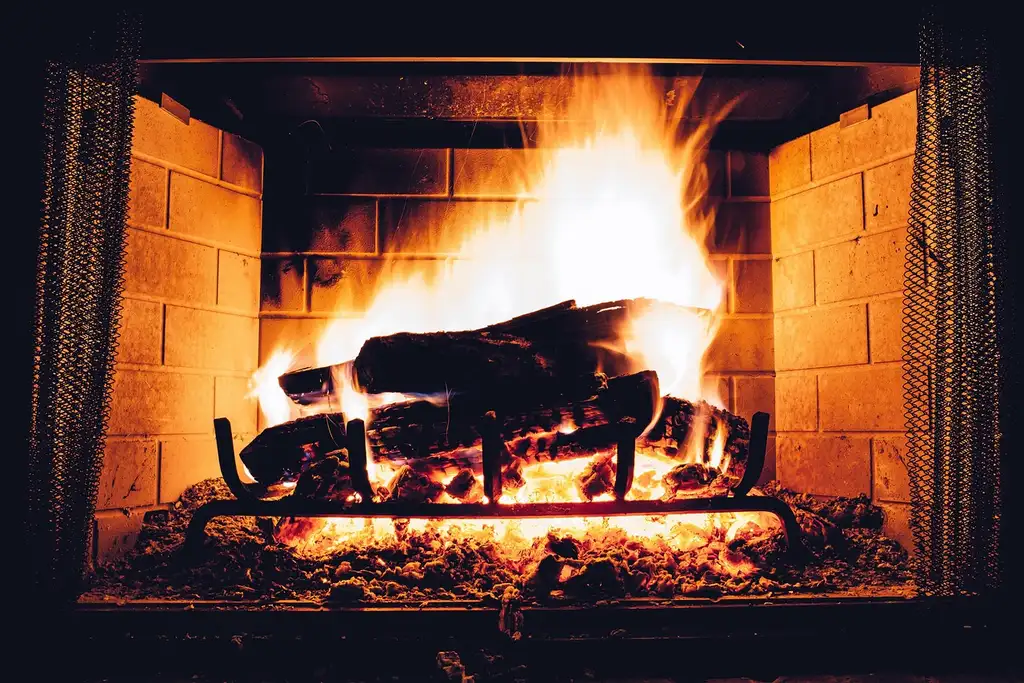
Is Poplar Good Firewood?
Yes, poplar is good firewood for quick heat, kindling, and shoulder-season fires, but it is poor for long burns. Expect less heat than denser hardwoods. Burn it badly, and you get a short fire, more reloads, and a cooler stove or fireplace. This guide shows where poplar fits in stoves, fireplaces, and outdoor fires, plus how to dry and burn it safely.
Quick burn, fast ignition, and the limits of softwood heat
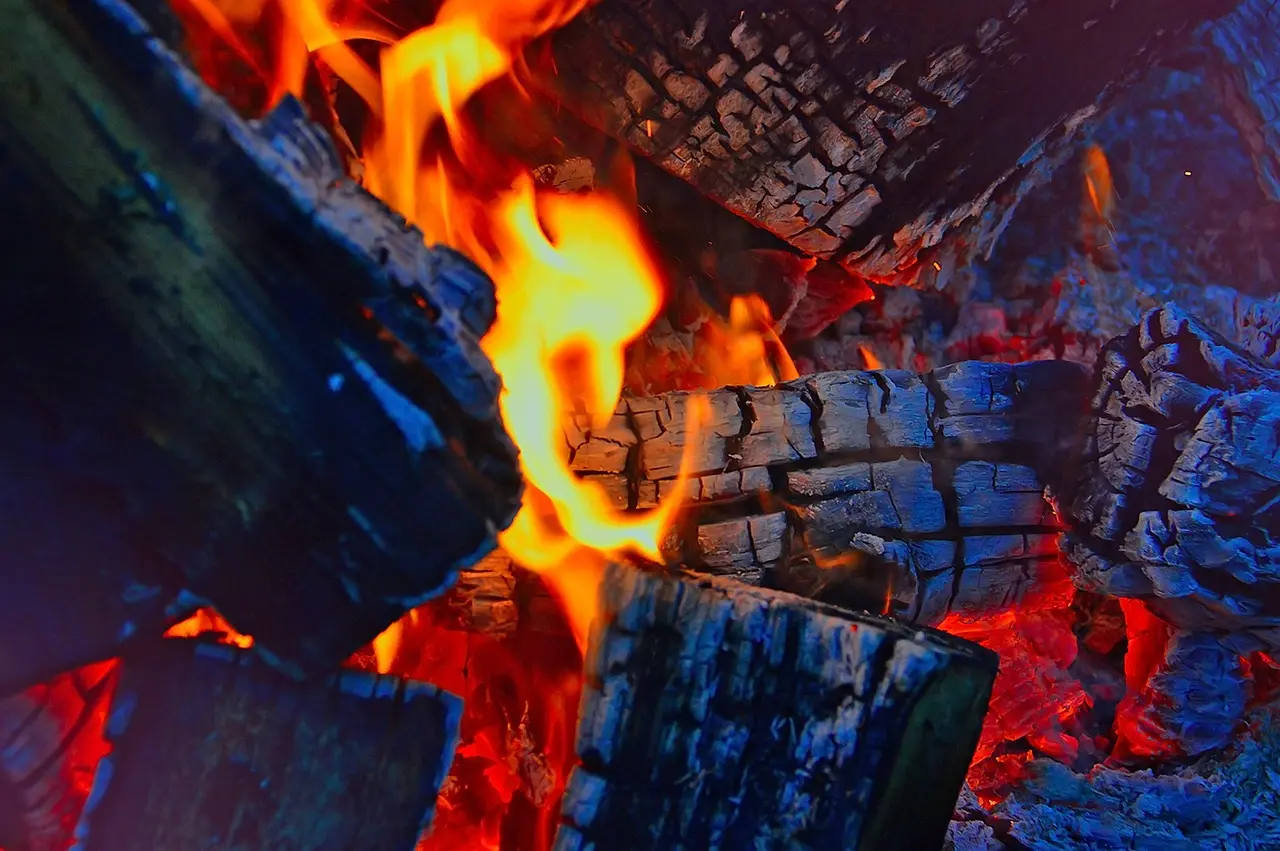
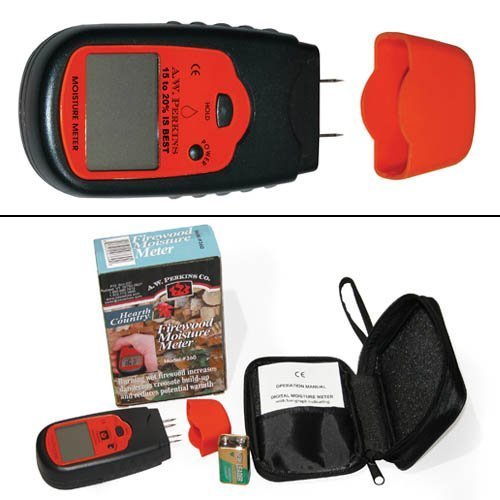


Yes, if you want fast ignition and a short, useful burn. Poplar is a relatively soft wood that burns quickly, so it fits best when you need heat soon rather than hours of steady output. It is a practical choice for shoulder-season fires, kindling, and mixed loads with denser wood.
It is not a top choice for deep winter heating or overnight burns. Compared with oak, hickory, and many maples, poplar gives less sustained heat and fewer coals, so you will reload more often. That tradeoff is normal for lower-density wood.
Poplar firewood decision table
| Species | Estimated BTU range from cited sources | Seasoning window | Smoke / creosote risk | Best use | Not recommended for |
|---|---|---|---|---|---|
| True poplar group: cottonwood, European aspen, balsam poplar, white poplar, black poplar | About 12.2 to 18.2 million BTUs per cord; other cited ranges include 13 to 18 million, 13.7 million, and 15 to 20 million | 6 to 12 months after splitting | Low when dry; higher if wet or allowed to smolder | Kindling, shoulder-season fires, mixed loads, fast daytime heat | Overnight heating, long coaling burns, very cold weather as the only fuel |
| Tulip poplar / yellow poplar | Not a true poplar; treat separately from Populus charts | Usually similar drying needs to other medium-density hardwoods when split and stacked well | Manageable when dry; more smoke if burned wet or throttled down | Shorter, hotter reloads and mixed loads where available | Any indoor burn if it is not properly seasoned |
Poplar good firewood checklist
- Wood stove: Yes, if the poplar is dry and you are willing to reload more often.
- Fireplace: Yes, for a live fire and quick room heat, with normal draft and a clean flue.
- Overnight heating: No, not as the main fuel for an unattended or all-night burn.
What counts as poplar?
True poplar means trees in the Populus genus, including cottonwoods, aspens, balsam poplar, white poplar, and black poplar. They are botanical hardwoods, even though many people call them softwood because they are light, easy to cut, and quick to burn. That label confusion matters when you compare firewood charts.
Tulip poplar is different. It is Liriodendron tulipifera in the magnolia family, not a true poplar. Buyers often lump it in with Populus wood, but the species label changes what you should expect for density, heat output, and burn style. White poplar, black poplar, cottonwood, European aspen, and balsam poplar all sit in the true poplar group, but they are not identical. (Wikipedia)
That difference is why broad “poplar” advice can mislead you. Some pages blur true poplar and tulip poplar into one pile of firewood, but the species label matters when you are choosing fuel for a stove, fireplace, or campfire.
How many BTUs does poplar firewood produce?
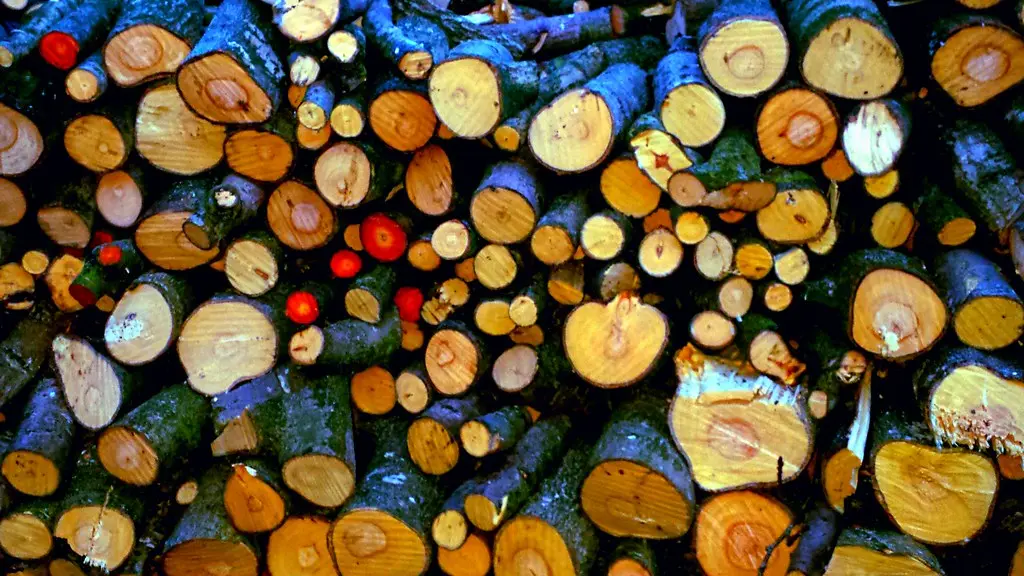
Poplar usually lands in a lower-to-mid firewood band. Cited charts place it in ranges such as about 12 to 18 million BTUs per cord, roughly 13 to 18 million BTUs per dry cord, and around 15 to 20 million BTUs per cord; one listing gives about 13.7 million BTUs. Those figures are useful as a range, not a promise of identical output from every log.
Species differences matter. Cottonwood and some aspens are often treated as the lighter end of the poplar group, while balsam poplar can sit a bit differently in density and burn behavior. Even so, all of them are generally below dense hardwoods such as oak and hickory, which are commonly reported to produce more heat per cord and leave longer-lasting coals.
Picture a 20-inch stove load built with poplar only. It can light fast and warm a room quickly, but the fire will need attention sooner than the same stove filled with oak. If you want heat across a long evening, poplar works better as part of a mixed load than as the whole load.
Does poplar smoke or cause creosote?
Dry poplar is usually manageable. Wet poplar, or poplar burned with the air turned down too far, can smoke heavily and may raise creosote risk. Creosote matters most for indoor burning because it can build inside the flue when smoke cools and condenses on the chimney walls.
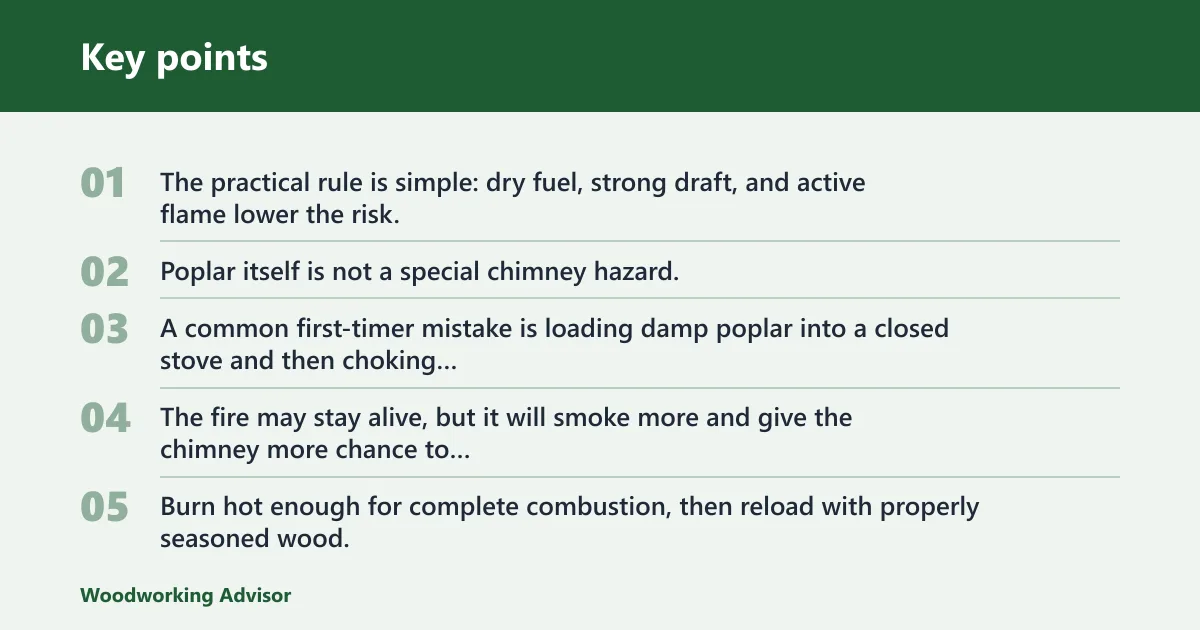
The practical rule is simple: dry fuel, strong draft, and active flame lower the risk. Smoldering burns do the opposite. Poplar itself is not a special chimney hazard, but wet wood or a lazy fire creates the conditions that build deposits in any species.
A common first-timer mistake is loading damp poplar into a closed stove and then choking the air to “save” the wood. The fire may stay alive, but it will smoke more and give the chimney more chance to collect deposits. Burn hot enough for complete combustion, then reload with properly seasoned wood.
For indoor burning, chimney cleaning and inspection still matter. Poplar does not remove that need. It only changes how quickly you can get heat and how carefully you need to manage airflow if the wood is less than fully dry.
How long does poplar firewood take to season?
Plan on 6 to 12 months after splitting, with some reports saying it can season in as few as six months. The real target is not the calendar alone. You want the moisture content below 20 percent before burning indoors. That threshold gives you a better chance of cleaner ignition, less smoke, and lower creosote risk.
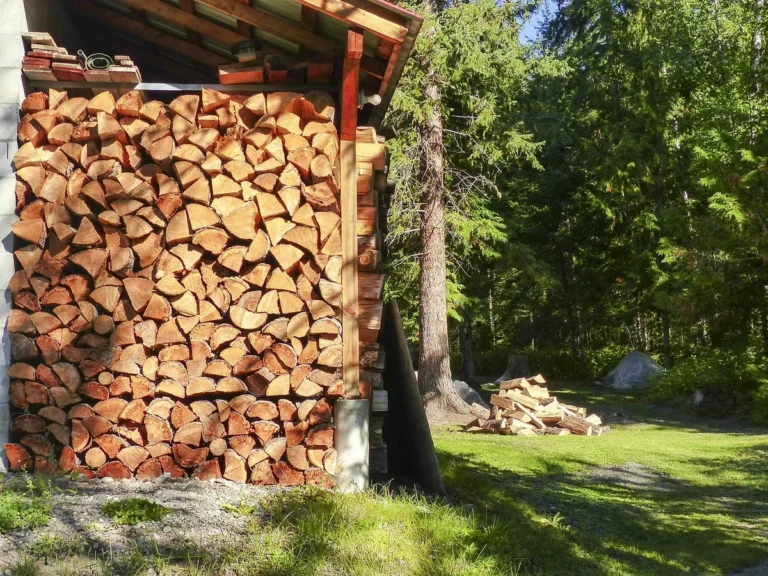
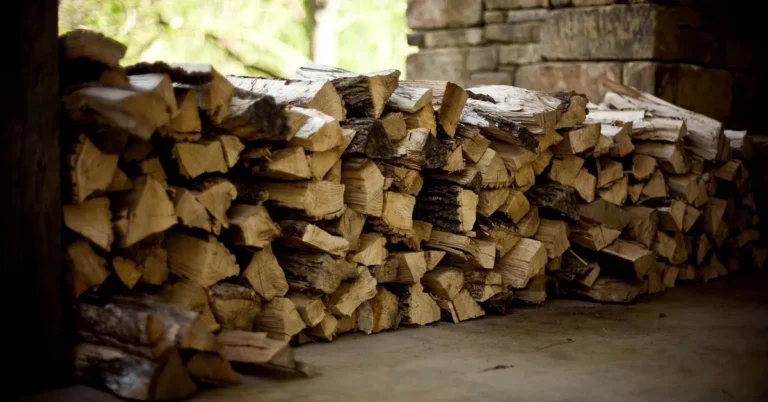
Seasoning works fastest when you split the wood soon after cutting it. Smaller pieces dry faster than rounds. Stack the wood on pallets or another base, keep the top covered, and leave the sides open so air can move through the pile. That airflow is what carries moisture away.
Check readiness with a moisture meter on a fresh split face, not just on the outside of a log. If the reading is still above 20 percent, the wood is not ready for a stove or fireplace, even if it feels dry on the outside.
- Split the rounds soon after cutting.
- Stack the wood on pallets, rails, or another base that keeps it off soil.
- Cover only the top of the stack.
- Leave the sides open for airflow.
- Test a split face with a moisture meter before indoor burning.
Is poplar easy to split?
Yes. Poplar is easier to split than dense hardwoods, and that is one reason it is popular for fast processing and kindling. Straight-grained pieces often split cleanly with less effort than oak or hickory. That ease does not make it premium firewood, but it does make handling simpler.
The low density also helps the drying process. Split pieces expose more surface area, which lets moisture leave the wood faster. That is especially useful with poplar because seasoning time is already shorter than with many heavier hardwoods.
Where poplar works best
Poplar works best where quick heat matters more than long duration. Use it for kindling, shoulder-season heating, daytime stove reloads, campfires, and outdoor fire pits. It lights fast, gives useful flame quickly, and is easy to process into small pieces.
It also works well mixed with denser hardwoods. The practical rule is to use poplar for ignition and early heat, then let oak, maple, or hickory carry the longer burn. That mix gives you easier starts without giving up all sustained output.
Say your stove needs a quick restart on a cool October morning. A few splits of dry poplar under denser hardwood can bring the fire up faster than hardwood alone, while the oak or maple extends the burn after the poplar has done its job.
Poplar is a weaker choice when the goal is long coaling, steady overnight heat, or deep-cold performance. In those cases, it is better as a helper wood than the main fuel.
Is poplar good firewood for a wood stove?
Yes, but only with the right expectation. Dry poplar can work well in a wood stove for quick heat and shoulder-season burning, especially when you are present to reload it. It is a poor choice if you want long burns, deep coals, or all-night output from a single load.
For stove use, the main risk comes from wet wood or a restricted air setting. Poplar does not handle lazy burning well because it already burns quickly. If you need more time between reloads, pair it with denser hardwoods instead of using poplar by itself.
Is poplar good firewood for a fireplace?
Yes, if the wood is dry and you want a fast, visible flame. Poplar is useful in a fireplace because it lights easily and can make a lively fire without much effort. It is less suitable if you want long-lasting coals or a slow overnight bed of heat.
Because fireplaces lose more heat up the chimney than a stove, fast-burning wood can disappear quickly. That makes poplar best for short sessions, not for trying to hold a room warm through the night. Keep the fire burning cleanly, and do not use damp wood that will smoke more.
Is tulip poplar good firewood?
Tulip poplar can be useful firewood, but it is not the same tree as true poplar. It is Liriodendron tulipifera, and buyers should keep it separate from Populus species when comparing charts. It usually burns as a practical, medium-heat firewood rather than as a long-burn fuel.
Do not assume tulip poplar is inferior to every true poplar species. The safer comparison is to judge it against the firewood you already use, then decide whether you need quick-start performance or longer output. As with any wood, dry fuel matters more than the label on the log.
Which poplar species are best for firewood?
The best species are usually the ones you can get dry, split, and stacked properly. White poplar, black poplar, cottonwood, European aspen, and balsam poplar all belong to the true poplar group, but they are not identical in density or burn behavior. That means one load may feel a little stronger or weaker than another.
For practical use, think in terms of the species group rather than expecting a single exact result from all poplars. Most of them are good for fast starts and shoulder-season heat, and most are not the right choice for long, steady output on their own.
Can you mix poplar with hardwoods for heating?
Yes, and that is often the smartest way to use it. Mix poplar with denser hardwoods when you want easier ignition and more heat early in the burn, but still need longer output after the fire is established. That approach helps you use poplar where it performs best.
A simple loading pattern is to place poplar as the starter wood, then add oak, maple, or hickory once the fire is established. The poplar gets the stove or fireplace going quickly, and the hardwood carries the load afterward. That method also cuts the temptation to run a smoky, throttled-down poplar fire.
Is poplar good firewood nz?
Yes, if the poplar is properly seasoned and you want fast heat rather than overnight output. The same basic rule applies in New Zealand as elsewhere: dry poplar is useful, wet poplar smokes more, and poplar is better as a quick-burning fuel than as a long-duration one. Local species names and supply can vary, so check the exact tree type.
Frequently asked questions
Is poplar good firewood?
Yes, for quick heat, kindling, and shoulder-season fires. It burns quickly, is easy to split, and seasons faster than many hardwoods. It is not a strong choice for overnight heating because it leaves fewer coals and needs more frequent reloading than denser woods.
Does poplar make a lot of smoke or creosote?
Dry poplar does not usually create special problems. Wet poplar, or any poplar burned with poor draft and heavy smoldering, can make more smoke and raise creosote risk. Good seasoning and a cleaner-burning fire matter more than the species alone.
Sponsored / affiliate links. As an Amazon Associate I earn from qualifying purchases. I may earn additional commission from eligible campaigns.