Wood Splitting Wedge: How to Choose, Use, and Maintain One
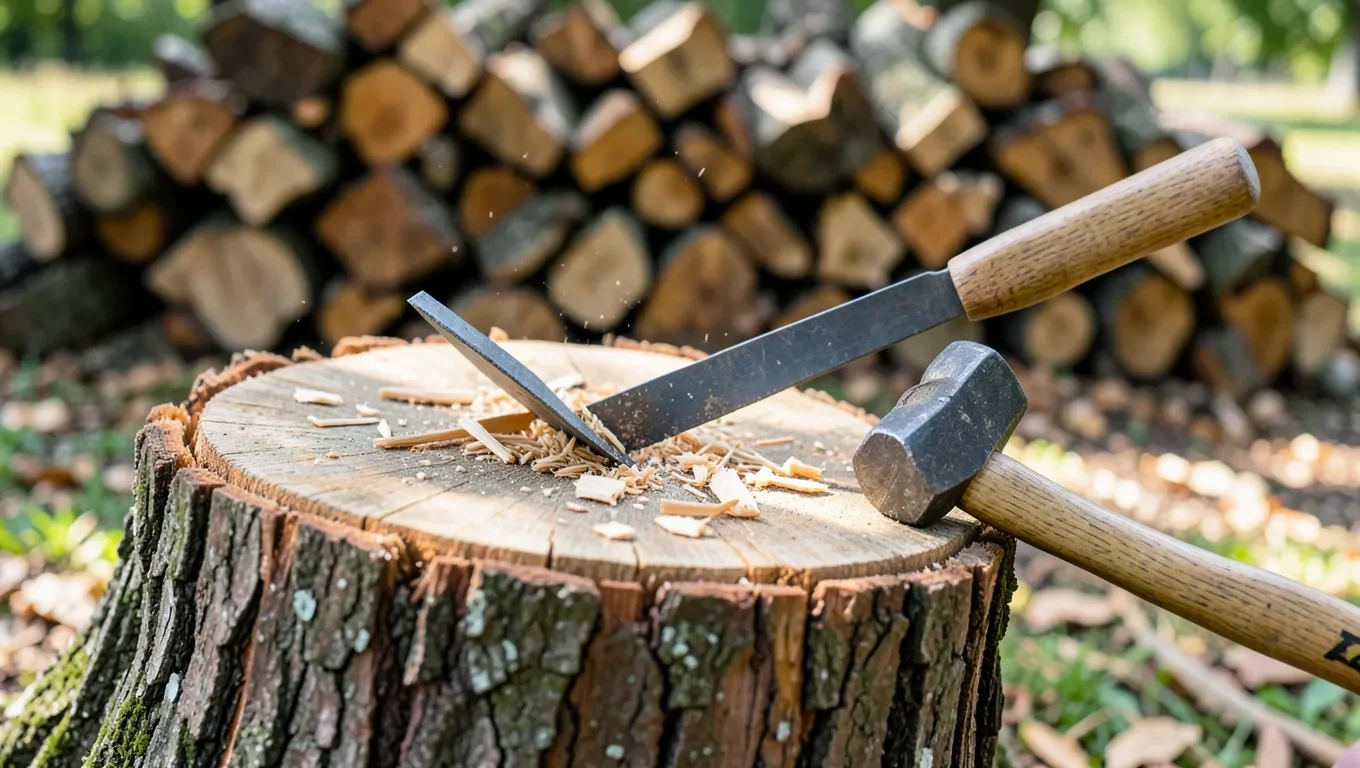
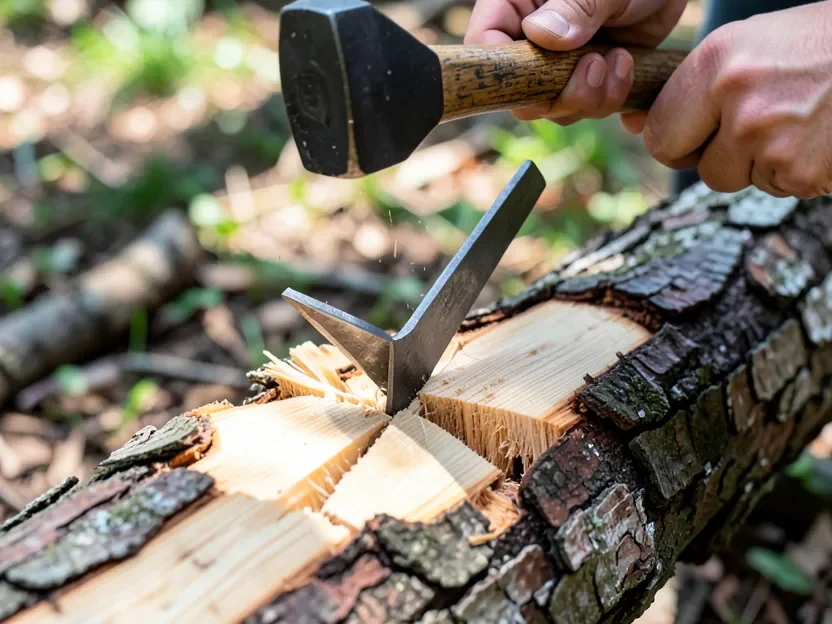
A wood splitting wedge is a thick, blunt steel wedge you drive into a log with a maul or sledgehammer to force it apart along the grain. It is the tool you reach for when a round will not crack with an axe alone – knotty, twisted, or oversized firewood rounds that would just bounce an axe blade back at you.
What a Splitting Wedge Actually Does
Best Steel Splitting Wedge
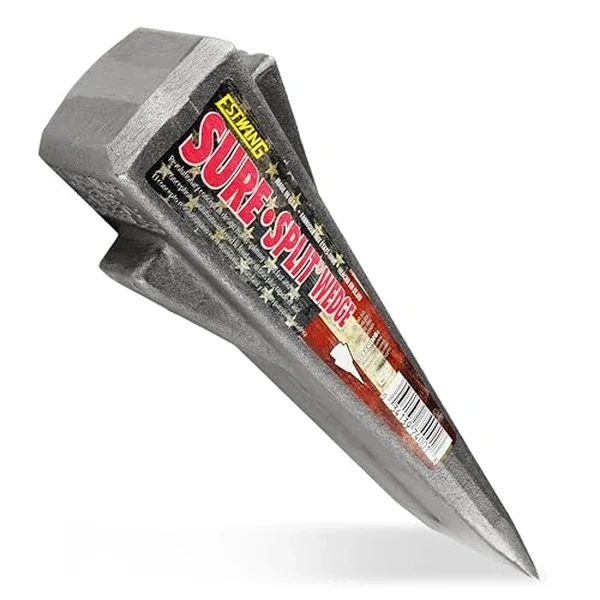 |
Estwing Sure-Split Wedge, 5lb Solid Steel – $23.98 A one-piece forged steel wedge with fin sides for extra splitting force on the tough rounds an axe cannot handle.
|
An axe relies on a thin, sharp edge and swing speed to slice through wood fibers. A splitting wedge works differently: its wide, wedge-shaped body is driven straight down into the log’s end grain, and as it sinks deeper, the widening steel physically forces the two halves of the log apart. That is why a wedge can split rounds an axe cannot – it does not need to cut cleanly, it just needs enough mass and force behind it to pry the wood open.
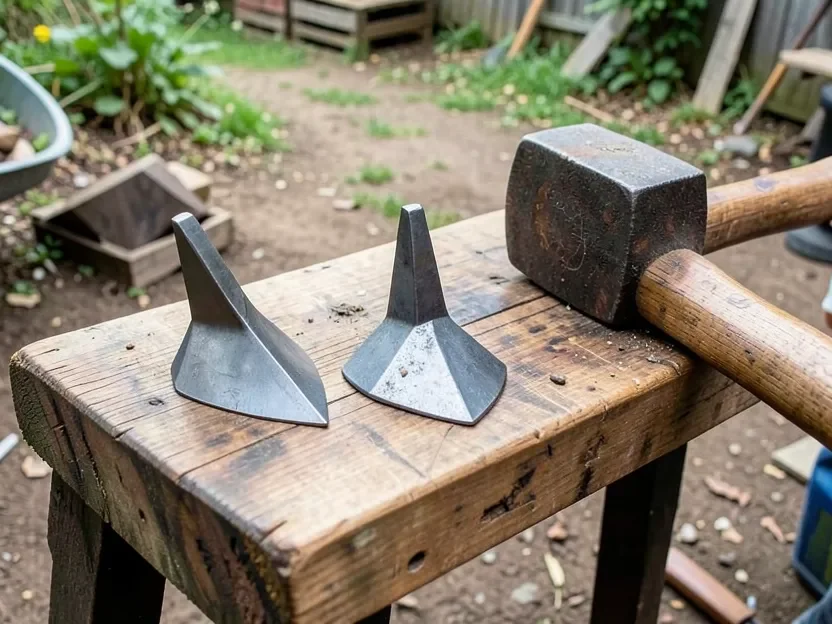
Most splitting wedges weigh between 4 and 6 pounds. Heavier wedges bite deeper per hit but are harder to control on a swing; lighter ones are easier to place accurately but may need more hits on tough rounds. Many, including the Estwing model above, have raised fins or flutes running down each side. Those fins do not cut – they add outward leverage as the wedge sinks, which helps prevent the wedge from binding partway into the wood.
Splitting Wedge vs. Felling Wedge vs. Joinery Wedge
“Wood cutting wedge” gets used loosely online, and older versions of this page blurred three genuinely different tools together. Here is the real distinction, because using the wrong one in the wrong job is a safety problem, not just a semantics issue.
| Wedge Type | Material | Used With | Job |
|---|---|---|---|
| Splitting wedge | Solid steel | Maul or sledgehammer | Splitting cut firewood rounds along the grain |
| Felling wedge | Plastic or aluminum (never steel) | A hand axe or hatchet poll, tapped by hand | Inserted into a chainsaw’s back cut during tree felling to prevent the kerf from pinching the bar and to help steer the fall direction |
| Joinery wedge | Hardwood (oak, hickory) | A mallet | Driven into a saw kerf cut in a tenon’s end to lock a wedged mortise-and-tenon joint tight |
Felling wedges are deliberately never made of metal. A steel wedge struck by a spinning chainsaw chain can throw metal fragments or badly damage the chain and bar – which is also why you tap a felling wedge in with the poll of a hand axe, not a steel hammer, and never stand directly behind the saw’s bar line while doing it. If your project involves felling a tree with a chainsaw, treat that as its own skill with its own escape-route planning – it is not the same task as splitting a round on a chopping block, and this guide is about the latter.
Choosing the Right Splitting Wedge
Solid steel is the standard for a reason – it holds up to repeated hammer strikes without deforming quickly. Cast iron wedges exist and cost less, but they are more prone to chipping or cracking under a hard hit, which is a real safety issue since a chipped wedge can throw shrapnel. Stick with drop-forged or solid steel construction from a known toolmaker.
On weight: a single 5-pound wedge handles most home firewood processing. If you regularly split large-diameter rounds (16 inches or more) or dense, interlocked-grain wood like elm or sweetgum, a heavier 6 to 8-pound wedge – or a second wedge used opposite the first to open a stubborn crack from both sides – will save you a lot of swings.
Look at the poll (the flat top you strike) too. A wider, slightly domed poll spreads the hammer’s impact over more surface area, which slows down the “mushrooming” that eventually makes an old wedge unsafe to keep striking – more on that in the maintenance section below.
How to Use a Splitting Wedge Safely
Gear up first. Safety glasses are non-negotiable here – not just for wood chips, but because a hammer glancing off a wedge’s poll can throw metal fragments. Add gloves for grip and steel-toe boots in case a round tips off the chopping block.
Set the round on a stable base. Work on a level chopping block or another flat round, never directly on the ground – striking into dirt or a rock dulls the wedge’s edge fast and can send it skittering sideways.
Start the wedge on a natural line. Look at the round’s end grain for an existing check (crack) or set the wedge as close to the pith (the log’s center) as you can. Splitting along a radial line through the center takes far less force than trying to split off-center.
Tap it in before you swing hard. A few light taps to seat the wedge upright and biting into the wood keep it from popping loose sideways on the first real swing. Once it is seated, strike the poll squarely with a maul or sledgehammer – never with an axe head, a claw hammer, or anything not designed to absorb repeated steel-on-steel impact.
For rounds that will not open, stop and reposition rather than hammering the same spot indefinitely. A second wedge started a few inches away along the same crack, or rotating the round to attack it from the opposite face, usually succeeds where brute force on one spot fails – and it is safer, since a wedge that will not sink further is more likely to deflect a glancing hammer blow.
Maintaining a Splitting Wedge
Wipe sap and dirt off after each session and store the wedge somewhere dry – surface rust on the taper makes it grip the wood more instead of sliding in cleanly. A light coat of oil on the steel before long-term storage prevents pitting.
The part most guides skip: check the poll, not just the cutting edge. Every splitting wedge slowly “mushrooms” – the repeated hammer strikes flatten and spread the steel at the top edge outward into a thin overhanging lip. Once that lip gets pronounced, a hammer strike can catch the edge and shear off a metal sliver at high speed. Manufacturers recommend grinding the mushroomed overhang back down periodically so the poll stays a clean, slightly domed surface. A wedge with a badly mushroomed poll should be dressed with a grinder before its next use, not swung at again as-is.
Common Mistakes to Avoid
Striking with the wrong tool. An axe poll or a standard claw hammer is not hardened or shaped for repeated wedge strikes. Use a maul or a dedicated hand sledge.
Ignoring a mushroomed poll. Covered above, but worth repeating: this is the single most common way people get hurt by a wedge, and it is entirely preventable with a few minutes on a grinder.
Splitting on an unstable surface. A round balanced on uneven ground can tip mid-swing. Always work on a flat, stable chopping block.
Standing wrong relative to the swing. Keep feet planted, knees slightly bent, and make sure nobody – including pets – is within your swing radius before starting.
Pairing a Wedge With the Right Tools
A wedge rarely works alone. Most people start a round with an axe, then bring in a wedge once the wood proves too tough or knotty to split cleanly. If you are deciding between a maul and a sledgehammer to drive the wedge, the short version is that a maul’s added weight helps on bigger wedges, while a standard hand sledge gives more control on lighter taps – see our hammer vs. mallet comparison for how striking tools differ. And if you want to sharpen your axe technique before reaching for a wedge at all, our guide on the best way to chop wood covers stance, swing, and grain-reading in more depth.
Frequently Asked Questions
What Is a Wood Splitting Wedge?
A wood splitting wedge is a solid steel, wedge-shaped hand tool driven into a log with a maul or sledgehammer to force the wood apart along its grain. It is used for firewood rounds that are too knotty, twisted, or large to split cleanly with an axe alone.
How Do You Use a Splitting Wedge?
Set the log on a stable chopping block, position the wedge near the pith or over an existing crack, tap it upright with a few light hits, then strike the poll squarely with a maul or sledgehammer until the round splits. Reposition rather than repeatedly hammering a spot that will not open.
Is a Splitting Wedge the Same as a Felling Wedge?
No. A splitting wedge is solid steel and used with a maul to split cut firewood rounds. A felling wedge is plastic or aluminum, never steel, and is tapped into a chainsaw’s back cut during tree felling to prevent the bar from pinching – the two tools are not interchangeable.
How Do You Keep a Splitting Wedge Safe to Use?
Keep it clean and dry to prevent rust, and periodically check the struck poll for “mushrooming” – a thin overhanging lip that forms from repeated hammer strikes. Grind that overhang back down before continuing to use the wedge, since a mushroomed edge can shear off a metal sliver under a hard hit.
Proper handling and regular maintenance keep both the wedge and the person swinging the hammer safe.
Conclusion
A splitting wedge earns its place next to the axe for exactly the rounds an axe cannot handle – knotty, oversized, or interlocked-grain firewood. Pick solid steel construction in a weight you can control, strike it only with a maul or hand sledge, and check the poll for mushrooming before every session. Get those three things right and a single wedge will outlast years of firewood seasons.
Sponsored / affiliate links. As an Amazon Associate I earn from qualifying purchases. I may earn additional commission from eligible campaigns.