How to Cut a Board in Half Thickness (Resaw Method + Kerf Math)
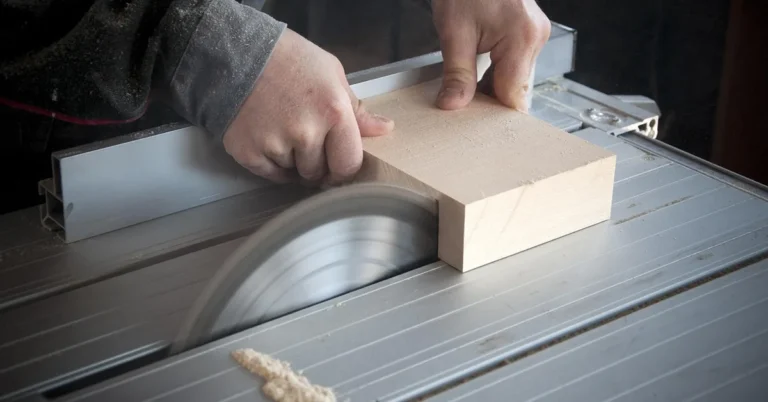
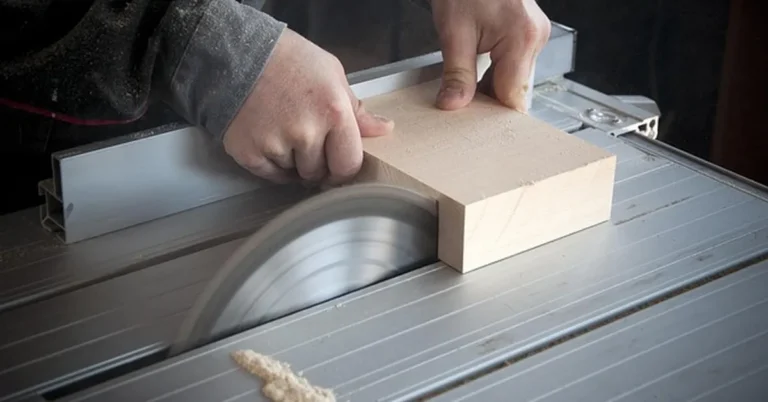
Cutting a board in half by thickness means resawing it — ripping it edge-on into two thinner boards — on a table saw (two flip passes) or a band saw (one pass with a tall fence). A 10″ table saw blade removes about 1/8″ to kerf, while a band saw blade removes as little as 1/32″, so a band saw gets you closer to true half-thickness pieces. This guide covers both methods with real numbers, plus how much thickness you actually lose to the blade.
Table Saw vs Band Saw for Resawing
Best Thin-Kerf Ripping Blade Pick
Freud LM75R010 10″ Thin Kerf Glue Line Ripping Blade – $58.48
A thin-kerf blade cuts closer to the true 1/32″–1/16″ range instead of the standard 1/8″ full-kerf loss, which matters most when you’re trying to split a board evenly in half on a table saw.
- Best for: table saw resawing where every 1/32″ of thickness matters
- Why we picked it: Freud is an established industrial blade brand and this model is purpose-built for glue-line-quality rip cuts
- Main drawback: thin-kerf blades flex more than full-kerf blades on very hard or thick stock, so feed slowly
As an Amazon Associate we earn from qualifying purchases.
Both tools can cut a board in half through its thickness, but they behave very differently once the board gets much thicker than about 3 inches.
| Table Saw | Band Saw | |
|---|---|---|
| Typical kerf (material lost) | ~1/8″ (0.125″) | ~1/32″ to 1/16″ (0.030–0.045″) |
| Max resaw thickness | ~3–3.5″ (needs two flipped passes) | 6–12″+ in a single pass, saw-dependent |
| Best for | Stock under 3″ thick, no band saw available | Thicker stock, cleanest and most efficient resaws |
| Main risk | Kickback — tall, narrow offcut can bind and launch | Blade drift — cut wanders off the line without a resaw fence |
How to Resaw on a Table Saw (Two-Pass Method)
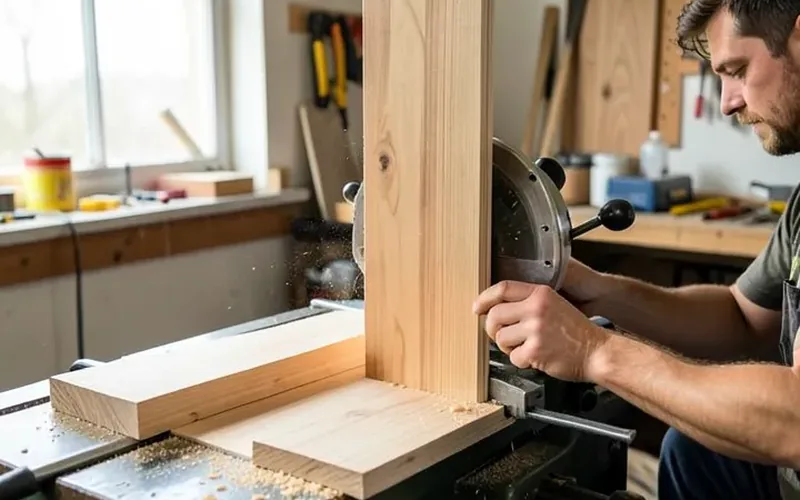
Most consumer table saws max out around 3 to 3.5 inches of blade height, so stock thicker than that needs two passes — cutting halfway from each face.
- Set the blade height to just over half the board’s thickness: for a 1.5″ thick 2×4, raise the blade to about 0.8″.
- Set the rip fence to the board’s centerline: measure from the fence to the near side of the blade, not the far side, so the kerf lands on the waste side of your line.
- Install a tall auxiliary fence and featherboard: the board rides on its edge, so a stock fence and standard featherboards won’t give enough support — this is the step most kickback accidents skip.
- Make the first pass: feed the board through standing on edge, keeping firm downward pressure against the tall fence.
- Flip the board end-for-end and make the second pass: flipping (not rotating) keeps the same face against the fence so the two kerfs meet in the middle.
- Finish the connecting web with a hand saw or band saw if needed: on thicker stock the two passes may not fully meet, leaving a thin center web to finish by hand.
For example, resawing a standard 2×4 (actual 1.5″ thick) on a table saw with a 1/8″ kerf blade leaves about 1.375″ of usable wood, split into two boards around 11/16″ thick before cleanup planing. The same cut on a band saw with a 1/16″ kerf leaves closer to two 23/32″ boards — nearly a full extra 1/32″ per side.
How to Resaw on a Band Saw
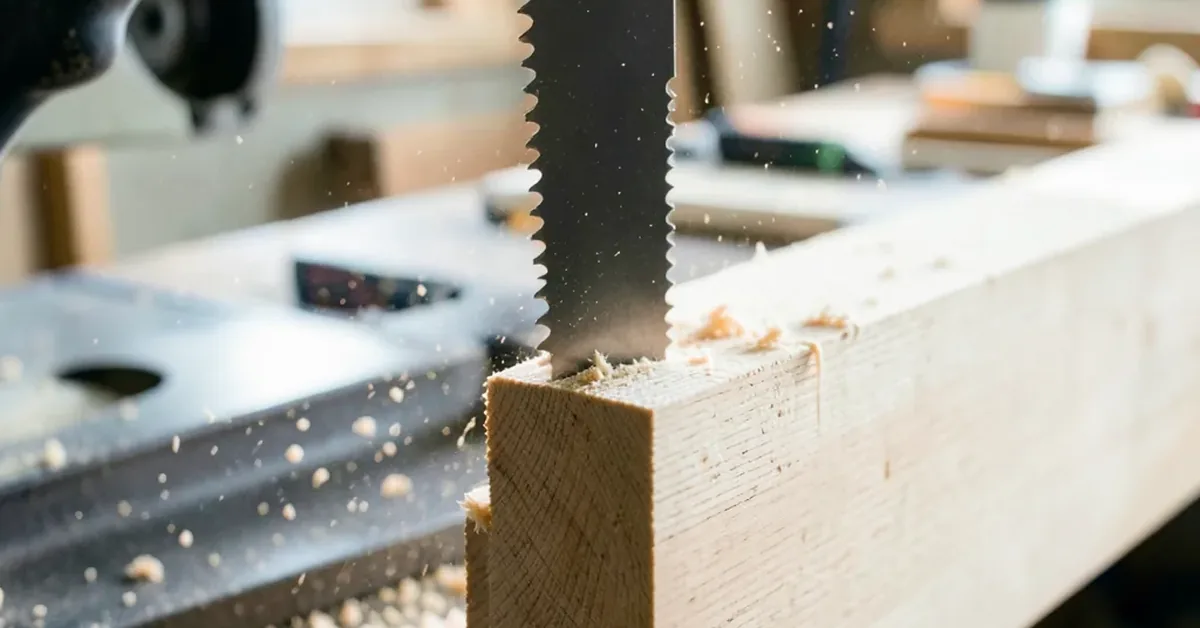
A band saw with a resaw fence handles thicker stock in a single pass and wastes far less wood to kerf than a table saw.
- Fit a wide, low-TPI resaw blade: a 1/2″–3/4″ wide blade with 2–3 teeth per inch tracks straighter through thick stock than a narrow general-purpose blade.
- Install a tall resaw fence or shop-made pivot fence: this compensates for blade drift, which is the main reason freehand resaw cuts wander.
- Mark the centerline on the board’s leading edge: a pencil line on the top edge lets you watch and correct drift as you feed.
- Feed at a steady, moderate pace: too fast causes the blade to bow and wander; too slow can burn the cut.
- Support the board as it exits the back of the blade: a roller stand or a helper prevents the two thin halves from tipping and binding right at the end of the cut.
How Much Thickness You Actually Lose to Kerf
📊 A full-kerf 10″ table saw blade removes about 1/8″ (0.125″) of wood as sawdust; a band saw blade removes as little as 1/32″ to 1/16″ (0.030–0.045″). On a 3/4″ board, that’s the difference between two roughly 5/16″ halves off a table saw versus two closer-to-3/8″ halves off a band saw. Always budget for the kerf loss plus a little extra for cleanup planing when you’re calculating “half” thickness. Source: WoodWorkers Guild of America.
| Starting Thickness | Table Saw Result (per side, ~1/8″ kerf) | Band Saw Result (per side, ~1/16″ kerf) |
|---|---|---|
| 3/4″ (0.75″) | ~5/16″ (0.3125″) | ~11/32″ (0.344″) |
| 1″ (1.0″) | ~7/16″ (0.4375″) | ~15/32″ (0.469″) |
| 1.5″ (2×4 actual) | ~11/16″ (0.6875″) | ~23/32″ (0.719″) |
These figures assume the cut lands dead center; plan on losing a little more to cleanup planing afterward since a resawn face is rarely glue-ready straight off the saw.
Common Mistakes and Troubleshooting
- Measuring the fence to the far side of the blade. Always measure to the near side (the side facing the fence) — the kerf itself accounts for roughly 1/8″ you’d otherwise lose track of.
- Skipping the tall auxiliary fence on a table saw. A board standing on edge is unstable against a standard-height fence; this is the single biggest cause of resaw kickback.
- Feeding a band saw too fast. This bows the blade and causes it to drift off the centerline, leaving one half noticeably thicker than the other.
- Forgetting the kerf when planning final dimensions. If you need two boards at a specific finished thickness, add the kerf loss (1/8″ for table saw, up to 1/16″ for band saw) plus planing allowance to your starting stock thickness before you cut.
“A band saw is preferred over a table saw mainly because of thin kerf.”
If you resaw often, a dedicated resaw setup on a band saw — a wide low-TPI blade plus a tall shop-made fence — pays for itself quickly in wasted material saved. Our band saw blade guide covers blade selection in more depth, and if kickback risk on the table saw method concerns you, a table saw gripper adds a second point of control when feeding narrow, tall stock.
Frequently Asked Questions
What is the best way to cut a board’s thickness down on a table saw?
Set the blade to just over half the board’s thickness, rip a pass with the board standing on edge against a tall auxiliary fence, then flip the board end-for-end and rip a second pass so the two kerfs meet in the middle. This two-pass method works for stock up to about 3 to 3.5 inches thick on most table saws.
How do you cut a 3/4 inch thick board in half lengthwise (by thickness)?
On a table saw, resawing 3/4″ stock with a standard 1/8″ kerf blade leaves two pieces around 5/16″ thick each. A band saw with a thinner kerf leaves closer to 11/32″ per side. Either way, a single table saw pass usually reaches full depth on 3/4″ stock, so no flip pass is needed at this thickness.
If I want half of a 2×4’s thickness, where should I set the blade?
A 2×4 is actually 1.5 inches thick, so set the blade height to about 0.8 inches for the first pass, flip the board, and cut again at the same height. Accounting for a 1/8″ table saw kerf, you’ll end up with two boards close to 11/16″ thick rather than an exact 3/4″ each.
How thick is a table saw blade’s kerf?
A standard full-kerf 10″ table saw blade removes about 1/8 inch (0.125″) of wood as sawdust. Thin-kerf table saw blades cut closer to 3/32″ (0.094″), and band saw blades remove as little as 1/32″ to 1/16″ (0.030–0.045″).
Can I resaw a board without a band saw?
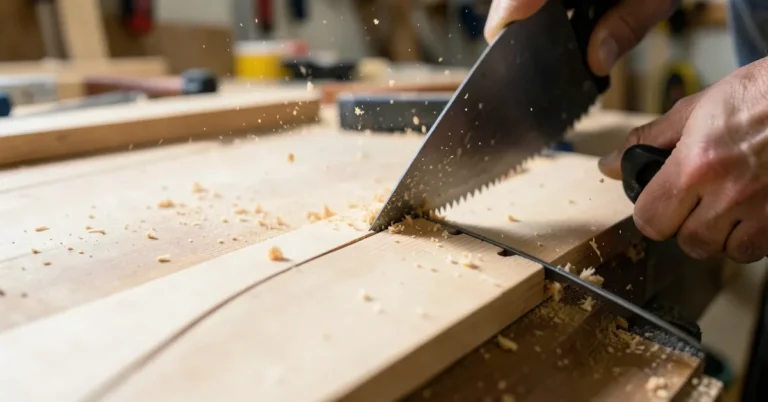
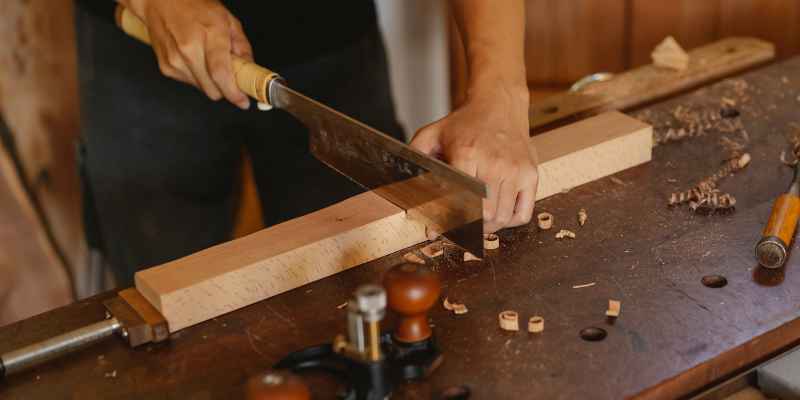
Yes. A table saw can resaw stock up to about 3 to 3.5 inches thick using the two-pass flip method described above. For thinner or narrower stock, a hand saw with a scored guide line also works, though staying on the line takes more practice than a fenced power tool cut.
Conclusion
Cutting a board in half by thickness is resawing, and the tool you choose changes how much wood you actually keep: a table saw’s 1/8″ kerf costs noticeably more material than a band saw’s 1/32–1/16″ kerf, especially once you’re flipping for a second pass on thicker stock. Budget for the kerf loss up front, use a tall fence for stability, and plan on a light cleanup pass with a planer before the resawn faces are glue-ready.
Sponsored / affiliate links. As an Amazon Associate I earn from qualifying purchases. I may earn additional commission from eligible campaigns.