Wood Deck Installation Cost: Full Price Breakdown
Figuring out the Wood Deck Installation Cost: Full Price Breakdown can feel a little tricky at first. Lots of numbers and different choices can make your head spin. But don’t worry!
We’ll break it all down nice and simple, step by step. We’ll show you exactly what goes into the price so you can plan your project without any surprises. Get ready to see how easy it is to understand what your new deck will cost.
Understanding Wood Deck Installation Cost
This section will give you a clear picture of all the factors that go into the price of building a wood deck. We’ll look at everything from the size of your deck to the type of wood you pick, and even the labor involved. Knowing these details helps you make smart choices for your budget and get the most for your money when you’re ready to build.
Deck Size and Shape
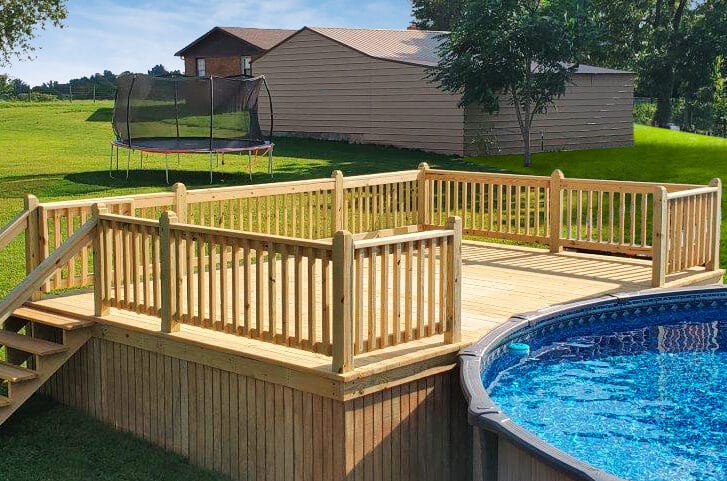
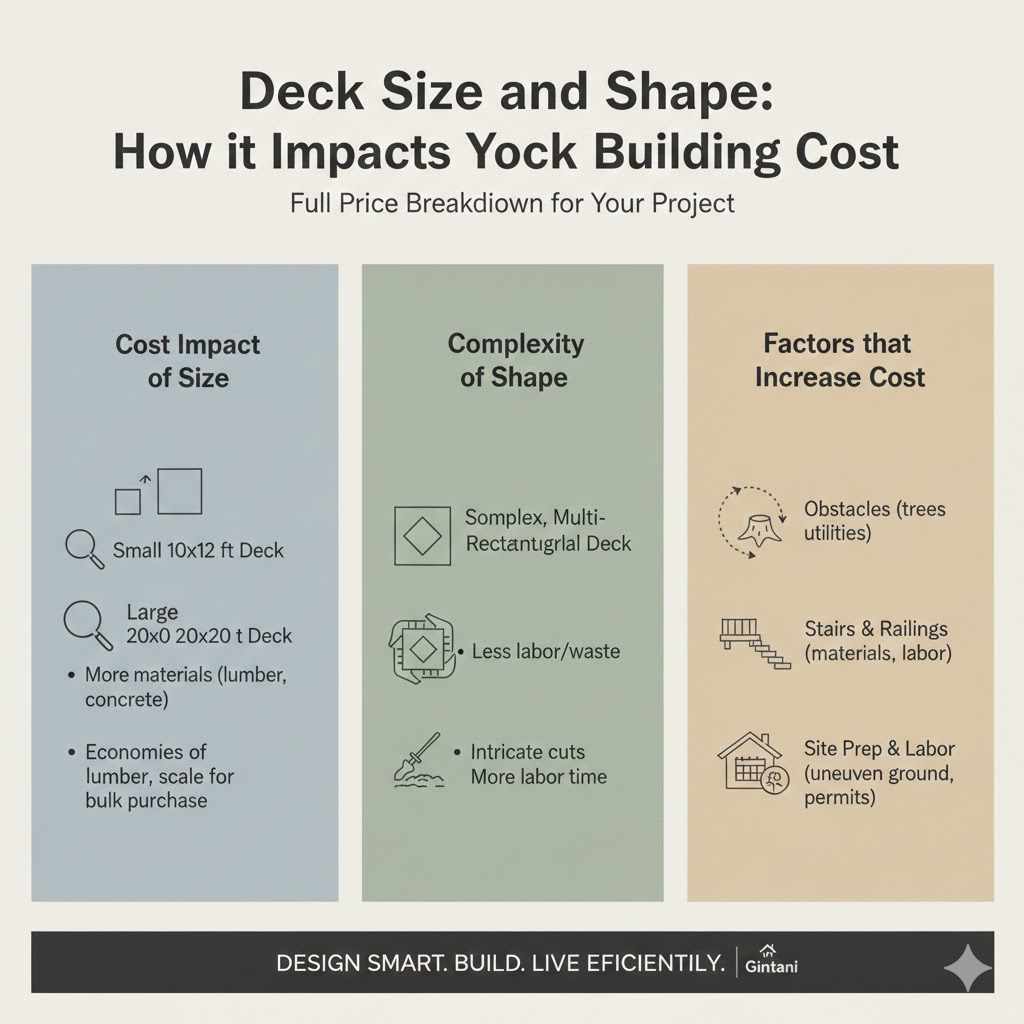
The size of your deck is a major factor in its overall cost. Bigger decks naturally require more materials, like lumber, fasteners, and concrete for footings. The shape also plays a role; simple rectangular or square decks are usually less expensive to build than complex, multi-level, or curved designs.
- Cost Impact of Size: A small 10×12 foot deck will cost significantly less than a large 20×20 foot deck. The difference isn’t just double; it can be more due to economies of scale in purchasing larger quantities of materials.
- Complexity of Shape: Designs that require intricate cuts, angled boards, or multiple corners add labor time and can also lead to more material waste, increasing the price. Think of a deck that wraps around an obstacle versus a straightforward square.
Material Selection for Decking
The type of wood you choose for your deck surface is a huge part of the budget. Different woods have different price points, durability, and maintenance needs. Your choice here will greatly influence the Wood Deck Installation Cost: Full Price Breakdown.
Common Decking Materials and Their Costs
| Wood Type | Average Cost Per Square Foot (Materials Only) | Pros | Cons |
|---|---|---|---|
| Pressure-Treated Pine | $4 – $8 | Affordable, readily available, resistant to rot and insects. | Requires regular sealing and staining, can warp or splinter over time. |
| Cedar | $7 – $12 | Naturally resistant to rot and insects, beautiful color, pleasant aroma. | Softer wood, can dent easily, requires sealing to maintain color. |
| Redwood | $8 – $15 | Highly durable, naturally resistant to rot and insects, beautiful rich color. | More expensive than pine or cedar, availability can vary. |
Pressure-treated pine is often the most budget-friendly option for decking. It’s chemically treated to resist decay and insect damage, making it a practical choice for many homeowners. Cedar and redwood offer natural beauty and resistance but come at a higher material cost.
Understanding Wood Grades
Within each type of wood, there are different grades. Higher grades typically mean fewer knots, straighter grain, and overall better appearance, but they also cost more. For a deck, a mid-grade wood often provides a good balance between looks and cost.
Moisture Content
The moisture content of the wood when purchased can also affect its price and how it performs. Kiln-dried lumber is more stable but usually more expensive than air-dried lumber. Proper drying is key to preventing warping and shrinking later on.
Framing and Support Structure
Beneath the surface of your deck lies a critical support system. The framing lumber, joist hangers, posts, and concrete footings are essential for a safe and sturdy deck. These components, while often hidden, contribute significantly to the total Wood Deck Installation Cost: Full Price Breakdown.
Lumber for Framing
Typically, pressure-treated lumber is used for the framing and support structure. This is because these parts are in constant contact with the ground or exposed to moisture. The size and spacing of the joists and beams depend on the decking material’s thickness and the expected load, which can also influence costs.
- Joist Size and Spacing: Standard joist sizes might be 2x8s or 2x10s, spaced 16 inches on center. Closer spacing or larger joists are needed for certain materials or to support heavier loads, increasing material costs.
- Beam and Post Requirements: The main support beams that carry the joists will be larger, and the number of posts needed depends on the deck’s span and design. Each post requires a concrete footing dug below the frost line for stability.
Footings and Foundation
For any deck, proper footings are non-negotiable. These are typically made of concrete and anchor the deck posts securely to the ground. The depth of the footings is determined by local building codes and the frost line to prevent the deck from shifting or heaving.
- Concrete and Rebar: The cost of concrete mix, rebar for reinforcement, and the labor to mix and pour it add up. Larger decks or those built on sloped terrain may require more extensive footing systems.
- Post Anchors: Metal post anchors are used to connect the wooden posts to the concrete footings, providing a strong, corrosion-resistant connection.
Hardware and Fasteners
While seemingly small, the nails, screws, bolts, and hangers used to assemble your deck are vital for its integrity. Using the right type of hardware is crucial for longevity and safety, and it’s an important detail in the Wood Deck Installation Cost: Full Price Breakdown.
Types of Fasteners
You have choices for fasteners. Galvanized or stainless steel fasteners are recommended for outdoor use to prevent rust and staining. Stainless steel is more expensive but offers superior corrosion resistance, especially in coastal areas or with certain types of wood.
- Deck Screws: These are specifically designed for decking, offering better holding power and reducing the chance of boards popping up compared to nails.
- Joist Hangers and Connectors: These metal brackets ensure strong connections between joists, beams, and posts. They are essential for structural integrity.
Hidden Fastener Systems
For a cleaner look, many homeowners opt for hidden fastener systems. These systems involve specialized clips or screws that are installed from the side or underneath the decking boards, leaving the surface free of visible screw heads. This aesthetic comes at a higher price, both for the hardware and the increased labor time.
Labor Costs
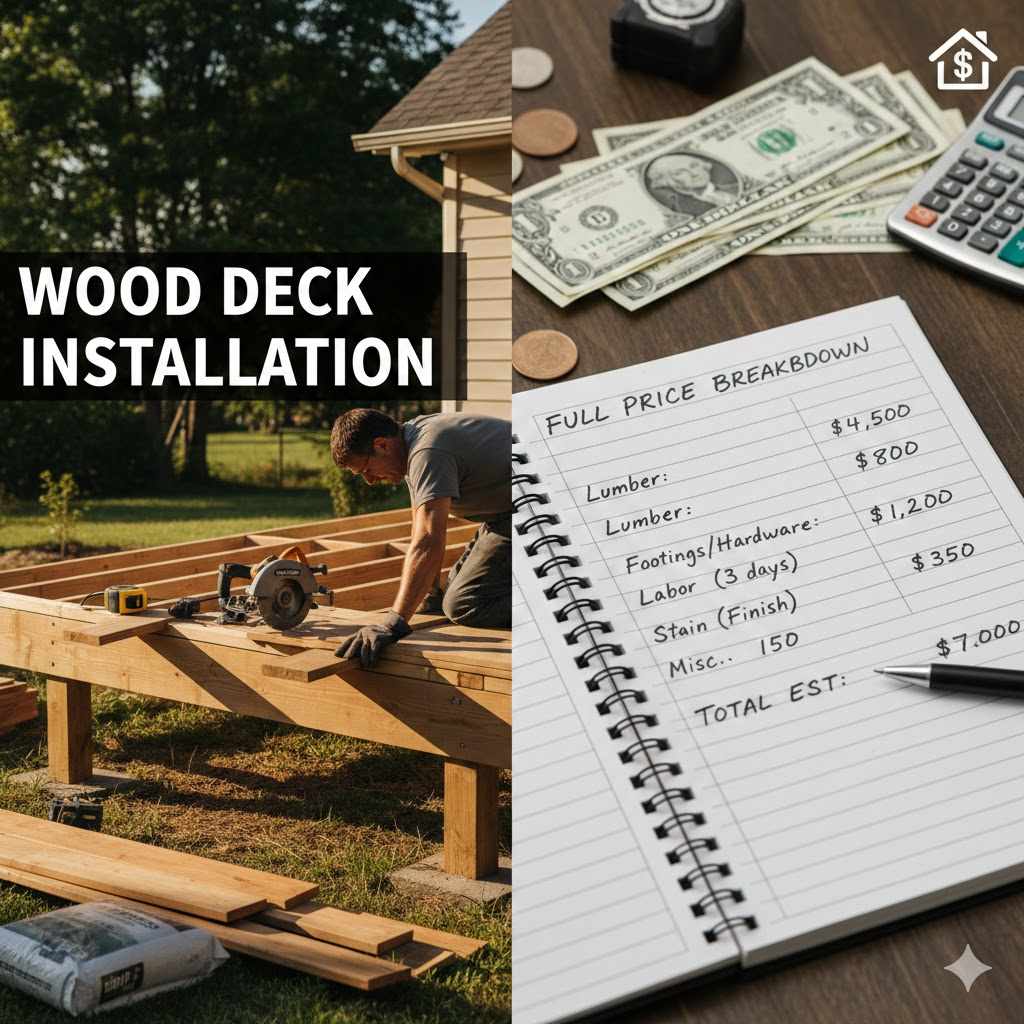
The cost of labor is often the largest single component of the total Wood Deck Installation Cost: Full Price Breakdown. This includes the wages for skilled carpenters and their crew, as well as the time it takes to complete the project from start to finish.
Factors Influencing Labor Costs
Several things affect how much you’ll pay for labor. The complexity of the design, the size of the deck, site accessibility, and the experience level of the contractor all play a part. A simple deck on a flat, easy-to-access backyard will cost less in labor than a multi-level deck on a steep slope.
- Contractor’s Hourly Rate vs. Project Bid: Some contractors charge by the hour, while others provide a fixed bid for the entire project. Understanding which method your contractor uses is important for budgeting.
- Experience and Reputation: Highly reputable contractors with years of experience may charge more, but their expertise often translates to a higher quality build and fewer potential issues down the road.
- Local Market Rates: Labor costs can vary significantly based on your geographic location. Areas with a higher cost of living generally have higher labor rates for construction trades.
Permits and Inspections
Most local governments require building permits for decks, especially for those over a certain size or height. The cost of these permits and any required inspections are often included in the contractor’s bid or paid for separately by the homeowner. These are crucial for ensuring your deck is built to code and is safe.
Additional Deck Features and Upgrades
Beyond the basic deck structure, many homeowners choose to add features that enhance its beauty, functionality, and value. These upgrades, while increasing the overall cost, can transform your deck into an outdoor living space.
Railing Systems
If your deck is more than 30 inches off the ground, building codes will likely require railings for safety. Railings can range from simple pressure-treated wood balusters to more elaborate styles using cedar, composite materials, or even metal. The material and design of your railing system will impact the final price.
- Wood Railings: These are the most common and often the most affordable. You can choose from treated pine, cedar, or redwood for consistency with your decking material.
- Composite or PVC Railings: These offer low maintenance and high durability but come at a higher initial cost. They are resistant to rot, fading, and splintering.
- Metal or Cable Railings: These modern options provide unobstructed views but are typically the most expensive choice.
Stairs and Access Points
The design and number of stairs needed to access your deck will also add to the cost. Wider stairs, multiple sets of stairs, or stairs with decorative risers or special handrails will increase both material and labor expenses.
Lighting and Electrical Work
Adding deck lighting can extend your enjoyment of the space into the evening. This includes deck post lights, stair lights, and accent lighting. The cost will depend on the number of fixtures, the type of lighting (LEDs are energy-efficient), and the complexity of the electrical work involved, including hiring a licensed electrician.
Built-in Features
Consider built-in seating, planters, or even outdoor kitchens. These custom additions are designed specifically for your deck and can significantly increase the project’s total cost due to custom fabrication and installation. They offer a high level of convenience and style.
DIY vs. Professional Installation
The decision to build your deck yourself or hire professionals is a major consideration that greatly impacts the Wood Deck Installation Cost: Full Price Breakdown. Each option has its pros and cons.
DIY Deck Installation
Taking on a DIY deck project can save you a considerable amount on labor costs. However, it requires significant time, effort, and a good understanding of construction techniques, tools, and building codes. You will still need to purchase all materials and rent or buy necessary tools.
- Potential Cost Savings: You save on the labor portion, which can be 40-60% of the total project cost. This can make a bigger deck or higher-quality materials more affordable.
- Time Commitment: Building a deck yourself is a time-consuming process, often taking weeks or even months depending on your availability and skill level.
- Tool and Skill Requirements: You’ll need a wide range of tools, from basic saws and drills to more specialized items like post-hole diggers and potentially a concrete mixer. Having basic carpentry skills is essential.
Professional Deck Installation
Hiring a professional deck builder ensures the job is done correctly, efficiently, and to code. While the upfront cost is higher due to labor charges, it can save you from costly mistakes and potential structural issues.
- Expertise and Efficiency: Professionals have the experience to build quickly and correctly, minimizing errors and ensuring a high-quality finished product.
- Warranty and Guarantees: Reputable contractors often offer warranties on their workmanship, providing peace of mind.
- Access to Resources: They often have established relationships with lumber suppliers and may be able to source materials more affordably or efficiently.
Sample Scenario Comparison
Let’s look at a hypothetical 12×16 foot deck. Materials might cost $3,000-$5,000. A professional installer might charge $4,000-$7,000 in labor.
So, a professionally installed deck could range from $7,000 to $12,000. If you did it yourself, you’d save that $4,000-$7,000 labor cost, paying only for materials and tools.
Estimating Your Total Wood Deck Installation Cost
Putting all these pieces together helps you estimate the Wood Deck Installation Cost: Full Price Breakdown for your specific project. It’s not just about one price; it’s about understanding the variables.
Key Factors to Consider for Your Quote
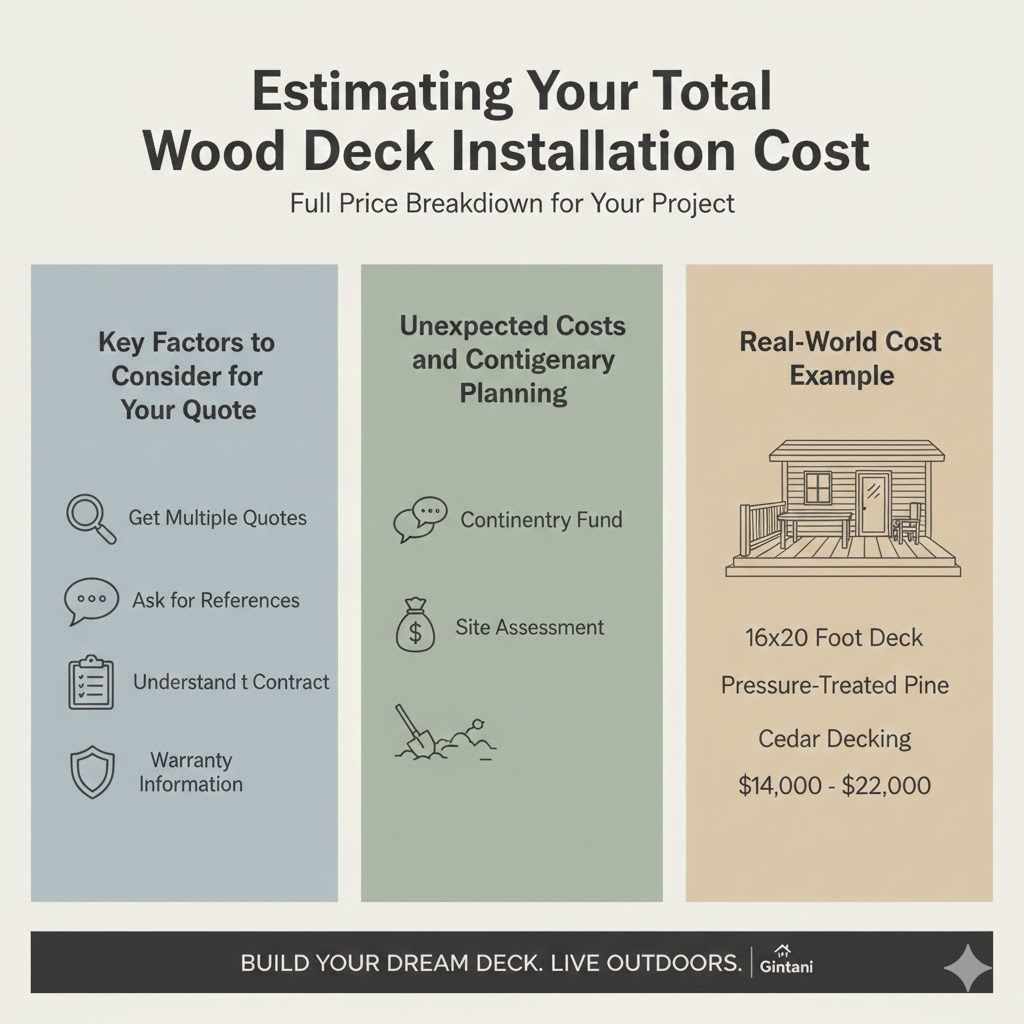
When you get quotes from contractors, ensure they are detailed and include all the items we’ve discussed: size, shape, materials for decking and framing, hardware, footings, and any chosen upgrades like railings or lighting. Don’t hesitate to ask for clarification on anything you don’t understand.
- Get Multiple Quotes: Always get at least three detailed quotes from different reputable contractors. This allows you to compare pricing and services.
- Ask for References: Check reviews and ask for references from past clients to gauge the contractor’s reliability and quality of work.
- Understand the Contract: Read the contract carefully before signing. It should outline the scope of work, materials to be used, timeline, payment schedule, and warranty information.
Unexpected Costs and Contingency Planning
It’s always wise to budget a little extra for unexpected issues. For example, encountering difficult soil conditions when digging footings, or discovering underground utilities you didn’t know were there, can add to the cost and timeline.
- Contingency Fund: Aim to set aside 10-20% of your estimated budget for unforeseen problems. This can prevent stress if minor issues arise.
- Site Assessment: A good contractor will perform a thorough site assessment before providing a final quote, which helps minimize surprises.
Real-World Cost Example
A 16×20 foot deck made from pressure-treated pine with a simple railing and stairs, built by a professional in a suburban area, might cost between $10,000 and $18,000. If cedar decking was chosen, the cost could increase to $14,000 – $22,000. This range reflects variations in labor rates, contractor overhead, and specific material choices.
Frequently Asked Questions
Question: What is the average cost per square foot to build a wood deck?
Answer: The average cost per square foot for a wood deck installation can range from $50 to $100. This price often includes materials and labor, but it can vary widely based on the wood type, complexity of the design, and your location.
Question: How much does pressure-treated pine decking cost?
Answer: Pressure-treated pine decking typically costs between $4 and $8 per square foot for the materials alone. This is one of the most affordable options available for deck building.
Question: Does the cost of permits factor into the total price?
Answer: Yes, building permits are often required and their cost is usually included in a professional installer’s quote or paid for separately by the homeowner. These fees ensure your deck meets local building codes.
Answer: Yes, hidden fastener systems generally increase the overall cost. They require more time and specialized tools to install, and the hardware itself is usually more expensive than standard screws.
Question: How can I reduce the cost of my wood deck installation?
Answer: You can reduce costs by choosing more affordable wood like pressure-treated pine, opting for a simpler design, doing some of the work yourself (DIY), or by comparing quotes from multiple contractors to find the best value.
Summary
Understanding the Wood Deck Installation Cost: Full Price Breakdown involves looking at deck size, wood type, framing, hardware, and labor. Simple designs and common woods like pressure-treated pine keep costs lower. Upgrades like fancy railings or built-in features add expense.
Getting multiple detailed quotes and budgeting for surprises is smart. You can build a beautiful deck that fits your space and budget.