Trex Decking Plugs: The Complete Color-Matching Guide (2026)
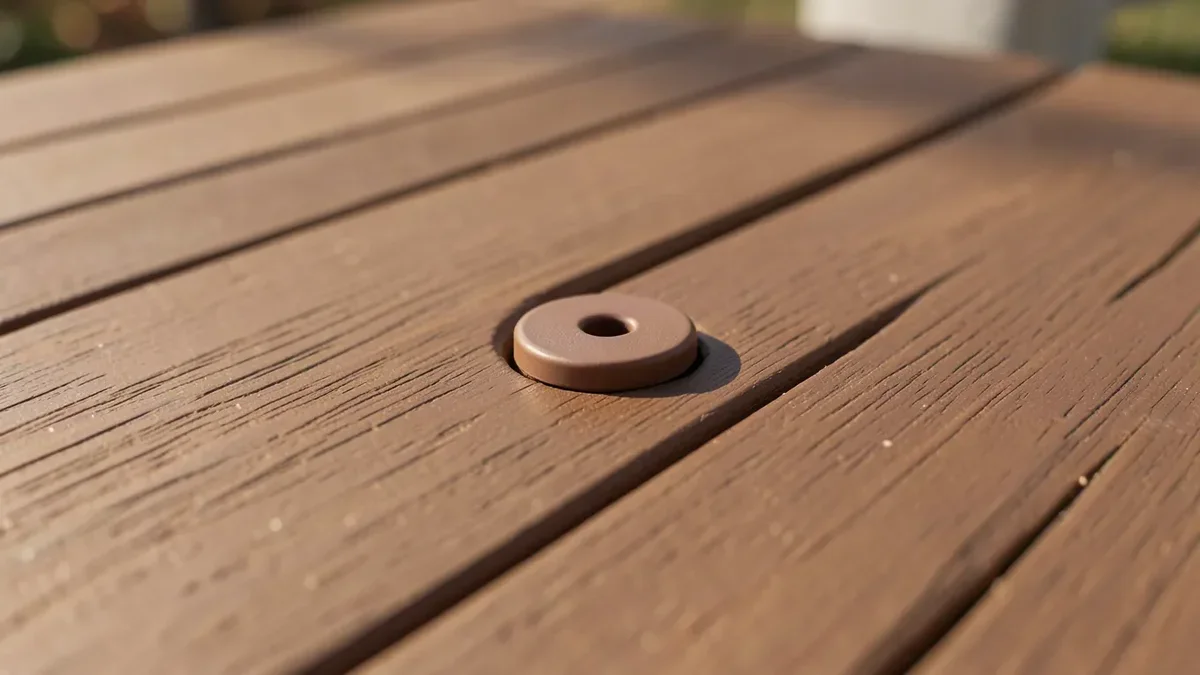
Trex decking plugs are small color-matched inserts that tap into a countersunk screw hole on composite deck boards, hiding the fastener and leaving a smooth, continuous surface. The tricky part is not the tapping-in – it is picking the right plug. Trex does not sell one universal plug color; it sells plugs by product line, and a plug that matches a Transcend board will not correctly match or fit an Enhance board even when both are described as “brown.” Here is what actually determines the right plug, and a genuine Trex-brand option that is currently in stock.
What Trex Decking Plugs Actually Are
Trex calls its plug-and-screw fastening system Hideaway. Instead of a visible screw head sitting on top of the board, the installer drives a color-matched composite screw into a countersunk pilot hole, then taps a plug made from the same shell material into the counterbore until it sits flush. The result hides the fastener completely and keeps water, dirt, and UV exposure out of the hole – a plain screw head left exposed on composite decking is a common spot for moisture to sit and for the surrounding material to discolor faster than the rest of the board.
Genuine Trex Hideaway Plugs
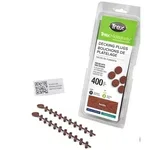 |
Trex Hideaway Decking Plugs, 400-Count, Saddle – $89.99 The genuine Trex-brand plug, made from the same composite shell material as Trex boards for a real color and texture match.
|
The pack above is the genuine Trex Hideaway plug in Saddle, sized for the solid-core board lines. Before ordering any plug, though, you need to know which of Trex’s board families you actually have – that single detail determines which plug will fit and match.
Why the Right Match Depends on Your Trex Line, Not Just the Color Name
This is the detail most homeowners miss: Trex’s solid-core lines – Signature, Lineage, Transcend, and Select – share the same board core profile, so a single Hideaway plug design fits across all four. You only need to match the specific board color within that shared design. Trex Enhance is a different animal. Its boards use a scalloped, hollow-core profile rather than a solid core, so Enhance needs its own dedicated plug line, sold and colored separately from the solid-core plugs. A plug sized for a solid-core board will not seat properly in Enhance’s shallower shell, and an Enhance plug will not sit flush in a solid-core board either.
In practice, that means the question to ask before buying is not “what color is my deck,” it is “which Trex line is my deck, and what color within that line.” Checking the stamp on the board’s underside or your original invoice for the line name (Enhance, Select, Transcend, Transcend Lineage, or Signature) takes a few minutes and avoids ordering a plug that never should have been paired with your boards in the first place.
Trex Color Lines at a Glance
Trex organizes its current colors by line and price tier. Use this as a starting checklist, then confirm the exact shade against your own boards or Trex’s swatch samples before ordering plugs, since lighting and monitor color can shift how a name like “Saddle” or “Spiced Rum” actually looks.
| Trex Line | Colors | Plug Type Needed |
|---|---|---|
| Enhance | Beach Dune, Saddle, Clam Shell, Tide Pool, Pebble Beach | Enhance-specific plug (scalloped/hollow-core) |
| Select | Pebble Grey, Millstone, Malted Barley | Standard Hideaway plug (solid-core) |
| Transcend | Spiced Rum, Havana Gold, Tiki Torch, Island Mist, Rope Swing, Lava Rock | Standard Hideaway plug (solid-core) |
| Transcend Lineage | Hatteras, Jasper, Biscayne, Carmel, Rainier, Salt Flat | Standard Hideaway plug (solid-core) |
| Signature | Ocracoke, Whidbey | Standard Hideaway plug (solid-core) |
Notice that “Saddle” shows up as one of the standard Hideaway plug colors and is also close to several Enhance and Transcend board tones – which is exactly the kind of overlap that leads people to grab the wrong pack. The line determines the plug family first; the color name only narrows it down after that.
How Trex Decking Plugs Are Installed
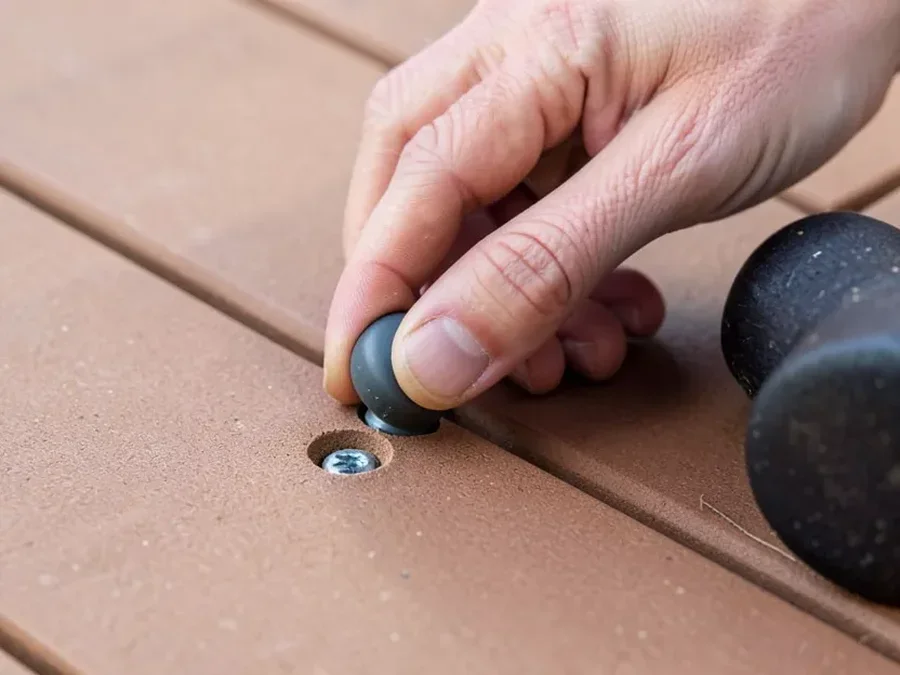
Trex’s own installation guidance calls for its color-matched composite screws and a Trex depth-setter tool, not a generic drill bit and countersink. The depth setter keeps every pilot hole the same depth, which matters because a hole that is too shallow leaves the plug sitting slightly proud of the surface, and one that is too deep leaves a visible gap around the plug’s edge. The general sequence is:
- Countersink a pilot hole at the manufacturer’s specified depth using the Trex depth-setter tool.
- Drive the matching Trex composite screw until the head sits below the board surface, inside the counterbore.
- Tap the color-matched plug into the counterbore with a rubber mallet until it sits flush with the surrounding board.
- Wipe away any composite dust before it sets into the surrounding grain texture.
Skipping the Trex-specific screw and tool and using a standard wood screw with a generic countersink bit is the most common reason a plug ends up loose, crooked, or sitting above the board line within the first season.
What Trex Decking Plugs Cost
Pricing runs by pack size and line. A 400-count pack of standard Trex Hideaway plugs for the solid-core lines lists for roughly $90, which works out to well under a quarter per plug on a full deck rebuild. Enhance-specific plugs are typically sold in smaller 75- to 80-count packs in the $25 to $35 range, reflecting the lower volume of that separate product line. Either way, buying a full pack up front – rather than a handful at a time – is worth it, since color batches can shift slightly between production runs.
Maintenance and Color Fade Over Time
Composite decking, Trex included, typically loses a bit of its factory sheen and settles into a slightly muted, stabilized color over the first several months to a year of sun exposure before the color largely levels off. If you are ordering plugs for a deck that was installed recently, the plug and board may look like an exact match on day one and then diverge slightly once the boards finish weathering. For a brand-new install, it is worth ordering plugs at the same time as the boards so both age together, rather than buying plugs months later once the boards have already lightened or dulled.
Composite vs. Wood: When Plugs (and Composite Decking) Make Sense
Color-matched plugs are a composite-decking-specific detail – they exist because composite boards are engineered to hide fasteners and resist the moisture damage that a wood deck’s exposed screw holes are prone to. If you have not settled on composite over real lumber yet, it is worth weighing the tradeoffs directly: our cedar vs. pressure-treated deck comparison covers cost, maintenance, and lifespan for the two most common wood options, so you can decide whether a wood deck or a composite decking system like Trex is the better fit before you get to fastener-level decisions like plug color.
Frequently Asked Questions
What are Trex decking plugs?
Trex decking plugs are small composite inserts, made from the same shell material as Trex boards, that tap into a countersunk screw hole to hide the fastener and keep the deck surface smooth and continuous. They are sold under Trex’s own Hideaway system and are color-matched to specific board lines rather than sold as a single universal color.
Do Trex decking plugs come in different colors for each line?
Yes. Trex groups its plug colors by product line rather than offering one plug that fits every board. Enhance uses its own line-specific colors such as Beach Dune, Saddle, Clam Shell, Tide Pool, and Pebble Beach, while the solid-core lines (Signature, Lineage, Transcend, and Select) share a separate set of Hideaway plug colors matched to their own board tones.
Can I use the same plug on Enhance and Transcend decking?
No. Enhance boards have a scalloped, hollow-core profile that needs Trex’s Enhance-specific plugs. Transcend, Signature, Lineage, and Select share a solid-core profile and use the standard Trex Hideaway plug line instead. A plug made for one profile will not seat correctly in the other, even if the color looks close.
How much do Trex decking plugs cost?
A 400-count pack of standard Trex Hideaway plugs for the solid-core lines runs around $90, while smaller 75- to 80-count packs of Enhance-specific plugs typically cost $25 to $35 depending on the color and retailer.
Do I need special tools to install Trex decking plugs?
Yes. Trex recommends its own color-matched composite screws and a depth-setter tool to countersink each hole to a consistent depth before the plug is tapped in flush. Using the wrong bit depth is the most common reason a plug sits proud of the board or falls out later.
Bottom Line
Before you order Trex decking plugs, confirm which line your boards belong to – Enhance needs its own plug, while Signature, Lineage, Transcend, and Select share the standard Hideaway plug – then match the color within that line rather than by name alone. Get the line right first, and matching the exact shade is the easy part.
Sponsored / affiliate links. As an Amazon Associate I earn from qualifying purchases. I may earn additional commission from eligible campaigns.