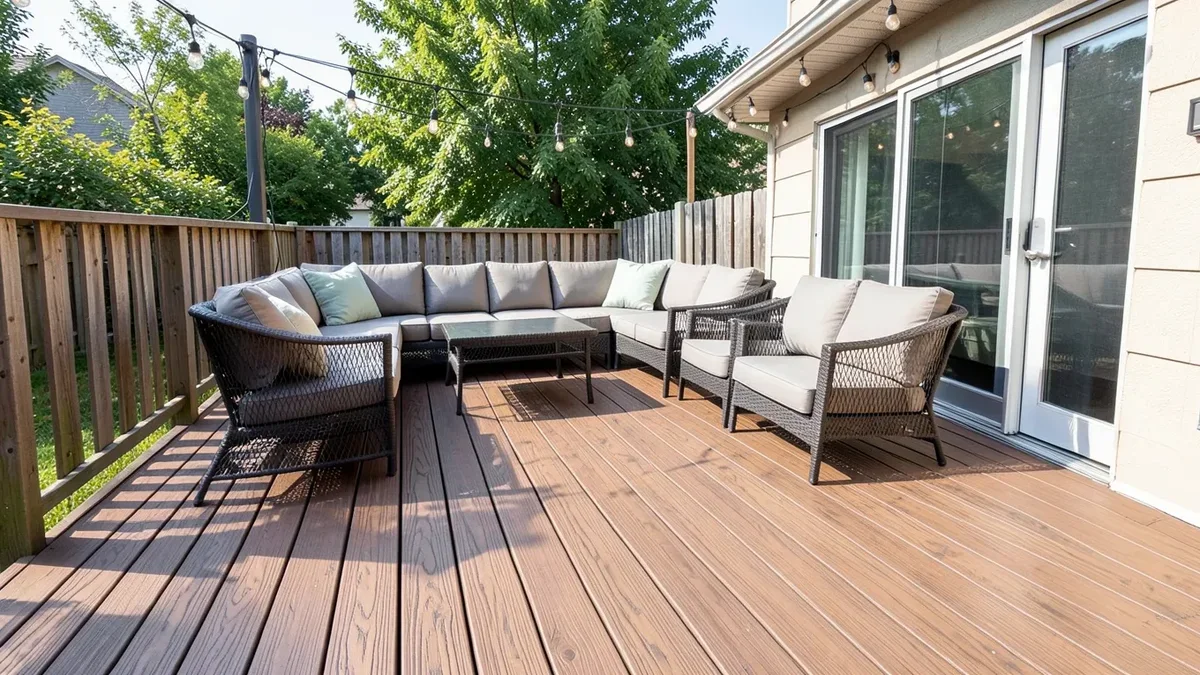
Trex Decking Colors: Every Collection Compared (2026 Update)
Trex is the name most homeowners mean when they say “composite decking,” and color is usually the first real decision in the buying process – before board width, before fastener style, before any of it. The lineup has actually changed for 2026: Trex named a new Color of the Year, refreshed its mid-tier Select colors, and added a new line most decking articles haven’t caught up on yet. Here’s what’s actually in the current color lineup, which line each shade belongs to, and how to pick one that will still look right on your house five summers from now.
Trex’s Product Lines, and Why the Line You Pick Limits Your Colors
Trex doesn’t sell one composite board in twenty colors – it sells six different product lines, and each one has its own, smaller color list. That trips people up more than the colors themselves. The lineup runs Enhance (entry-level, three-sided capping, solid or lightly multi-tonal colors), Select (mid-tier, three-sided capping, a wider color range), Transcend (premium, four-sided capping, high-definition wood grain), Transcend Lineage (the heat-mitigating version of Transcend, built to stay cooler underfoot in direct sun), Signature (the top of the range, made to pass for real exotic hardwood), and Refuge, a newer line Trex launched in January 2026 in two colors – Martis Valley and Point Reyes. If a color you like turns out to only exist in Signature, that’s a real budget decision, not a small detail: Signature boards run well above Enhance pricing for the same square footage.
Trex-Safe Cleaner We’d Grab First
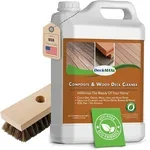 |
DeckMax Premium Deck Cleaner Kit – $45.55 Keeping the actual color you picked looking right long-term comes down to cleaning it the right way – this kit is formulated specifically not to strip or dull a composite cap.
|
Trex’s 2026 Color of the Year, and What Else Is New
Trex named Biscayne its 2026 Color of the Year – a warm taupe with subtle charcoal streaking, inspired by mangrove and sandy-shoreline tones, and available in the Transcend Lineage line. That’s worth knowing because most “Trex colors” articles online are still working off an older color chart and won’t mention it. Select also got a real refresh for 2026: five updated colors – Malted Barley (earthy brown and soft gray blended together), Millstone (a weathered gray with charcoal undertones), Whiskey Barrel (a warm brown built to read like aged oak), plus Pebble Grey and Saddle in the Select line’s own version. Transcend Lineage separately picked up a new shade called Hatteras. If you’re pricing this out now, the color you actually want may not have existed when an article you’re reading was written – it’s worth cross-checking Trex’s own site before you order samples.
Color Options by Collection
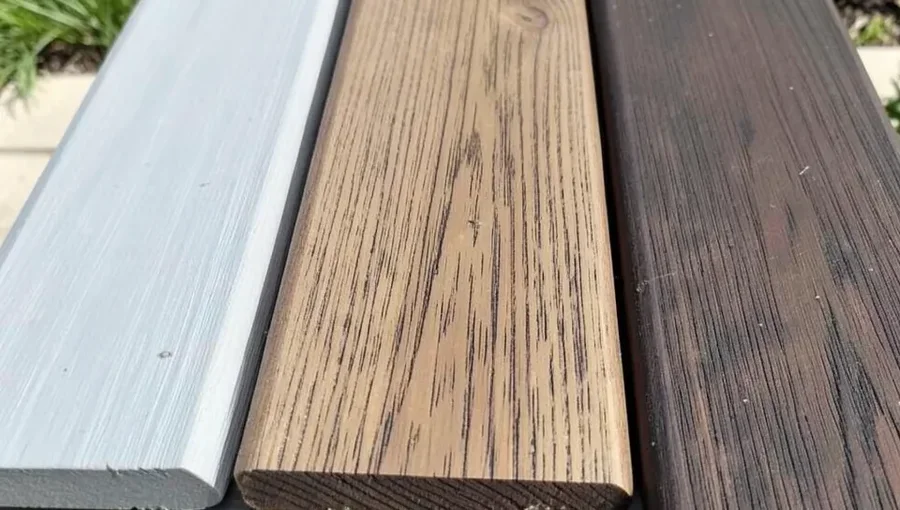
Here’s how the colors break out across lines. A few names (Saddle, Pebble Grey) show up more than once because Trex reuses a color name across two lines with slightly different grain and capping – always confirm which line a color belongs to before you order, since the price and warranty differ even when the name matches.
| Line | Representative Colors | Key Feature |
|---|---|---|
| Enhance | Clam Shell, Saddle, Tide Pool, Foggy Wharf, Toasted Sand, Rocky Harbor | Entry-level, three-sided capping, budget-friendly |
| Select | Pebble Grey, Saddle, Malted Barley, Millstone, Whiskey Barrel (last three new for 2026) | Three-sided capping, wider color range than Enhance |
| Transcend | Havana Gold, Spiced Rum, Tiki Torch, Island Mist, Lava Rock, Rope Swing | Four-sided capping, high-definition grain |
| Transcend Lineage | Biscayne (2026 Color of the Year), Rainier, Carmel, Jasper, Island Mist Lineage, Salt Flat, Hatteras | Heat-mitigating shell, stays cooler in direct sun |
| Signature | Whidbey, Ocracoke | Luxury tier, built to mimic exotic hardwood |
| Refuge (new Jan 2026) | Martis Valley, Point Reyes | Newest line, two-color launch |
Does Composite Color Actually Fade?
This is where a lot of composite marketing oversimplifies things. It’s true that Trex’s color doesn’t fade the way untreated wood does – wood grays from UV breakdown of lignin at the surface, and that’s a fundamentally different process than what happens to a plastic-composite cap. Trex’s capped boards resist that specific kind of graying almost entirely. But “doesn’t fade like wood” isn’t the same as “never fades.” Capped composite can still show a modest amount of color shift in its first year or so of full sun exposure as the cap’s outer layer weathers in, and it can lose a small amount of saturation over many years the way any exterior plastic does under UV. Darker, more saturated colors (Spiced Rum, Jasper) show this shift less visibly than very light or very uniform colors, simply because a small amount of fade is harder to see against a color that already reads dark. Trex backs its Transcend and Signature lines with a 50-year residential fade-and-stain warranty, which is a real, meaningful number – but it’s a warranty against defect-level fading, not a claim that the color is chemically frozen in place forever.
Matching a Trex Color to Your House and Climate
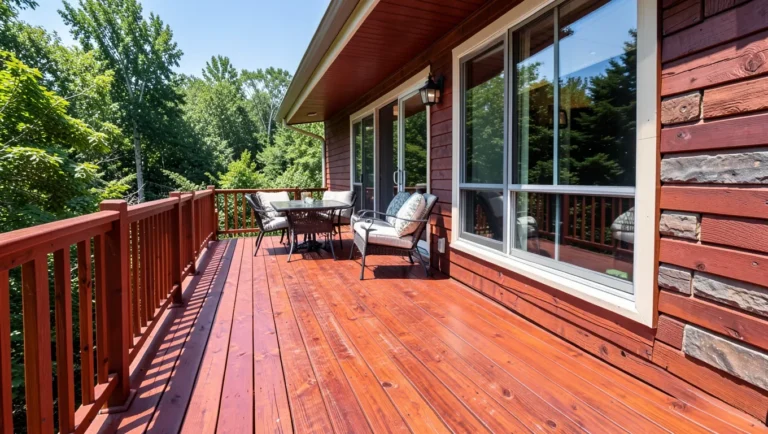
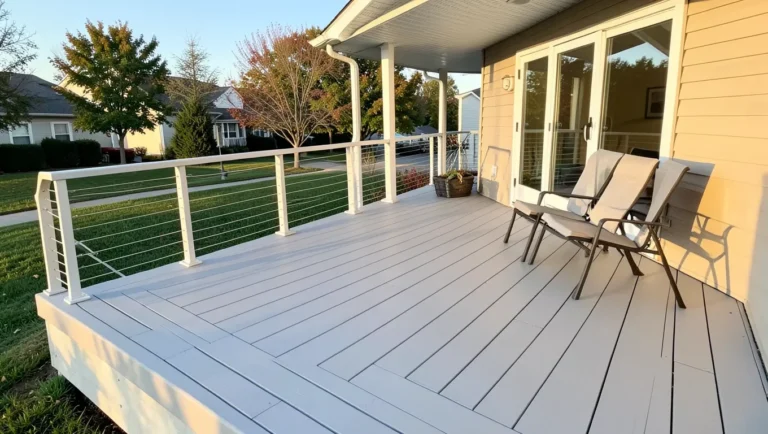
Start with your siding, not the deck. Warm-toned siding (beige, brick, cedar-stained) generally pairs better with browns and warm grays – something like Saddle or Havana Gold – than with a cool blue-gray board that will visually fight the house. Cool-toned siding (gray, white, blue) tends to pair better with Biscayne, Island Mist, or Whidbey. If the house sits in a wooded lot, a mid-to-dark brown blends into the tree line better than a light gray will; on a coastal or open lot, lighter grays read as more natural.
Climate is a real factor, not just aesthetics. Dark, highly saturated colors absorb more solar heat and can get noticeably hot underfoot on a sunny afternoon – that’s simple physics, darker surfaces absorb more visible light as heat, and it applies to composite the same way it applies to a dark car hood. If you’re in a hot-summer climate and want a dark color anyway, that’s specifically what the Transcend Lineage line’s heat-mitigating shell is built to address; it’s worth the line’s extra cost if bare feet on the deck in July is a real consideration for how you’ll use the space.
For related comparisons, our guides on how Trex compares to other composite decking brands and Wolf decking vs. Trex both cover how color range and pricing stack up against Trex’s main competitors, if you haven’t fully committed to the Trex brand yet.
Mixing Colors on One Deck
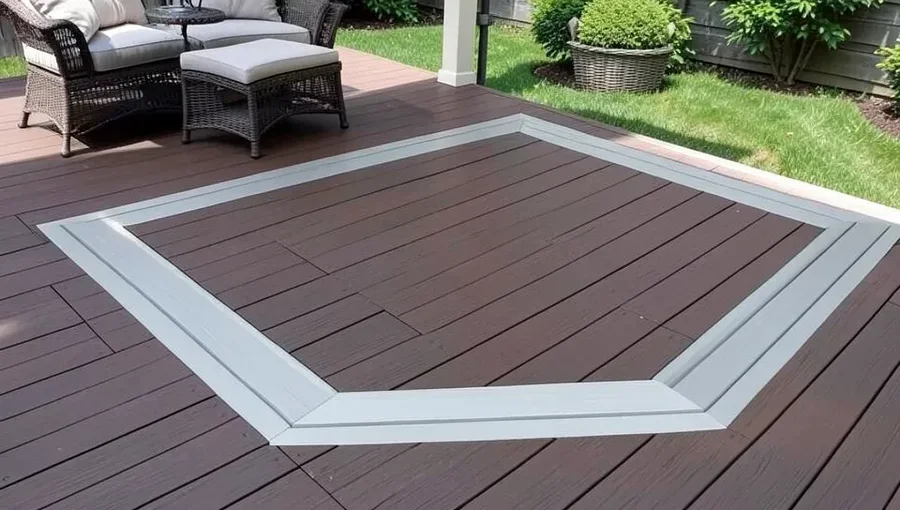
Trex boards from the same line can be combined on one deck, and it’s a common enough design move that it has its own name: a “picture-frame” border, where a contrasting color runs around the perimeter of the deck field. A common combination is a darker field color (Spiced Rum, Jasper) framed by a lighter border (Island Mist, Pebble Grey), which reads as more finished than a single flat color across the whole surface. The same idea works on stairs – a different color on stair treads than the main deck field is a low-cost way to add visual separation without changing materials. If you go this route, order samples of both colors together rather than separately; two colors that each look good alone can clash once they’re actually side by side.
Ordering Samples Before You Commit
Trex offers free samples directly through its site, and it’s worth using them – a color chip under store lighting or on a screen reads differently than the same board on your actual house. Lay the sample flat against your siding at a few different times of day; a color that looks right at noon can shift noticeably at dusk under warmer light. If you’re weighing composite against a cost-comparison to wood before deciding on Trex at all, our composite vs. wood decking cost breakdown and our Trex pricing guide both cover where the line-by-line price differences actually land per square foot.
Conclusion
The color decision on a Trex deck is really two decisions stacked together: which line fits your budget, and which color in that line fits your house and climate. Start with the line – Enhance, Select, Transcend, Transcend Lineage, Signature, or the new Refuge – since that determines both your price and your actual color menu, then narrow down from there using real samples against your own siding, not a photo on a screen. If you’re in a hot climate and drawn to a dark color, the Lineage line’s heat-mitigating shell is worth the upcharge. And once the deck is built, a composite-safe cleaner – not a wood deck cleaner, not straight bleach – is what keeps the color you picked looking the way it did on day one.
FAQs
What are the most popular Trex decking colors?
Spiced Rum, Island Mist, and the new 2026 Color of the Year, Biscayne, are among the most requested. Spiced Rum is a deep brown with black streaking, Island Mist is a weathered coastal gray, and Biscayne is the warm taupe Trex is currently promoting as its flagship 2026 shade.
Can I paint or stain Trex decking to change the color?
Older, uncapped Trex boards can technically be painted, but Trex does not recommend painting or staining any of its current capped lines (Enhance, Select, Transcend, Signature, Refuge). The cap is a solid plastic shell, not a porous wood surface, so paint doesn’t bond to it reliably and can trap moisture underneath instead of sealing it out. If you don’t like the color, the practical fix is replacing the boards, not repainting them.
How do I clean Trex decking to maintain its color?
Regular cleaning is just mild dish soap, water, and a soft-bristle brush. For mildew, pollen film, or set-in grime, a cleaner formulated specifically for composite (not a wood-deck cleaner or straight bleach) removes buildup without dulling the cap’s finish. Avoid pressure-washing at close range or high PSI, since it can etch the surface of the cap over time.
Do Trex decking colors fade over time?
Capped Trex colors don’t gray the way untreated wood does, but they can show a modest amount of color shift during the first year of full sun exposure as the outer cap weathers in, and a small amount of further fade over many years, like most exterior plastics under UV. Darker colors tend to show this less visibly than lighter, flatter colors. Trex’s Transcend and Signature lines carry a 50-year fade-and-stain warranty against defect-level fading.
How do I choose a Trex color for a sunny climate?
Lighter colors absorb less solar heat and stay cooler underfoot than dark, saturated ones. If you want a darker color anyway, Trex’s Transcend Lineage line uses a heat-mitigating shell specifically designed to stay cooler in direct sun than a standard cap in the same color depth.
Sponsored / affiliate links. As an Amazon Associate I earn from qualifying purchases. I may earn additional commission from eligible campaigns.