Wood Fence Pickets: Sizes, Styles, Spacing & Picket Counts
Wood fence pickets are sold as nominal 1×4 and 1×6 boards, but a 1×6 actually measures 3/4 by 5-1/2 inches, and many pressure-treated pickets are only 5/8 inch thick. That gap between tag and tape decides how many boards you buy. An 8-foot section takes 17 pickets of 1×6 with a 5/32 inch gap, or 18 pickets of 1×4 with about a 2 inch gap. This guide covers top styles, true sizes, thickness, spacing, rail height and picket counts, with the arithmetic shown.
Wood Fence Picket Sizes and Gaps at a Glance
Best Picket Gap Tool Pick
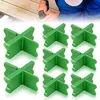 |
8-Piece ABS Spacer Set (1/16, 1/8, 3/16 and 1/4 inch) – $7.99 Sold as deck board spacers, but the 1/8 to 1/4 inch sizes match the small privacy-fence gaps this guide works out for 1×6 pickets, so you can set each board without a tape measure.
|
As an Amazon Associate we earn from qualifying purchases.
The sizes below come from the product listings and installer guides named in each section. Where a figure is a calculation instead of a published spec, we say so, so you can rerun it with your own boards.
| Picket | Actual thickness x width | Where the figure comes from |
|---|---|---|
| Nominal 1×4 board | 3/4 x 3-1/2 in | Dressed lumber size under PS 20; a 1×4 dog-ear picket drawing at dimensions.com lists 3.5 in wide and 0.625 in thick |
| Nominal 1×6 board | 3/4 x 5-1/2 in | Dressed lumber size under PS 20 |
| 1×6 pressure-treated dog-ear picket | 5/8 x 5-1/2 in | Big-box listings, for example Menards lists 5/8 x 5-1/2 in x 6 ft |
| Full-width cedar picket | 5/8 x 6 in | One cedar supplier lists a 5/8 inch thick, true 6 inch face |
Notice the last row. A cedar picket sold as a full 6 inch board is half an inch wider than a standard 1×6, and that half inch changes the picket count later in this guide.
What Styles of Wood Fence Pickets Are There?
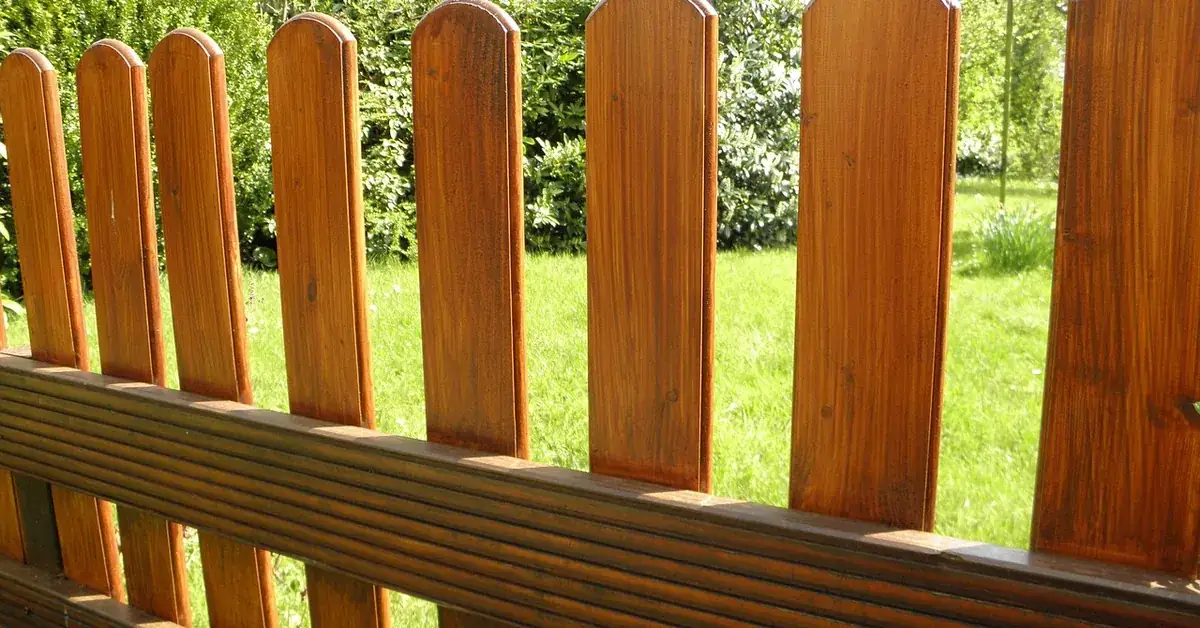
The three classic top cuts are dog-ear, flat-top and French Gothic. All three come off the same board; only the top few inches change. Round-top pickets, like the ones in the photo at the top of this page, are a fourth shape you will also see on garden fences.
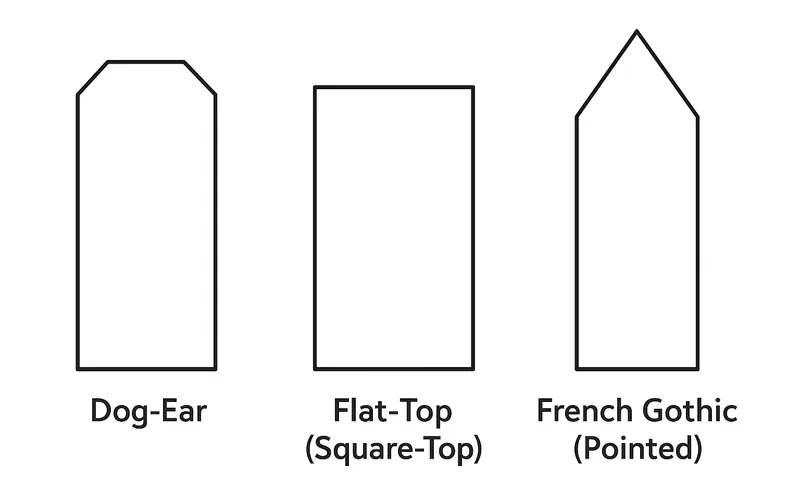
Dog-ear: clipped corners
A dog-ear picket has both top corners cut off at an angle, leaving a short flat section in the middle. It is the style you will see most often in home-center listings for 6 foot privacy pickets.
Flat-top: the plain cut
Flat-top pickets are simply cut square. The flat end grain is a small horizontal surface where rain can sit, which is why many builders cover a flat-top fence with a cap rail. That is general end-grain behavior, not a measured test of our own, so treat it as a reason to finish the tops rather than a hard rule.
French Gothic: the pointed top
The pointed top is a decorative cut that mostly appears on open picket fences, where the gaps let the shape show. If you are choosing between a closed privacy layout and an open one, our comparison of wood fence designs puts the styles side by side.
Nominal vs Actual: Which Width Should You Plan With?
Nominal sizes are the old rough-sawn names. After drying and planing, a dressed board is 1/4 inch thinner than its name and 1/2 inch narrower: nominal 1×4 becomes 3/4 x 3-1/2, and nominal 1×6 becomes 3/4 x 5-1/2. Always plan with the actual width in the picket listing, because it varies by supplier.
Here is why it matters. In an 8 foot (96 inch) post-to-post section, 17 pickets that are 5.5 inches wide cover 17 x 5.5 = 93.5 inches, so they fit with a little gap to spare. Seventeen full 6 inch cedar pickets cover 102 inches and do not fit at all; that section takes 16 boards, which is exactly 16 x 6 = 96 inches with no gap.
How Thick Should a Fence Picket Be: 5/8 or 3/4 Inch?
Most pressure-treated dog-ear pickets at big-box stores are 5/8 inch thick, while a true 1x board is 3/4 inch. The difference looks small, but stiffness against bending grows with the cube of thickness for a board of the same width and species. So a 5/8 inch picket is (5/8 divided by 3/4) cubed, about 0.58 times as stiff as a 3/4 inch one, or roughly 42 percent less. The 5/8 inch board also contains 17 percent less wood.
That is a calculation, not a test result, and it does not make 5/8 inch pickets bad. It explains why thin pickets flex in wind and show waves sooner on a long run, and why fastener placement matters. Our guide on what type of screws to use for a wood fence covers lengths and spacing, so read it before you buy fasteners for thin pickets.
How Much Space Should You Leave Between Fence Pickets?
Leave no gap on wet pressure-treated pickets, and about 1/8 inch on dry ones. A fence installer guide from Fantastic Fence says privacy boards should be butted tight when installed, and as they dry they open gaps of 1/8 to 1/2 inch. Open picket styles use planned gaps of roughly 2 to 3 inches, with 1×4 boards.
Shrinkage can open a butted privacy fence by 1/8 to 1/2 inch per board gap. Source: Fantastic Fence guide to ideal board spacing
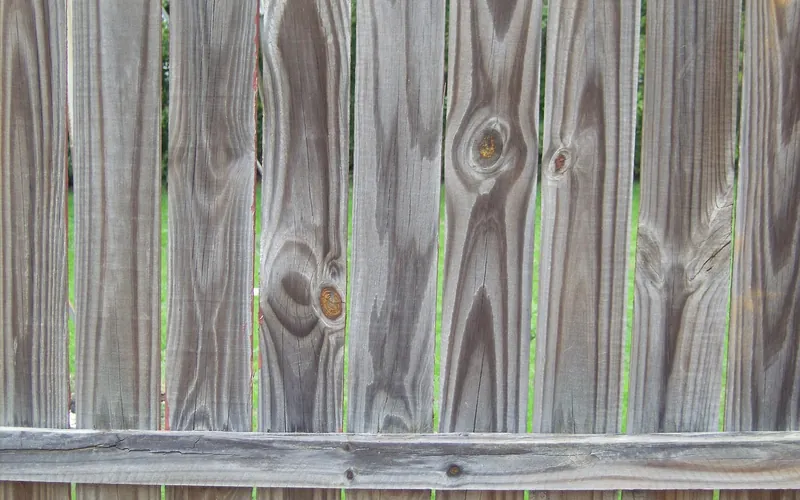
The wet-versus-dry rule comes down to which direction the wood will move. Wet lumber shrinks as it dries; dry lumber has little left to lose, and cedar is usually bought dry. If you butt dry boards tightly, a wet season can swell them against their neighbors, so give dry boards the small reveal.
“damp boards are more forgiving when a nail or screw goes through them”
Not sure which type you have? The end tag on a treated board usually tells you more than the species; our cedar versus pressure-treated comparison explains why the end tag matters. For what happens to cedar left bare, see our guide on whether cedar can be left untreated.
How Many Fence Pickets Do You Need? The Arithmetic
The formula is simple: pickets per foot = 12 divided by (picket width plus gap), both in inches. For a section, n = (section length + gap) divided by (picket width + gap), rounded to a whole board. Then recompute the gap so the boards fill the section exactly: gap = (section length minus n x picket width) divided by (n minus 1).
Here is that worked through for an 8 foot (96 inch) section, assuming pickets run on the outside face of the rails and past the posts:
| Layout | Picket width | Target gap | Pickets per foot | Pickets per 8 ft section | Gap that fills the section | Pickets for 100 ft |
|---|---|---|---|---|---|---|
| Privacy, 1×6, butted | 5.5 in | 0 | 2.18 | 17 (leaves 2.5 in) | 5/32 in if spread evenly | 219 |
| Semi-privacy, 1×6 | 5.5 in | 1.5 in | 1.71 | 14 | 1.46 in | 172 |
| Traditional, 1×4 | 3.5 in | 2 in | 2.18 | 18 | 1.94 in | 219 |
| Wide-spaced, 1×4 | 3.5 in | 3 in | 1.85 | 15 | 3.11 in | 185 |
| Privacy, full 6 in cedar | 6 in | 0 | 2.00 | 16 | 0 | 200 |
Two things stand out. First, a 1×6 privacy fence and a 1×4 picket fence with 2 inch gaps need the same number of boards per foot (2.18), so the cost difference between those looks comes from the board price, not the count. Second, a butted 1×6 run does not divide evenly into 96 inches: 17 boards leave 2.5 inches. Spreading that leftover across the 16 gaps gives 5/32 inch each, which sits halfway between the 1/8 and 3/16 inch spacers. Pick one, set the spacers, and check the board count at the section end.
A true 1/4 inch reveal on 1×6 pickets works out to 16.7 boards per 8 foot section, so across a long run you count boards in total instead of per section. The arithmetic also gives you a layout trick most guides skip: if the leftover is awkward, change the gap by a hair instead of ripping a skinny last picket, which leaves a visibly odd board at every post.

Rail Height and Picket Height: Where Pickets Meet Rails
Standard 6 foot pickets are 72 inches long. If you keep the bottoms 2 to 5 inches off the ground, a range This Old House gives for picket fences, a picket set at 2 inches tops out at 74 inches, so the fence is 6 feet 2 inches tall at the pickets. Some local codes cap a fence at 6 feet, and how height is measured varies, so check yours before you cut posts.
For rails, an installation article from Engineer Fix recommends at least three rails on a 6 foot privacy fence: top rail 4 to 6 inches below the top of the pickets, bottom rail 6 to 8 inches above the ground, and the middle rail about 30 inches from the bottom rail. On a 74 inch fence that works out to:
- Top rail: 4 to 6 inches down from the picket tops, so its top edge sits near 68 to 70 inches
- Middle rail: roughly 30 inches above the bottom rail, near 36 to 38 inches off the ground
- Bottom rail: 6 to 8 inches above grade, which also keeps the rail out of splash and moisture
Those positions assume posts spaced 8 feet on center. For the posts themselves, our guide to ground-contact pressure-treated wood explains which lumber can go in the ground, and the full build sequence is in our wood fence building guide.
What Wood Species and Grades Are Used for Fence Pickets?
Western red cedar and pressure-treated pine are the two common choices. Cedar pickets are usually labeled with a grade; for example, one supplier’s “Rustic” cedar dog-ear picket is described as allowing more knots, color variation and natural imperfections than a cleaner grade. Treated pine is sold by retailer, thickness and treatment tag instead. For cedar prices per board and per linear foot, see our guide to how much cedar wood costs; we do not repeat price figures here because they change.
When you cut treated lumber, wear eye protection and a dust mask, and keep sawdust out of food gardens.
FAQ: Wood Fence Pickets
What is a dog-ear fence picket?
A dog-ear picket has both top corners cut off at an angle, leaving a short flat section in the middle. It is the most common top on privacy pickets in home-center listings, and it is cut from the same board as a flat-top picket.
What is the actual size of a 1×6 fence picket?
A nominal 1×6 board dresses to 3/4 by 5-1/2 inches. Many pressure-treated dog-ear pickets are 5/8 by 5-1/2 inches, and some cedar pickets are sold as a full 6 inch face, so check the listing before planning your spacing.
How many pickets do I need for an 8 foot fence section?
Divide the section length by picket width plus gap. In a 96 inch section you need 17 pickets of 1×6 (5.5 in), 18 pickets of 1×4 (3.5 in) with about a 2 inch gap, or 16 full 6 inch cedar pickets butted.
Should fence pickets touch each other?
Wet pressure-treated pickets can be butted because they shrink as they dry, opening gaps of 1/8 to 1/2 inch per Fantastic Fence. Dry cedar pickets barely shrink, so leave about 1/8 inch between them.
How high above the ground should fence pickets sit?
This Old House gives 2 to 5 inches between the ground and the picket bottoms. A 6 foot picket set 2 inches up makes the fence 74 inches tall, so confirm how your local code measures fence height.
Is a 5/8 inch picket strong enough?
Many fences use them, but a 5/8 inch picket is about 0.58 times as stiff as a 3/4 inch one by simple beam arithmetic, so it flexes sooner. Place fasteners carefully and expect more waviness on long runs.
Match the picket to the job: dog-ear for a standard privacy fence, flat-top with a cap rail for a cleaner line, French Gothic for open picket fences. Measure the actual width of the board in your hand, run the picket-count arithmetic for your section, and pick the gap tool that suits it. For the whole picture, return to our guide to building a wood fence.
Sponsored / affiliate links. As an Amazon Associate I earn from qualifying purchases. I may earn additional commission from eligible campaigns.