Where Does a Washer Go With a Screw? Head, Nut, Lock Order
A washer goes under the screw head, between the head and the material, and on a bolt with a nut you add a second washer under the nut. It spreads the clamping load so the head cannot dig into wood or pull through thin sheet, which matters most with soft wood or a small pan head. Skip it only when the head already has a built-in flange. This guide covers placement for each fastener, flat versus lock washer order, standard 1/4 to 3/8 inch washer sizes, and the mistakes that cause loosening.
Where Does a Washer Go With a Screw?
BEST WASHER ASSORTMENT |
NEIKO 50400A Lock and Flat Washer Assortment, 350 Pieces: $13.99
|
The rule is simple: a washer always sits between the part you tighten and the surface being clamped. That part is the screw head, the nut, or both. The washer is the wide, flat ring that takes the pressure the head or nut would otherwise put on a small ring of material.
| Fastener setup | Where the washer goes | Why |
|---|---|---|
| Wood screw into wood (pan, round, or hex head) | Flat washer under the head | Stops the head sinking in and crushing wood fibers |
| Bolt or machine screw through two parts, with a nut | Flat washer under the head and another under the nut | Protects both faces and keeps the nut from digging in |
| Bolt through soft wood | Wide or fender washer under head and nut | Larger outside diameter resists pull-through and crushing |
| Countersunk (flat head) screw | No plain washer; use a countersunk finishing washer if you need one | A flat ring does not seat on a cone-shaped head |
| Any joint with a lock washer | Flat washer against the material, then lock washer, then nut | The flat washer protects the surface, the lock washer sits against the nut |
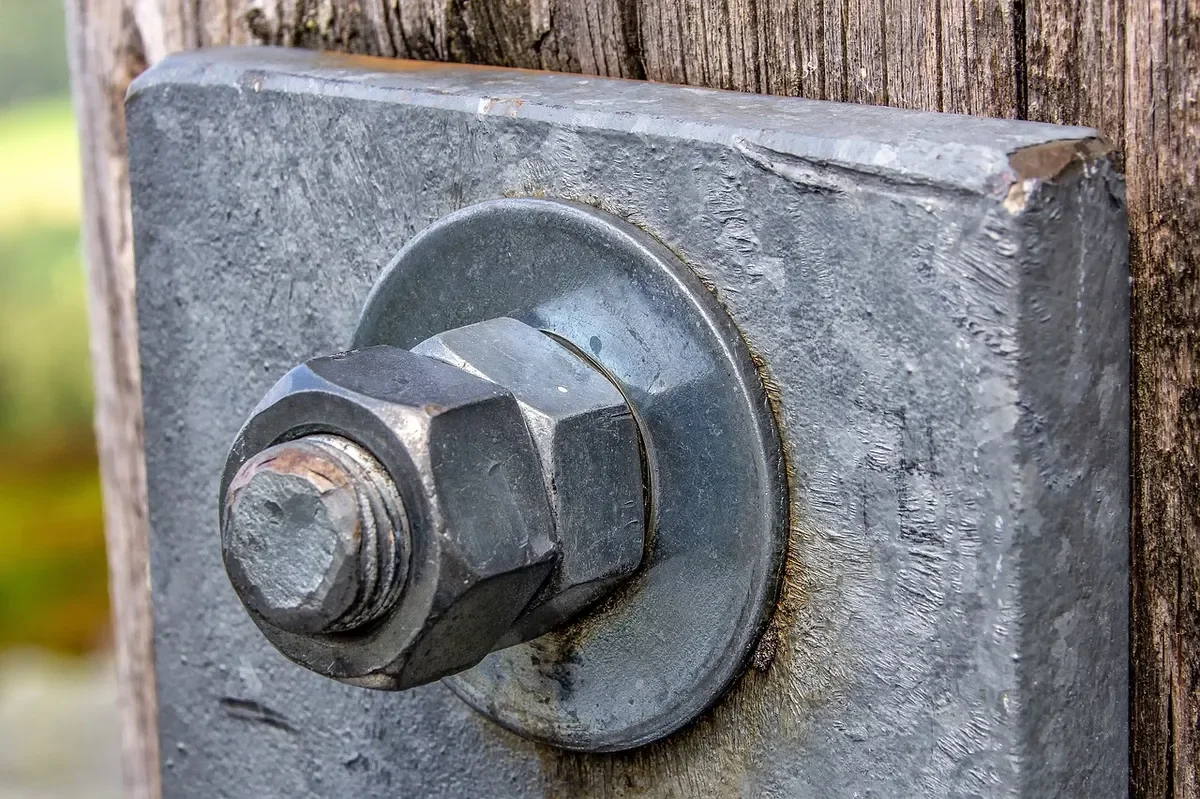
With a screw driven into wood, there is no nut, so the only place a washer can go is under the head. With a through-bolt, think of the head side and the nut side as two separate clamping points, and give each one a washer when the material is wood, plastic, or thin metal. For a metal-to-metal bolted joint with a tight-fitting hole and a wide, flanged head, the washer on the head side is often optional, but the nut side still benefits from one.
Flat Washer vs Lock Washer: Which Goes First?
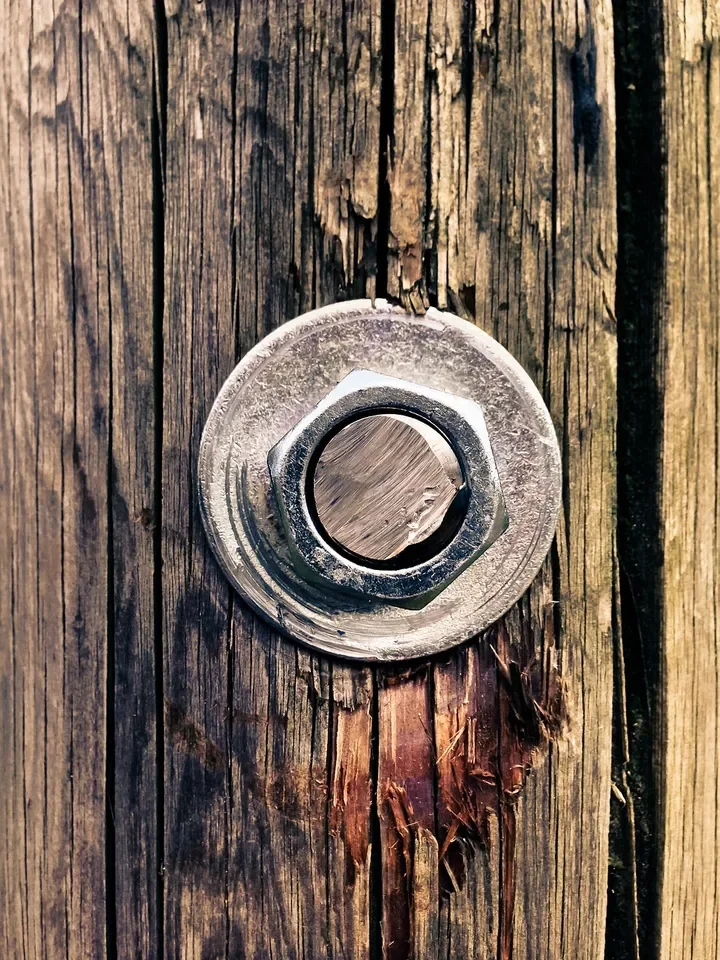
Working outward from the material, the standard stack is the material, then the flat washer, then the lock washer, then the nut. The flat washer spreads load and protects the surface. The lock washer sits between the flat washer and the nut, where it can do its job without gouging the material. Spring or split lock washers go on the nut side only, unlike flat washers, which can go on both sides.
Stamped flat washers often have one smoother, slightly rounded face and one sharper edge. When you can tell them apart, the rounded face goes toward the screw or bolt head so the sharp edge does not nick the fillet under the head.
The myth: a lock washer stops a screw from vibrating loose
Most DIYers add a split lock washer because it looks like insurance. The evidence is not kind to it. In the Junker vibration test, the standard way to check whether a fastener stays tight under side-to-side movement, split ring washers rated 1 out of 5 for locking ability in the Nord-Lock assessment, which describes them as ineffective at locking joints under higher dynamic loads. Nord-Lock sells competing wedge-locking washers, so treat its ratings with that in mind, but the finding matches what engineers commonly report: a split washer flattens at normal tightening torque and then acts like a plain flat washer.
For woodworking, that changes what to buy. If a joint moves, such as a workbench vise, a table leg bolt, or a swing set, a nylon-insert lock nut or a thread-locking compound is a better fix than stacking a lock washer. If the joint is static furniture, a properly sized flat washer and correct torque usually matter more than any locking device.
Which Washer Size Fits Which Screw?
A washer that is too tight will not slide over the threads, and one that is too loose lets the head or nut drift off center. Standard plain washers are made to ASME B18.22.1, and each screw size comes in narrow (N) and wide (W) versions. The wide version has a larger outside diameter, which is the one to grab for soft wood or thin material.
| Screw or bolt size | Narrow (N): ID / OD | Wide (W): ID / OD |
|---|---|---|
| 1/4 inch | 0.281 in / 0.625 in | 0.312 in / 0.734 in |
| 5/16 inch | 0.344 in / 0.688 in | 0.375 in / 0.875 in |
| 3/8 inch | 0.406 in / 0.812 in | 0.438 in / 1.000 in |
Source: ANSI/ASME B18.22.1 Type A plain washer preferred sizes. ID is inside diameter, OD is outside diameter.
Notice the jump at 3/8 inch: the wide washer has a full 1.000 inch outside diameter, against 0.812 inch for the narrow one. That extra footprint is what lets a washer keep a bolt from crushing soft pine or cedar. If you need even more coverage, a fender washer has a much larger outside diameter for its hole size and is the usual choice for thin sheet goods and plywood.
Do Pan Head Screws Need Washers?
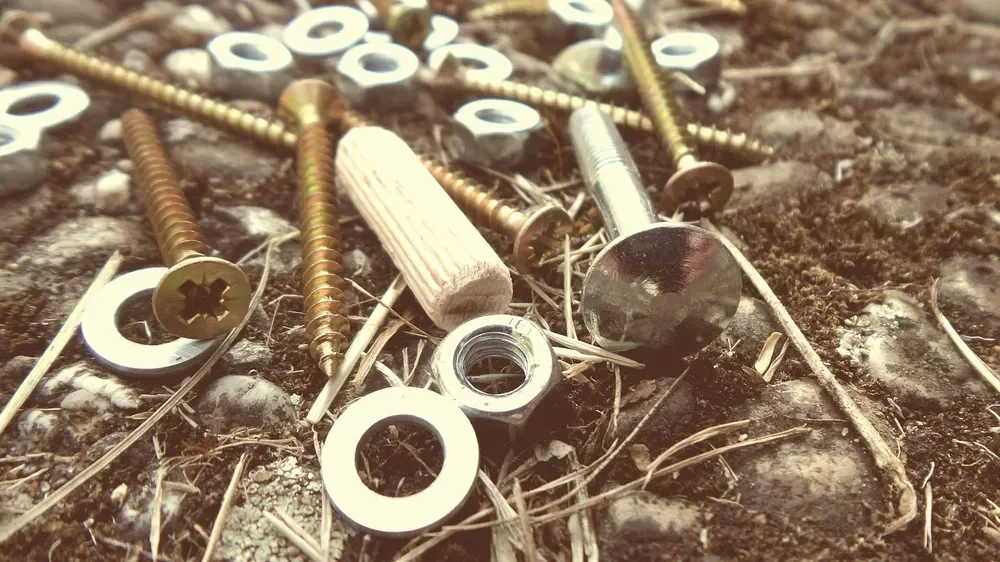
A pan head screw has a small, domed head with no flange, so all of its clamping force lands on a narrow ring under the head. In hardwood or thick metal that is fine. In softwood, particleboard, MDF, or thin sheet, a washer under a pan head keeps the head from sinking in and stops the screw from pulling through as the joint is tightened.
If you want the washer built in, washer head wood screws have a wide flange as part of the head, and that guide covers when they are the better pick. If you are still choosing between screw types for cabinet work, see our comparison of cabinet screws vs wood screws.
Common Washer Mistakes
- Washer under the nut only. On a bolt through wood, the head needs a washer as much as the nut does, or it will sink into the surface.
- Lock washer straight against wood. The hard split edge bites into the surface. Always put a flat washer under it.
- Wrong size for the fastener. A washer whose inside diameter is much larger than the screw lets the head slip off center, and one that is too small will not spread the load.
- Overtightening a washer into soft wood. A washer spreads pressure but does not stop crushing. Stop when the joint is snug and the washer is flush.
- Mixing metals outdoors. Pair stainless washers with stainless screws, and galvanized with galvanized, so a mismatched pair does not corrode faster.
Fastening wood to a metal frame or post is where washers matter most. Our guides to fastening wood to metal and mounting a vise to a workbench both use bolts, washers, and nuts in exactly the arrangement above.
Frequently Asked Questions
Does the washer go under the screw head or the nut?
On a screw with no nut, the washer goes under the head, between the head and the material. On a bolt with a nut, use a flat washer under the head and another under the nut, so both bearing surfaces are protected. A lock washer, if used, sits between the flat washer and the nut.
Do you put a washer on both sides of a bolt?
Usually yes. Put a flat washer under the bolt head and one under the nut, especially when the bolt passes through wood, plastic, or thin sheet metal. Both the head and the nut concentrate force on a small ring of material, and a washer spreads it over a larger area.
Which goes first, the flat washer or the lock washer?
Order from the material outward: material, flat washer, lock washer, nut. The flat washer takes the load and protects the surface, and the lock washer sits between it and the nut. Putting a lock washer directly against wood lets its hard edge bite into the surface.
Do you need a washer with a wood screw?
Not always. A washer helps when the head is small for the load, when the wood is soft or the material is thin, or when the hole is oversized. It is unnecessary with a screw that has a built-in washer or flange head, and a plain washer does not seat under a countersunk flat head.
In short: put a washer under the screw head, add one under the nut on a bolt, and stack flat washer, lock washer, nut if you use both. Match the washer size to the screw, and choose a wide or fender washer for soft wood.
Sponsored / affiliate links. As an Amazon Associate I earn from qualifying purchases. I may earn additional commission from eligible campaigns.