Wood Stove Ash Pan: How to Empty It Safely
Empty the ash pan when ash reaches a level that starts blocking airflow, and use your stove manual for the exact depth guidance for your model. Do not remove ashes from a stove with an active or full fire, and do not relight until the drawer is fully reseated and sealed. Cooling guidance varies by stove and manual; many sources advise waiting until the stove and ash drawer are fully cool, which may take from about 24 hours to 72 to 96 hours.
Some freestanding wood stoves have an ash pan or ash drawer. Others do not. That changes the removal method, so check the stove design and the manual before you lift anything out. If the drawer will not close cleanly after reinstalling, stop and clear the cavity or slide area before the next burn.
Tools and equipment needed
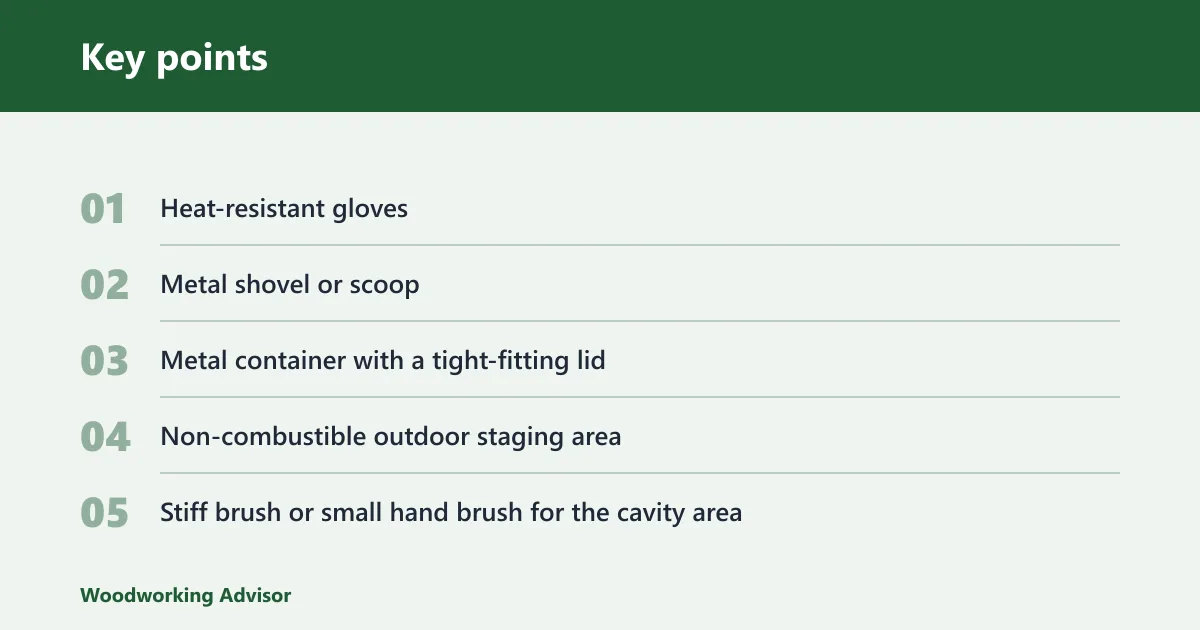


What you’ll need
- Heat-resistant gloves
- Metal shovel or scoop
- Metal container with a tight-fitting lid
- Non-combustible outdoor staging area
- Stiff brush or small hand brush for the cavity area
Should you empty it now?
If ash is low and the fire is still burning cleanly, a common rule of thumb is to leave it in place until it starts to interfere with airflow. If ash is building up enough to block the grate or airflow, plan to empty it before that happens. If the stove still carries live coals, wait unless the stove manual gives a different procedure.
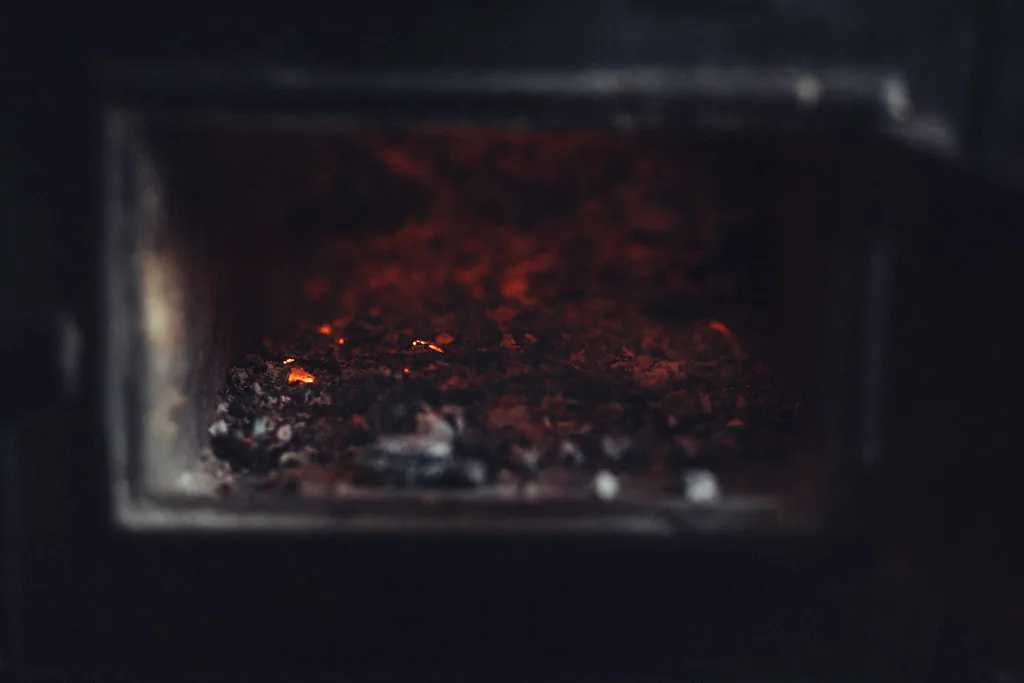
Say your stove has a live coal bed after an overnight burn and the ash is already building up. The safer choice is to leave the pan alone until the fire is far enough down to handle the drawer without rushing. A common first-timer mistake is opening the drawer too soon and scattering embers.
Empty the ash pan safely
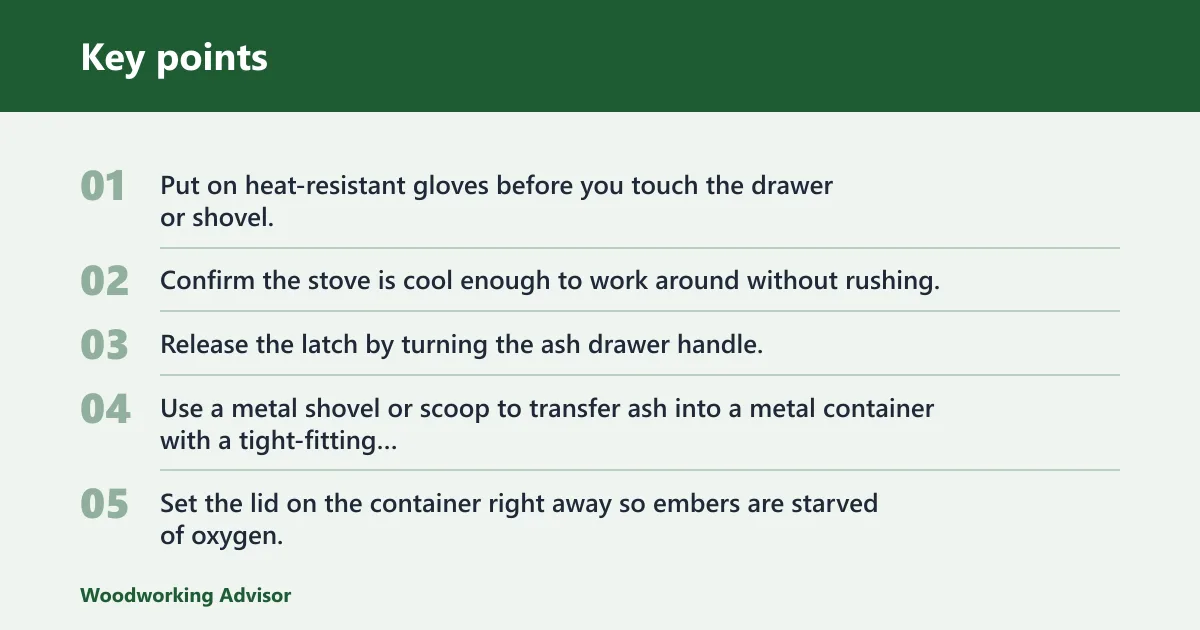
- Put on heat-resistant gloves before you touch the drawer or shovel.
- Confirm the stove is cool enough to work around without rushing. If it is still hot, wait longer.
- Release the latch by turning the ash drawer handle, then remove the drawer according to the model design.
- Use a metal shovel or scoop to transfer ash into a metal container with a tight-fitting lid.
- Set the lid on the container right away so embers are starved of oxygen.
- Carry the container to an outdoor isolation area on a non-combustible surface, away from the house, firewood, and porches.
- Leave an ash bed that matches your stove manual after cleaning, unless the stove manual says otherwise.
- Clean the ash cavity or drawer slide area, then reinstall the drawer fully and confirm that it seals before relighting.
If you want a practical top-up rule, keep the remaining ash bed to the level your stove manual recommends after cleaning, then check the stove’s draft and airflow on the next burn.
How to handle a live-coal bed
Suppose the stove is being held for an overnight burn and the pan has live coals mixed into the ash. Do not dump the load into a bucket indoors or near the stove. Move slowly, keep the lid close, and place the container outside on a non-combustible surface before you leave it alone.
If the stove is still maintaining heat and the ash drawer is only partly loaded, the safest move is usually to wait. A quick emptying job is not worth a flare-up, a spill, or a drawer that will not seal afterward.
Common mistakes
Leaving the ash drawer open or operating the stove with it removed is a fire hazard. So is using a plastic bucket, paper bag, or other combustible container. Hot ash can hold embers for many hours.
Another common failure is skipping the cavity cleanout. Even a thin layer of ash in the slide area can keep the drawer from sealing properly and can affect airflow. Store the lidded metal container far from the house, garage, porch, and firewood pile.
Do not guess that a drawer is sealed. Push it home, check the latch, and make sure the fit is even all the way across.
What if your stove has no ash pan?
If your stove has no ash drawer, remove ash through the loading door with a metal scoop. Work slowly so you do not disturb live coals or spill embers. Use the same lidded metal container and the same outdoor storage rules as you would with a drawer-equipped stove.
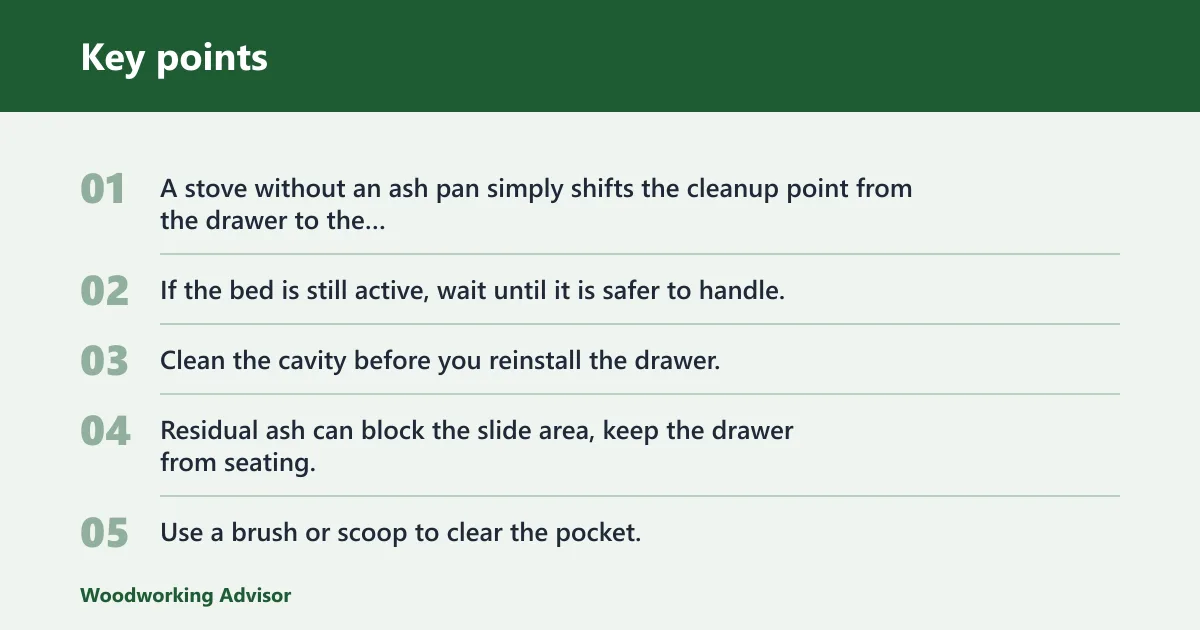
Do not improvise with a combustible bucket. A stove without an ash pan simply shifts the cleanup point from the drawer to the firebox, but the fire-safety steps stay the same. If the bed is still active, wait until it is safer to handle.
What should you do if ashes are blocking the ash pan cavity?
Clean the cavity before you reinstall the drawer. Residual ash can block the slide area, keep the drawer from seating, and restrict airflow on the next burn. Use a brush or scoop to clear the pocket, then check that the drawer glides in and closes without resistance.
If the drawer still will not seal, stop and remove more ash from the cavity rather than forcing it shut. Forcing the latch can leave a gap that leaks ash or air.
Ash pan decision table
| ash depth | fire status | stove type | action | risk notes |
|---|---|---|---|---|
| Under 3 inches | Active burn | With ash drawer | Leave it in place and check again later | Low urgency unless airflow starts to drop |
| 3 to 4 inches | Active overnight burn | With ash drawer | Wait for a safer cool-down before removal | Live coals can spill during a rushed emptying |
| Above 3 to 4 inches | Fire out | With ash drawer | Empty, then leave about 1 inch in the stove bottom | Too much ash can choke airflow and fill the cavity |
| Any depth | Fully cold stove | With ash drawer | Empty after the cooling period, then reseat and seal the drawer | Do not operate with the drawer removed or open |
| Any depth | Fire out or cooling | No ash drawer | Scoop from the firebox through the loading door | Use the lid immediately to contain hidden embers |
| Drawer jammed by ash | Fire out | With ash drawer | Clear the cavity first, then test the seal | Residual ash can prevent proper sealing and airflow |
Frequently asked questions
How often should I empty a wood stove ash pan?
Empty it when ash starts to interfere with airflow, and use your stove manual for the exact depth guidance for your model. Frequent burners may need to check it more often, while occasional burners may go longer. The key is depth and airflow, not a fixed calendar.
Can I empty the ash pan when the fire is still burning?
No. Never empty ashes when the stove has an active or full fire. If the stove still has live coals, wait until it is cooler and easier to handle safely. A rushed dump can spill embers and leave the stove unsafe to relight.
How do I empty a wood stove ash pan without spilling embers?
Wear gloves, remove the pan slowly, and transfer ash into a metal container with a tight-fitting lid. Keep the container close to the stove during the move, then carry it outside right away. The lid matters because it cuts off oxygen that can feed hidden embers.
How much ash should I leave in the stove after cleaning?
Leave the ash bed at the level your stove manual recommends. That layer can help maintain a charcoal bed on the next burn without choking airflow. Do not pack the firebox full, and do not leave a thick mound that reaches the grate.
Can I put wood ashes in a plastic bucket?
No. Use a metal container with a tight-fitting lid. Plastic can melt or ignite if hidden embers are still present. Set the lidded container outdoors on a non-combustible surface and keep it away from the house, garage, porch, and firewood.
Do all wood stoves have an ash pan?
No. Ash pans or ash drawers are found on some freestanding wood stoves, and the removal method varies by model. If your stove does not have one, remove ash through the loading door with a metal scoop and follow the same cooling and container rules.
Sponsored / affiliate links. As an Amazon Associate I earn from qualifying purchases. I may earn additional commission from eligible campaigns.