Firewood on a Pallet: How to Stack It Safely
Use pallets for firewood only if they are flat, sound, and sized to fit your log length. A common rule of thumb is to keep the pile 4 to 6 inches off the ground and no higher than about 4 feet unless it is braced. Bad stacking can make the load tip, trap moisture, and ruin a season’s fuel. This guide covers safe pallet choice, load support, stacking pattern, and cover placement for outdoor firewood storage.
Can you use pallets for firewood?


Yes, pallets can work for outdoor firewood storage when the pallet is sound, the base is level, and the stack stays within a stable footprint. A pallet base lifts wood off soil, keeps air moving under the stack, and cuts moisture contact from wet ground. It fits best in dry, accessible yards where the pile can stay short and centered.
When a pallet stack makes sense
Use a pallet when you want a simple base for cordwood that needs airflow and some ground separation. A standard wooden pallet can typically hold around 2500 pounds, but the limit that matters most is stability, not brute strength. If the log length matches the pallet width, the stack can sit with less overhang and less tipping force.
If your firewood is cut to 16 to 20 inches, it can fit a common 40 by 48 inch pallet size. That combination usually fits stove wood better than long fireplace splits, because the shorter pieces sit farther within the pallet footprint and are easier to keep centered.
When a dedicated rack is the better choice
Choose a dedicated rack when the site is windy, the soil is soft, or you need a taller, straighter pile. A rack gives you fixed side support and a more predictable load path. If the yard slopes, sheds water poorly, or leaves little room for side access, a purpose-built rack is usually easier to keep square than a loose pallet stack.
Why footprint and load path matter
Firewood acts like a layered load, so the outer rows push outward as the stack rises. If the pallet footprint is too small for the log length, the ends act like levers and raise collapse risk. Centering the weight over the pallet keeps the load path vertical and cuts sway at the edges.
Choose the right pallet
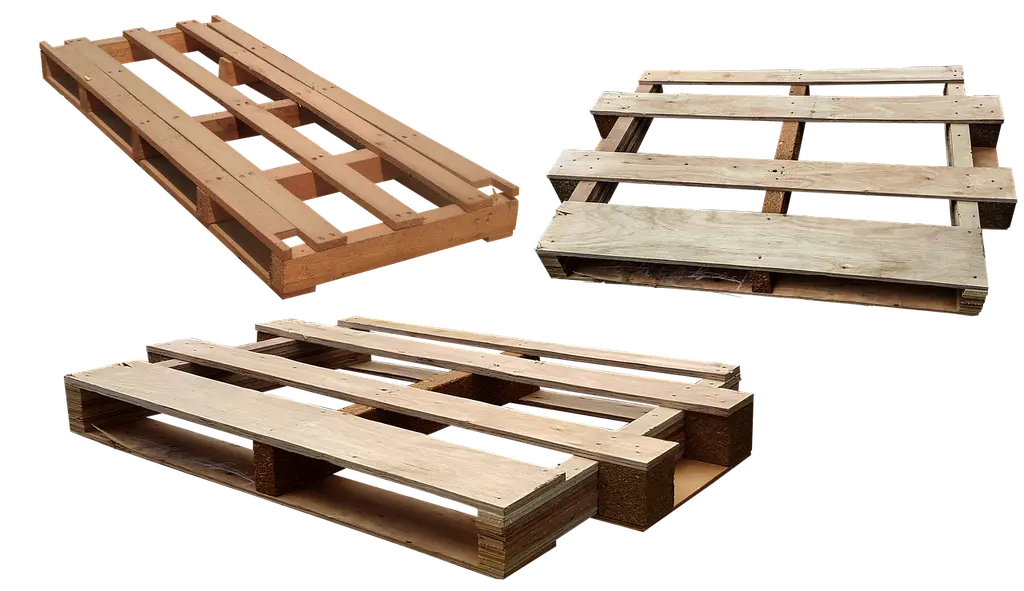
The right pallet is flat, structurally sound, and marked for heat treatment rather than chemical treatment. Read the stamp first. Then inspect the slats, stringers, and nails. A pallet that looks fine from above can still fail if the middle sags, a stringer is split, or a board is missing near the load path.
Read the stamp: HT vs. MB
Look for HT, which means heat-treated, when selecting pallets for firewood storage. Avoid MB-stamped pallets, which were treated with methyl bromide. That mark is not the right choice for stacking firewood that will later be handled near the home or stove area.
Check slats, stringers, and nails
Reject pallets with bowed deck boards, split stringers, missing slats, or protruding nails. Those defects create uneven bearing points and can snag gloves or split wood. Insect harborage also matters; loose bark pockets, damp grime, and old debris can hide pests and hold moisture against the stack base.
Match pallet width to firewood length
Firewood length usually needs to match both the pallet width and the appliance it will fit. A common range is 16 to 20 inches. Standard 40 by 48 inch pallets suit 12 to 16 inch stove wood, while 18 to 24 inch fireplace wood calls for custom or oversized pallets. If the wood overhangs too far, the ends become a tipping arm.
Prepare the base and site
Set the pallet on level ground whenever possible. Level ground reduces tipping risk because the stack’s center of gravity stays over the base instead of drifting downhill. Manage soft soil, slope, and drainage before the first row goes down. Leave enough space to walk around the stack, inspect the sides, and keep air moving on every open side.
Set the pallet on level ground
Use a shovel, gravel, blocks, or a graded pad to remove the worst dips before loading the pallet. Even a slight lean can turn into a steady outward pull as rows rise. If the pallet rocks when you press a corner, the base is not ready.
Control soft soil, slope, and drainage
Wet ground softens under load and lets one side settle faster than the other. That changes the load path and can twist the stack. A dry, sunny, well-drained location remains the best starting point, but the surface still needs to be firm enough to keep the pallet from sinking after rain.
Leave space for air movement and access
Leave room to walk around the stack and inspect the sides. If one side will be backed by a wall, a common rule is to leave a 2-inch gap behind the stack so air can move. Tight contact against a wall slows drying and makes it harder to spot split boards, leaning rows, or moisture buildup.
How do you stack firewood on a pallet safely?
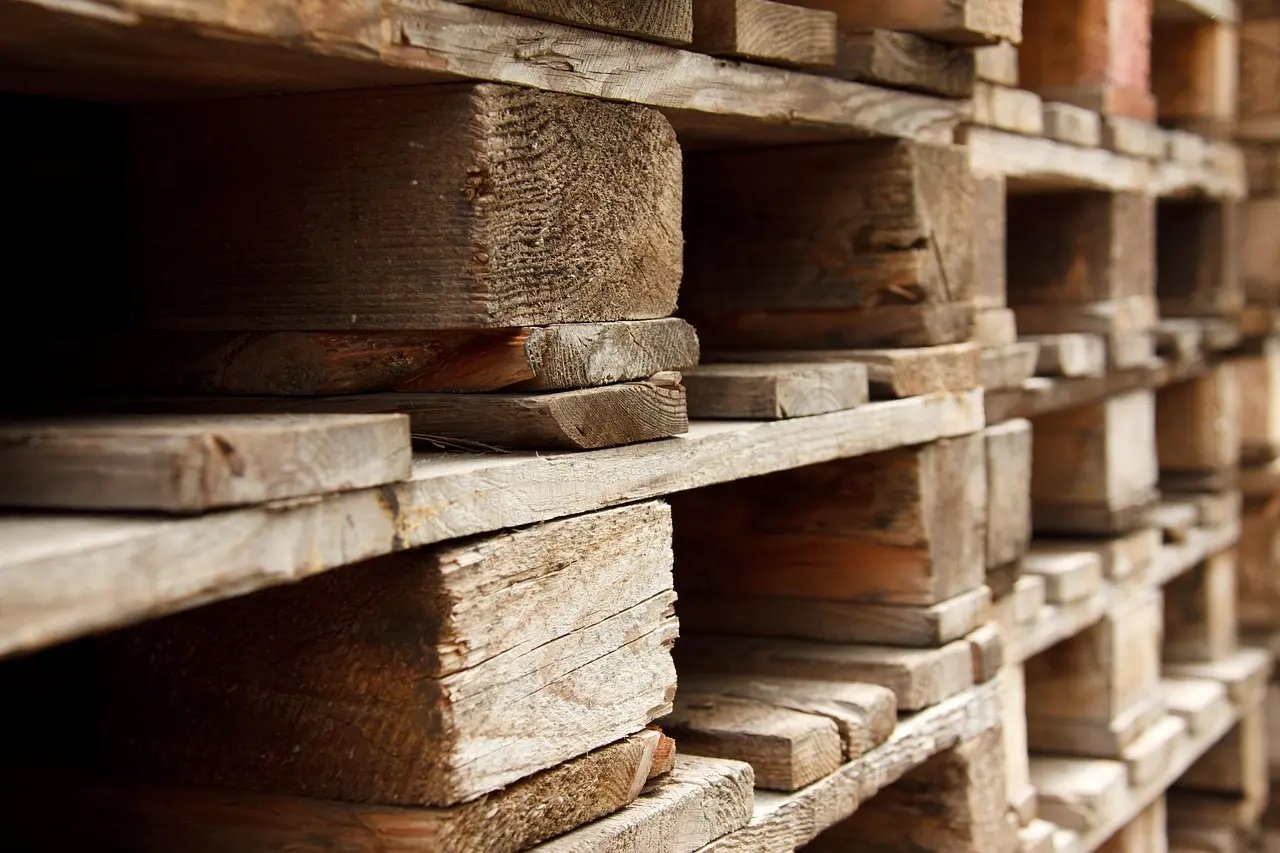
Stack firewood by keeping each row tight, flat, and centered on the pallet so the load stays over the base. Start with the straightest pieces on the bottom, build the sides evenly, and check alignment after each layer. If the pile starts leaning, correct it immediately instead of waiting for the top to force the shape.
Keep each row tight and centered
Place the first row so the pieces sit squarely on the pallet slats, not hanging out past the edge. Every new row should sit directly above the one below it. Avoid leaving a hollow center unless the stack style requires it, because empty space shifts the load outward as the pile rises.
A common first-timer mistake is stacking one side faster than the other. The pile may look fine at knee height, then begin to flare outward halfway up. Stop and re-level the row before adding more wood.
Use a criss-cross pattern when it helps
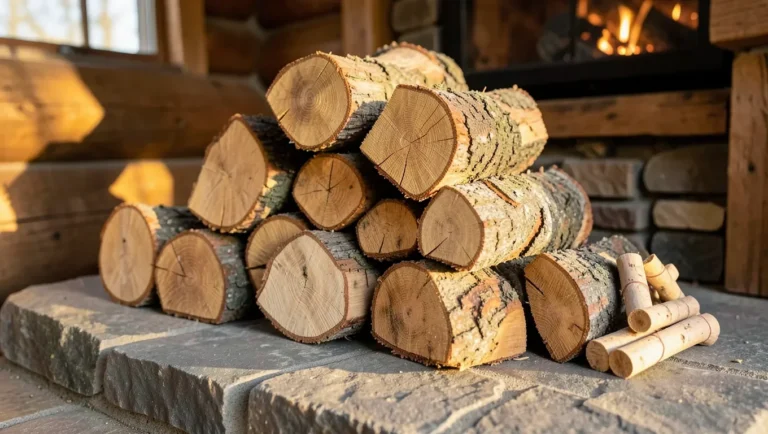
A criss-cross stack alternates log direction from layer to layer. That pattern can add stability and improve airflow, especially in a shorter stack with straight, uniform splits. It is not ideal for every yard or every pile height, because it uses more space and can become awkward if the base is narrow.
Add T-posts or side support for taller stacks
T-Posts can act as side support for a DIY pallet rack or taller pile. Set them outside the stack line so they help keep the rows straight without crushing the wood. For taller storage, side support matters because it helps resist the outward push created by the weight above.
Handle the stack without building risk
Keep the work within reach height while loading. Lift with your legs, not your back, and place each split rather than tossing it into position. If a piece lands off-center, remove and reset it. Quick corrections are safer than trying to push a heavy, unstable row into place.
Pallet stack safety checklist
This checklist turns the main failure points into a quick field check. Use it before loading, after the first few rows, and after a wind event or heavy rain. A pallet stack that fails any one of these checks needs correction before you add more weight.
| Condition to inspect | Why it matters | Pass/fail action |
|---|---|---|
| Pallet stamp: HT vs. MB | HT is the safe marking to look for; MB pallets should be avoided for firewood storage. | Pass: HT stamp visible. Fail: remove the pallet and replace it. |
| Board, split, and stringer damage | Bowed slats, split stringers, and missing boards weaken the base and can start a collapse. | Pass: all load-bearing parts are sound. Fail: do not stack on it. |
| Ground levelness | An uneven base shifts the center of gravity and raises tipping risk. | Pass: pallet sits flat without rocking. Fail: level the site first. |
| Log overhang | Excess overhang adds leverage and pulls the stack outward. | Pass: wood stays centered with minimal overhang. Fail: shorten the row or use a wider base. |
| Stack height | Higher stacks become harder to keep stable and harder to correct. | Pass: keep it at about 4 feet or less. Fail: stop stacking or add side support. |
| Wind exposure | Wind pushes the stack sideways and can loosen outer rows. | Pass: sheltered or braced site. Fail: add T-posts or move to a better spot. |
| Cover placement | Top-only coverage sheds rain and snow without trapping moisture in the sides. | Pass: cover stays above the stack edges. Fail: remove side wrap or reseat the cover. |
Which stack style fits your yard?
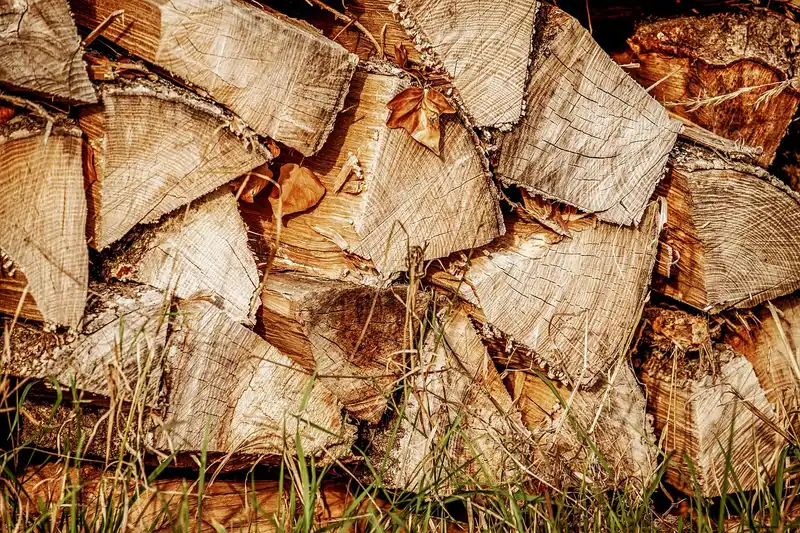
The best stack style depends on weather, ground conditions, and available space. Calm, dry sites can use a simpler open stack. Windy yards need side support. Uneven ground often calls for a smaller footprint. Tight spaces usually favor a straight stack against a support line rather than a wide dome or broad criss-cross pile.
| Scenario | Best stack style | Why it fits |
|---|---|---|
| Calm, dry site | Simple pallet stack or criss-cross base | Good airflow and lower wind load |
| Windy site | Pallet stack with T-post side support | Helps keep the stack straight |
| Uneven ground | Smaller stack on a leveled pad | Shorter load path is easier to stabilize |
| Tight space | Straight stack with wall gap | Uses less footprint and still allows airflow |
Calm, dry sites
For a sheltered yard with good drainage, a simple pallet stack often works well. Keep the sides straight, leave the top open until rain threatens, and make sure the bottom row stays flat. A Holzhausen stack can also work here if you have room for the dome shape and want strong airflow through the center.
Windy sites
Windy sites need more restraint than a loose pile can provide. Use T-Posts, a wider base, or a shorter stack. A Holzhausen pile can move air well, but in a windy location it still needs careful shaping and a base that will not shift. If gusts regularly hit the yard, a dedicated rack is often the safer choice.
Uneven ground
On uneven ground, fix the base first and reduce the stack height. The less the pallet tilts, the less side force develops as the pile rises. If you cannot level the site enough, move the storage spot instead of forcing the pallet to compensate for slope with extra wood.
Tight spaces
In tight suburban yards, choose a narrower, straighter stack and leave enough space to inspect the sides. A wall-backed setup can work if the wall gap is maintained and the cover stays at the top only. Do not trade airflow for convenience by pressing the stack tight against a fence or shed wall.
Should you cover the stack?
Yes, but cover only the top. A breathable cover or tarp protects the stack from rain and snow without sealing moisture in. Side coverage should be limited, because wrapping the whole pile traps humidity and slows drying. The goal is to keep water off the top while leaving the sides open to air.
Top-only cover versus side coverage
Place the cover over the crown of the stack and let it shed water beyond the edges. Keep the sides exposed so moving air can dry the wood. A breathable tarp is better than a fully sealed plastic cover because it reduces rain contact without turning the pile into a damp pocket.
How to keep rain and snow off without trapping moisture
Secure the cover so wind does not lift it, but do not cinch it around the lower rows. Let the bottom remain open. If snow is expected, a weighted top cover works better than a wraparound sheet that holds melted moisture against the bark and ends of the splits.
When a tarp creates more problems than it solves
A tarp becomes a problem when it sags into the wood or seals the side walls. That traps condensation and slows drying. If the cover repeatedly blows off, the site may need better shelter, a lower stack, or a different rack style instead of more tie-downs.
How do you build a DIY pallet firewood rack?
A DIY pallet firewood rack uses the pallet as the floor and side support as needed, often with T-Posts or a second pallet to keep the pile straight. Build it when you want a simple, low-cost frame that keeps wood off the soil, preserves airflow, and fits a known firewood length.
- Choose an HT-stamped pallet with sound slats and straight stringers.
- Set it on level, drained ground and confirm that it does not rock.
- Drive T-Posts outside the intended stack line if you need side support.
- Load the first row flat and centered, then keep each row aligned above it.
- Stop around 4 feet unless the stack is braced and still straight.
- Place a breathable cover only on top, leaving the sides open.
For a basic rack, the pallet is the base and the side supports are there to limit outward lean. For a taller pile, the supports do more work, so the post spacing and stack alignment matter more. If the wood is long enough to overhang the pallet by a large margin, switch to a wider base instead of forcing the rack to carry a bad fit.
Frequently asked questions
How high can you stack firewood on a pallet?
A practical upper limit is about 4 feet for an unsupported or lightly supported pallet stack. Higher piles are harder to keep straight, and the load becomes more sensitive to wind, slope, and small shifts in the base. If you need more height, use stronger side support or a dedicated rack.
Should firewood stacks be covered with a tarp?
Yes, but only the top should be covered. A breathable tarp protects against rain and snow without sealing moisture into the sides of the pile. Full wrap coverage traps humidity and slows seasoning, so keep the lower sides open for airflow.
What kind of pallets are safe for firewood storage?
Use heat-treated pallets marked HT and avoid MB-stamped pallets. Then inspect for bowed boards, split stringers, missing slats, and protruding nails. A safe pallet is flat, intact, and large enough for the firewood length you plan to store.
How do you stack firewood on uneven ground?
Level the site first if you can. If the slope is mild, reduce stack height and use side support so the load stays centered. If the pallet rocks or settles unevenly after rain, move the stack to firmer ground rather than adding more wood to compensate.
Can you burn pallets as firewood?
No, not as a routine fuel source. Some pallets carry chemicals, nails, or dirt, and MB-stamped pallets should be avoided for storage in the first place. Firewood should be clean, dry, and cut for the stove or fireplace, not mixed with pallet wood.
How do you properly stack firewood for airflow?
Leave space between rows, keep the sides open, and choose a pattern that lets air move through the pile. A criss-cross stack can help, and a Holzhausen stack moves air well through its dome shape. In either case, keep the top covered and the sides open.
How to stack firewood in fireplace
For indoor fireplace use, stack firewood so it stays tidy, accessible, and safely away from heat sources. That question is different from outdoor seasoning storage. Outdoor pallet stacking is about airflow, drainage, and stability; indoor fireplace arrangement is about safe placement near the firebox and easy loading.
Sponsored / affiliate links. As an Amazon Associate I earn from qualifying purchases. I may earn additional commission from eligible campaigns.