12-Inch Chop Saw Blade: Tooth Count & Material Guide
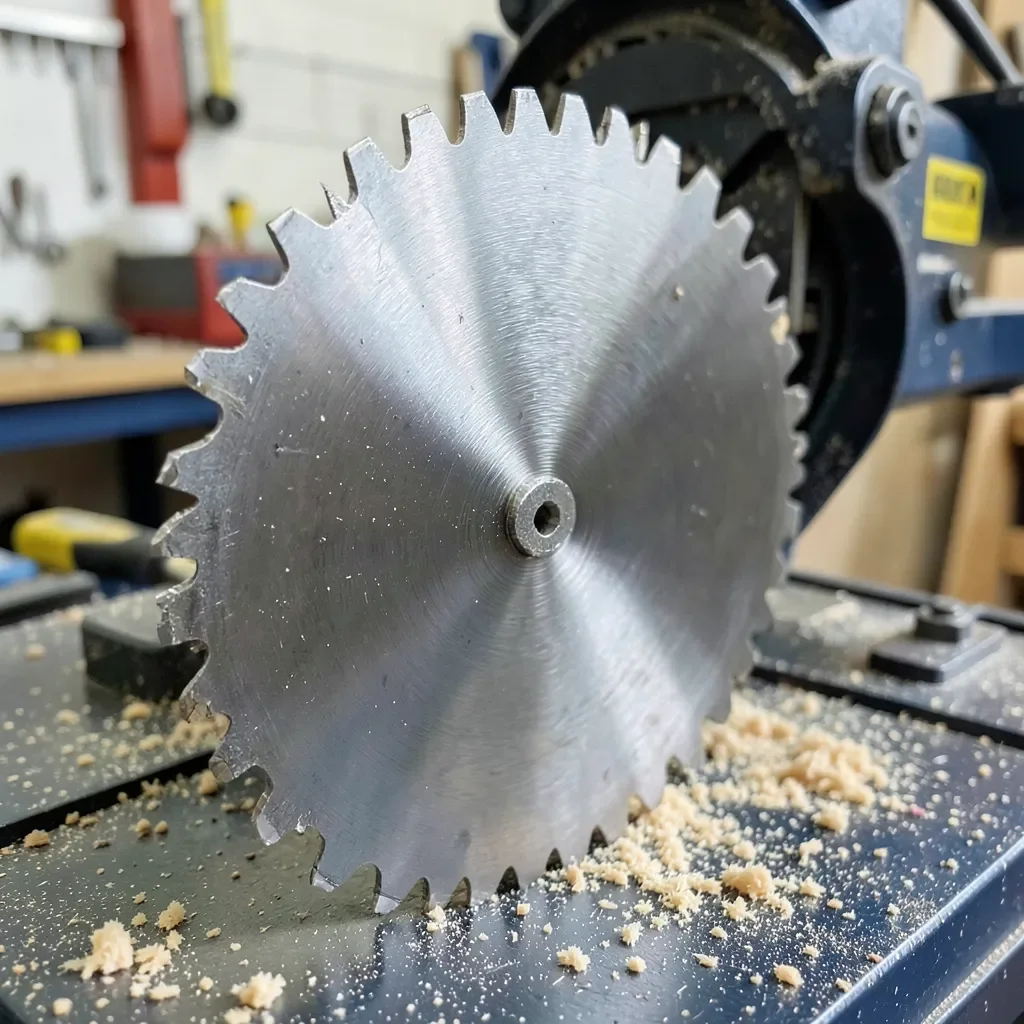
A 12-inch chop saw blade’s tooth count, not the saw’s horsepower, is what actually determines cut quality – a 32-tooth blade rips through framing lumber fast but leaves a rougher edge, while an 80-to-100-tooth blade gives trim work a splinter-free finish at a slower feed rate. Match the wrong tooth count to the material and you get burning, chipping, or a blade that dulls in a few cuts. This guide covers which tooth count fits which material, how wide a 12-inch chop saw actually cuts (it’s not 12 inches), and one blade pack that covers both the rough and fine-finish ends of the job.
What a 12-Inch Chop Saw Blade Is Actually Rated For
Best 12-Inch Chop Saw Blade Pick
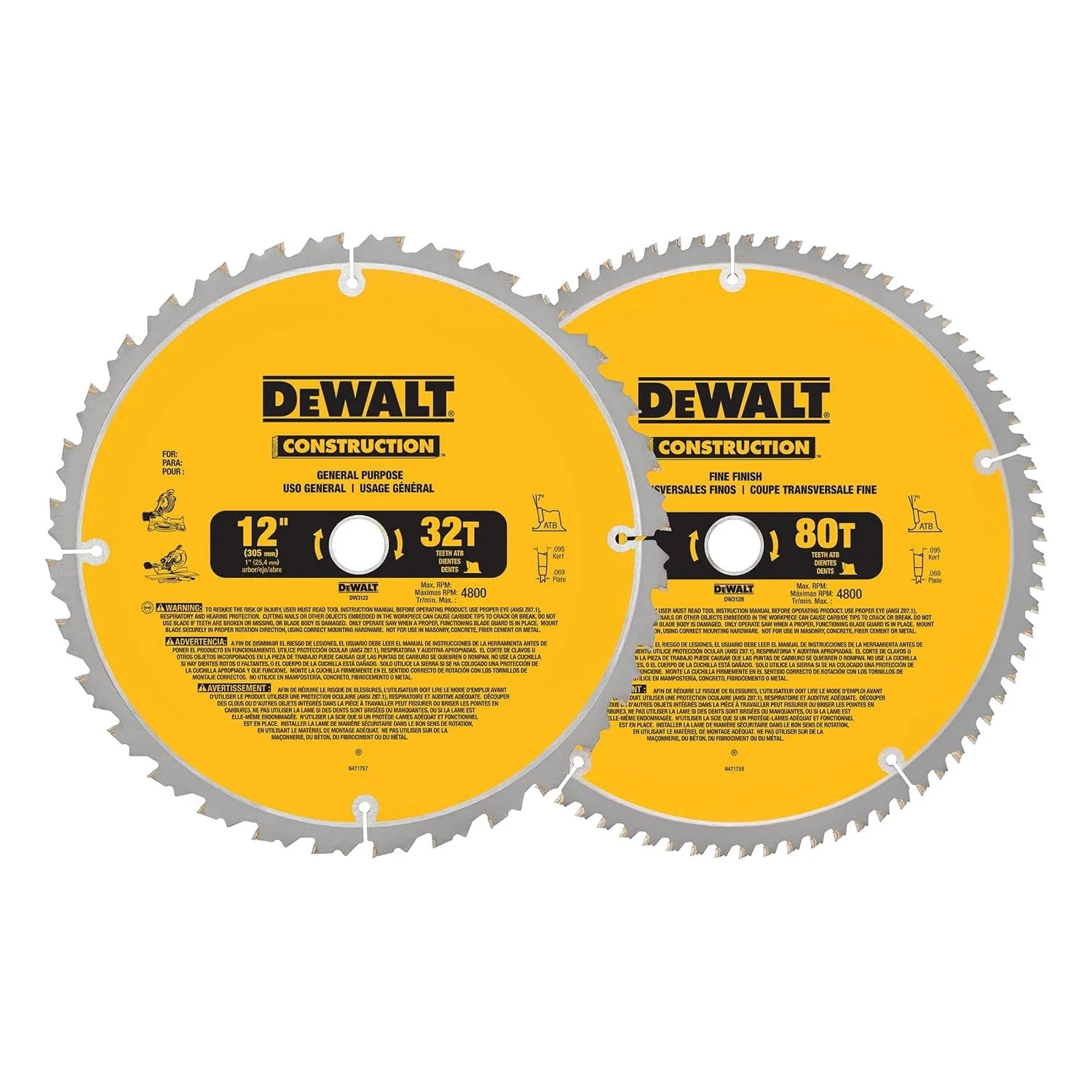 |
DEWALT DW3128P5 12″ Blade 2-Pack (80T + 32T) – $132.96 One pack covers both ends of the tooth-count tradeoff this guide walks through: the 80-tooth blade for fine crosscuts and trim, the 32-tooth blade for faster framing-lumber cuts.
|
A 12-inch chop saw blade is a circular carbide-tipped or abrasive disc sized to a saw’s rated maximum diameter – it is not, by itself, a guarantee the saw can cut a 12-inch-wide board (more on that below). Blades in this size are sold for wood, metal, masonry, and concrete, but a single blade is never good at all four; the tooth geometry, tooth count, and material of the blade itself change based on what it’s built to cut.
For a first 12-inch blade purchase, a two-blade pack that covers both a rough general-purpose tooth count and a fine-finish tooth count avoids buying twice.
12-Inch Blade Types by Material
The right 12-inch blade depends entirely on the material, not just the saw it’s going on:
- Wood (framing/rough): 24-40 tooth carbide blade for fast crosscuts in dimensional lumber, at the cost of a rougher edge.
- Wood (fine trim/plywood): 80-100 tooth carbide blade for a smooth, splinter-free finish on molding and veneered plywood, at a slower feed rate.
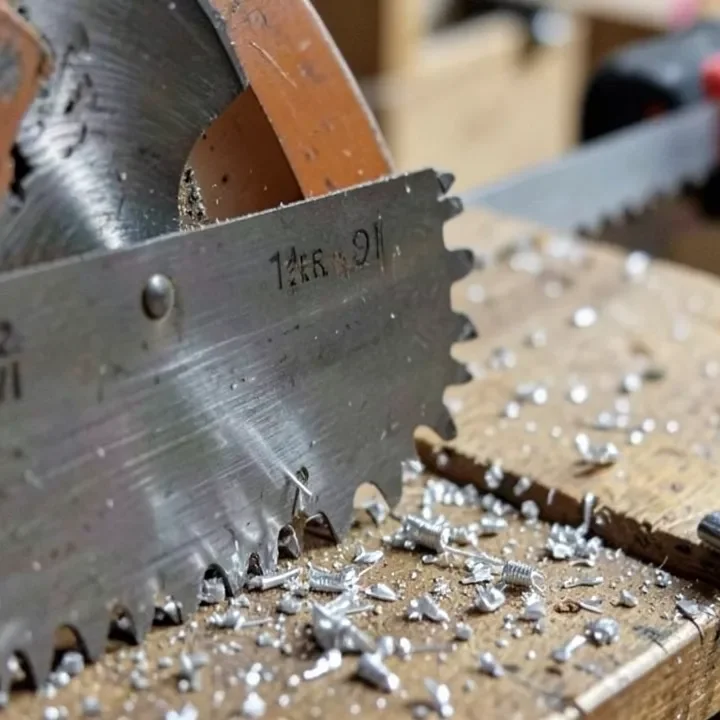
- Metal: a dedicated carbide-tipped or abrasive metal-cutting blade rated for the saw’s RPM – never a wood blade, and never assume any 12-inch blade works on metal by default.
- Masonry/concrete: a diamond or abrasive masonry blade rated specifically for that material, typically used on a dedicated cut-off saw rather than a wood chop saw.
Choosing the Right Blade for Your Project
Before buying a replacement blade, confirm three things: the blade’s diameter matches your saw’s rated size exactly, the arbor bore size matches (5/8 inch is standard on most 12-inch saws, but always check), and the tooth count matches the material and finish you actually need. A blade with a mismatched arbor won’t mount securely no matter how good the tooth geometry is.
Safety Precautions When Using Chop Saws
When using a 12-inch chop saw blade, it is important to take safety precautions to avoid injuries. Always wear appropriate safety gear, keep the work area clean, secure the material being cut, and follow the manufacturer’s instructions carefully.
- Always wear personal protective equipment (PPE) such as safety glasses, ear protection, and gloves when using chop saws.
- Proper blade installation is essential for safety. Make sure the blade is securely and correctly mounted and tightened before operating the saw.
- Regular maintenance of the chop saw blade is necessary to ensure that it cuts well and operates safely. Check the blade for any signs of damage and replace it immediately if necessary.
- Never force the blade into the material being cut. Let the blade do the work and avoid pushing or pulling the material through the saw.
- Always keep the work area clean and free of debris. This will help prevent accidents and ensure that the saw operates smoothly and efficiently.

How Wide Can a 12-Inch Chop Saw Actually Cut?
📊 A non-sliding 12-inch chop saw typically crosscuts up to about 8 inches wide at 90 degrees; a 12-inch sliding miter saw reaches roughly 12 to 16+ inches wide at 90 degrees. – Source: 10-inch vs. 12-inch sliding miter saw crosscut comparison
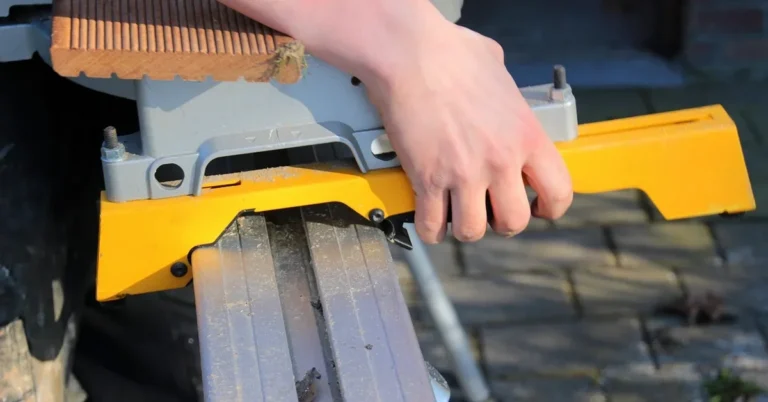
This surprises a lot of first-time buyers: blade diameter and maximum board width are not the same number. A chop saw’s blade only travels straight down through the material, so its crosscut width is limited by how far the blade’s arc reaches down into the fence – roughly two-thirds of the blade’s diameter at best, and less once you account for the arbor and guard. A sliding miter saw adds a rail that lets the whole cutting head travel forward through the board, which is the only thing that gets you close to the blade’s full 12-inch diameter in cut width.
Care and Maintenance for Long-Term Use
Proper care and maintenance of your 12-inch chop saw blade is essential for long-term use. Clean the blade after each use with a damp cloth and mild detergent to prevent rust and pitch buildup, and always store it in a dry place. Inspect the blade regularly for wear, and replace it when cutting performance declines or you spot chipped or missing carbide tips – a damaged tooth at 12-inch blade speeds is a real kickback risk, not just a cosmetic issue.
Frequently Asked Questions
Can a 10-inch blade be used on a 12-inch miter saw?
No. A 10-inch blade has a smaller diameter and a different arbor bore alignment relative to the saw’s blade guard and depth stops, which are calibrated for a 12-inch blade’s cutting arc. Using an undersized blade can leave the guard unable to fully cover the blade and can throw off depth-of-cut settings. Always match blade diameter to the saw’s rated size.
How wide of a board will a 12-inch chop saw actually cut?
A non-sliding 12-inch chop saw typically crosscuts up to about 8 inches wide at a 90-degree angle, since the blade only drops straight down rather than traveling forward. A 12-inch sliding miter saw reaches roughly 12 to 16+ inches wide at 90 degrees because the blade rides a rail through the cut. If you regularly cut lumber wider than about 8 inches, the sliding feature – not just blade size – is what actually adds capacity; see our full 10-inch vs. 12-inch sliding miter saw crosscut comparison for exact model specs.
Can I put a 12-inch blade on a saw designed for a 10-inch blade?
No, don’t do this. A saw’s blade guard, depth-of-cut geometry, and safety mechanisms are engineered around its rated maximum blade diameter. Fitting a larger blade increases the blade’s edge speed beyond what the motor and guard were designed to safely contain, and the guard may not fully shroud the larger blade. Only use the blade diameter stamped on the saw’s specification plate.
How many teeth should a 12-inch chop saw blade have?
It depends on the material and finish you want, not a fixed number. General framing and rough crosscuts in dimensional lumber typically use a 32- to 40-tooth blade for faster, cooler cutting. Fine trim, molding, and plywood want 80 to 100 teeth for a smoother, splinter-free edge. Metal-cutting blades use far more small carbide or abrasive teeth rated for a completely different RPM range – never substitute a wood blade for metal cutting.
Conclusion
Choosing the right 12-inch chop saw blade comes down to matching tooth count to the material and finish you need, not chasing the highest tooth count across the board. A low-tooth-count blade for rough framing and a high-tooth-count blade for fine trim will outperform any single “do everything” blade, and remembering that a 12-inch blade doesn’t mean a 12-inch-wide cut will save you a surprise the first time you try to crosscut a wide board on a non-sliding saw.
Sponsored / affiliate links. As an Amazon Associate I earn from qualifying purchases. I may earn additional commission from eligible campaigns.