15 Gauge vs 16 Gauge Finish Nails: Diameter, Strength & Best Uses
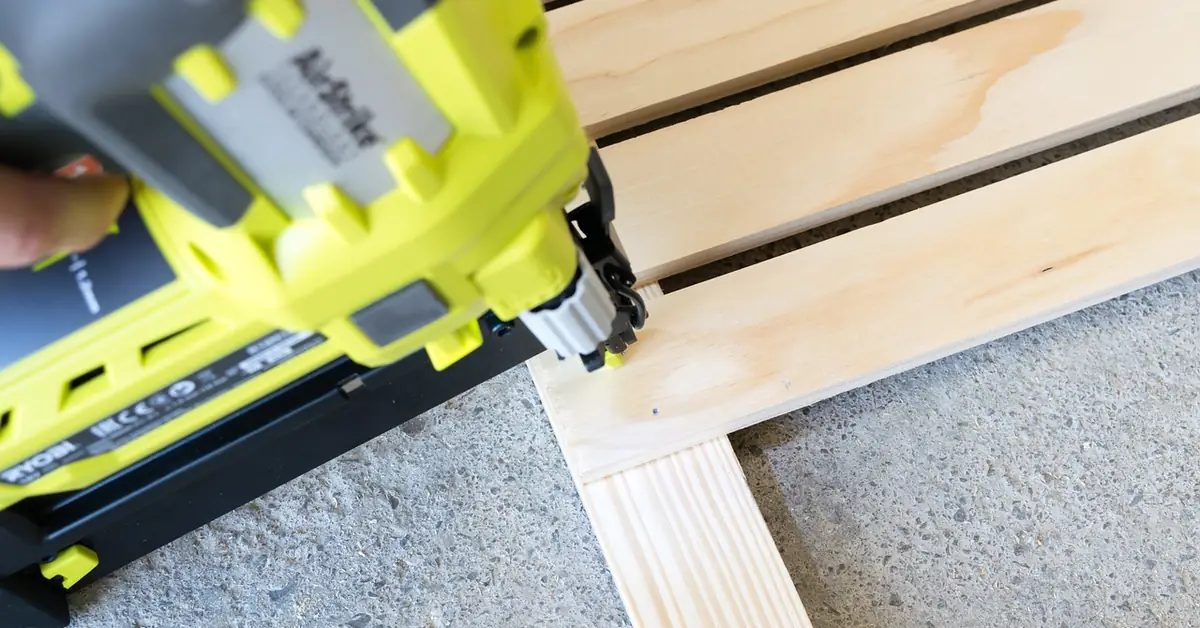
15 gauge finish nails measure 0.072 inches in diameter with a round head — thicker and stronger than 16 gauge nails, which run 0.0625 inches with a smaller, rectangular head. Use 15 gauge for door casing and thick crown molding; 16 gauge for baseboards and delicate trim, where it splits wood less and leaves a smaller hole to fill. This guide covers the exact diameter specs, holding power, and which gauge fits your project. If your 15-gauge nails are labeled DA or FN and you’re not sure what that means, see DA vs FN finish nails for the collation-angle and head-shape difference.
Disclosure: This post may contain affiliate links. As an Amazon Associate we earn from qualifying purchases.
Diameter and Strength Compared
Best 15 Gauge Finish Nailer Pick
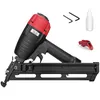
3PLUS Angled 15 Gauge Finish Nailer – $66.88
Drives the 0.072" nails this guide recommends for door casing and thick crown molding — the exact heavy-trim use case covered above.
- Best for: door casing, thick crown molding, cabinet face frames
- Why we picked it: angled magazine reaches tight corners a straight 15 gauge nailer can’t
- Main drawback: overkill for thin baseboard and delicate trim — use 16 gauge instead
Compare more finish nail gauge options
 Option 1 ARROW 16 Gauge Finish Nailer Kit – $90.99
|
 Option 2 meite 15 Gauge Finish Nails (2,000pk) – $24.99
|
 Option 3 meite 16 Gauge Finish Nails (2,500pk) – $18.99
|
As an Amazon Associate we earn from qualifying purchases.
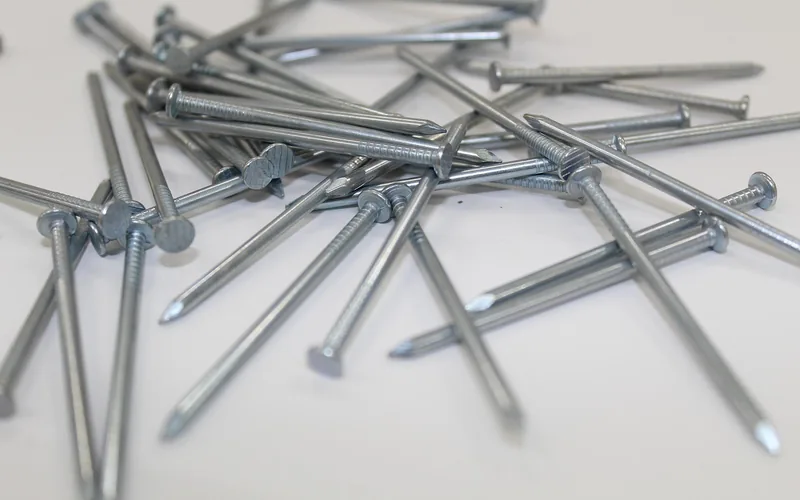
The difference between these two nail gun gauges comes down to shank diameter, not just marketing language. A 15 gauge finish nail is a fastener that measures 0.072 inches (about 1.8mm) in diameter with a round head, giving it more holding power for heavy trim and cabinetry. A 16 gauge finish nail is thinner at 0.0625 inches (about 1.6mm) with a smaller rectangular head, trading some holding power for a smaller, easier-to-fill entry hole.
Both gauges above assume you already own a pneumatic finish nailer. If you don’t, and don’t want to buy one for a single room of trim, see how to put up trim without a nail gun for the hand-nailing and construction-adhesive alternatives, including which hand-driven nail size stands in for each gauge above.
Holding Power in Real Applications
15 gauge nails resist pull-out better in dense hardwoods and hold heavier trim — door casing, thick crown molding, cabinet face frames — without loosening over time. 16 gauge nails hold well enough for standard interior trim but shouldn’t be relied on for load-bearing or structural connections.
Splitting Risk on Delicate Trim
The thicker 15 gauge shank can split narrow molding, MDF, and thin bed moldings if you’re not careful with placement. The thinner 16 gauge nail is the safer choice on delicate stain-grade trim because it’s less likely to blow apart the wood fibers — and the smaller round-to-rectangular head leaves less to putty and sand before finishing.
📊 15 gauge finish nails run 0.072" in shank diameter versus 0.0625" for 16 gauge — a roughly 15% difference that determines holding power and hole size. — Source: NailerGuy Nail Gun Gauge Chart, 2026
“If you’re working with thick, dense wood or hanging doors, you need the heavier 15 gauge nail — if you want a smaller head to fill on delicate molding, 16 gauge is the better option.”
Best Uses for Each Gauge
Match the gauge to the trim, not the other way around. Heavier, thicker trim needs the extra holding power of 15 gauge; thinner, more delicate pieces do better with 16 gauge’s smaller hole and lower splitting risk.
- 15 gauge finish nails: door casing, thick crown molding, baseboards over 3/4" thick, cabinet face frames, and staircase trim.
- 16 gauge finish nails: standard baseboard (1/2"–3/4" thick), interior trim, paneling, furniture assembly, and delicate or MDF molding.
For a full breakdown by trim thickness and nail length, see our nail gauge and length chart for trim and baseboard. If you’re specifically working on baseboard trim, our brad nail size guide for baseboard covers the thinner 18-gauge alternative, and our DA vs FN finish nail head-style guide explains the head-shape difference in more depth.
Cost and Availability
16 gauge finish nails are usually the cheaper option per box because they use less steel, but the gap is small enough that it shouldn’t drive your gauge choice on its own — trim thickness and splitting risk matter far more.
| Spec | 15 Gauge | 16 Gauge |
|---|---|---|
| Shank diameter | 0.072" (1.8mm) | 0.0625" (1.6mm) |
| Head shape | Round | Rectangular |
| Average price (per 2,000–2,500pk box) | $25–$30 | $18–$25 |
| Best for | Door casing, thick crown molding | Baseboards, delicate trim |
Both gauges are widely stocked at home centers and are compatible with a wide range of nailers — check your nailer gauge compatibility before buying, since a 15 gauge nailer won’t fire 16 gauge nails and vice versa.
Frequently Asked Questions on 15 Gauge vs 16 Gauge Finish Nails
What is the difference between 15 gauge and 16 gauge finish nails?
The difference is shank diameter. 15 gauge nails measure 0.072 inches thick with a round head, giving more holding power. 16 gauge nails measure 0.0625 inches with a smaller rectangular head, trading some strength for a smaller hole and less splitting risk.
Which gauge finish nail should I choose for my project?
Choose 15 gauge for heavy trim — door casing, thick crown molding, cabinet face frames — where maximum holding power matters. Choose 16 gauge for standard baseboard, paneling, and delicate stain-grade trim where a smaller nail hole and lower splitting risk matter more.
Are 15 gauge finish nails more expensive than 16 gauge nails?
Yes, generally by a few dollars per box. 15 gauge boxes typically run $25–$30 versus $18–$25 for 16 gauge, because the thicker nails use more steel. The price difference is minor compared to how the wrong gauge affects trim quality.
Can I use 15 gauge nails in a nail gun designed for 16 gauge nails?
No. Each nailer is built for one specific gauge’s magazine and driver. Forcing a different gauge into the wrong nailer causes jamming or misfiring — always match the nail gauge printed on the nailer’s spec label.
Do 15 gauge or 16 gauge nails leave a smaller hole to fill?
16 gauge nails leave the smaller hole. Their thinner 0.0625" shank and rectangular head need less wood filler and sanding before painting or staining, which is why finish carpenters default to 16 gauge on visible, stain-grade trim.
Is a 16 gauge finish nailer strong enough for door casing?
It can work on lighter interior doors, but 15 gauge is the safer choice for door casing and any trim that gets bumped or leaned on. The extra shank diameter resists pull-out where a 16 gauge nail can eventually work loose.
Conclusion
15 gauge finish nails (0.072") win on holding power for door casing, thick crown molding, and cabinetry. 16 gauge finish nails (0.0625") win on finish quality — smaller holes, less splitting — for baseboards and delicate trim. Match the gauge to the trim thickness in front of you, not the other way around.
Sponsored / affiliate links. As an Amazon Associate I earn from qualifying purchases. I may earn additional commission from eligible campaigns.