3/4 Plywood at Lowe’s: Price per Sheet by Type (2026)
A 4×8 sheet of 3/4 inch plywood at Lowe’s ran from $42.00 for Plytanium rated pine sheathing to $89.78 for sanded maple on Lowe’s.com listings in early October 2026, about $1.31 to $2.81 per square foot. The catch: sheathing is labeled 23/32 inch, not 3/4, and “CDX” does not mean exterior. This guide covers price by type, real thickness, and which sheet fits which job.
3/4 Inch Plywood Prices at Lowe’s by Type
Best Plywood Thickness Gauge Pick
 |
General Tools 147 Digital Caliper (6 in.): $36.29 Sheathing labeled 3/4 inch is really 23/32 (0.719 in), so measure the sheet you bought before you set a dado or rabbet. This caliper switches between decimal inches, fractional inches, and millimeters.
|
As an Amazon Associate we earn from qualifying purchases.
Lowe’s lists 3/4 inch plywood in four families: rated sheathing, pressure-treated sheathing, sanded softwood and poplar panels, and hardwood veneer panels in birch and maple. The table below uses 4×8 listing prices taken from Lowe’s.com product pages in early October 2026, with cost per square foot worked out on the 32 square feet in every sheet.
| Lowe’s listing (3/4 in x 4 ft x 8 ft) | Type | Price per sheet | Per sq ft |
|---|---|---|---|
| Plytanium 23/32 Rated Pine Sheathing | Rated sheathing | $42.00 | $1.31 |
| Severe Weather Pressure Treated Douglas Fir CDX | Treated sheathing | $59.98 | $1.87 |
| Severe Weather 23/32 Pressure Treated Southern Yellow Pine CDX | Treated sheathing | $61.98 | $1.94 |
| McCorry Corry PRO-Panel Sanded (poplar) | Sanded hardwood-faced | $65.65 | $2.05 |
| McCorry Square Sanded Plywood | Sanded hardwood-faced | $68.98 | $2.16 |
| Patriot Timber Products Square Sanded Plywood | Sanded softwood-faced | $79.98 | $2.50 |
| SoyStrong NAF Birch Square Sanded Plywood | Birch | $83.78 | $2.62 |
| CorryCabinet Maple Square Sanded Plywood | Maple | $89.78 | $2.81 |
Store shelf prices, stock, and brands change by location, so select your store on Lowe’s.com before you drive over. Treat the table as a way to compare types, not as a quote.
Three patterns stand out. Pressure treatment adds about $18 to $20 per sheet over untreated pine sheathing ($59.98 and $61.98 against $42.00). The sanded poplar and softwood-faced panels sit in a $65 to $80 band. Birch and maple add roughly $4 to $10 more over the Patriot Timber panel. Per square foot, maple costs about 2.1 times as much as pine sheathing ($2.81 against $1.31).
📊 Spread across the eight listings: $42.00 to $89.78 per sheet, $1.31 to $2.81 per square foot. Source: product pages on Lowe’s.com plywood & sheathing, early October 2026, per-square-foot figures calculated by us.
A price per sheet hides what a small project really costs. One 4×8 sheet yields exactly four 24 x 48 inch panels with a single rip at 24 inches and a crosscut at 48, so the material cost of one shelf or cabinet side is a quarter of the sheet price, before kerf and scrap.
| Sheet | Sheet price | Material cost of one 24 x 48 in. panel |
|---|---|---|
| Plytanium rated pine sheathing | $42.00 | $10.50 |
| McCorry Corry PRO-Panel sanded poplar | $65.65 | $16.41 |
| Patriot Timber sanded panel | $79.98 | $20.00 |
| SoyStrong birch | $83.78 | $20.95 |
| CorryCabinet maple | $89.78 | $22.45 |
Buying a different thickness, or shopping a different store? Our guide to 1/2 inch plywood 4×8 prices covers the thinner sheet, and Home Depot plywood costs shows how the other big box compares. If you only want the sanded grades, we break those out separately in our Lowe’s 3/4 sanded plywood guide.
What CDX Means on a Lowe’s Plywood Tag
Most Lowe’s sheathing is tagged CDX or Rated Sheathing. The letters are veneer grades: C on the face, D on the back, and X for the glue bond. Many shoppers read the X as exterior. It is not. APA, the engineered wood association, states that panels commonly called CDX are Exposure 1 rated, which means the glue survives the rain a bare subfloor takes during construction, not permanent weather exposure.
⚠ CDX is Exposure 1, not Exterior. According to APA, Exposure 1 panels are for uses without long-term weather exposure.
This matters at the rack because the untreated $42.00 sheathing and the $59.98 treated sheathing look almost identical. The grade stamp, not the shelf sign, tells you the exposure rating. Veneer grades run from A (best appearance) to D, and APA says C is the lowest veneer grade allowed in Exterior panels, while D veneer is limited to protected applications. For the grade-letter comparison, see our ACX vs CDX plywood guide, and for the treated sheets and how their ratings differ, our 4x8x3/4 treated plywood guide.
Is 3/4 Inch Plywood Really 3/4 Inch? Actual Thickness at Lowe’s
No. Structural panels are sold by Performance Category, a nominal size, and the category that goes with “3/4 inch” is 23/32. That is 0.719 inch, about 1/32 inch (0.031 in) under 0.750. Lowe’s listings show the split: the rated pine sheathing is titled 23/32-in, while the birch, poplar, and maple panels are listed as 3/4-in. Same nominal size, different labels.
| Label | Decimal inches | Difference from 0.750 |
|---|---|---|
| 3/4 in (nominal) | 0.750 | 0 |
| 23/32 in (rated sheathing) | 0.719 | -0.031 |
| 18 mm (metric panel) | 0.709 | -0.041 |
| Two layers of 23/32 glued up | 1.438 (1-7/16 in) | -0.062 versus a 1.5 in top |
We did not measure the sanded and hardwood panels, so do not assume they match the sheathing. The only number you can trust is the one a caliper gives you on the sheet you carried to the register.
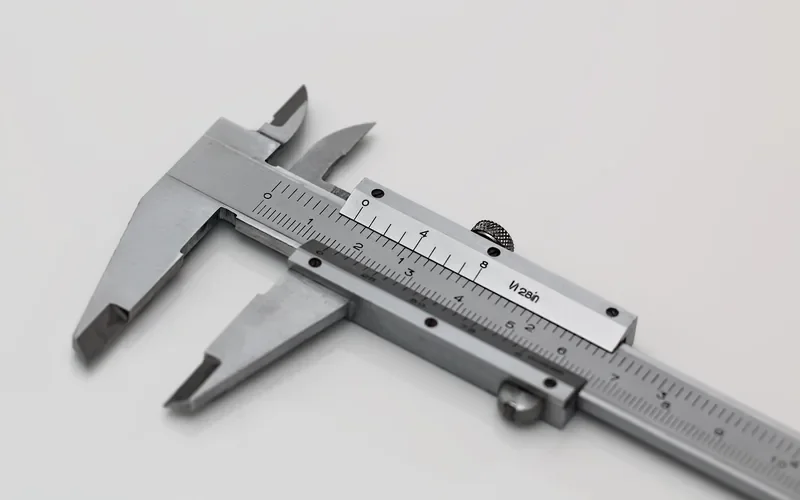
The gap shows up in joinery. A 3/4 inch dado bit cuts a slot about 1/32 inch wider than a 23/32 panel, which is visible and weakens the glue line. Cut a test dado in an offcut from the same sheet, or use a bit sized for undersize plywood. It also shows up in stack-ups: a workbench top made from two glued layers of sheathing is 1-7/16 inches thick, not 1-1/2. Our 23/32 vs 3/4 plywood breakdown goes deeper on the labeling, and the standard plywood sizes chart lists nominal versus actual for every common thickness.
One more number from APA’s rated sheathing sheet: a 23/32 panel carries a 48/24 span rating. The first number is the maximum support spacing for roof sheathing, the second the maximum joist spacing for subfloor, both in inches. So 23/32 rated sheathing is rated for a subfloor on joists up to 24 inches on center.
Which 3/4 Inch Plywood to Buy for Each Project at Lowe’s
| Project | Sheet to pick | Why | Listing price seen |
|---|---|---|---|
| Subfloor on joists 24 in. on center or closer | Rated pine sheathing | 48/24 span rating covers 24 in. joist spacing | $42.00 |
| Outdoor or ground-contact build | Pressure-treated sheathing; confirm the tag says ground contact | Untreated CDX is Exposure 1 only | $59.98 to $61.98 |
| Painted shelves, cabinet boxes, workbench top | Sanded poplar or sanded softwood-faced panel | Smooth face, takes primer cleanly | $65.65 to $79.98 |
| Stained furniture or visible edges | Birch | Light, even face veneer for clear finish | $83.78 |
| Premium visible surfaces | Maple | Hard, pale face veneer | $89.78 |
The cheapest sheet is rarely the cheapest project. Pine sheathing at $42.00 is the right price for a hidden subfloor and the wrong choice for a cabinet, where you would spend extra hours filling knots and sanding. Paying $23.65 more per sheet for sanded poplar ($65.65 against $42.00) buys back that time.
Building a cabinet box from 3/4 inch panels? Our guide to Kreg screws for 3/4 plywood covers the correct screw length and jig setting.
Inspecting and Hauling 3/4 Inch Plywood from Lowe’s
Sight down the long edge of each sheet before it goes on the cart; a bow or twist is obvious from the end. Pull from the middle of the stack rather than the top, since top sheets take the most handling damage. Look at the exposed edge for dark gaps between plies, and check the face for patches and loose veneer.
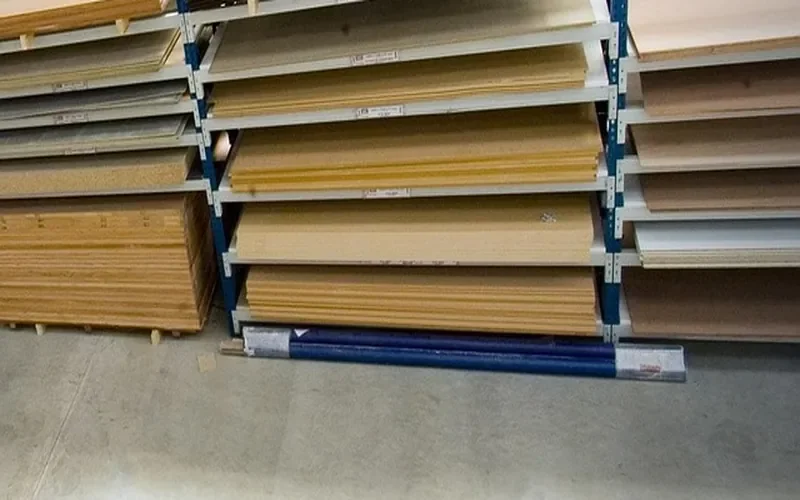
Read the grade stamp for the Exposure 1 or Exterior line instead of trusting the shelf sign, and confirm the thickness label matches what you planned for (23/32 or 3/4). A full sheet is heavy and awkward; our plywood weight comparison gives per-sheet weights. If you need straight cuts to fit a vehicle, ask your store whether it offers them, since policies vary; our does Lowe’s cut plywood guide explains what to expect.
3/4 Inch Plywood at Lowe’s: Frequently Asked Questions
How much does 3/4 inch plywood cost at Lowe’s?
On Lowe’s.com listings seen in early October 2026, a 4×8 sheet of 3/4 inch plywood ranged from $42.00 for rated pine sheathing to $89.78 for sanded maple, or $1.31 to $2.81 per square foot. Treated sheathing was $59.98 to $61.98 and sanded poplar and birch fell between $65.65 and $83.78. Store prices vary.
Is 3/4 inch plywood actually 3/4 inch thick?
Usually not. Rated sheathing sold as 3/4 inch is Performance Category 23/32, which is 0.719 inch, about 1/32 inch under 0.750. Lowe’s titles the sheathing 23/32-in and the hardwood panels 3/4-in, so measure each sheet with a caliper before cutting dadoes or rabbets.
Is CDX plywood exterior grade?
No. According to APA, panels commonly called CDX are Exposure 1 rated, meaning they tolerate moisture during construction but not long-term weather exposure. For outdoor builds choose pressure-treated sheathing with the right tag, or a panel stamped Exterior.
What is the cheapest 3/4 inch plywood at Lowe’s?
Of the listings we compared, Plytanium 23/32 rated pine sheathing was the cheapest at $42.00 per 4×8 sheet, or $1.31 per square foot. It suits subfloors and sheathing that will be covered, not painted or stained surfaces.
Which 3/4 inch plywood is best for cabinets and shelves?
Sanded poplar panels such as the McCorry Corry PRO-Panel ($65.65) are a cost-effective choice for painted cabinet boxes and shelves. Choose birch ($83.78) when you plan a clear or stained finish. Pine sheathing is rougher and needs more prep.
Sponsored / affiliate links. As an Amazon Associate I earn from qualifying purchases. I may earn additional commission from eligible campaigns.