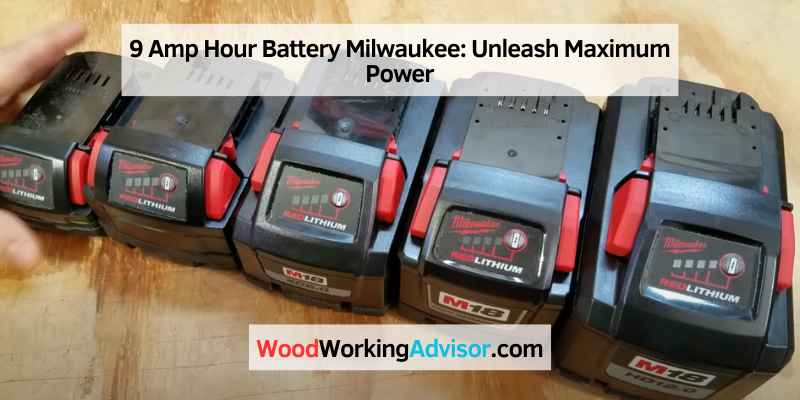
Milwaukee 9.0 Ah Battery: What It Means and What Is In Stock
“9 amp hour” describes a battery’s capacity, not its power – on Milwaukee’s 18-volt M18 platform, a 9.0 Ah battery stores roughly 162 watt-hours of energy, enough to run a high-draw tool like a circular saw or SDS rotary hammer for an extended job before needing a recharge. The exact Milwaukee 9.0 Ah pack (model 48-11-1890) has become hard to find in stock, because Milwaukee’s current lineup skips straight from 8.0 Ah to 12.0 Ah in its newer HIGH OUTPUT battery line – here’s what that means for which battery you should actually buy.
What “Amp Hour” Actually Measures
CLOSEST IN-STOCK EQUIVALENT TO THE 9.0 AH PACK
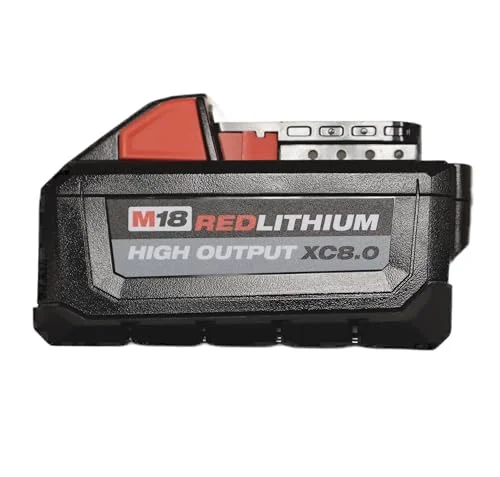 |
Milwaukee M18 HIGH OUTPUT XC8.0 Battery – $149.99 The genuine 48-11-1890 (9.0 Ah) is frequently out of stock. This is Milwaukee’s own next-closest capacity in the current HIGH OUTPUT line, with the same high continuous-discharge rating that heavy-draw tools need.
|
Amp-hours (Ah) measure how much charge a battery holds, not how much power it can deliver at once – that’s a common mix-up. Multiply Ah by voltage to get watt-hours (Wh), the real measure of total stored energy: a 9.0 Ah M18 battery is 18V × 9Ah = 162 Wh, compared to 144 Wh for an 8.0 Ah pack or 216 Wh for a 12.0 Ah pack. A higher-capacity battery runs a given tool longer between charges, but it does not make the tool cut, drill, or drive any faster – that’s determined by the tool’s motor and the battery’s discharge rate, not its Ah rating.
Do You Actually Need That Much Capacity?
A 9.0 Ah (or 8.0 Ah) battery makes the most sense for tools that draw a lot of current continuously: table saws, miter saws, SDS rotary hammers, large circular saws, and string trimmers under load. For lighter-draw tools – drill/drivers, impact drivers, work lights, most drills used for typical woodworking joinery – a smaller 5.0 or 6.0 Ah battery runs those tools for a full work session anyway, at noticeably less weight hanging off the tool. Buying the biggest battery available for every tool isn’t free: it’s extra cost and extra weight for capacity you may not use.
The Weight Trade-Off
A Milwaukee 9.0/8.0 Ah HIGH OUTPUT battery weighs close to double what a 5.0 Ah compact pack weighs. That extra weight sits at the base of the tool, which changes the balance point – noticeable on a drill you’re holding overhead or at arm’s length for more than a few minutes, much less noticeable on a table saw that sits on a stand. Match the battery size to how the tool is actually held and used, not just to “more capacity is always better.”
Compatibility: Any M18 Battery Fits Any M18 Tool
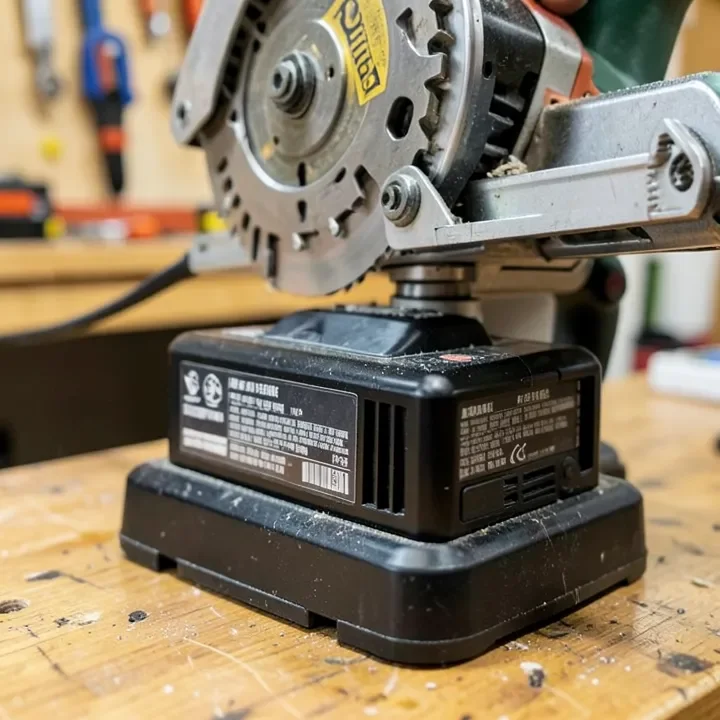
Every battery in Milwaukee’s M18 lineup, from the smallest 1.5 Ah compact pack to the newest 12.0 Ah FORGE, is physically and electrically interchangeable across every M18 tool ever made – capacity (Ah) only changes runtime and weight, not compatibility. That means you can buy the higher-capacity pack for your table saw and still use it (temporarily) on a drill in a pinch, though the added weight makes it a poor everyday match for smaller tools.
Real-World Runtime Example
A cordless miter saw drawing roughly 1,200 watts under load will run for about 162 Wh ÷ 1,200 W × 60 ≈ 8 minutes of continuous full-load cutting time on a 9.0 Ah pack – but real-world cutting is intermittent, not continuous, so that translates to well over an hour of typical on-and-off use making cuts. The math scales directly with capacity: an 8.0 Ah pack gets about 89% of that runtime, a 12.0 Ah pack about 133%. Use this ratio to estimate runtime for your own tool once you know its rated wattage or amp draw.
Frequently Asked Questions
Is a 9 Ah Milwaukee battery still available?
The original Milwaukee 48-11-1890 (M18 9.0 Ah) is often out of stock, since Milwaukee’s current HIGH OUTPUT lineup steps from 8.0 Ah to 12.0 Ah rather than continuing to sell a 9.0 Ah pack. The 8.0 Ah HIGH OUTPUT battery is the closest genuine Milwaukee equivalent currently in regular stock.
Will a 9.0 Ah battery make my tool more powerful?
No. Amp-hours measure stored energy (runtime), not power output. A tool’s cutting or drilling power comes from its motor and the battery’s discharge rate rating, not from a higher Ah number. A bigger battery runs a tool longer between charges; it doesn’t make that tool cut faster.
Can I use a 9.0 Ah battery on a small tool like a drill?
Yes, it’s fully compatible with any M18 tool, but the extra weight makes it an awkward match for a lightweight drill you hold at odd angles. It’s a better fit for tools that sit on a stand or bench, like a table saw or miter saw.
How long does a 9.0 Ah Milwaukee battery last (charge cycles)?
Milwaukee’s REDLITHIUM and HIGH OUTPUT cells are generally rated for several hundred full charge cycles before capacity noticeably declines, and Milwaukee batteries carry a manufacturer warranty (typically multi-year) against premature failure. Partial charges (topping off rather than fully draining first) don’t meaningfully shorten lithium-ion battery lifespan the way older nickel-based batteries did.
Bottom Line
“9 amp hour” is a capacity spec, not a power spec, and the exact Milwaukee 9.0 Ah pack has largely been succeeded by the 8.0 Ah HIGH OUTPUT and 12.0 Ah FORGE packs in the current lineup. Match battery size to the tool: high-draw stationary tools benefit from the bigger, heavier packs, while everyday drills and drivers do better with something lighter. Any M18 battery works in any M18 tool, so it’s a sizing decision, not a compatibility one.
Sponsored / affiliate links. As an Amazon Associate I earn from qualifying purchases. I may earn additional commission from eligible campaigns.