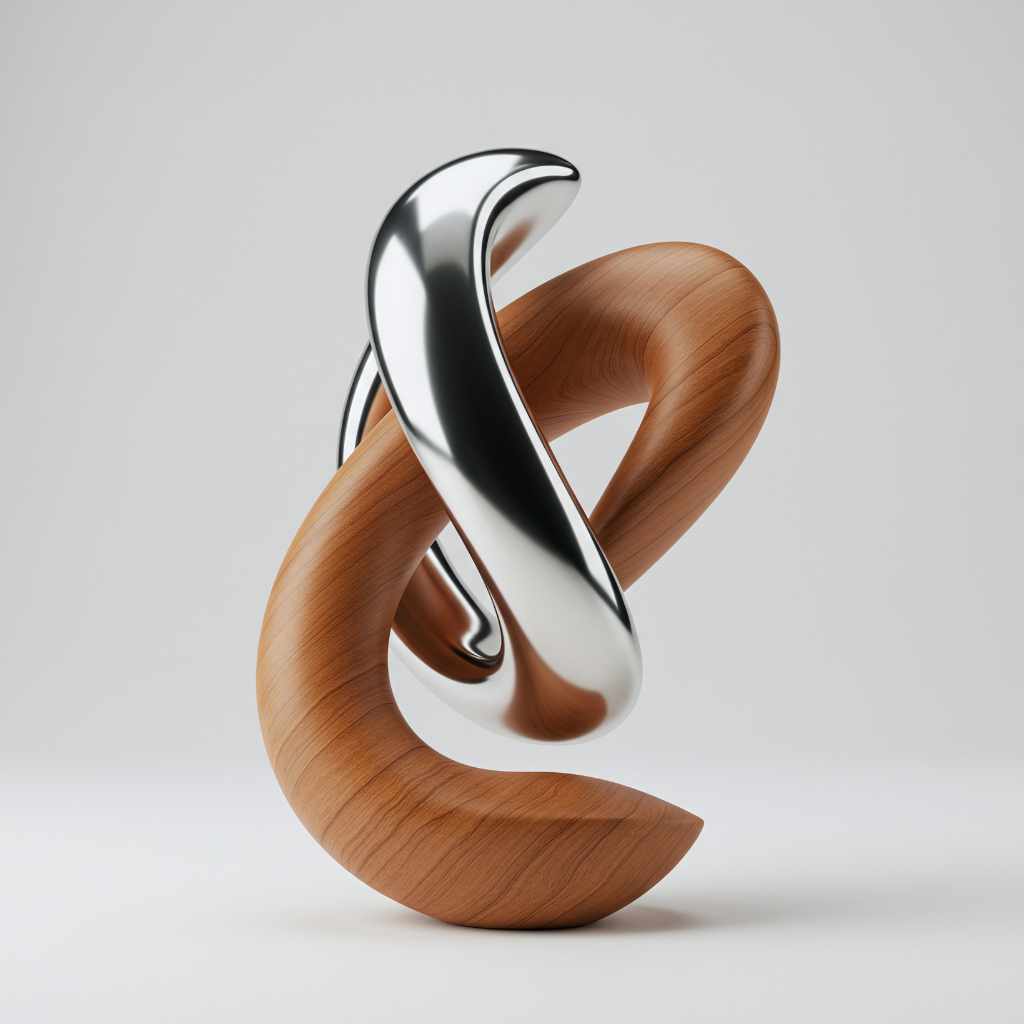
Abstract Wood Sculpture Ideas: Essential & Proven
Discovering essential and proven abstract wood sculpture ideas is simple when focusing on fundamental shapes, material contrast, and thoughtful negative space. Beginners can start with accessible cuts like flowing curves and stacked geometric blocks, using basic tools to create striking, original artwork that looks professional.
Are you staring at a beautiful piece of lumber, wondering how to turn it into something that isn’t just a box or a shelf? Many new woodworkers feel stuck when trying to move beyond straight lines into the exciting world of abstract art. It feels complicated, like you need advanced carving skills. Don’t worry! Creating stunning abstract wood sculpture ideas is totally achievable. You just need a few proven starting concepts that focus on flow and form rather than perfect replication. We will guide you through simple methods to unlock your creativity, ensuring your first abstract piece is a genuine success.
When you look at professional abstract sculptures, they often seem complex. But at their core, most successful abstract ideas rely on three simple principles: flow, balance, and the relationship between solid wood and empty space. This guide, written by a fellow woodworker, breaks down concepts that even a beginner using basic shop tools can master. We are focusing on ideas that yield maximum visual impact with minimum fuss.
Understanding Abstraction in Wood: What Are We Actually Making?
Abstraction means simplifying a subject down to its core elements—its shape, texture, and movement—or creating something completely new based on feeling or concept. In woodworking, this is often achieved by manipulating simple geometric forms or following the natural lines within the wood itself.
For the beginner, we focus on two main avenues for abstract wood sculpture ideas:
-
- Geometric Abstraction: Working primarily with cubes, wedges, cylinders, and joining them in unexpected ways to create tension or harmony.
- Organic Abstraction: Focusing on smooth, flowing lines, waves, and carved negative spaces that mimic natural elements like water or wind.
Proven Idea Set 1: The Power of Geometric Stacking and Juxtaposition
This set of ideas is perfect for when you are comfortable with cutting straight lines on a table saw or using a jigsaw. It focuses on how different shapes interact when stacked or placed next to each other.
Idea 1.1: The Labyrinth Stack
This concept uses repetition and subtraction to create visual depth. It’s surprisingly easy to execute safely.
- The Vision: Create a sculpture that looks complex, but is built from identical, simple blocks.
- Beginner Steps:
- Cut five identical wood blocks (e.g., 3” x 3” x 3”). Pine is great for practice.
- On the top face of each block, cut a square hole in the center, leaving a consistent border (e.g., 1/2 inch wide). This looks like picture framing.
- Assemble these offset. Instead of stacking them perfectly, rotate the second block 45 degrees relative to the first, the third back to 0 degrees, and so on.
- Glue them together. The alternating holes create a visual labyrinth effect.
- Skill Focus: Precision cutting of identical parts and alignment.
Idea 1.2: Contrasting Mass and Void
In sculpture, “void” (empty space) is just as important as “mass” (the solid wood). This idea plays them against each other.
- The Vision: A heavy, solid base supporting a seemingly impossible, thin arc or sphere.
- Execution Tip: Use your clamps and wood glue liberally. For the thin connecting piece, consider using a sturdy hardwood like maple, even if your base is pine, for necessary tensile strength. If you are using softwoods, keep the connections thick.
- Tool Consideration: This relies heavily on strong joinery. Look up reliable guides on doweling or biscuit joints for beginners, as they greatly increase the strength of glued-up sections. Always aim for strong structural integrity, even in abstract work.
Proven Idea Set 2: Embracing Organic Flow and Negative Space
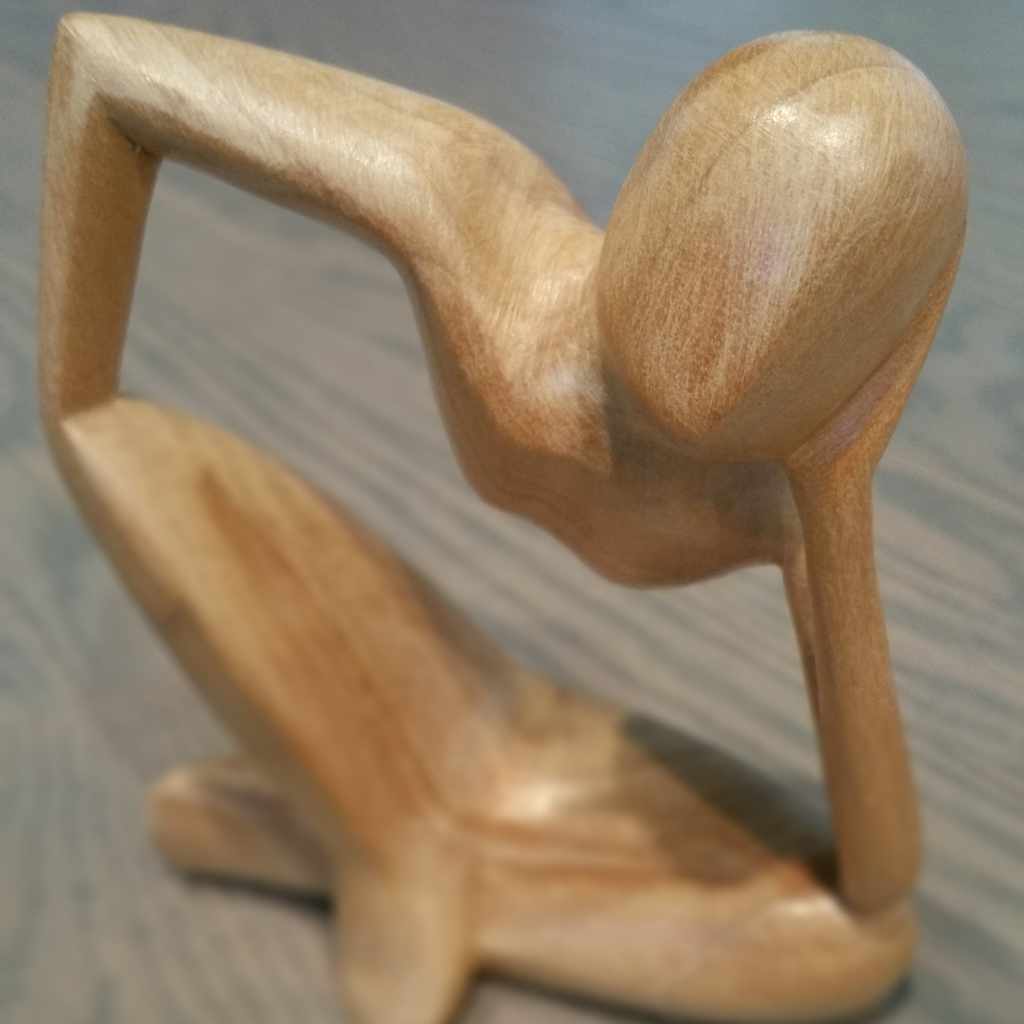
These ideas involve curves, which often feel intimidating. However, if you focus on one dominant curve at a time, you gain control. This is where you explore sandpaper and sanding tools more heavily.
Idea 2.1: The Twisted Ribbon
This mimics the look of a single piece of wood that has been molded or blown into an organic shape.
- The Vision: A long, thin slab of wood that twists throughout its length, revealing different cross-sections as you view it from different angles.
- How to Achieve the Twist:
- Start with a long, thick plank (e.g., 2” x 4” x 18”).
- Mark the center line down the length.
- On one end, mark a 90-degree rotation (if viewing the end grain).
- Carefully use a band saw or a jigsaw (with patience) to cut out the basic profile, removing material that defines the curve but keeping the core mass.
- The key is constant shaving and sanding to smooth the transition between the twist faces. Use a rotational sanding block or a belt sander turned sideways to smooth the tight curves.
- Safety Note: When cutting thin, curved workpieces, always maintain a firm grip and keep your hands far from the blade path. Wear eye protection religiously, especially when sanding curves that expel dust in unpredictable ways.
Idea 2.2: The Sculpted Void (The Hole as the Subject)
This is a very advanced concept simplified for beginners. Instead of carving around a shape, you are carving into a solid block to let light pass through, making the emptiness the focus.
- The Concept: Take a solid block (a “cube” or a thick slab). Drill or cut a deliberate, asymmetrical hole through it. The sculpture becomes the frame for that hole.
- Beginner Success Tip: Use Forstner bits for clean, round holes on a drill press before sanding the edges. If using a jigsaw for more complex holes, drill relief holes first to allow the blade to enter easily.
- External Resource Hint: Learning about negative space is critical here. Resources like those from the National Endowment for the Arts often touch on how artists manage empty space, which translates directly to sculpture.
Essential Tools for Abstract Sculpting (No Need for Fancy Chisels)
You do not need a full carving set to start making impressive abstract pieces. The following list focuses on tools that handle shaping, sanding, and joinery—the real backbone of beginner abstract work.
| Tool | Primary Use in Abstraction | Beginner Comfort Level |
|---|---|---|
| Jigsaw or Band Saw | Cutting initial curves and sweeping lines. | Medium (Requires careful handling of thin stock). |
| Orbital Sander (Random Orbit) | Smoothing large surfaces and softening edges. Essential for organic flows. | High (Very forgiving). |
| Rotary Tool (e.g., Dremel) with sanding drums | Detail work on tight interior curves or hollowing small sections. | Medium (Can remove material too fast if rushed). |
| Clamps (Lots of them!) | Securing pieces for glue-ups and laminations that form complex shapes. | High (Your best friend for strong joints). |
Material Matters: Choosing Wood for Abstract Success
The wood you choose can define your sculpture before you even make the first cut. For abstract work, we want materials that either take detail well or offer pleasing natural color variations.
Hardwoods vs. Softwoods for Beginners
- Softwoods (Pine, Cedar): Great for practicing cuts and large forms where you plan to heavily sand or paint the piece. They are inexpensive but can splinter unpredictably on fine curves.
- Hardwoods (Maple, Walnut, Cherry): These woods show off sanding beautifully. Walnut, with its dark color, highlights shadowed areas magnificently. They are harder on tools but the grain often looks purposeful in an abstract setting.
The “Found Wood” Concept
One of the best abstract wood sculpture ideas involves letting the wood dictate the form. Look for wood scraps with interesting knots, spalting (dark lines created by fungi), or natural twists.
If you have a piece of firewood with a severe, natural crook in it, don’t cut it into firewood! Clean it up, remove the bark using a drawknife or scraper, and sand it smooth. The natural curve of the wood is your abstract statement. This requires minimal cutting and maximizes natural beauty.
Four Steps to Developing Your Own Abstract Concept
While proven ideas are a great starting point, the goal is to create something unique. Use this simple process to move from a block of wood to a concept sketch.
- Define Your Medium (The Wood): Select one piece of wood. Look at the grain direction. Does it want to run straight, or does it curve? If it has a knot, treat that knot as the focal point that everything else must orbit around.
- Choose One Action Verb: Abstract art often conveys motion. Pick one verb to guide your cuts: Twist, Flow, Slice, Balance, Interlock, Tunnel. For example, if you choose “Slice,” you will focus on using shallow, straight cuts that overlap.
- Simplify the Shape: Do not try to carve a human figure or a recognizable animal. Instead, ask: What is the essence of that thing? If you were making a sculpture about “flight,” you might only use two tapered, upward-sweeping planes, leaving large amounts of space between them (negative space).
- Test the Viewpoint: Before cutting deep, hold the wood. Spin it around slowly. Where does the light hit it best? If it looks interesting from only one angle, that’s fine—it’s a powerful one-sided sculpture! If it looks good from all angles, you’ve created a free-standing 360-degree piece.
Finishing Abstract Work: Enhancing Form, Not Hiding It
The finish on an abstract sculpture is crucial because it defines the shadows and highlights that create the illusion of depth.
Do not use a thick, glossy varnish. This tends to flatten the subtle curves and texture variations you worked so hard to create.
Recommended Beginner Finishes
| Finish Type | Effect Achieved | Best For |
|---|---|---|
| Danish Oil or Tung Oil | Slightly deepens color, highlights grain texture naturally, low sheen. | Organic, flowing pieces where you want the wood grain to stand out. |
| Wax (Paste Wax) | Soft, matte finish that feels great to the touch. Excellent for geometric pieces. | Pieces handled often; protects without adding thick gloss. |
| Black Pickling Stain (Lightly Wiped) | Accentuates negative space by darkening carved recesses, maximizing contrast. | Geometric sculptures or ‘Sculpted Void’ ideas. |
Always apply your primary finish (oil or wax) first. If you want to add black stain to enhance shadows later, wipe it on very lightly with a rag, let it sit for 30 seconds, and then wipe almost all of it off. The stain will remain trapped only in the deepest textures and crevices, making your curves pop.
Safety First: Carving and Shaping Best Practices
Working on sculptures often means shaping wood in non-standard ways. This requires extra vigilance regarding safety protocols. Remember, the goal is to finish your project, not visit the emergency room!
- Secure Your Work: Never try aggressive shaping, routing, or sanding on a piece you are holding by hand unless it is very small (like an exacto knife sized craft). Use robust clamps or a sturdy workbench vice to hold the wood firmly.
- Dust Control: Sanding curves creates fine dust. Wearing a quality dust mask or respirator is non-negotiable. Fine wood dust can cause serious respiratory issues over time. Check resources from organizations like the Occupational Safety and Health Administration (OSHA) regarding wood dust exposure limits for guidance.
- Start Softly: When experimenting with a new tool (like a rotary tool), use the lowest speed first. Higher speeds remove material faster than you can react, leading to accidental deep cuts or gouges that are hard to fix in abstract shapes.
Frequently Asked Questions (FAQ) for Beginner Sculptors
Q1: Can I use wood glue for abstract sculptures, or do I need joinery?
A: Wood glue (like Titebond II or III) is incredibly strong when used correctly with good clamps. For geometric stacking, glue is often enough. However, for any piece that relies on cantilever (sticking out without support) or twist, adding dowels or biscuits for mechanical strength is highly recommended.
Q2: My curves look rough after cutting with the jigsaw. How do I make them smooth?
A: Rough-cut curves are normal. Do not try to get them perfectly smooth with just a detail sander. Use a belt sander or an oscillating spindle sander if you have one for the main smoothing. Follow up with a random orbital sander (starting with 80 or 100 grit, moving up to 220) to refine the final shape.
Q3: What is the easiest way to drill a perfectly centered hole in a curved piece?
A: If the curve is shallow throughout the drilling area, use a drill press with a center point guiding the bit, but keep the curve pressed firmly against the fence. If the piece is highly irregular, you might have to free-hand drill with a brace and bit or use a handheld drill, taking exceptionally slow, steady pressure.
Q4: Is it okay to mix different types of wood (e.g., maple and oak) in one abstract sculpture?
A: Absolutely! Mixing woods of different colors (like light maple and dark walnut) is a fantastic way to define planes and sections in abstract work. Just be mindful of differences in hardness, as they will sand and absorb stain differently.
Q5: How do I fix a section where I accidentally sanded too much and went past my intended line?
A: This is common! In abstract work, you can often incorporate the mistake. If you sanded too far down, turn that area into a deeper void or a new line of separation. If you need to fill it, use a mixture of fine sawdust from the same wood and wood glue to create a strong paste that matches the wood color closely before finishing.
Q6: What size wood block should a total beginner start with for their first abstract piece?
A: Start small enough to manage easily but large enough to feel substantial. A block around 6 inches long, 4 inches wide, and 3 inches thick gives you enough surface area to experiment with curves and stacks without feeling overwhelmed by a giant log.
Conclusion: Building Confidence Through Creative Form
Moving from functional woodworking to abstract sculpture is a wonderful leap in your creative journey. You have seen that the barrier to entry isn’t technical skill; it’s about daring to look at wood based on its shape and potential, not just its utility.