ACX vs CDX Plywood: Which One Is Better?
Choosing the right plywood can make a big difference in your projects. Many people wonder about ACX vs CDX Plywood: Which One Is Better? It sounds complicated, but it’s not. This guide will show you the simple differences.
We’ll help you pick the perfect plywood for your needs easily.
Understanding Plywood Grades
Plywood comes in different grades, and these grades tell you a lot about its quality and what it’s good for. The letters you see on plywood, like ‘A’ or ‘C’ and ‘X’, are part of a grading system. This system helps builders and DIYers know what to expect from the wood.
It’s like a label that tells you if the wood is smooth and good for finishing, or if it’s meant for hidden jobs where appearance isn’t the main thing. Knowing these grades means you won’t waste money on plywood that’s not right for your task.
What Do the Letters Mean
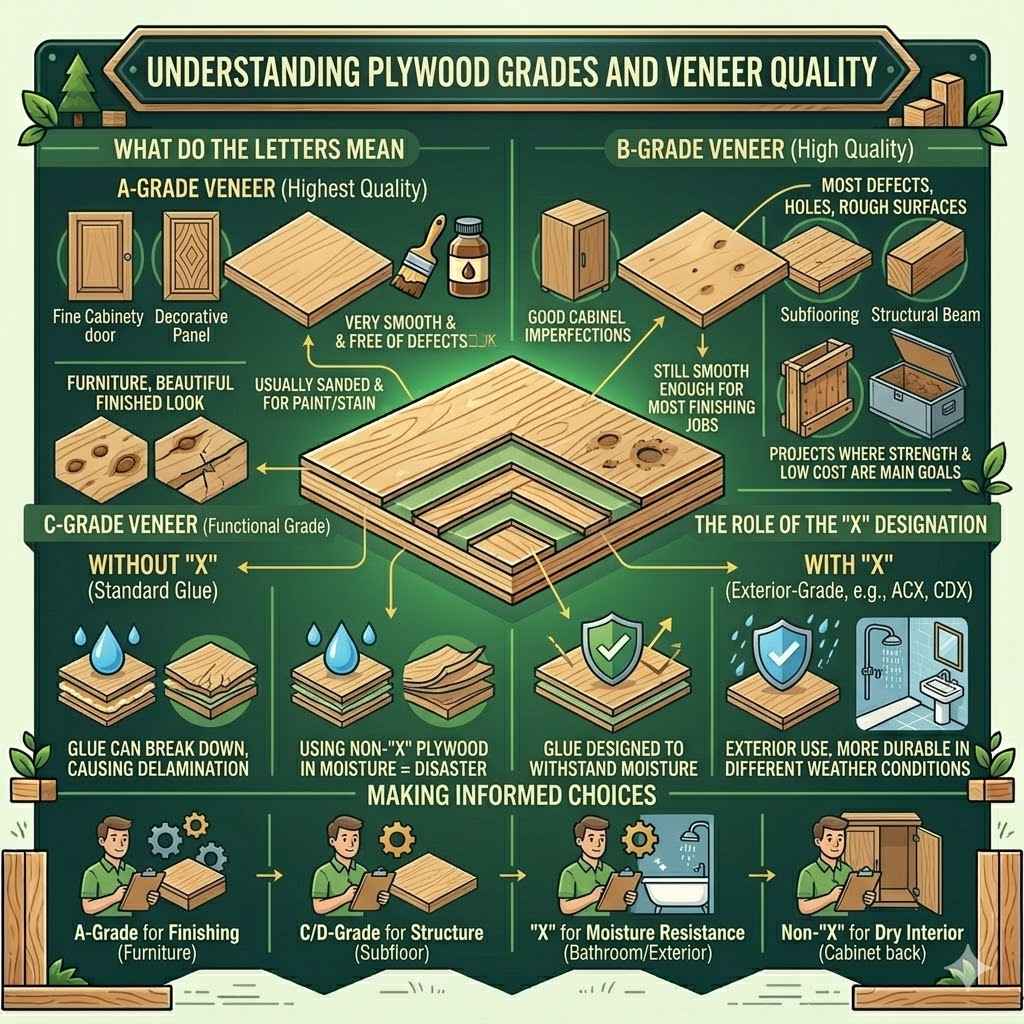
The letters on plywood, such as A, B, C, and D, refer to the quality of the wood veneer used on each side. These veneers are the thin sheets of wood that are glued together to make plywood. A higher letter grade generally means a smoother, more attractive surface with fewer knots or defects.
A ‘C’ grade means the veneer might have some visible defects, like knots or splits. The ‘X’ means the glue used in the plywood is designed to withstand moisture and is suitable for exterior use, making it more durable in different weather conditions. This grading system is essential for making informed choices.
- A-Grade Veneer: This is the best grade. It’s very smooth and free of defects. You’ll find this on furniture or decorative panels where you want a beautiful, finished look. It’s usually sanded and ready for paint or stain.
- B-Grade Veneer: This grade is also quite good, but might have a few small imperfections. It’s often used where appearance is important but not as critical as A-grade. It’s still smooth enough for most finishing jobs.
- C-Grade Veneer: This is a more functional grade. It can have more knots, some splits, or minor veneer repairs. It’s not meant for visible surfaces. Think of it for subflooring or structural parts where it won’t be seen.
- D-Grade Veneer: This is the lowest grade. It has the most defects, like large knots, holes, and rough surfaces. It’s typically used for projects where strength and low cost are the main goals, and appearance is not a factor at all.
The Role of the ‘X’ Designation
The ‘X’ in plywood grades, like ACX and CDX, stands for exposure. This means the glue used to bond the wood veneers together is waterproof or at least water-resistant. This is a critical feature for any plywood that might encounter moisture, whether it’s being used outdoors or in a damp indoor area like a bathroom or basement.
Standard glue can break down when exposed to water, causing the plywood layers to separate. Plywood with an ‘X’ rating is made to hold up much better under these conditions, preventing delamination and maintaining its structural integrity longer.
Using plywood without an ‘X’ rating in a moist environment is a recipe for disaster. The layers can swell, warp, and eventually come apart. This can ruin your project and lead to costly repairs.
Therefore, when your project calls for any kind of moisture resistance, looking for that ‘X’ is a must. It’s a simple symbol that guarantees a significant increase in durability for your construction.
ACX Plywood Explained
ACX plywood is a popular choice for many projects where both appearance and durability are important. The ‘A’ side means it has a high-quality, smooth surface that is ready for finishing. The ‘C’ side is less refined, suitable for less visible areas.
The ‘X’ indicates it has waterproof glue, making it suitable for some outdoor applications or areas with potential moisture exposure. This combination makes ACX a versatile option for many home improvement tasks. It strikes a good balance between aesthetics and practical performance.
The ‘A’ Face Characteristics
The ‘A’ face of ACX plywood is its most appealing feature. It’s smooth, sanded, and virtually free of defects like knots, plugs, or patches. This makes it ideal for projects where the finished surface will be visible and important.
You can easily paint, stain, or varnish an ‘A’ face to achieve a beautiful, professional look. Think of cabinetry, shelving, or even decorative wall panels. The consistent quality of the ‘A’ face means you won’t be fighting with an uneven or blemished surface when you go to apply your final finish.
It simplifies the finishing process significantly.
For example, if you’re building custom bookshelves that will be stained, the ‘A’ face ensures a smooth, grain-like appearance after the stain is applied. You won’t have any unsightly knots or dark spots to try and cover up. This level of finish is hard to achieve with lower-grade plywood without extensive work and filler.
The ‘C’ Back and ‘X’ Glue
The ‘C’ side of ACX plywood is less perfect than the ‘A’ side. It might have some knots, small splits, or veneer patches. Because this side is usually not visible in the final project, its appearance doesn’t matter as much.
This also helps keep the cost down compared to plywood with two good faces. The ‘X’ in ACX means it uses waterproof glue, which is a key benefit. This glue can withstand moisture without failing, making the plywood more durable in damp conditions.
It’s great for things like built-in cabinets that might be in a bathroom or kitchen.
The waterproof glue is a significant advantage. It prevents the layers of wood from separating when they get wet. This is especially important for projects that aren’t fully protected from the elements.
It ensures that the structural integrity of the plywood remains intact, even in challenging environments. This makes ACX a much better choice than plywood without the ‘X’ rating for anything that might experience even occasional dampness.
CDX Plywood Explained
CDX plywood is a workhorse in the construction industry, known for its strength and affordability. The ‘C’ and ‘D’ grades mean that both sides can have visible defects, making it less about looks and more about function. The ‘X’ signifies that it’s made with waterproof glue, essential for structural applications that might be exposed to the weather.
CDX is commonly used for sheathing roofs, walls, and floors because it provides a solid base for other building materials and can handle moisture. It’s a practical choice for unseen structural elements.
Understanding the ‘C’ and ‘D’ Faces
With CDX plywood, you’re looking at veneers that are less about beauty and more about utility. The ‘C’ face can have knots, plugs, and some surface imperfections, but it’s generally considered usable. The ‘D’ face is the less attractive side.
It can have more numerous or larger knots, open splits, and a generally rougher surface. Neither side is meant to be seen in the final construction. Their purpose is to create a strong, continuous surface for things like wall sheathing or subflooring.
This allows manufacturers to use less perfect wood, which translates to a lower cost for you.
For example, when building an exterior wall, the CDX plywood is nailed directly to the studs. The drywall or siding will then be installed over it. The appearance of the CDX itself is completely hidden, so its imperfections don’t matter.
The focus is entirely on providing a stable, structural layer that holds the building together and provides a base for finishes.
The ‘X’ Glue for Durability
Just like in ACX, the ‘X’ in CDX plywood is crucial for its performance. It means that the adhesive used to bond the wood layers together is rated for exterior exposure. This waterproof glue is designed to resist delamination when the plywood is exposed to moisture, humidity, or even direct rain.
This is a vital feature for structural plywood used in roofing, walls, and subflooring, as these areas are often the first line of defense against the elements. Without this waterproof glue, the plywood layers would eventually separate, compromising the building’s integrity.
A common scenario where the ‘X’ glue shines is during the construction phase of a new home. If it rains before the roof is covered or the walls are fully sealed, the plywood sheathing will get wet. CDX plywood with its ‘X’ glue will hold together, while plywood with interior glue would start to swell and delaminate, requiring
ACX vs CDX Plywood Which One Is Better?
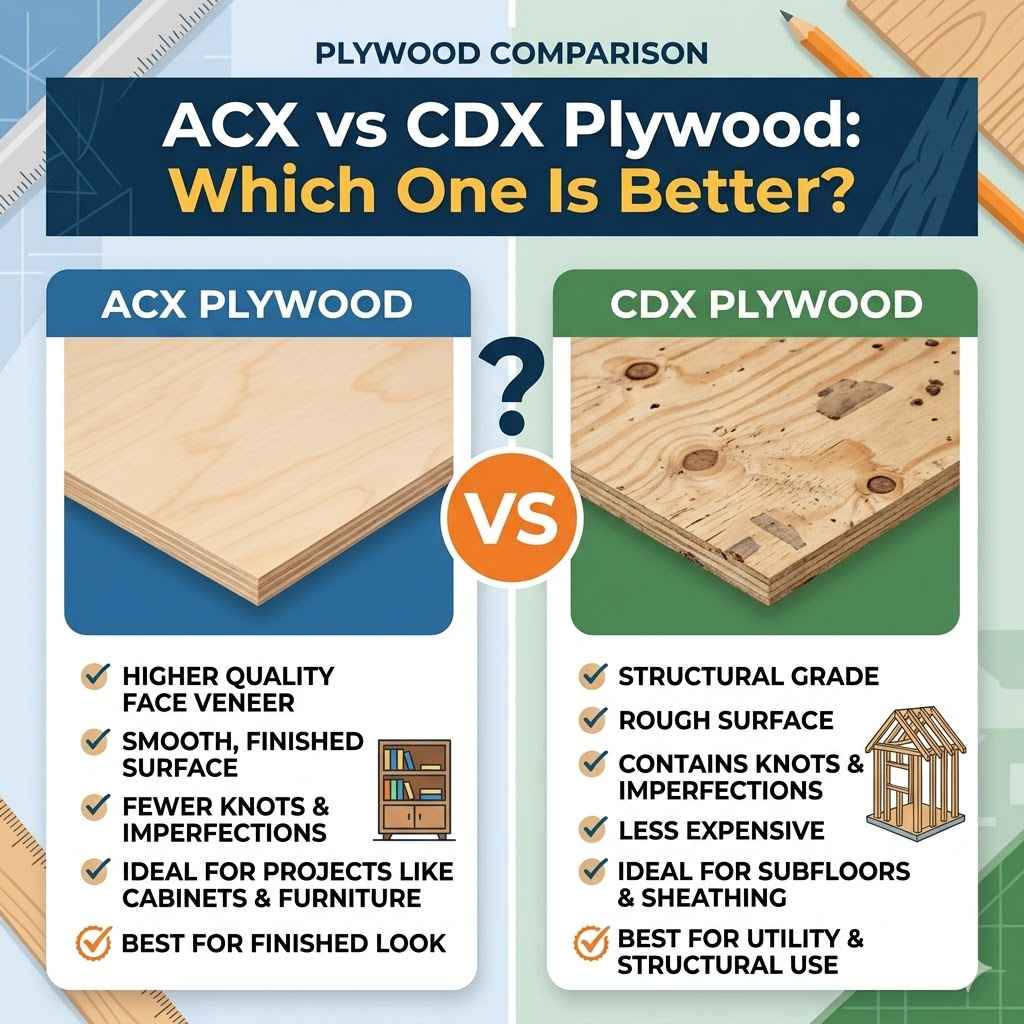
The question of ACX vs CDX Plywood: Which One Is Better? doesn’t have a single answer because the best choice depends entirely on your project. If you need a smooth, paintable or stainable surface for visible elements like cabinetry or trim, ACX is usually the better option because of its ‘A’ grade face. If your project requires a strong, structural component that will be hidden and might encounter moisture, like roof sheathing or subflooring, CDX is the more practical and cost-effective choice.
Both offer the durability of waterproof glue thanks to the ‘X’ rating, but their face grades are the key differentiator.
Key Differences at a Glance
The main difference between ACX and CDX plywood lies in the quality of their faces. ACX has a superior ‘A’ grade face, perfect for finishing, and a less refined ‘C’ grade back. CDX has two less refined faces, ‘C’ and ‘D’ grades, making it ideal for structural purposes where appearance is not a concern.
Both use ‘X’ rated waterproof glue, meaning they are suitable for exterior applications or areas prone to moisture. This makes them functionally similar in terms of moisture resistance but quite different in terms of surface finish and cost.
| Feature | ACX Plywood | CDX Plywood |
|---|---|---|
| Top Face Grade | A (Smooth, High Quality) | C (Usable but may have knots/defects) |
| Back Face Grade | C (Less refined) | D (Rougher, more defects) |
| Glue Type | X (Waterproof/Exterior) | X (Waterproof/Exterior) |
| Best Use Cases | Cabinetry, shelving, visible trim, furniture | Roof sheathing, wall sheathing, subflooring, fences |
| Appearance | Good for finishing, smooth surface | Functional, not for visible surfaces |
| Cost | Generally higher | Generally lower |
When to Choose ACX Plywood
You should opt for ACX plywood when the surface appearance is a top priority. This is the case for many DIY projects that involve visible elements. For instance, if you are building custom kitchen cabinets, ACX’s smooth ‘A’ face will take paint or stain beautifully, giving your cabinets a professional look.
Similarly, for built-in bookshelves that you plan to finish, ACX provides a superior surface that requires less prep work.
Consider ACX for any project where you want a clean, blemish-free surface that’s ready for a final coat of paint or varnish. This could include furniture like tables or desks, decorative wall paneling, or even custom built-ins in living areas. The extra cost for the ‘A’ face is usually worth it when you want a high-quality finish that enhances the overall aesthetic of your project.
It saves you time and effort in sanding and filling imperfections.
When to Choose CDX Plywood
CDX plywood is your go-to for structural applications where the wood will be covered and won’t be seen. Its primary strength is its durability and affordability. For building a new roof, CDX is used as sheathing to create a solid base for shingles.
It’s also commonly used for wall sheathing, providing rigidity and support for exterior walls before siding is applied. Furthermore, it’s a standard choice for subflooring, creating a strong foundation for your finished floors.
If you’re building a fence, a shed, or any outdoor structure where appearance isn’t the main concern, CDX is an excellent choice. Its waterproof glue ensures it can withstand outdoor elements like rain and humidity better than interior-grade plywood. Because both faces have defects, it’s significantly less expensive than ACX, making it a cost-effective solution for large surface areas that don’t need to be pretty.
A study by the Forest Products Laboratory found that CDX plywood provides comparable structural performance to higher-grade plywoods when used for sheathing, highlighting its value for functional applications.
Practical Applications and Scenarios
Understanding the practical uses of ACX and CDX plywood helps clarify their roles. ACX shines where aesthetics meet function, like in the visible parts of furniture or cabinetry. CDX excels in hidden structural applications, providing strength and moisture resistance where it’s needed most.
By looking at real-world examples, you can better decide which type of plywood suits your next project. This helps avoid costly mistakes and ensures your finished product is both durable and looks great.
Scenario 1 Building a Shed Wall
Imagine you are building a simple shed for your garden tools. The walls of the shed need to be strong and able to withstand the weather. You’ll be putting siding over the plywood.
In this case, CDX plywood is the perfect choice. Its ‘C’ and ‘D’ faces don’t matter because they will be hidden by the siding. The ‘X’ rating means the waterproof glue will keep the plywood from delaminating if it rains before the siding is on, or from general moisture exposure.
It’s also more affordable for the large areas needed for shed walls. Using ACX here would be an unnecessary expense because its smooth ‘A’ face would be completely covered.
Scenario 2 Creating Custom Shelving
Now, let’s say you want to build custom shelves for your living room. These shelves will be painted or stained and will be a prominent feature in your room. Here, ACX plywood is the clear winner.
The ‘A’ face is smooth and ready for finishing, ensuring a beautiful, professional look once painted or stained. You won’t have to spend a lot of time filling knots or sanding down rough spots. While CDX could be used structurally, its rough faces would make finishing very difficult and time-consuming.
The ‘X’ rating is still a plus if the shelves are in a kitchen or bathroom where moisture might be a factor.
Scenario 3 Flooring Underlayment
For flooring underlayment, such as beneath tile or laminate, CDX plywood is often used. It provides a stable, smooth surface for the flooring material to be laid on. The ‘C’ and ‘D’ faces are not an issue, as they are completely hidden by the finished floor.
The ‘X’ rating is beneficial, especially in areas like kitchens or bathrooms, providing some resistance to moisture that might seep through from spills or cleaning. This helps prevent the plywood from deteriorating and causing issues with the finished floor above it. ACX would be overkill and more expensive for this application.
Maintenance and Care
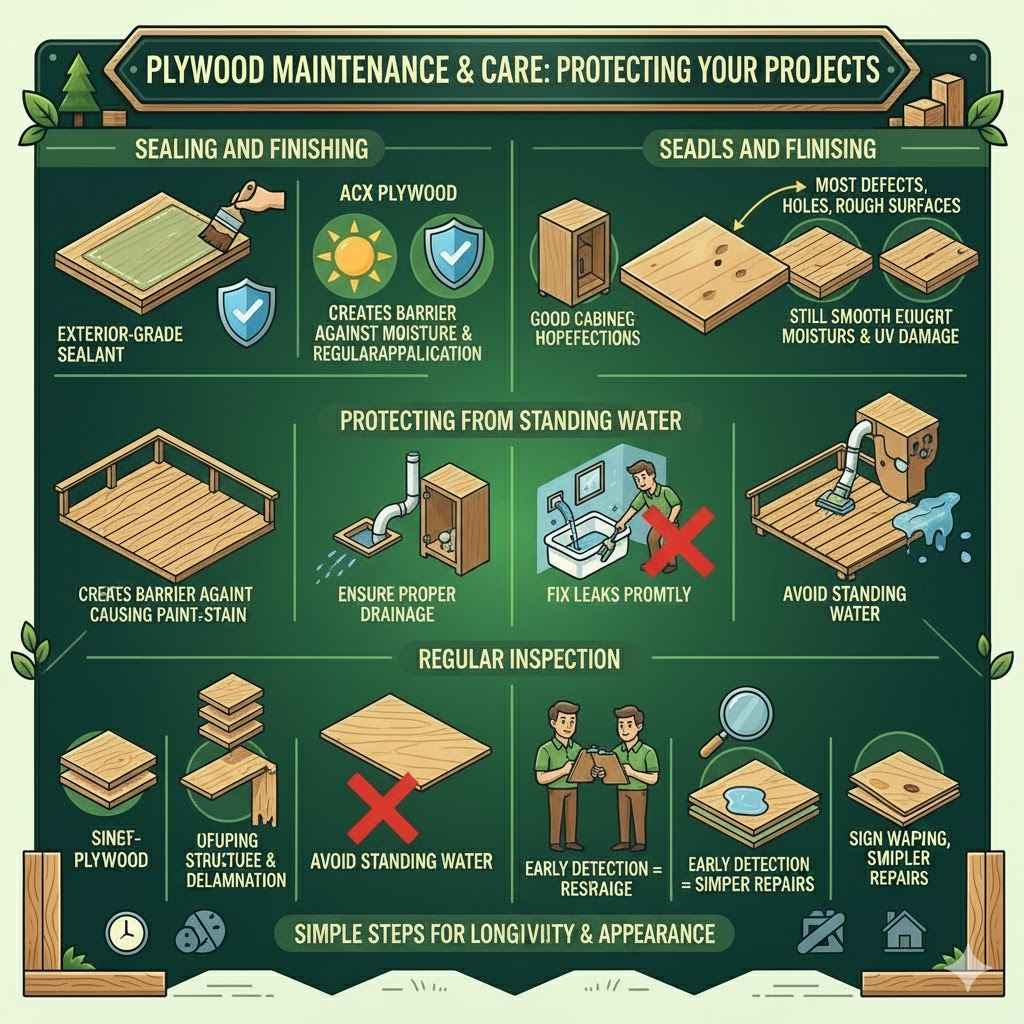
Proper care and maintenance can extend the life of any plywood project, whether you choose ACX or CDX. While the ‘X’ rating provides significant moisture resistance, it doesn’t make plywood completely waterproof or immune to damage. Understanding how to protect your plywood, especially if it’s used in exterior applications, is key to ensuring your projects stand the test of time.
Simple steps can make a big difference in the longevity and appearance of your plywood construction.
- Sealing and Finishing: For any exterior use, or even for interior projects in high-moisture areas, sealing and finishing plywood is crucial. Apply a good quality exterior-grade sealant or varnish to all surfaces, including edges. This creates an extra barrier against moisture and UV damage, which can degrade the wood over time. Regular reapplication of finishes will maintain protection.
- Protecting from Standing Water: Even with waterproof glue, plywood should not be left in standing water. Ensure proper drainage around any exterior structures built with plywood. For interior applications, fix any leaks promptly to prevent water damage. Plywood needs a chance to dry out if it gets wet.
- Regular Inspection: Periodically inspect your plywood projects for any signs of damage, such as warping, swelling, or delamination. Early detection of issues can allow for simpler repairs before they become major problems. Look for any cracking in the finish or soft spots that could indicate moisture intrusion.
Frequently Asked Questions
Question: Can I use CDX plywood for furniture?
Answer: While technically possible, it’s generally not recommended for furniture that will be seen. CDX plywood has rougher surfaces (‘C’ and ‘D’ grades) that are difficult to finish smoothly, making it unsuitable for visible furniture parts. ACX or even higher grades are better choices for furniture where appearance matters.
Question: Is ACX plywood suitable for outdoor decks?
Answer: ACX plywood has a smooth face and waterproof glue, making it better than CDX for some outdoor applications where appearance is a factor. However, for direct deck surfaces that will be walked on, specially designed decking boards or pressure-treated lumber are usually preferred for maximum durability and safety.
Question: How do I know if my plywood is exterior grade?
Answer: Look for the ‘X’ designation in the plywood grade, such as ACX or CDX. This indicates that the glue used is waterproof and suitable for exterior use. Always check the stamp or markings on the plywood panel.
Question: Can I paint over CDX plywood?
Answer: Yes, you can paint over CDX plywood, but you will need to do significant surface preparation. The ‘C’ and ‘D’ faces have imperfections like knots and splits that will show through paint if not properly filled and sanded. For a smooth finish, more work is required compared to ACX.
Question: What is the difference between CDX and exterior plywood?
Answer: CDX is a specific type of exterior plywood. The ‘X’ in CDX means it uses exterior-grade waterproof glue. Other exterior plywood grades might have better face veneers (like ACX), but the ‘X’ is the standard indicator for water-resistant glue across various grades.
Wrap Up
ACX plywood offers a smooth surface for finishing, ideal for visible projects. CDX plywood provides strength and moisture resistance for hidden structural work. Both use waterproof glue, making them durable choices.
Your project’s needs for appearance and function will guide your selection.