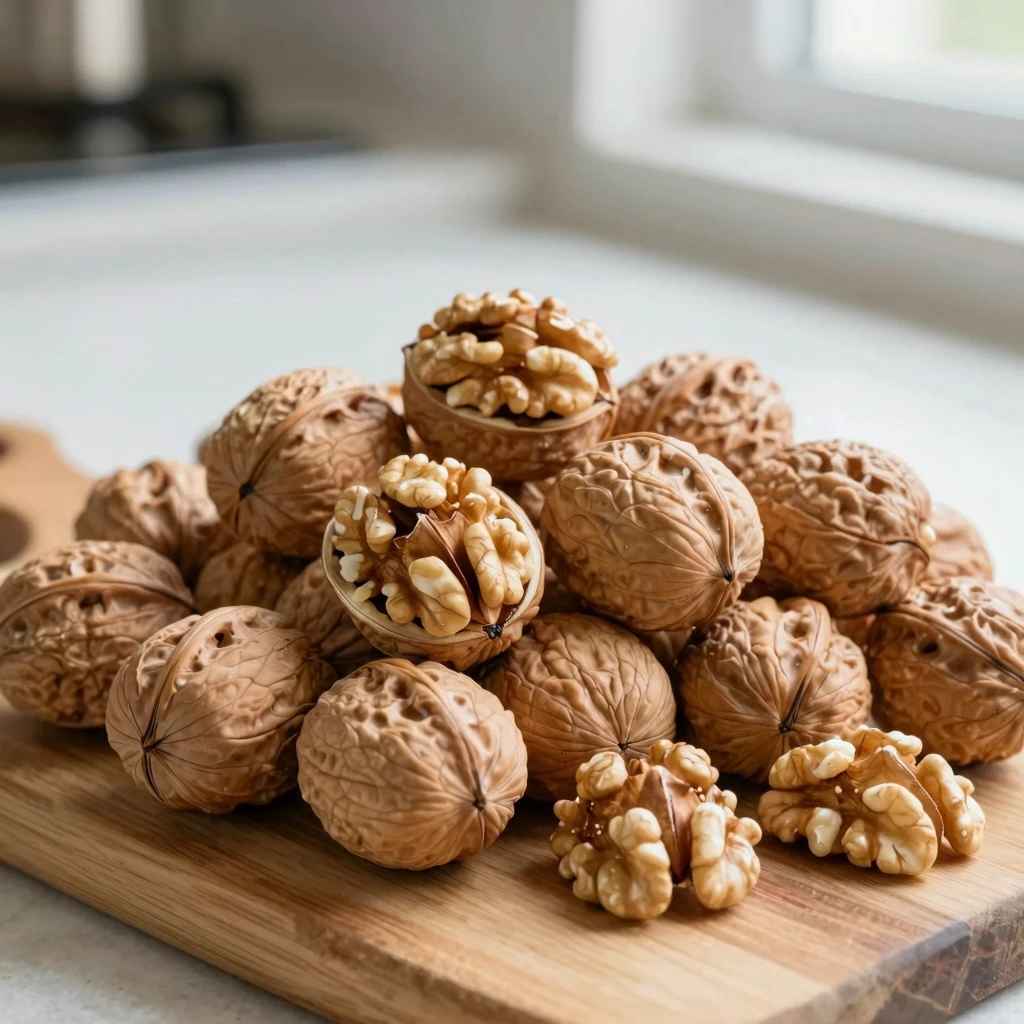
Are All Walnuts Edible? What You Should Know Before Eating
Not all walnuts are edible. While the familiar English walnut and Black walnut are edible, some other species can be toxic or simply not tasty. It is crucial to correctly identify a walnut tree before consuming any nuts, especially those found in the wild. Proper identification ensures safety and enjoyment.
Understanding Walnut Edibility
Walnuts are a familiar sight. We see them in grocery stores. They’re in pies and salads.
But not every nut that looks like a walnut is the same. There are many kinds of walnut trees. Some grow in our backyards.
Others are found deep in forests.
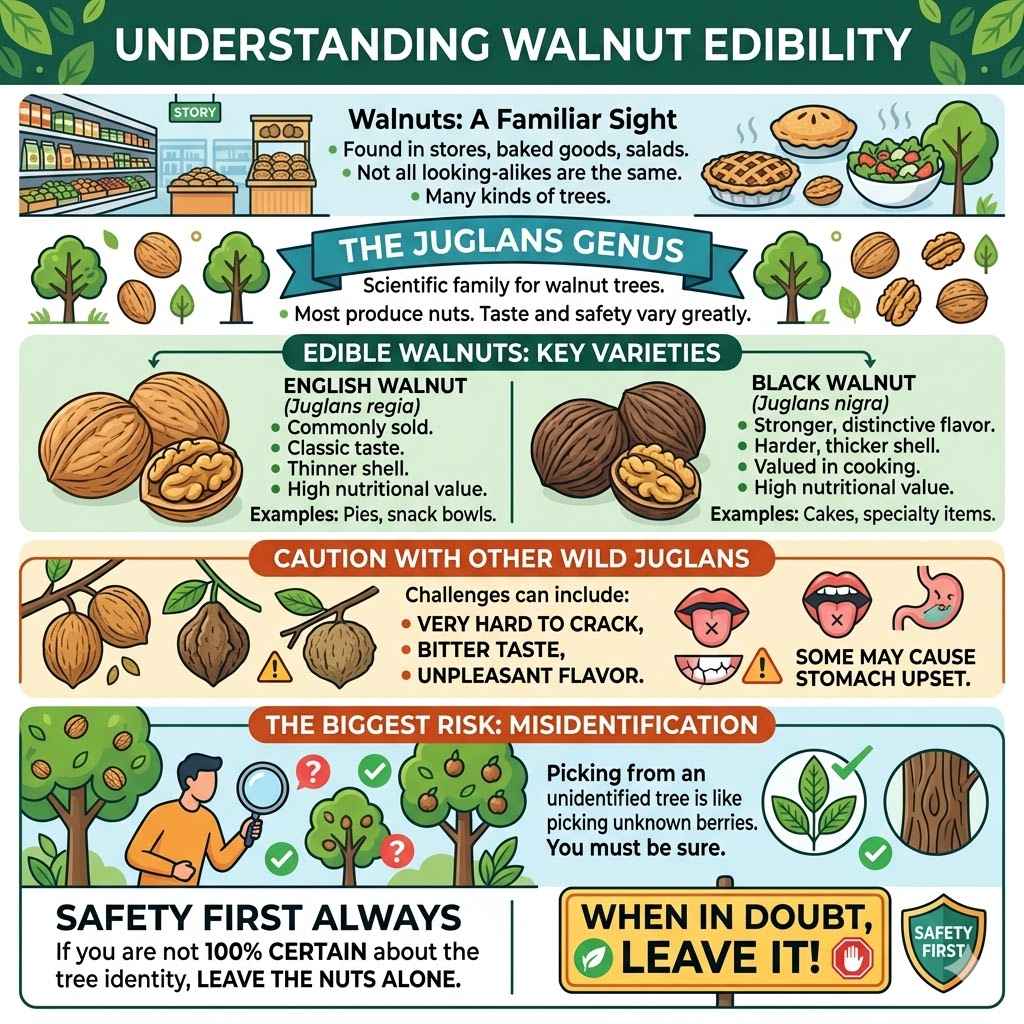
The main thing to know is that walnuts come from trees in the Juglans genus. This is the scientific family for walnut trees. Most trees in this family produce nuts.
However, the taste and safety can change a lot from one type to another.
When we talk about edible walnuts, we usually mean the ones we buy. These are typically the English walnut (Juglans regia) or the Black walnut (Juglans nigra). These are the stars of the walnut world.
They have a taste people enjoy. They also have a good nutritional value.
But what about the other Juglans trees? Some of these have nuts that are very hard to crack. Others have a taste that is bitter or even unpleasant.
A few can cause stomach upset if eaten.
The biggest risk is picking nuts from a tree you can’t identify for sure. It’s like picking berries without knowing if they are safe. You have to be sure.
If you are not 100 percent certain about the tree, it’s best to leave the nuts alone. Safety comes first. Always.
My First Walnut Mishap
I remember when I was a kid. My family moved to a house with a big old tree in the backyard. It dropped these round, green balls in the fall.
My dad said it was a walnut tree. I was so excited! I pictured a huge stash of walnuts for the winter.
I ran out, grabbed a few, and tried to crack them open with a rock. They were tough!
Finally, I got one open. The nut inside looked a bit different from the ones at the store. It was darker and smaller.
I didn’t care. I popped it in my mouth. Wow.
It was awful. So bitter. It made my tongue tingle in a weird way.
I spit it out right away.
My dad came out and saw me. He asked what I was doing. I told him about the nuts.
He laughed and explained that it was a Black walnut tree. He said the nuts were edible, but not in the way I expected. They were mostly used for flavorings or in special recipes.
He said they were much harder to get to and the taste was strong. He showed me how to handle them properly. It was a lesson learned.
Not all walnuts are the same. And trying one without knowing can be a really bad taste experience.
Spotting Different Walnut Varieties
English Walnut (Juglans regia):
- Look: Round, smooth shell. Light brown color.
- Taste: Mild, slightly sweet. This is the common walnut.
- Tree: Often has lighter bark.
Black Walnut (Juglans nigra):
- Look: Round, very hard shell. Darker brown, often ridged.
- Taste: Strong, rich, sometimes bitter.
- Tree: Bark is dark and deeply furrowed.
Butternut (Juglans cinerea):
- Look: Oval, sticky shell.
- Taste: Milder than Black walnut, but can be oily.
- Tree: Has smooth, gray bark.
The Main Edible Walnuts
When most people think of walnuts, they think of the common ones you find in stores. These are the ones we usually mean when we ask if walnuts are edible. Let’s talk about them.
The most common edible walnut is the English walnut. Its scientific name is Juglans regia. This is the nut you’ll find in most baked goods.
It’s also great for snacking. The shell is fairly smooth and light brown. It’s not too hard to crack.
The nut inside has that familiar, pleasant flavor.
Then there’s the Black walnut. This is Juglans nigra. These nuts are also edible.
But they are quite different. Their shells are very hard. They are round and dark.
Cracking them takes effort. The taste is also much stronger and more bitter than English walnuts. Because of this, Black walnuts are often used in small amounts.
They add a deep flavor to ice cream or candies.
Both of these trees are native to North America or have been grown here for a very long time. They are well-known and widely cultivated. Most people who grow or harvest walnuts for food focus on these two types.
It’s important to remember that even with these common types, freshness matters. Old walnuts can taste rancid. This happens when the oils inside the nut go bad.
So, even if it’s an English or Black walnut, check that it’s fresh. Look for a good smell and avoid any nuts that smell “off”.
Quick Guide: Common Edible Walnut Traits
English Walnut:
- Shell: Thin, smooth, lighter brown.
- Shape: Round.
- Ease of Cracking: Moderate.
- Flavor: Mild, buttery, slightly sweet.
- Usage: Snacking, baking, salads.
Black Walnut:
- Shell: Thick, very hard, dark brown, ridged.
- Shape: Round.
- Ease of Cracking: Difficult.
- Flavor: Intense, rich, earthy, slightly bitter.
- Usage: Flavoring in desserts, candies, sometimes baked goods.
When Walnuts Are Not Safe to Eat
So, we know English and Black walnuts are generally safe and tasty. But what about other types of walnuts? Or nuts that just look like walnuts?
There are other trees in the Juglans family. For example, there’s the Japanese walnut (Juglans ailantifolia) and the Texas black walnut (Juglans microcarpa). Their nuts can be edible.
However, they often have very hard shells. The kernels might also be less flavorful or even a bit bitter. They aren’t the usual go-to for eating.
The real danger comes from misidentification. Sometimes, other nuts might be mistaken for walnuts. Or, a person might find a walnut-like nut from a tree that is not a walnut at all.
Some plants produce nuts that look similar but are not safe for humans.
Here’s a key point: The husk or outer green covering of walnuts can stain your skin. This is especially true for Black walnuts. The stain is very hard to remove.
It’s a good sign you’re dealing with a walnut, but it also means you should wear gloves if handling them.
Another concern is the condition of the nut. Even edible walnuts can become unsafe if they are old and rancid. The oils in the nuts break down.
This creates a bad taste and smell. It’s not poisonous, but it’s very unpleasant. It can also cause a mild stomach ache for some people.
Wild trees might also be growing near pollution. Or they could have been treated with pesticides. If you are foraging for nuts, it’s wise to know the history of the land.
You want to be sure the tree hasn’t been exposed to anything harmful.
So, if you find a nut that looks like a walnut, but you’re not sure what kind of tree it is, the safest rule is to not eat it. It’s better to be safe than sorry. There are many other foods you can enjoy that you know are safe.
Real-World Context: Where Walnuts Grow
Walnut trees are found all over the world. But here in the United States, we have native species and introduced ones.
The Black walnut is native to eastern North America. You’ll find it in forests and woodlands. It likes deep, moist soil.
It’s a valuable hardwood tree, not just for its nuts. So, when you see a Black walnut tree, it might be in a park, a rural area, or even a large backyard.
The English walnut, on the other hand, was brought to North America. It grows best in climates with mild winters and dry summers. California is a huge producer of English walnuts.
But you can find them in other parts of the country too, often in orchards or planted in home gardens where the climate is suitable.
The environment really matters for these trees. Black walnuts can grow in more varied conditions. English walnuts are a bit pickier.
They need specific weather patterns to produce well.
When you are out and about, and you see a tree with nuts that might be walnuts, take a moment to look around. Is it a manicured garden? Is it a wild forest?
Knowing the setting can give you clues about the type of tree. And that can help you decide if the nuts are likely edible.
Remember, trees in urban or suburban areas are often known varieties. Wild trees in forests might be native species. If you’re not an expert, it’s always best to stick to the familiar kinds.
Don’t experiment with unknown wild nuts.
The Walnut’s Journey: From Tree to Table
Stage 1: The Green Husk: Walnuts grow inside a green, fleshy outer layer. This husk is thick and can stain. It protects the hard shell inside.
Stage 2: The Hard Shell: Once the husk is removed (or falls off), you see the hard shell. This varies in thickness and texture by species.
Stage 3: The Kernel: Inside the shell is the actual walnut kernel. This is the edible part. Its quality depends on freshness and variety.
Stage 4: Storage: Shelled walnuts should be stored in a cool, dark place. Refrigeration or freezing helps them last longer. Unopened nuts can last longer too.
What This Means For You
So, you’re out and about, maybe on a hike or just walking through your neighborhood. You see a tree with nuts that look like walnuts. What should you do?
When it’s probably fine: If you see trees that are clearly labeled or known to be English walnut trees (Juglans regia) or Black walnut trees (Juglans nigra), then yes, the nuts are edible. These are the ones you find in stores. They are safe to consume, provided they are fresh and haven’t gone bad.
When to be cautious: If you find nuts from a tree you can’t identify, or if it looks like a walnut but you’re not sure, it’s best to leave them. Some wild nuts can be unpalatable or even cause mild health issues. It’s not worth the risk.
Simple checks: If you do find nuts you believe are edible walnuts, give them a good look and smell. Do they smell fresh? Are there any signs of mold or pests?
If they look and smell good, you can try cracking one open. The kernel inside should look healthy. If you’re still unsure, it’s always better to err on the side of caution and buy your walnuts from a trusted source.
The main takeaway is to trust your identification skills. If you’re not an expert botanist, stick to what you know. Don’t take chances with wild nuts that you can’t positively identify.
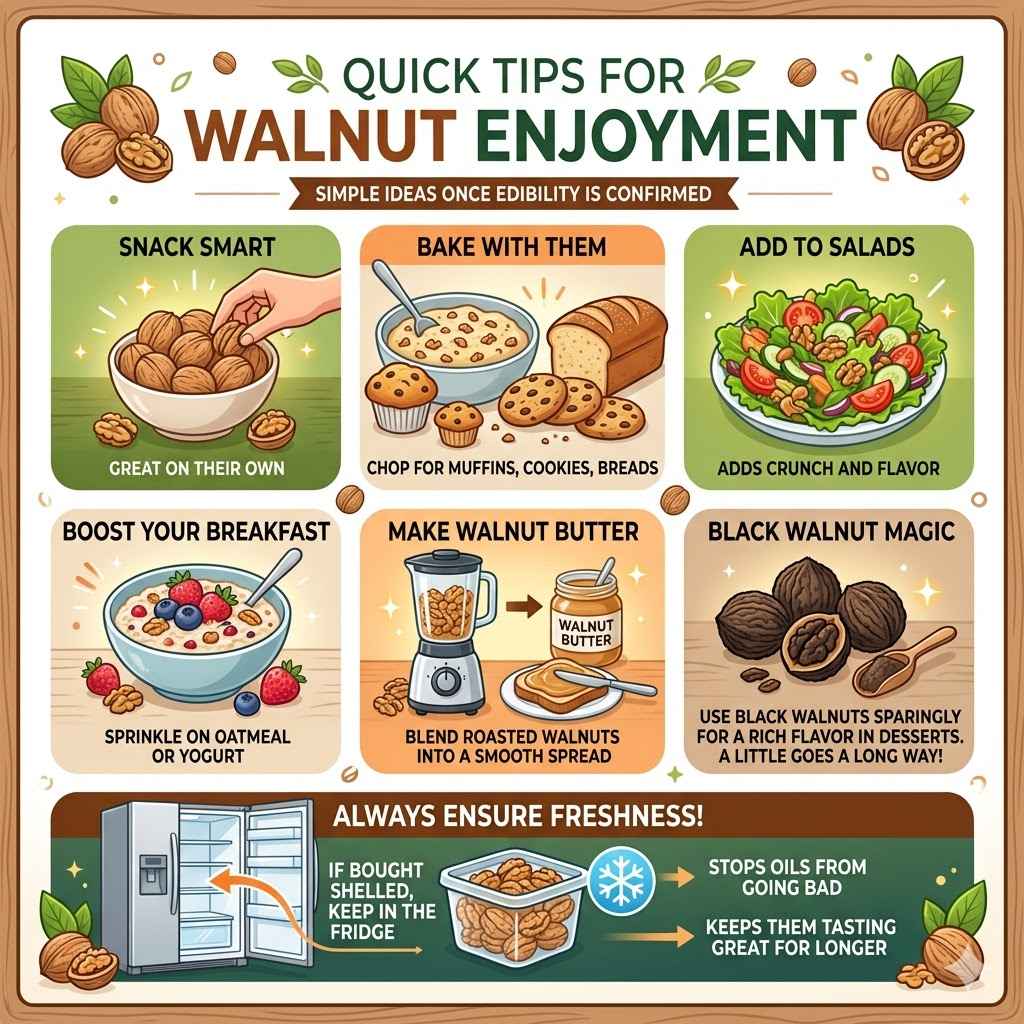
Quick Tips for Walnut Enjoyment
If you’ve confirmed you have edible walnuts, here are some simple ideas to enjoy them:
- Snack Smart: Raw walnuts are great on their own.
- Bake with Them: Chop them up for muffins, cookies, or breads.
- Add to Salads: A handful of walnuts adds crunch and flavor.
- Boost Your Breakfast: Sprinkle them on oatmeal or yogurt.
- Make Walnut Butter: Blend roasted walnuts into a smooth spread.
- Black Walnut Magic: Use Black walnuts sparingly for a rich flavor in desserts. A little goes a long way!
Always make sure your walnuts are fresh. If you buy them shelled, keep them in the fridge. This stops the oils from going bad.
This keeps them tasting great for longer.
Frequently Asked Questions About Edible Walnuts
Are all nuts that look like walnuts edible?
No, not all nuts that resemble walnuts are edible. While the familiar English and Black walnuts are safe and tasty, other related species or look-alike nuts might not be. It’s essential to positively identify the tree before consuming any nuts, especially those found in the wild.
What happens if I eat a non-edible walnut?
Eating a non-edible or toxic nut can lead to various symptoms. These might include stomach upset, nausea, vomiting, or diarrhea. Some nuts can cause skin irritation or allergic reactions.
If you experience adverse effects after eating an unknown nut, seek medical advice.
How can I tell the difference between an English walnut and a Black walnut?
You can tell them apart by their shells and taste. English walnuts have a smoother, thinner, light brown shell that’s easier to crack. Black walnuts have a very hard, dark, ridged shell.
The taste of English walnuts is mild and buttery, while Black walnuts are strong, rich, and often a bit bitter.
Are the green hulls of walnuts edible?
No, the green hulls of walnuts are not edible. They are very tough and can stain your skin and surfaces. They also contain juglone, a compound that can be irritating.
The edible part is the kernel inside the hard shell.
Can I eat walnuts found on the ground in a public park?
If the nuts are clearly from a known edible walnut tree (like an English or Black walnut) and look fresh, they might be edible. However, be cautious. Nuts in public areas could be exposed to pesticides or contamination.
It’s always best to be sure of the source and condition before eating.
What are the signs of a rancid walnut?
Rancid walnuts have a strong, unpleasant, “off” smell and taste. They might also appear discolored or oily. This happens when the natural oils in the nut break down over time.
Rancid walnuts are not harmful, but they taste very bad and can cause mild stomach upset.
The Final Word on Edible Walnuts
So, to wrap things up, not all walnuts are edible. The ones you buy at the store, the English and Black walnuts, are delicious and good for you. If you find nuts that look like walnuts, always be sure of the tree’s identity.
When in doubt, stick to the safe, known varieties. Your taste buds and your stomach will thank you.