Are Ash Wood Chips Good For Mulch? Yes (But EAB Rules Matter)
Yes, ash wood chips make perfectly good mulch, and they work the same way any other hardwood mulch does – they don’t meaningfully raise soil pH the way people often assume. That confusion comes from mixing up two different things: wood ash (the alkaline powder left after burning wood) and ash wood chips (unburned chunks of wood from an ash tree). The real issue specific to ash wood chips isn’t chemistry, it’s biology – emerald ash borer, and whether your state restricts moving ash wood at all. This guide covers both correctly.
Ash Wood Chips Are Not The Same As Wood Ash
This mix-up shows up constantly online, so it’s worth being direct about it: wood ash is the alkaline mineral residue left after wood is burned – it’s genuinely high in calcium carbonate and potassium, and it genuinely can raise soil pH when applied as a soil amendment. Ash wood chips are unburned pieces of wood from an ash tree (genus Fraxinus), chipped up for mulch. They are chemically just wood – cellulose and lignin, like chips from any other hardwood. Unburned ash wood chips do not carry the alkaline mineral content that burnt wood ash does, and using them as mulch will not meaningfully shift your soil’s pH the way spreading actual wood ash would. If you’re looking for a natural way to raise soil pH, that’s a job for wood ash (see our separate guide on using wood ash as fertilizer) – not ash-species wood chips.
What Ash Wood Chips Actually Do As Mulch
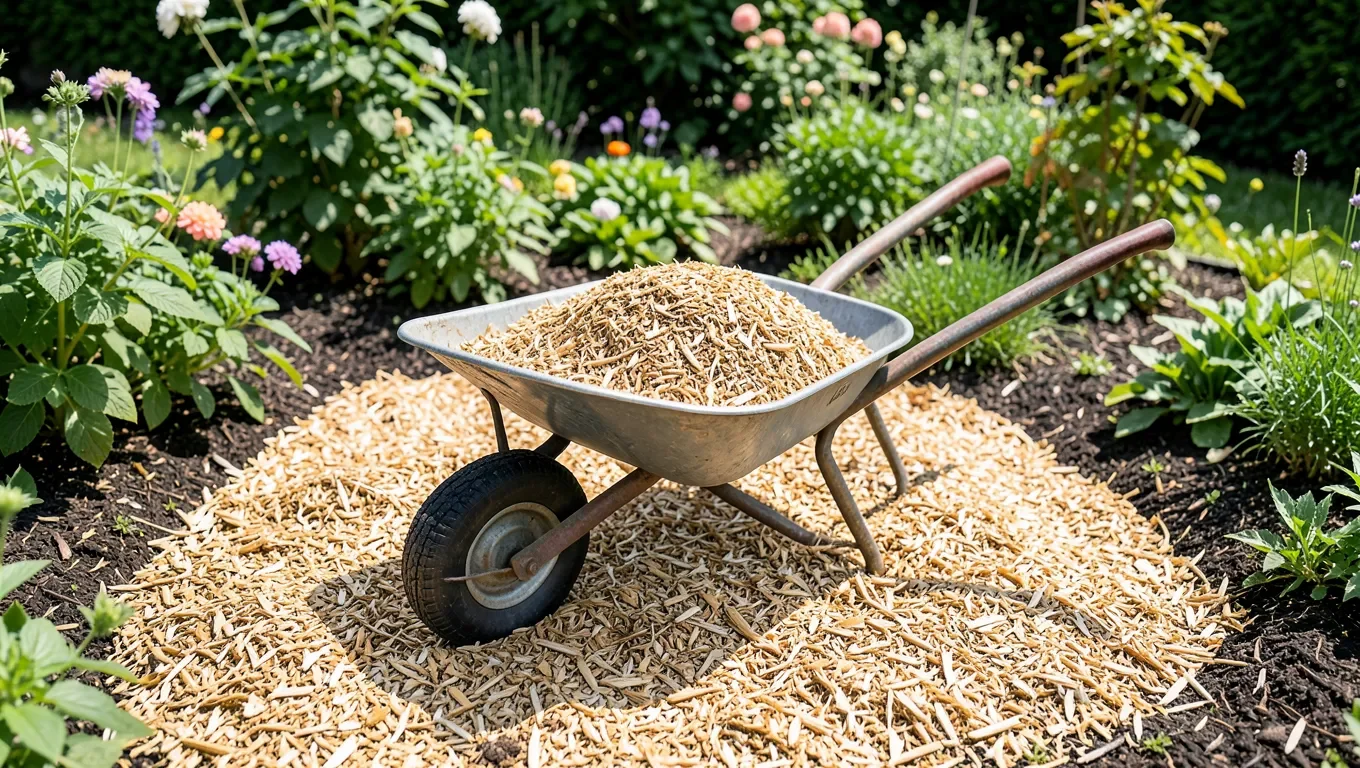
Once you set the pH myth aside, ash wood chips are a genuinely solid mulch choice with the same real benefits and tradeoffs as other hardwood chip mulches:
- Weed suppression: a 2-4 inch layer blocks light from reaching weed seeds, cutting down on germination.
- Moisture retention: mulch slows evaporation from the soil surface, meaning less frequent watering.
- Temperature moderation: insulates roots from summer heat and winter freeze-thaw cycles.
- Slow organic matter addition: as the chips break down over one to several years, they add organic matter to the soil.
- Temporary nitrogen tie-up: like any woody, carbon-rich mulch, soil microbes pull nitrogen from the soil to decompose fresh chips, which can temporarily reduce nitrogen available to plants. This is real but usually minor, and far less of an issue if the chips have aged or partially composted for a few months before use.
The Real Ash-Specific Issue: Emerald Ash Borer
The one thing that actually makes ash wood chips different from chips off any other hardwood is emerald ash borer (EAB), an invasive beetle that has killed hundreds of millions of ash trees across North America since it was first detected in the early 2000s. EAB larvae live under the bark and in the wood of ash trees, and moving infested wood – firewood, logs, and in some cases chips above a certain size – is one of the main ways the beetle spreads to new areas.
- Check your state’s current rules before moving ash wood. Many states have had (and some still maintain) quarantine restrictions on transporting ash wood, firewood, and chips out of infested counties or across state lines. These rules vary by state and change over time as EAB spreads, so check your state department of agriculture’s current guidance rather than assuming a blanket national rule.
- Chip size matters for EAB risk. Standard wood-chipper output (roughly 1 inch or smaller) is generally considered lower-risk than whole logs or large chunks, since the reduction in size disrupts larval habitat, but this doesn’t override any active state or local quarantine on the source material.
- Source locally when possible. If you’re getting ash chips from a local tree service that removed a tree on-site, that’s lower-risk than transporting ash wood in from another region.
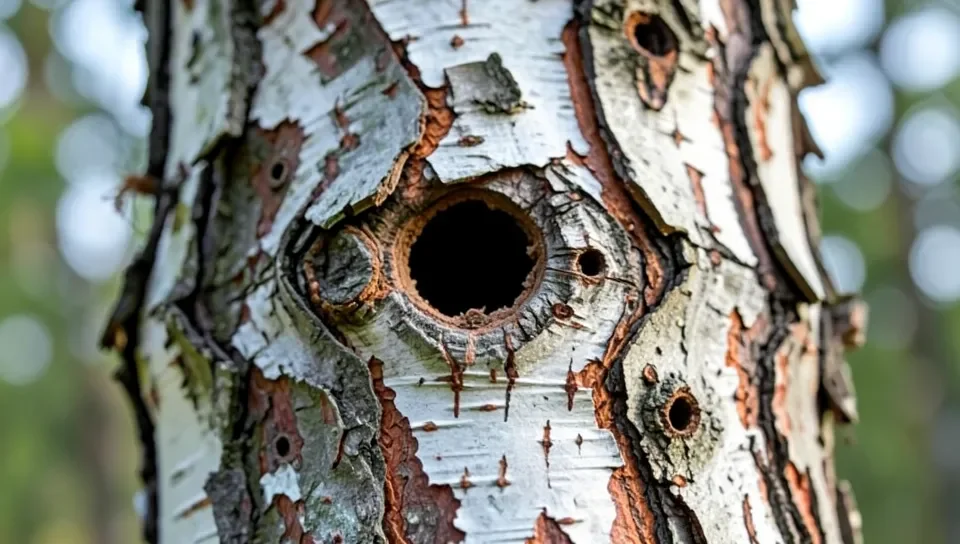
- A dead or dying ash tree with D-shaped exit holes, bark splitting, or canopy dieback is a visual sign of EAB infestation – worth asking about if you’re sourcing chips from a specific tree.
When To Avoid Ash Wood Chips (For Reasons That Are Actually Real)
- Unknown source or history: if you don’t know whether the tree was healthy or whether the wood contacted chemicals (paint, stain, pressure-treatment), skip it.
- In an active EAB quarantine area, without checking local rules first: moving ash wood chips out of a restricted zone can be a real regulatory violation, not just a theoretical risk.
- Piled directly against tree trunks or plant stems (“mulch volcanoes”): this traps moisture against bark and encourages rot and pests, regardless of what species the mulch came from.
- As the sole ingredient in a compost pile that needs balance: like other woody mulch, ash chips are carbon-heavy; mix with nitrogen-rich green material if composting rather than mulching directly.
How To Use Ash Wood Chips As Mulch
- Source wisely: confirm the tree was healthy (or at least not from an active EAB quarantine zone) and free of chemical treatment.
- Let fresh chips age 2-3 months if possible before using them close to plants, to reduce the temporary nitrogen tie-up during decomposition.
- Apply 2-4 inches deep, the standard depth for most mulches, and keep it a few inches back from trunks and stems.
- Clear existing weeds first – mulch prevents new weed germination, it doesn’t remove what’s already growing.
- Refresh as it breaks down, typically topping up once a year as the layer thins and decomposes into the soil.
Frequently Asked Questions
Do Ash Wood Chips Raise Soil pH?
Not meaningfully. That’s a common mix-up with wood ash (burnt residue), which is genuinely alkaline. Unburned ash wood chips are chemically just wood and don’t carry the alkaline mineral content that raises pH the way actual wood ash does.
Is It Safe To Move Ash Wood Chips Due To Emerald Ash Borer?
It depends on your location. Many states have or have had quarantine restrictions on moving ash wood, firewood, and sometimes chips out of EAB-infested areas. Check your state department of agriculture’s current rules before transporting ash wood chips any distance, especially across county or state lines.
How Much Ash Wood Chip Mulch Should I Use?
A standard 2 to 4 inch layer works well for most garden applications, kept a few inches back from plant stems and tree trunks to avoid trapping moisture against the bark.
Can I Use Ash Wood Chips Around Vegetable Gardens?
Yes, the same way you’d use any hardwood chip mulch – around plants, not tilled into the soil, and ideally aged a few months first to reduce temporary nitrogen tie-up during decomposition.
Conclusion
Ash wood chips make a perfectly good mulch with the same real benefits as any other hardwood chip mulch – just don’t expect them to adjust your soil pH the way actual wood ash does, since that’s a different material entirely. The one thing worth real attention with ash specifically is emerald ash borer: check your state’s current rules before sourcing or moving ash wood any distance, and you’re set.
Sponsored / affiliate links. As an Amazon Associate I earn from qualifying purchases. I may earn additional commission from eligible campaigns.