Are Backwoods Bad For You? The Real Health Risks Explained
This guide will help you understand the truth about wild mushrooms. We’ll look at why some are great and why others are very risky. You’ll learn what to watch out for.
We want you to enjoy nature’s bounty safely.
Wild mushrooms can be a healthy food source, but they also carry significant health risks due to misidentification. Many poisonous mushrooms look very similar to edible ones. Eating a toxic mushroom can cause severe illness, organ damage, or even death.
Proper identification by an expert is crucial before consuming any wild mushroom.
Understanding Wild Mushrooms
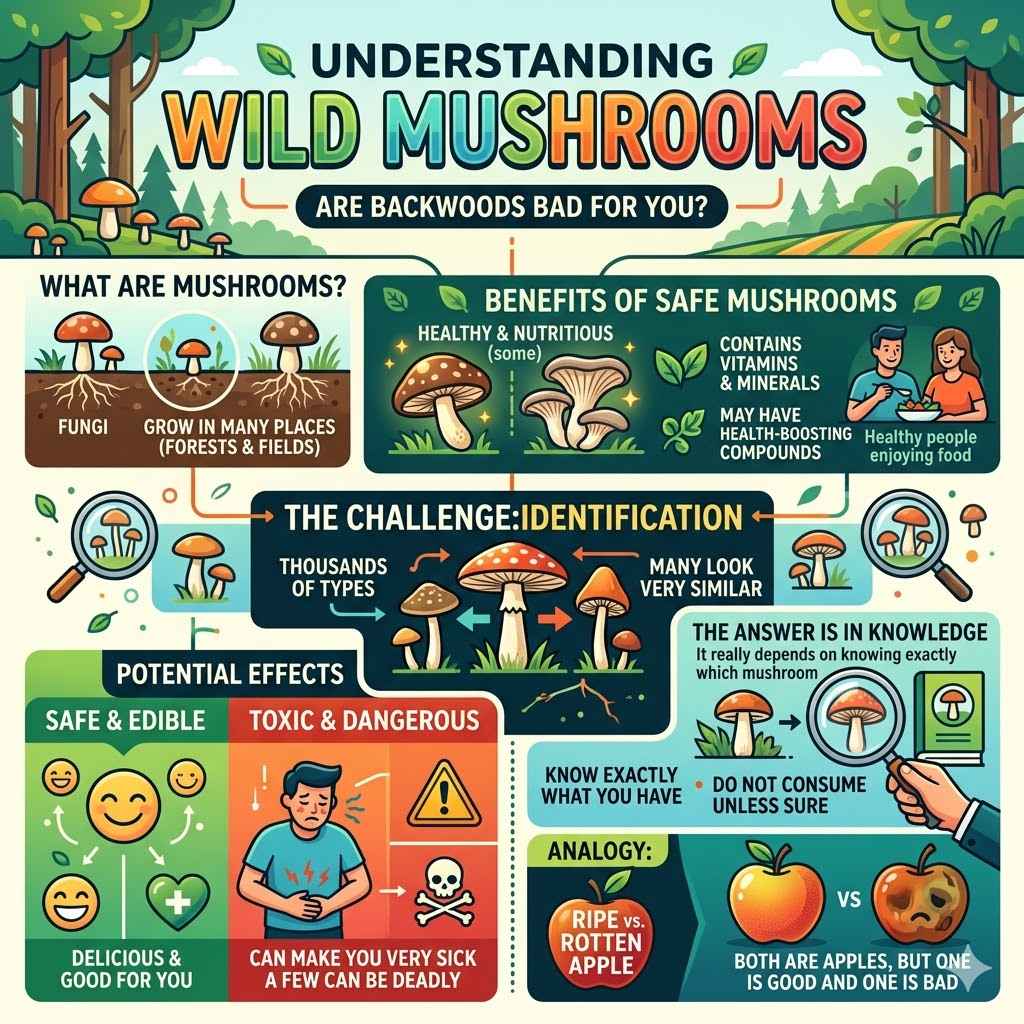
Mushrooms are fungi. They grow in many places, like forests and fields. Some mushrooms are perfectly safe and good to eat.
In fact, many are quite healthy. They can have vitamins and minerals. They might even have compounds that help your body.
But here’s the tricky part. There are thousands of mushroom types. Many of these look very much alike.
Some are delicious and good for you. Others, though, can make you very sick. A few can even be deadly.
This is why people often ask, “Are backwoods bad for you?”
The answer isn’t a simple yes or no. It really depends on knowing exactly which mushroom you have. It’s like comparing a ripe apple to a rotten one.
Both are apples, but one is good, and one is bad.
My First Mushroom Hunt: A Story of Caution
I remember my first real foraging trip. It was a crisp autumn day in the woods. Sunlight dappled through the red and gold leaves.
My friend, Sarah, who was much more experienced, led the way. We were looking for Chanterelles. They are bright orange and smell like apricots.
Sarah pointed out a cluster of mushrooms. “Look!” she whispered excitedly. My heart jumped.
They looked orange. They smelled a little fruity. I was ready to pick them.
But Sarah gently stopped me. “Hold on,” she said, her brow furrowed. “See this part?
And the way the gills are shaped underneath?”
She explained that a similar-looking mushroom, a Jack-o’-lantern, could cause bad stomach problems. It wasn’t deadly, but it would ruin our day. We spent another hour finding the real Chanterelles, confirming each one carefully.
That day taught me a vital lesson: identification is everything. A moment of excitement can quickly turn into worry if you’re not sure.
The Dangers of Misidentification
The biggest risk with wild mushrooms is not knowing what they are. Many poisonous mushrooms are experts at disguise. They can look almost identical to edible ones.
This is a natural defense for them. It helps them survive.
Think about the “Little Brown Mushroom” group. Many of these are hard to tell apart. Some are fine.
Others can cause serious liver or kidney damage. One of the most dangerous is the Death Cap. It looks a bit like an edible button mushroom.
But just one bite can be fatal.
The symptoms of mushroom poisoning can vary a lot. Some mushrooms cause stomach upset. Others affect your nervous system.
They can make you dizzy or confused. Some toxins damage your liver or kidneys over time, or even right away. The problem is, sometimes symptoms don’t show up for hours, or even days.
By then, the poison may have done its worst.
Key Mushroom Danger Factors
What to Watch For:
- Look-Alikes: Many toxic mushrooms resemble safe ones.
- Delayed Symptoms: Poisoning effects can take hours or days to appear.
- Habitat Clues: Some mushrooms prefer specific growing spots, but this isn’t foolproof.
- No Universal Test: There’s no single trick or rule to tell if a mushroom is safe.
Common Misconceptions About Wild Mushrooms
People often rely on folk wisdom. They might think a mushroom is safe if animals eat it. Or they might believe it’s fine if it doesn’t taste bitter.
These are dangerous myths. Animals have different digestive systems. What’s safe for a squirrel could be deadly for you.
Another myth is that cooking always makes poisonous mushrooms safe. This is not true for all types. Some toxins are not destroyed by heat.
Peeling or soaking mushrooms also doesn’t guarantee safety. The only truly safe method is correct identification.
Some people think brightly colored mushrooms are the most dangerous. While some bright ones are toxic, many deadly mushrooms are plain white or brown. Color is not a reliable indicator of poison.
Relying on these old beliefs can lead to severe health problems.
Edible vs. Poisonous: A Visual Contrast
Myth vs. Reality: Mushroom Safety
| Myth | Reality |
|---|---|
| Animals eating a mushroom means it’s safe for humans. | Animal digestion differs. What’s safe for them may not be for us. |
| Cooking always makes poisonous mushrooms safe. | Some toxins are heat-resistant. Cooking doesn’t neutralize all poisons. |
| Brightly colored mushrooms are the most dangerous. | Many deadly mushrooms are plain white or brown. Color is not a reliable guide. |
| If a mushroom doesn’t taste bitter, it’s safe. | Some deadly mushrooms have a mild or even pleasant taste. |
| All mushrooms with pores instead of gills are edible. | Some poisonous mushrooms, like the Boletes, have pores. |
When Are Backwoods Mushrooms Good for You?
When identified correctly, wild mushrooms can be a wonderful addition to your diet. They are often low in calories. They can be a good source of B vitamins, selenium, and potassium.
Some mushrooms are known for their high antioxidant levels. These can help protect your body’s cells.
Certain types, like Lion’s Mane, are studied for their potential cognitive benefits. Shiitake mushrooms are known for their immune-boosting properties. Morel mushrooms, when found and prepared safely, offer a unique, earthy flavor and good nutrition.
The key word here is “identified correctly.” This means being 100% certain of the mushroom’s species. It’s not a guess. It’s not a maybe.
It requires knowledge or expert help. For most people, buying mushrooms from a reputable grocery store or farmer’s market is the safest way to enjoy them.
Identifying Safe Mushrooms: The Expert Way
Learning to identify wild mushrooms is a serious undertaking. It takes time, practice, and dedication. It’s not something you can master from a few pictures online.
You need to learn about:
- Cap shape and texture
- Gill structure (or pores)
- Stem characteristics
- Spore color (which requires a spore print)
- Habitat and growing season
- Smell and bruising color
Even experienced foragers make mistakes. This is why joining a local mycological society or taking courses from experts is highly recommended. These groups offer hands-on learning.
They provide opportunities to examine mushrooms closely with knowledgeable mentors. These are the people who truly understand the nuances.
Using field guides is helpful, but they should be used with extreme caution. Always cross-reference information. Compare your find to multiple descriptions and photos.
When in doubt, throw it out. This is the golden rule of foraging.
Quick Mushroom Identification Steps
If you’re considering foraging:
- Start with a Local Expert: Find a mycologist or experienced forager.
- Use Reliable Field Guides: Get books specific to your region.
- Learn Key Features: Focus on cap, gills/pores, stem, and spore color.
- Take Clear Photos: Document the mushroom from all angles.
- Never Eat Anything You’re Not 100% Sure Of: When in doubt, leave it.
Real-World Mushroom Poisoning Scenarios
Sadly, mushroom poisoning happens more often than people think. A common story involves families picking mushrooms during a fall hike. They find what they think are edible Chanterelles.
They excitedly bring them home and cook a big meal.
A few hours later, children start complaining of stomach aches. Then the adults feel sick. Vomiting and diarrhea become severe.
They might think it’s just food poisoning. But if the mushroom was toxic, it could be much worse. Some families end up in the emergency room.
I’ve heard stories of people who felt perfectly fine after eating wild mushrooms, only to develop serious liver failure days later. This is often due to Amatoxins found in mushrooms like the Death Cap or Destroying Angel. These toxins attack the liver and can lead to the need for a transplant.
It’s a devastating outcome from a seemingly innocent activity.
Another scenario is when people try to sell foraged mushrooms. They might not have the proper training. They could accidentally sell poisonous mushrooms mixed in with edible ones.
This puts many unsuspecting customers at risk. Regulations often require permits and certification for commercial mushroom sales for this very reason.
What If You Think You’ve Eaten a Poisonous Mushroom?
If you suspect you or someone else has eaten a poisonous mushroom, act fast. Time is critical. Do not wait for symptoms to appear or worsen.
The best thing to do is:
- Call Poison Control immediately. In the U.S., the number is 1-800-222-1222.
- Call your local emergency services (911).
- Try to recall exactly what mushroom was eaten. Any details about its appearance can help.
- If possible, save a sample of the mushroom. Bring it with you to the hospital. This is incredibly helpful for identification and treatment. Even a small piece or a photo can be useful.
Medical professionals will assess the situation. They may induce vomiting or give activated charcoal to absorb the poison. Further treatment depends on the type of toxin ingested and the severity of the symptoms.
Immediate Steps for Suspected Mushroom Poisoning
Don’t Delay:
- Call Poison Control: 1-800-222-1222 (U.S.)
- Call 911: For emergencies.
- Gather Information: What mushroom was eaten? Where was it found?
- Save a Sample: Bring any remaining mushroom to the hospital.
The Safest Way to Enjoy Mushrooms
For the vast majority of people, the safest way to enjoy mushrooms is to buy them. You can find a wide variety of cultivated mushrooms at your local grocery store. These include:
- White Button Mushrooms
- Cremini Mushrooms
- Portobello Mushrooms
- Shiitake Mushrooms
- Oyster Mushrooms
- Maitake Mushrooms
These are grown under controlled conditions. Their safety is guaranteed. They are also often more affordable and readily available than wild varieties.
If you are very keen on foraging, consider it as a hobby that requires serious study. Treat it with respect. Never take risks.
Start with learning to identify just one or two common edible mushrooms in your area. Work with experts. This ensures you are learning from reliable sources.
When It’s Okay to Forage (with extreme caution)
Foraging for mushrooms can be a rewarding experience. It connects you with nature and provides a unique food source. However, it’s crucial to set realistic expectations and prioritize safety above all else.
You are responsible for your own choices.
It’s generally considered more acceptable to forage if:
- You are under the direct guidance of an experienced and trusted expert.
- You are 1000% certain of the identification.
- You are familiar with the poisonous look-alikes for the species you are collecting.
- You are collecting from areas that are known to be safe from pollution or contamination.
Foraging in urban parks or areas near industrial sites can be risky. Mushrooms can absorb heavy metals and toxins from the soil. Always consider the environment where the mushrooms are growing.
So, Are Backwoods Mushrooms Bad?
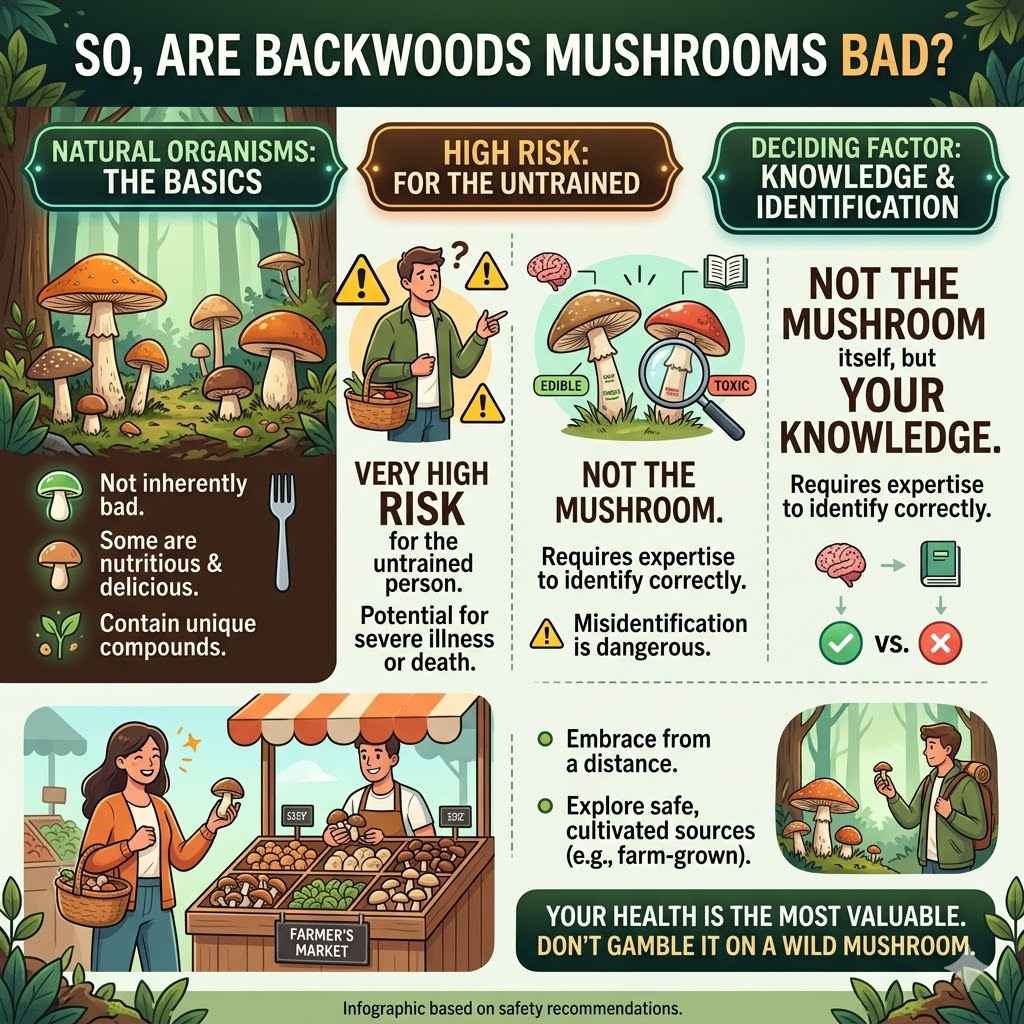
To wrap things up, are backwoods bad for you? Not inherently, but the risk associated with them is very high for the untrained person. The potential for severe illness or death means you cannot be casual about it.
The mushrooms themselves are natural organisms. Some are nutritious and delicious. Others are incredibly toxic.
The deciding factor isn’t the mushroom itself, but your knowledge and ability to identify it correctly. Without that expertise, the “backwoods” can indeed be a dangerous place for your health.
Embrace the wonder of wild mushrooms from a distance or through safe, cultivated sources. Your health is the most valuable thing you have. Don’t gamble it on a wild mushroom.
Frequently Asked Questions About Wild Mushrooms
Can I trust mushroom identification apps?
Mushroom identification apps can be a helpful tool for getting a general idea, but they should NEVER be used as the sole basis for deciding if a mushroom is edible. They are prone to errors and cannot capture all the subtle details that an expert can. Always cross-reference with field guides and, ideally, get a human expert’s opinion.
What are the most common poisonous mushrooms in North America?
Some of the most dangerous mushrooms in North America include the Death Cap (Amanita phalloides), Destroying Angel (Amanita bisporigera/virosa), False Morels (Gyromitra spp.), and various species of Galerina. These are responsible for the majority of fatal mushroom poisonings.
Is it safe to eat mushrooms found in my yard?
It’s generally not advisable to eat mushrooms found in your yard unless you are an expert and can identify them with 100% certainty. Many common lawn mushrooms can be toxic. Additionally, yard soil may be treated with pesticides or chemicals that can be absorbed by the mushrooms.
How do I tell a poisonous mushroom from an edible one by looking?
There is no single, simple visual rule to distinguish poisonous from edible mushrooms. Many poisonous mushrooms look very similar to edible ones. Reliable identification requires learning specific features of many different species, including cap shape, gill attachment, stem structure, spore color, and habitat.
If you are not an expert, it is unsafe to make this determination.
What should I do if my child eats a wild mushroom?
If you suspect your child has eaten a wild mushroom, treat it as a medical emergency. Call Poison Control immediately at 1-800-222-1222 or 911. Try to collect a sample of the mushroom if possible to bring to the hospital.
Do not wait for symptoms to appear.
Are wild mushrooms more nutritious than store-bought ones?
While some wild mushrooms can have unique nutritional profiles or higher concentrations of certain beneficial compounds, cultivated mushrooms are also very nutritious. They are a good source of vitamins, minerals, and antioxidants. The difference in nutrition is often less significant than the difference in risk when considering wild varieties.
Conclusion
Wild mushrooms offer a tantalizing glimpse into nature’s pantry. However, the allure of foraging comes with significant, potentially deadly risks. Until you gain deep, expert-level knowledge, it’s best to admire these forest treasures from afar.
Stick to verified sources for your mushroom enjoyment.