DeWalt Router Base: Which One Fits Your Router (and How to Replace It)
A DeWalt router base isn’t a single, universal part — it’s a family of bolt patterns split across the brand’s compact, fixed, and plunge router lines, and mixing them up is the single most common reason a “compatible” replacement base doesn’t actually seat flush. This guide breaks down which base pattern each DeWalt router uses, when an OEM sub-base makes sense versus an aftermarket acrylic one, and how to swap one out without stripping a screw hole.
Which DeWalt Router Base Fits Your Model
DeWalt’s router lineup splits into two base families, and confusing them is the fastest way to buy a base that won’t bolt on.
Best DWP611 / DCW600B Base Replacement
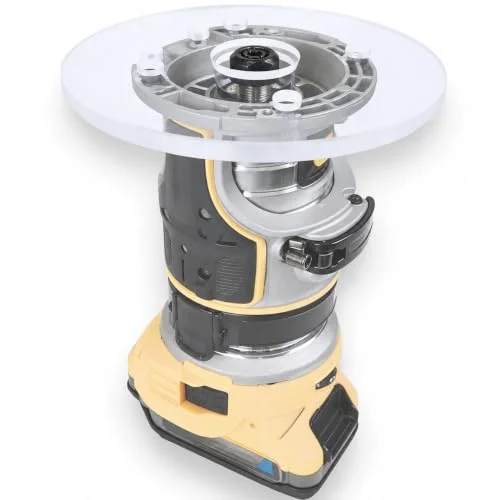 |
6" Router Base Plate for DWP611 & DCW600B – $19.99 A pre-drilled, direct-fit replacement base sized specifically for the two compact DeWalt routers covered in this guide — no adapter hunting or hole-drilling required.
|
The compact family — the corded DWP611 and the 20V cordless DCW600 (sold as a bare tool, DCW600B) — shares a smaller round base footprint with a tight bolt spacing built for one-handed trim and edge work. Their sub-bases interchange with each other, which is why a single replacement base can list both models. The full-size family — the DW618 fixed/plunge combo, DW621 plunge router, and DW625 3-HP plunge router — uses a larger base plate with wider bolt spacing sized for heavier router bodies and deeper plunge travel. A base built for the compact routers will not physically bolt onto a DW618 or DW625, and vice versa, regardless of how a listing markets it as “universal.”
Both DeWalt families also happen to share their guide-bushing bore size with the widely used Porter-Cable/Bosch-style template guide pattern, which is why most aftermarket bases — including acrylic ones from third-party brands — advertise compatibility with standard template guide bushings rather than a DeWalt-proprietary one.
OEM Sub-Base vs. Aftermarket Acrylic Base
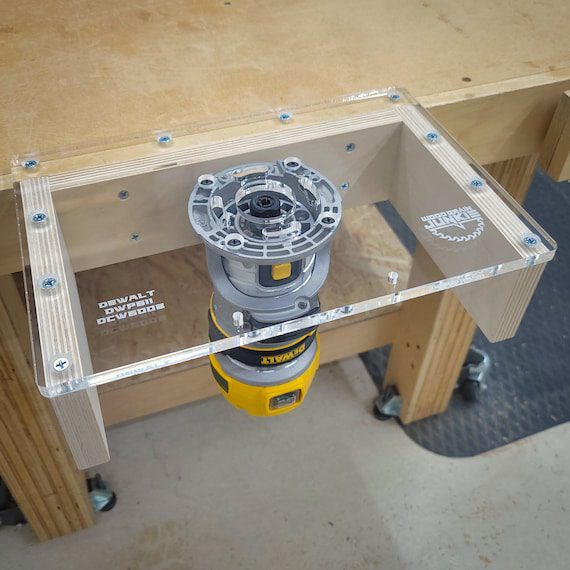
DeWalt’s factory sub-base is usually a tinted or opaque plastic disc bolted to the motor housing with two or three screws. It’s built to match the router’s exact bolt spacing out of the box, but it isn’t transparent, which makes it harder to see your layout lines and bit position while you’re cutting freehand. That’s the main reason woodworkers replace a perfectly functional stock base: not because it failed, but because a clear acrylic base lets you actually watch the bit meet the wood.
Aftermarket acrylic bases trade that visibility for a bit of fragility — a 3/8″ acrylic disc will survive normal shop use and years of router-table mounting, but it can crack if the router is dropped bit-down onto a hard floor or if you overtighten the mounting screws into a stripped hole. If you mount your router in a router table and rarely pull it back out, this trade-off is a clear upgrade. If you do a lot of handheld freehand routing where drops are more likely, keep the factory base as a backup rather than tossing it.
How to Choose the Right Replacement Base
Before buying, confirm three things: your exact router model number (stamped on the motor housing, not just “DeWalt router”), whether the listing states your model by name rather than “universal fit,” and whether you actually need template-guide compatibility. If you only ever freehand-route edges and grooves, a base without a guide-bushing bore is fine and often cheaper. If you plan to use letter/number templates, dovetail jigs, or circle-cutting guides, confirm the base has the standard guide-bushing opening sized for your bit diameter — an opening that’s too small will bind larger bits, and one that’s too large defeats the point of a guide bushing.
Budget is a secondary concern here: OEM sub-bases and quality aftermarket acrylic bases both typically land under $25, so the real decision is fit and features, not price. Look for bonus features like a built-in dust port adapter or pre-drilled edge-guide rod holes if your router doesn’t already have them.
Installing a New Router Base
Swapping a DeWalt router base is a five-minute job if you go in order:
- Unplug the router (or pull the battery on the DCW600) before touching the base — the bit can still be live if the trigger is bumped.
- Remove the bit and collet nut, then flip the router over and back out the two or three base screws. Note which screw came from which hole if they’re different lengths.
- Set the new base in place and hand-thread the screws first before tightening any of them fully — this keeps the base centered instead of pulling it off-square.
- Snug the screws in a criss-cross pattern (opposite corners, not one after another) to seat the base evenly, then check it spins true with no wobble.
- Reinstall the collet and bit, then test the fit in your router table or handheld base plate before running it under load.
Getting More Out of Template and Circle-Cutting Guides
Once you have a base with a standard guide-bushing bore, three accessories cover most jobs. An edge guide bolts to the base and rides along a board’s edge for straight dado and groove cuts without a clamped-down straightedge. A template guide bushing threads into the base’s center opening so you can trace a hard template — a hinge mortise pattern, a lettering stencil, a dovetail jig — and get identical results across multiple parts. A circle-cutting guide, usually a pivoting arm that bolts to the base, lets you dial in a radius for perfect circles and arcs, which is the same setup used for cutting round sink cutouts in a countertop or clean holes for electrical boxes.
A few habits make any of these more reliable: rout in two or three shallow passes instead of one deep pass when working hardwood or cutting a groove deeper than about a quarter of the bit’s diameter — it reduces motor strain and chip-out. Clamp the workpiece down every time, even for “quick” cuts, since a shifting board is the most common cause of a ruined template pass. And if you’re new to a particular base/guide combination, make a test pass in scrap first; a guide bushing that’s slightly off-bore telegraphs into every cut it makes.
Maintaining Your Router Base
- Wipe sawdust out of the base opening and off the mounting screws after every session — packed dust under the base is a common cause of a base that no longer sits flush.
- Check the base for hairline cracks around the mounting holes every few months, especially on acrylic bases — a crack there will spread under vibration.
- Keep a light coat of paste wax on the underside of the base; it reduces friction against the workpiece and helps the router glide instead of catching.
- Re-torque the base screws periodically — vibration from routing will work them loose over time, and a loose base is the most common cause of an inconsistent cut depth.
Frequently Asked Questions For Dewalt Router Base
Do all DeWalt routers use the same base?
No. DeWalt splits its router bases into two bolt patterns: a compact pattern shared by the DWP611 and DCW600/DCW600B, and a larger pattern used by the DW618, DW621, and DW625. A base sized for one family will not bolt onto the other.
Why would I replace a router base that isn’t broken?
The most common reason is visibility. DeWalt’s factory sub-base is opaque, while an aftermarket acrylic base is clear, letting you see the bit and your layout lines while cutting. Some woodworkers also upgrade for a wider base for more stability or to add guide-bushing compatibility a factory base lacks.
Will a universal router base plate fit my DeWalt router?
Only if it’s specifically listed for your exact model number. “Universal” base plates typically fit a family of similarly sized routers across brands, but DeWalt’s bolt spacing and center-opening size don’t always match generic patterns, so always confirm your model is named in the listing before buying. If you’re shopping for the router itself rather than a replacement base, our guide to the best heavy duty wood routers compares the DW618PKB against six other combo, plunge, and fixed-base options.
What guide-bushing size do DeWalt router bases use?
Most DeWalt bases, and the aftermarket bases built for them, accept the same guide-bushing bore used across the Porter-Cable/Bosch-style pattern, which is the most common template-guide standard on the market. Check your specific base’s center opening diameter before buying a bushing set, since bit diameter and bushing outer diameter both need to clear the opening cleanly.
Conclusion
The right DeWalt router base comes down to matching your exact model’s bolt pattern first, then deciding whether visibility, guide-bushing compatibility, or dust collection matters more for how you actually use the router. Get that match right and a base swap takes five minutes and noticeably improves control on every cut afterward.
Sponsored / affiliate links. As an Amazon Associate I earn from qualifying purchases. I may earn additional commission from eligible campaigns.