Are Metal Buildings Cheaper Than Wood? Proven Savings
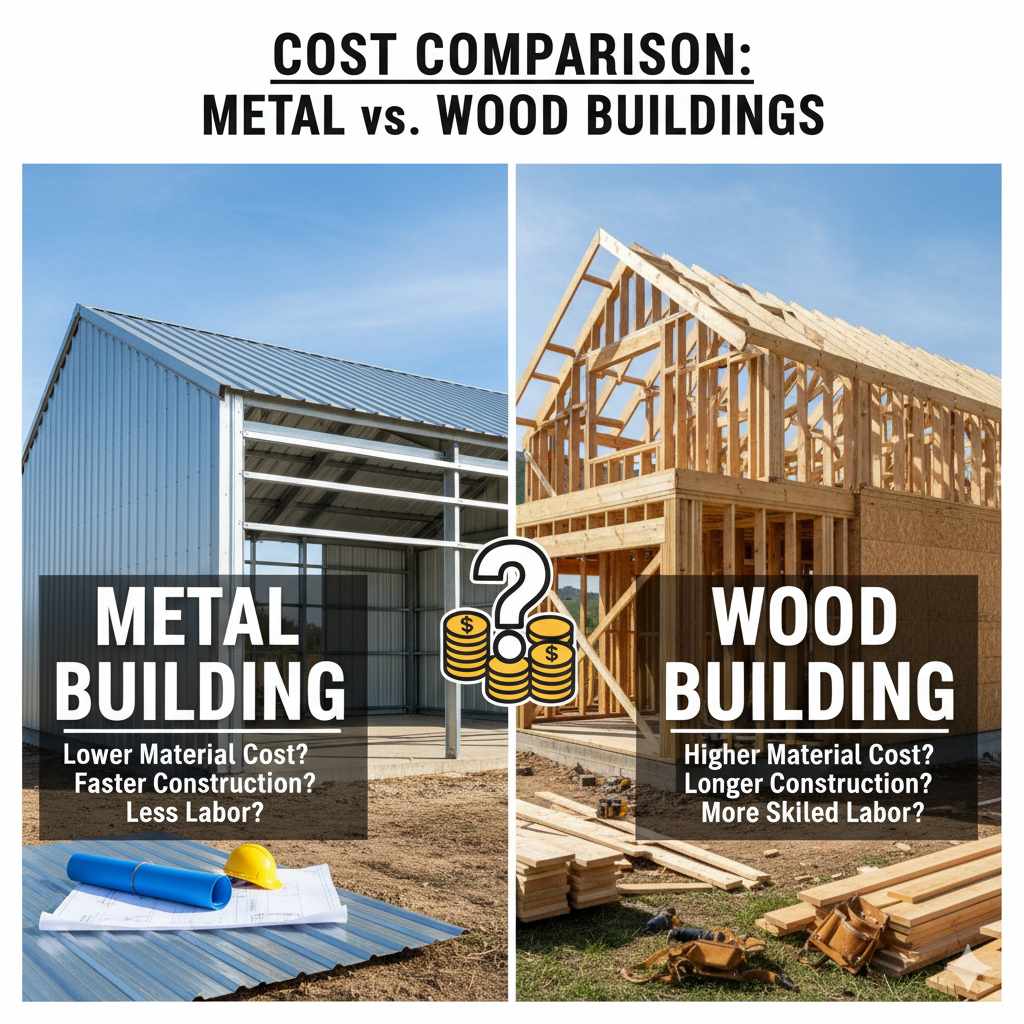
Yes, metal buildings are often cheaper than wood buildings, especially when considering the total cost of ownership over time. Factors like reduced maintenance, faster construction, and durability contribute to significant proven savings for metal structures compared to their wooden counterparts.
Hey there, fellow DIYers and homeowners! If you’re dreaming of building a new workshop, garage, or even a small home, you’ve probably asked yourself: “Are metal buildings cheaper than wood?” It’s a big question, and a smart one, because building costs can really add up. Many folks worry about the upfront investment and then the ongoing upkeep. It can feel a bit overwhelming trying to figure out the most cost-effective and durable option for your project. Don’t sweat it! I’m here to break it down for you in a way that’s easy to understand, just like sorting through lumber at the yard. We’ll look at the numbers, the long-term benefits, and why metal might just be your wallet’s best friend. Ready to get building smarter?
Metal vs. Wood: Unpacking the Real Costs
When we talk about “cheaper,” it’s important to think beyond just the initial price tag. We need to consider the whole picture – from the moment you buy the materials to how much you’ll spend keeping it in good shape for years to come. This is where metal buildings often shine brightly against wood.
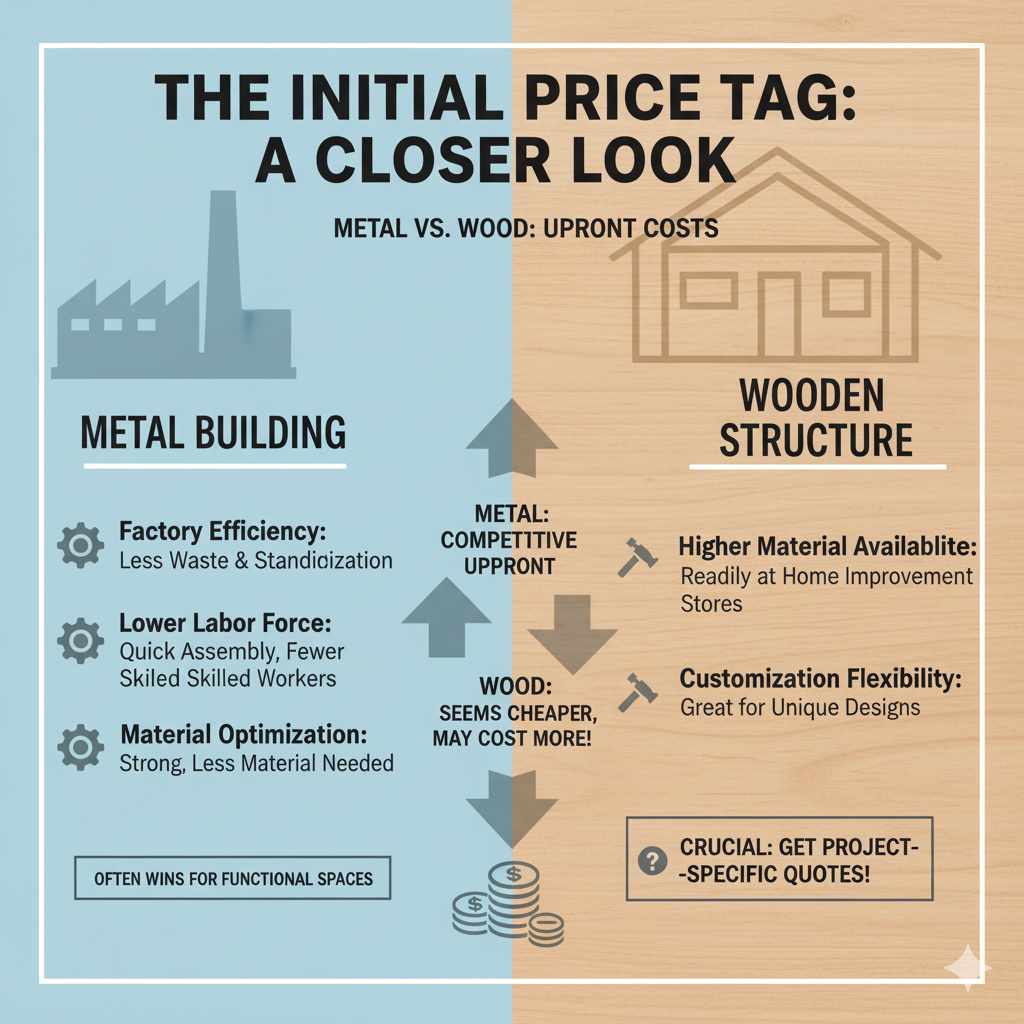
The Initial Price Tag: A Closer Look
At first glance, the materials for a wooden structure might seem less expensive. You can find lumber, nails, and plywood readily available at most home improvement stores. However, metal building kits, especially prefabricated ones, can offer surprisingly competitive upfront costs. This is often due to:
- Factory Efficiency: Metal buildings are manufactured in controlled factory settings, leading to less waste and more standardization. This efficiency can be passed on to the buyer.
- Smaller Labor Force: The components of a metal building are often designed for quick assembly. This can mean fewer skilled workers are needed, and the project is completed faster, saving on labor costs.
- Material Optimization: Metal is incredibly strong for its weight, meaning less material is often needed to achieve the required structural integrity compared to wood.
However, it’s crucial to get quotes for both options for your specific project size and design. A custom-designed wooden structure could potentially cost more than a standard metal building of the same size. For a straightforward, functional space, metal often wins on the initial investment.
Long-Term Savings: Where Metal Really Scores
This is where the “proven savings” really come into play. While wood is familiar and easy to work with, it also comes with its own set of ongoing expenses that metal buildings largely avoid.
Durability and Resistance: Fighting the Elements
Metal structures are inherently resistant to many of the problems that plague wood:
- Pests: Termites, carpenter ants, and other wood-boring insects can cause significant damage to wooden structures, leading to costly repairs. Metal buildings are impervious to these pests.
- Rot and Decay: Moisture is the enemy of wood. Fungal growth and rot can weaken structural components over time, especially in damp environments or if not properly sealed and maintained. Steel doesn’t rot.
- Fire: While not entirely fireproof, steel is non-combustible, making metal buildings generally safer and less expensive to insure than wood. Wood is a fuel source.
- Weather: Strong winds can damage wood structures, and warping can occur with extreme temperature fluctuations. Metal buildings, when properly engineered and anchored, can withstand severe weather conditions effectively.
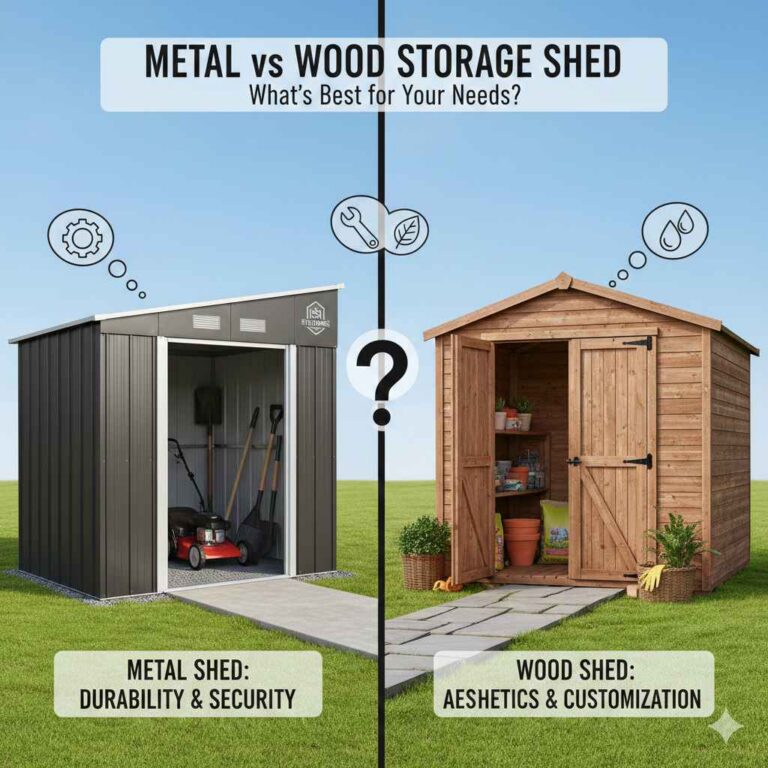
These advantages mean fewer repairs, a longer lifespan for the building, and peace of mind, all of which translate to significant savings over the life of the structure.
Maintenance: Less Work, Less Money
Think about the maintenance a wooden structure typically requires:
- Regular painting or staining to protect it from the sun and moisture.
- Sealing against water damage.
- Treating for pests.
- Checking for and repairing any rot or structural weaknesses.
Metal buildings, on the other hand, require significantly less maintenance. A good quality paint or coating will protect the metal from rust, and otherwise, they are remarkably low-maintenance. Occasional washing is often all that’s needed to keep them looking good. For many homeowners, this reduction in ongoing effort and expense is a huge draw.
Energy Efficiency: Keeping Costs Down
Modern metal buildings can be designed for excellent energy efficiency. With proper insulation techniques and reflective coatings, they can help keep your space cooler in the summer and warmer in the winter. This can lead to lower heating and cooling bills – another proven saving. While a well-insulated wooden building can also be energy-efficient, the inherent properties of steel and advancements in insulation technology for metal structures offer a strong competitive edge.
Cost Comparison: A Side-by-Side View
To help visualize the potential differences, let’s consider a hypothetical scenario for a 30×40 foot workshop. Keep in mind that these are rough estimates and actual costs can vary widely based on location, design complexity, material quality, and labor. For detailed comparisons, it’s always best to get local quotes.
Here’s a simplified comparison:
| Cost Factor | Wooden Building (Approximate) | Metal Building (Approximate) |
|---|---|---|
| Initial Material Cost | $$$ | $$ |
| Foundation/Site Prep | $$ | $$ |
| Labor for Construction | $$$ | $$ |
| Permits & Design | $$ | $$ |
| Subtotal (Initial) | $$$$ | $$$ |
| Annual Maintenance (Painting, Repairs, Pest Control) | $$ | $ |
| Insurance Premiums (Fire Risk) | $$ | $ |
| Energy Costs (Heating/Cooling) – Assuming similar insulation | $$ | $ |
| Lifespan/Replacement Costs | $$$ (Wood needs replacement sooner) | $ (Steel lasts much longer) |
| Total Cost Over 20 Years | $$$$$$ | $$$$ |
Note: ‘$’ represents relative cost, with more ‘$’ signs indicating higher cost. This table is a simplified illustration.
Understanding Different Types of Metal Buildings
It’s also worth noting that “metal building” isn’t a one-size-fits-all term. There are several common types:
- Pre-fabricated Metal Buildings (Post-Frame or Rigid Frame): These are kits often delivered to your site, designed for relatively fast assembly. They are incredibly popular for workshops, garages, RV storage, and agricultural buildings. They offer a great balance of cost, durability, and customization. Many reputable suppliers, like Metal Building Depot, offer a wide range of designs and options.
- Structural Steel Buildings: These are more heavy-duty and often used for larger commercial or industrial applications, but can also be adapted for substantial home workshops. They are typically more expensive initially but offer unparalleled strength and spans.
The post-frame or rigid-frame kits are generally the most comparable and often more cost-effective option when comparing to a traditional stick-built wooden structure of similar size and purpose.
Key Advantages of Metal Buildings Beyond Cost
While cost savings are a major draw, metal buildings offer a bundle of other benefits that DIYers and homeowners highly value:
Speed of Construction
Pre-fabricated metal building kits are designed for rapid assembly. Components are manufactured to precise specifications, often meaning you can erect the framing and shell of your building in a matter of days, rather than weeks or months. This can save you significant money on labor if you’re hiring professionals, or save you a lot of your own time and effort if you’re tackling it as a DIY project.
Strength and Longevity
Steel is one of the strongest building materials available. Properly engineered and installed metal buildings can withstand significant loads, including heavy snow and high winds. When protected from rust, steel structures have an incredibly long lifespan, often exceeding 75 years or more, according to resources like the American Institute of Steel Construction. This means you’re building something that can last for generations.
Design Flexibility
Modern metal building systems offer surprising design flexibility. While basic kits are straightforward, you can often customize:
- Building dimensions (width, length, height)
- Roof pitch and style
- Door and window placements
- Color of the panels
- Adding interior partitions or various types of insulation
This flexibility allows you to create a space that perfectly suits your needs and aesthetic preferences.
Environmental Benefits
Steel is a highly recyclable material. Many metal building components are made from recycled steel, and the buildings themselves can be recycled at the end of their life. This makes metal buildings a more environmentally friendly choice compared to wood, which can contribute to deforestation if not sourced sustainably.
The DIYer’s Perspective: Working with Metal vs. Wood
As a woodworking mentor, I have a soft spot for wood, but I also appreciate efficiency and longevity. Here’s how metal building kits stack up for the DIYer:
Ease of Assembly
This is where the perception can sometimes be a hurdle. Many might think metal buildings are complex, requiring specialized welding skills. However, most pre-fabricated kits use bolt-together systems. Components are labeled, and clear instructions are provided. While it still requires physical effort and basic mechanical skills, it’s often simpler and faster than framing a traditional wood structure from scratch. You’ll need tools like wrenches, drills, and possibly a ladder and safety equipment, but you won’t necessarily need advanced carpentry skills.
Precision and Standardization
Metal building components are manufactured with precision. This means everything fits together as intended, significantly reducing the guesswork and opportunities for error that can sometimes plague DIY woodworking projects where materials might not be perfectly straight or cuts slightly off. For beginners, this standardization can be a huge confidence booster.
Safety Considerations
While both building types have safety considerations, metal buildings can sometimes offer advantages:
- Reduced Fire Risk during Construction: No open flames or sparks needed for assembly (unlike some wood framing treatments or cutting operations).
- Structural Integrity: The engineered components ensure a strong, stable frame from the start.
- Working at Height: This is a universal concern for any construction. Always use proper scaffolding, harnesses, and follow safety guidelines when working at heights, regardless of the material. The Occupational Safety and Health Administration (OSHA) provides excellent resources on fall protection.
For a DIYer, the straightforward assembly of a metal kit can be very rewarding and lead to professional-looking results without needing years of carpentry experience.
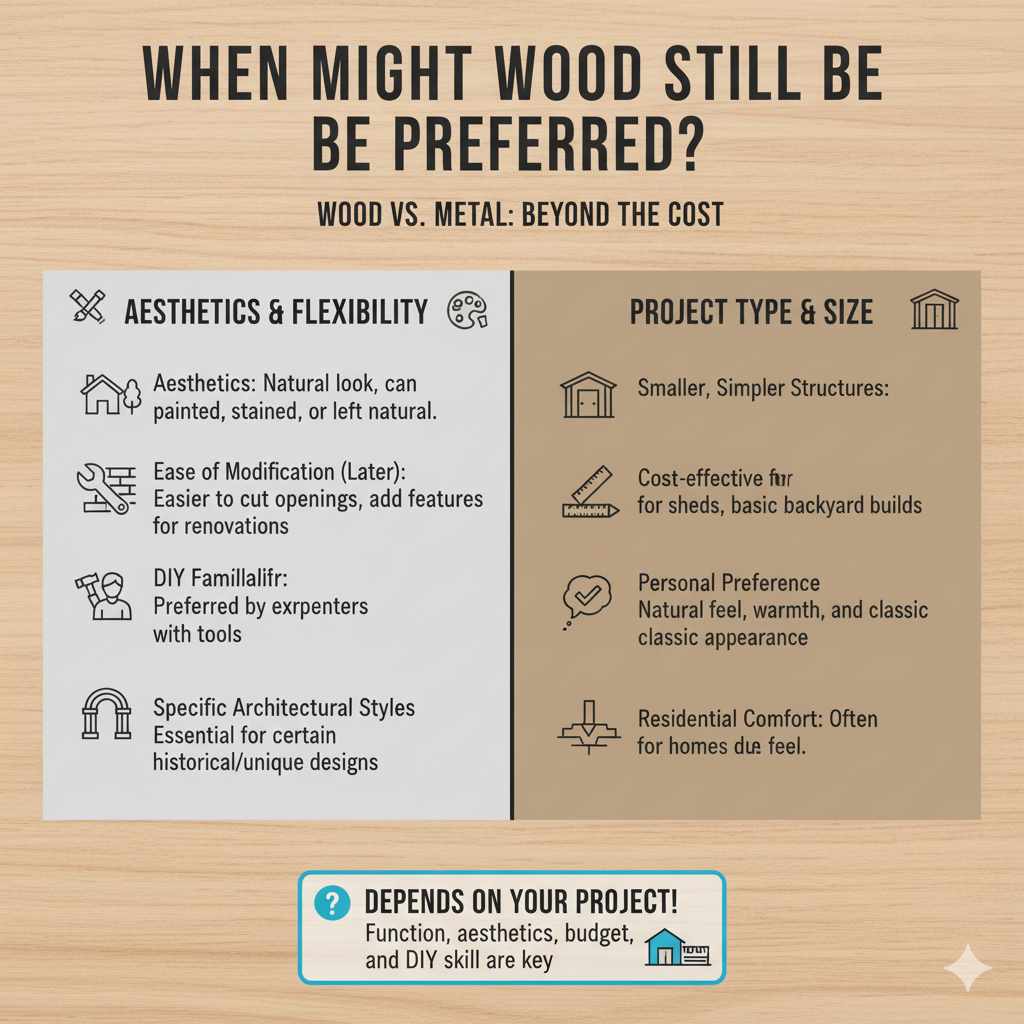
When Might Wood Still Be Preferred?
Don’t get me wrong, wood is a fantastic building material, and there are still scenarios where it might be the better or preferred choice:
- Aesthetics: Some people simply prefer the natural look and feel of wood, especially for homes or structures where appearance is paramount. Wood can be painted, stained, or left natural in beautiful ways.
- Ease of Modification (Later): If you anticipate making frequent or significant changes to your building’s layout after it’s built, wood can offer more flexibility for future renovations. Cutting new openings or adding features can be simpler with wood framing.
- DIY Familiarity: If you’re a seasoned woodworker who is extremely comfortable with carpentry and has all the tools, building from wood might feel more intuitive and enjoyable.
- Specific Architectural Styles: Certain historical or architectural styles are intrinsically tied to wood construction and might be impractical or impossible to replicate with metal.
- Smaller, Simpler Structures:** For very small sheds or basic backyard structures, the cost and complexity of a metal building kit might outweigh the benefits compared to a simple wooden build.
The “cheaper” question is highly dependent on the specifics of your project, but for many functional buildings like workshops, garages, and storage, metal often emerges as the more economical and durable option over the long haul.
Frequently Asked Questions (FAQ)
Q1: Is a metal building truly built faster than wood?
Generally, yes. Pre-fabricated metal building kits are manufactured to precise standards and designed for bolt-together assembly, which significantly speeds up the construction process compared to traditional stick-built wooden structures. Many can be erected in a matter of days.
Q2: What kind of maintenance is required for a metal building?
Metal buildings are very low maintenance. The primary concern is preventing rust. A quality paint or coating offers protection. Beyond that, occasional washing is usually all that’s needed. Unlike wood, they don’t require regular sealing, painting, or pest treatment.
Q3: Are metal buildings more durable against weather like snow and wind?
Yes, when engineered and installed correctly, metal buildings are exceptionally durable and can withstand heavy snow loads and high winds better than many wooden structures. Their strength-to-weight ratio is a significant advantage in harsh weather conditions.
Q4: Can I easily add windows, doors, or even interior walls to a metal building later on?
Yes, you can. Most metal building systems allow for the addition of windows and doors. They are typically installed into pre-cut openings or sections that can be easily modified. Interior walls can also be added, though they may require specific framing techniques depending on the building’s design.
Q5: Is a metal building a good investment for a workshop or garage?
Absolutely. Metal buildings offer tremendous value for workshops and garages due to their durability, low maintenance, resistance to pests and fire, and often lower long-term costs. They provide a safe, secure, and long-lasting space for your projects and vehicles.
Q6: How does the cost of a metal building compare to a pole barn (a type of wood structure)?
While pole barns can be cost-effective for some applications, metal buildings often provide a more robust and durable structure for a comparable or even lower price, especially when considering the longevity and reduced maintenance. The upfront cost can be similar, but the total cost of ownership over 20-30 years usually favors metal.
Q7: Are metal buildings prone to condensation inside?
Condensation can be an issue in any uninsulated or poorly ventilated building, including metal ones. However, this is easily managed with proper insulation and ventilation systems specifically designed for metal structures. Many metal building packages offer excellent insulation options.
Conclusion: Making the Smart Choice for Your Project
So, to circle back to our big question: Are metal buildings cheaper than wood? The answer, in most practical scenarios for workshops, garages, and storage, is a resounding yes, particularly when you factor in the total cost of ownership. While the initial outlay might sometimes be comparable, the proven savings from reduced maintenance, superior durability, pest resistance, and lower insurance costs make metal buildings a very financially savvy choice.
As a DIY enthusiast and someone who loves seeing projects come to life beautifully and affordably, I can confidently say that a well-chosen metal building kit offers an excellent path to achieving your building goals. They represent a smart investment in a structure that will stand strong, require minimal upkeep, and save you money year after year. Whether you’re building your dream workshop or just need a reliable place to store your car, exploring your options with metal buildings is a step toward a more cost-effective and long-lasting solution. Happy building, and remember to always prioritize safety and smart planning!