Are Plywood Cabinets Good? Strength vs MDF for Cabinet Boxes
Plywood cabinets are a good choice for kitchens, bathrooms, and garages — cross-grain veneer layers resist warping and hold screws far better than MDF or particle board. The exception: an unsealed cut edge still absorbs moisture and swells over time. This guide covers plywood grades by room, honest pros and cons, and how plywood compares to MDF and particle board for cabinet boxes.
What Makes Plywood a Good Cabinet Material
Best Cabinet Hardware Pick
Soft-Close Concealed Cabinet Hinges (6-Pack)
Face-frame soft-close hinges sized for standard 1/2″ overlay plywood cabinet doors.
- Best for: replacing worn hinges or finishing a new plywood cabinet box
- Why we picked it: stainless construction holds up under the repeated door-swing stress plywood boxes are built to handle
- Main drawback: confirm your overlay size (1/2″, 3/4″, or 1-1/4″) before ordering — the wrong size won’t seat
Compare more plywood cabinet hardware options
 Option 1 Iron-On Birch Edge Banding Tape
|
 Option 2 18″ Soft-Close Drawer Slides
|
 Option 3 Pre-Finished Edge Banding (Lacquer)
|
As an Amazon Associate we earn from qualifying purchases.
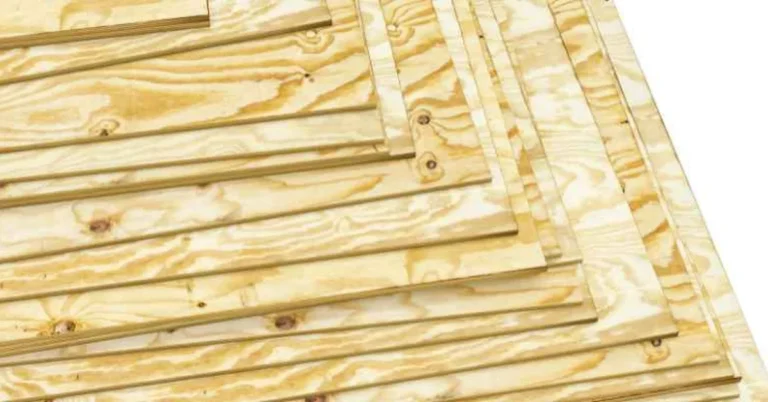
Plywood is layers of thin wood veneer glued together with the grain of each layer running perpendicular to the next. That cross-grain construction is what makes it useful for cabinet boxes: it resists the warping, cracking, and expansion that solid boards and particle board go through as kitchen and bathroom humidity swings through the seasons. The continuous wood layers also hold screws, hinge hardware, and drawer slides far more securely than compressed-fiber materials like MDF, which strip out and lose grip after repeated use.
Not every sheet is cabinet-grade, though. Plywood is also made from a range of wood species and core types — browse our full plywood guides hub for grade and species breakdowns beyond cabinets. The veneer grade, ply count, and glue type you choose matter more than the blanket “plywood vs. everything else” question, which is why grade and room application get their own sections below. On the sustainability side, plywood’s manufacturing process uses thin veneer sliced from a log rather than solid-milled lumber, so a single log yields more usable material than solid-wood cabinet construction — and most cabinet-grade plywood sold in the U.S. is now certified to the EPA’s TSCA Title VI formaldehyde-emission standard, worth confirming on the label before you buy.
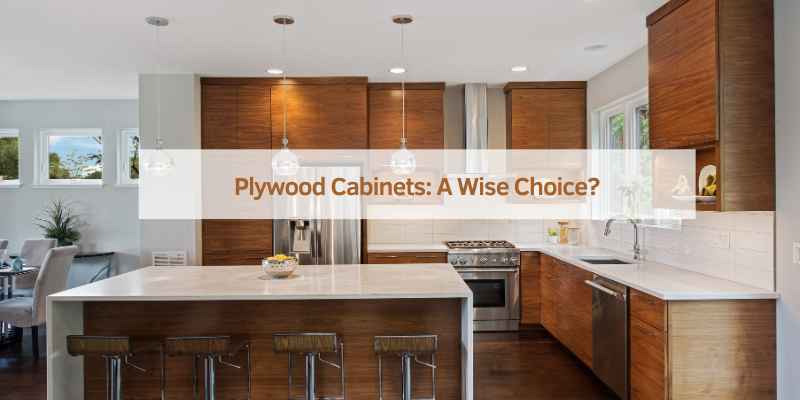
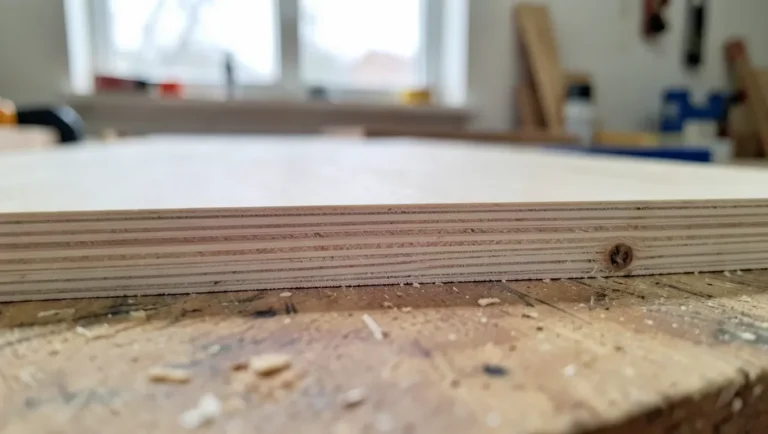
Cross-grain veneer layers — the perpendicular grain pattern is what stops plywood from warping the way solid boards do.
Plywood vs. MDF vs. Particle Board for Cabinets
Plywood costs more than particle board or MDF, but the gap is smaller than most buying guides suggest once you price cabinet-grade sheets against name-brand MDF. Here’s how the three materials actually compare for cabinet boxes:
| Material | Screw & Hinge Holding | Moisture Resistance | Typical 3/4″ Sheet Cost* | Best For |
|---|---|---|---|---|
| Cabinet-grade plywood | Excellent — continuous wood layers | Good if edges are sealed/banded | $40–$90 | Cabinet boxes, load-bearing shelves |
| MDF | Weak — screws strip without pre-drilling and the right fastener | Poor — swells and crumbles when wet | $30–$50 | Painted doors, flat panels |
| Particle board | Weakest — chips loosely bound, fasteners pull out | Poorest — disintegrates when saturated | $25–$40 | Budget interiors, low-load shelving |
*U.S. lumber-supplier pricing for a standard 4×8 sheet, 2026. Prices vary 10–25% by region and specific grade.
📊 A 3/4-inch cabinet-grade birch plywood sheet typically runs $40–$90, versus $25–$40 for a comparable particle board sheet. — Source: U.S. lumber supplier pricing surveys, 2026
The Real Pros and Cons of Plywood Cabinets
Plywood earns its reputation for a reason, but it isn’t flawless — most buying guides skip the drawbacks entirely. Here’s the balanced picture.
Why Plywood Wins
- Weight tolerance: holds heavy dishes, cookware, and tools without sagging or delaminating.
- Longevity: a properly built plywood box commonly outlasts particle board cabinetry by a decade or more.
- Repairability: can be re-drilled, patched, and re-screwed without losing structural integrity the way crumbled particle board can’t.
Where Plywood Falls Short
- Cost: cabinet-grade sheets run roughly double the price of particle board (see table above).
- Grade inconsistency: not all plywood is cabinet-grade — cheaper ply counts and void-filled cores look fine until you cut into them and find gaps.
- Exposed edges still need sealing: the face veneer resists moisture, but a bare cut edge (a shelf end, a drawer bottom) will absorb water and swell just like any other wood if it’s left unsealed.
- Weight when unfinished: hardwood-faced sheets are heavier than MDF, which matters if you’re building and installing cabinet boxes solo.
“In my shop, the plywood cabinets that fail early almost always fail at an unsealed cut edge, not the face — a shelf edge or drawer bottom left bare against a damp floor will swell within a season, while the same sheet with iron-on edge banding on every cut edge has held up for years.”
Best Plywood Choice by Room: Kitchen, Bathroom, Garage & Closets
“Are plywood cabinets good” depends partly on where they’re going — a garage storage cabinet doesn’t need the same grade as a bathroom vanity next to a shower. Here’s how to match the grade to the room:
| Room | Recommended Grade/Thickness | Watch Out For |
|---|---|---|
| Kitchen | 3/4″ cabinet-grade (A/B veneer), exterior-rated glue | Sink-base cabinets need banded or sealed edges near the plumbing cutout |
| Bathroom | 3/4″ cabinet-grade, marine or Type I exterior glue near tubs/showers | Sustained humidity at the vanity toe-kick — ventilate and seal all cut edges |
| Garage / Workshop | 1/2″–3/4″ BC or CDX-grade (utility grade is fine — looks don’t matter here) | Temperature swings stress glue lines over years; seal exposed edges anyway |
| Closets & Built-ins | 3/4″ cabinet-grade for load-bearing shelving, 1/2″ acceptable for door panels | Don’t drop to particle-core shelving for anything holding real weight — it sags |
Building kitchen cabinets specifically? See our full breakdown of plywood grades, thickness, and cost for kitchen cabinets for the exact veneer grade and core specs to ask for at the lumber yard.
Once you’ve settled on the right grade, browse our modern, budget-friendly plywood kitchen design ideas for layout and finish inspiration.
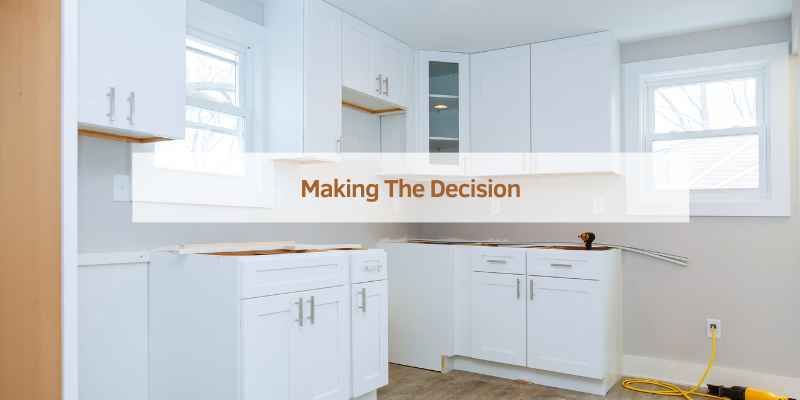
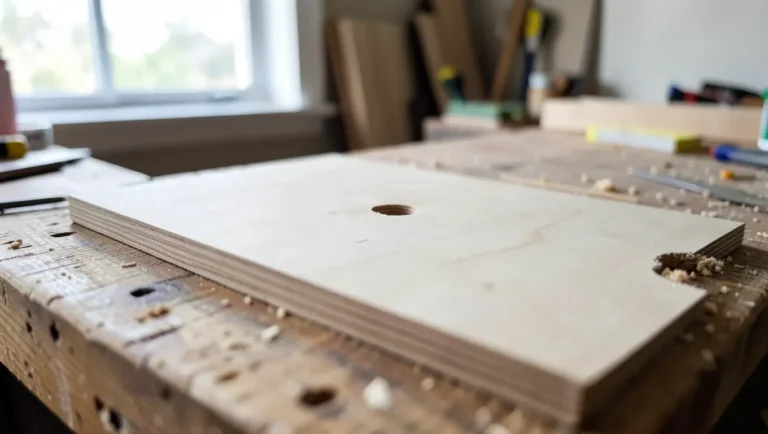
A finished plywood cabinet box — the grade you pick for kitchen, bath, garage, or closet use should match the table above.
Fasteners, Hinges & Hardware for Plywood Cabinets
Plywood’s biggest practical advantage over MDF and particle board is fastener holding: the continuous wood layers grip screw threads instead of letting them chew through compressed fiber. That makes plywood cabinets a reliable choice for anything that gets opened and closed daily — drawer slides, concealed hinges, and shelf-pin holes all hold up better over years of use. For the specific screw types and pre-drilling technique that make the biggest difference, see our guide on cabinet screws vs. wood screws.
Plywood is also easier to customize and repair than particle board or MDF: it can be cut, drilled, and re-drilled without the material crumbling around the fastener, and minor scratches or dents can be sanded and refinished rather than requiring a full panel replacement.
Is the Extra Cost Worth It?
Plywood cabinets cost more upfront than particle board, but the gap narrows once you account for replacement cycles: particle board cabinetry exposed to kitchen or bathroom humidity commonly needs partial replacement within 7–10 years, while a properly sealed plywood box can last two to three times that. For resale, buyers and inspectors generally read solid cabinet construction as a quality signal, which can support a stronger asking price compared to visibly swollen or delaminating particle board cabinetry.
Frequently Asked Questions
What Are The Disadvantages Of Plywood Cabinets?
Plywood cabinets cost more than particle board, veneer grade varies between sheets, and any bare cut edge left unsealed will still absorb moisture and swell over time, just like other wood products.
Do Plywood Cabinets Last?
Yes. A properly built plywood cabinet box with sealed or banded cut edges commonly lasts decades, well outlasting particle board cabinetry exposed to the same kitchen or bathroom humidity.
Is Plywood Or MDF Better For Cabinets?
Plywood is better for cabinet boxes because its continuous wood layers hold screws and hinges more securely and resist moisture better than MDF, which is made from compressed wood fiber that swells and strips out around fasteners.
What Are The Benefits Of Plywood Kitchen Cabinets?
Plywood kitchen cabinets are durable, water-resistant, and hold screws and hinge hardware securely, making them a reliable choice for daily kitchen use — see our full grade and thickness breakdown for kitchen-specific buying advice.
Are Plywood Cabinets Good For Bathrooms?
Yes, as long as you choose marine-grade or exterior-glue plywood near tubs and showers and seal every cut edge — bathrooms hold sustained humidity longer than kitchens, which is harder on unsealed edges.
Can You Use Plywood Cabinets In A Garage Or Workshop?
Yes, and utility-grade BC or CDX plywood is usually enough since appearance matters less in a garage — just seal exposed edges, since temperature swings in an unconditioned garage still stress unsealed cuts over time.
Conclusion
Plywood cabinets are a good choice for kitchens, bathrooms, garages, and built-ins because their cross-grain layers resist warping and hold hardware better than MDF or particle board. Match the grade to the room, seal every cut edge, and a plywood cabinet box will comfortably outlast cheaper alternatives.
Sponsored / affiliate links. As an Amazon Associate I earn from qualifying purchases. I may earn additional commission from eligible campaigns.