Are Porter Cable Batteries Interchangeable? (Yes, With This)
Porter Cable 20V MAX batteries ARE interchangeable with Black+Decker 20V MAX tools with no adapter needed – they share the same physical battery platform under parent company Stanley Black & Decker. Porter Cable batteries are NOT compatible with DeWalt, Makita, Milwaukee, or Ryobi tools, and they don’t fit the newer Craftsman V20 line without an adapter. This guide covers exactly which brands share a battery slot, which don’t, and where an adapter can bridge the gap.
Porter Cable Battery Specifications
Best Cross-Brand Adapter Pick
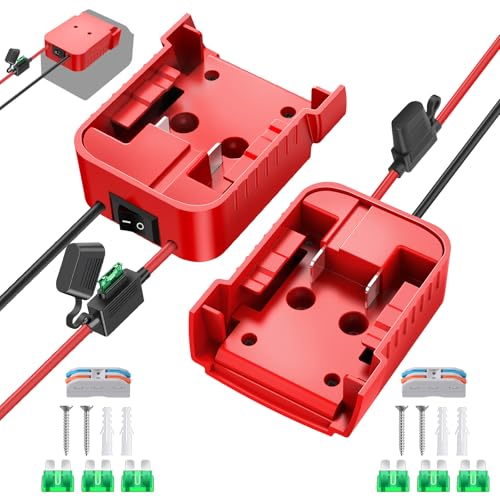
DeWalt 20V Battery to Porter Cable/Black+Decker Tool Adapter – $19.99
Bridges exactly the gap this guide flags above – DeWalt and Porter Cable share the same “20V MAX” label but a different connector, so this adapter lets a DeWalt battery power a Porter Cable or Black+Decker tool without buying a second battery.
- Best for: Anyone with a DeWalt battery collection who also owns a Porter Cable or Black+Decker tool
- Why we picked it: Solves the one incompatible pairing covered in this guide, at a fraction of a new battery’s cost
- Main drawback: Adapter only – does not charge the battery, and may void your tool’s warranty (see the safety checklist above)
As an Amazon Associate we earn from qualifying purchases.
Porter Cable’s current cordless lineup runs on 20V MAX batteries, sold in 1.5Ah, 2.0Ah, 4.0Ah, and 6.0Ah capacities. Higher amp-hour (Ah) ratings mean longer runtime per charge, not more power – a 6.0Ah battery simply lasts about 4x longer per charge than a 1.5Ah pack in the same tool. Older Porter Cable tools ran on 18V NiCd batteries, which use a completely different (and now-discontinued) slide-pack shape – those do not fit any current 20V MAX tool, Porter Cable included.
The connector that matters is the physical slide-rail shape and the position of the electrical contacts, not just the printed voltage. Two batteries can both say “20V MAX” and still not physically fit each other’s tools if the rail shape differs – which is exactly why DeWalt, a 20V MAX brand too, is not compatible with Porter Cable despite the matching voltage label.
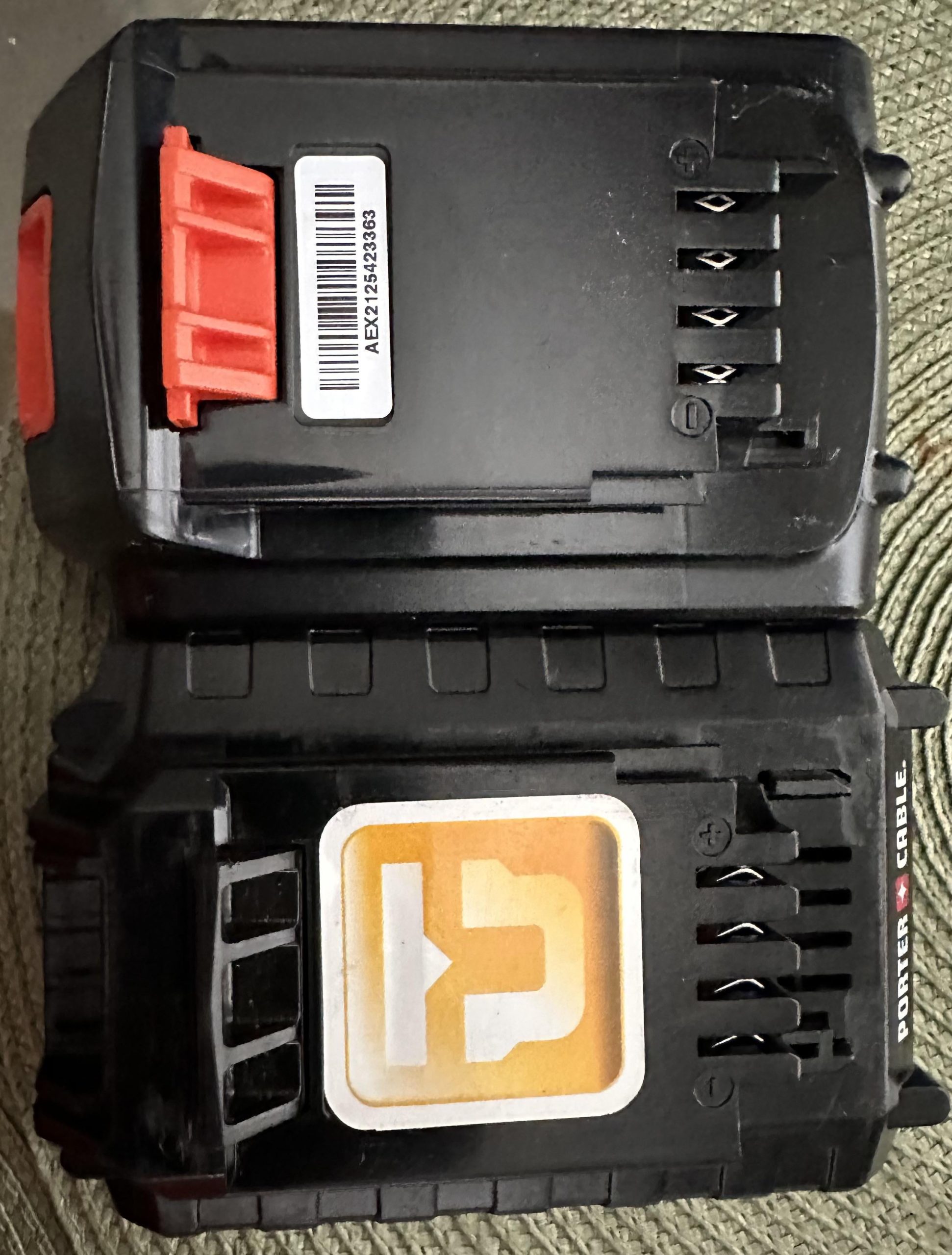
This is the part most articles get backwards, so here’s the direct answer brand by brand.
| Brand | Compatible? | Notes |
|---|---|---|
| Black+Decker (20V MAX) | Yes – direct fit | Same parent company, identical slide-rail battery platform. No adapter needed. |
| Craftsman (older 20V, pre-2017 Stanley Black & Decker line) | Yes – direct fit | Built on the same Stanley Black & Decker platform as Porter Cable/B+D. |
| Craftsman V20 (current line, sold since ~2017) | No – adapter required | SBD redesigned the newer V20 connector; a purpose-built adapter bridges it. |
| DeWalt | No | Different slide-rail shape despite also being “20V MAX.” DeWalt has its own separate compatibility rules, too. |
| Makita, Milwaukee, Ryobi | No | Entirely separate battery systems and voltages; adapters exist for some combinations. See Ryobi’s own cross-brand rules for that platform specifically. |
Why the Voltage Number Isn’t Enough
“20V MAX” is a marketing figure, not a compatibility guarantee. It describes the battery’s peak voltage right off the charger before it settles to its nominal (running) voltage – almost every major cordless brand uses this same “20V MAX” label, including DeWalt, Craftsman V20, Ryobi (which markets 18V nominal the same way), and Milwaukee’s M18 line. Matching labels tell you nothing about whether the physical connector fits.
What actually determines fit:
- The slide-rail width and shape on the battery base
- The number and position of electrical contact pins
- Whether the tool’s firmware checks for a brand-specific signal (some newer tools do this to block off-brand batteries even if they’d physically fit)
Using a Battery Adapter Safely
Adapters exist for combinations Porter Cable doesn’t natively support – most commonly DeWalt-to-Porter Cable and Craftsman V20-to-Porter Cable.
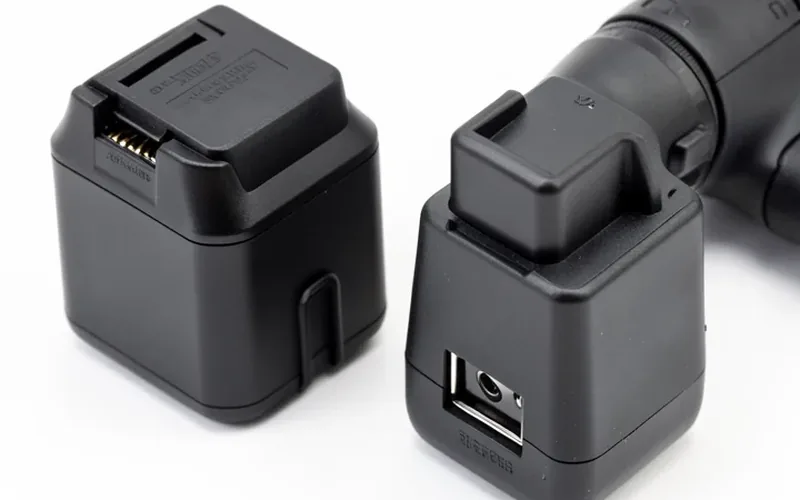
What a Battery Adapter Does and Doesn’t Do
- Does: Physically lets an off-brand battery slide into and power the tool.
- Does not: Add charging capability in most cases – you typically charge the battery on its original brand’s charger, then use the adapter only to run the tool.
- Does not: Guarantee the tool’s full rated performance – amperage draw and communication between battery and tool can differ slightly from the OEM pairing.
Adapter Safety Checklist
- Match the voltage class exactly – 20V MAX battery to 20V MAX tool, never mixed with an 18V or 12V system.
- Buy from a seller with real reviews – a loose-fitting adapter can arc or overheat at the contacts.
- Check your tool’s warranty terms – some manufacturers void the warranty if a non-OEM battery or adapter is used, regardless of whether it works fine.
- Never force a fit – if an adapter requires noticeable force to seat, stop and confirm it’s the correct model for your exact battery generation.
Frequently Asked Questions
Are Porter Cable Batteries Compatible With Other Brands?
Yes, with Black+Decker 20V MAX tools and older (pre-2017) Craftsman 20V tools – all three share the same Stanley Black & Decker battery platform, so the battery swaps in directly with no adapter. Porter Cable batteries are not compatible with DeWalt, Makita, Milwaukee, Ryobi, or the current Craftsman V20 line without a purpose-built adapter.
Can I Use DeWalt Batteries With Porter Cable Tools?
Not directly. DeWalt and Porter Cable both use a “20V MAX” label, but the physical slide-rail connector is a different shape, so a DeWalt battery won’t seat in a Porter Cable tool without an adapter. A dedicated DeWalt-to-Porter Cable/Black+Decker battery adapter solves this without any tool modification.
Do Porter Cable Batteries Fit Black And Decker Tools?
Yes. Porter Cable and Black+Decker 20V MAX batteries are direct-fit interchangeable in both directions with no adapter, because both brands are owned by Stanley Black & Decker and use the identical battery platform.
Will Using An Adapter Void My Tool’s Warranty?
It can. Some manufacturers’ warranty terms specifically exclude damage caused by non-OEM batteries or adapters, even if the combination works fine day to day. Check your specific tool’s warranty documentation before relying on an adapter for a tool still under warranty.
Conclusion
Porter Cable batteries are more interchangeable than most people assume – just not with the brands you might guess. Black+Decker and older Craftsman 20V tools take a Porter Cable battery directly, no adapter required, while DeWalt, Makita, Milwaukee, Ryobi, and the newer Craftsman V20 line all need a dedicated adapter or don’t work at all. Match the connector shape, not just the voltage number, and check your warranty terms before mixing brands on a tool that’s still covered.
Sponsored / affiliate links. As an Amazon Associate I earn from qualifying purchases. I may earn additional commission from eligible campaigns.