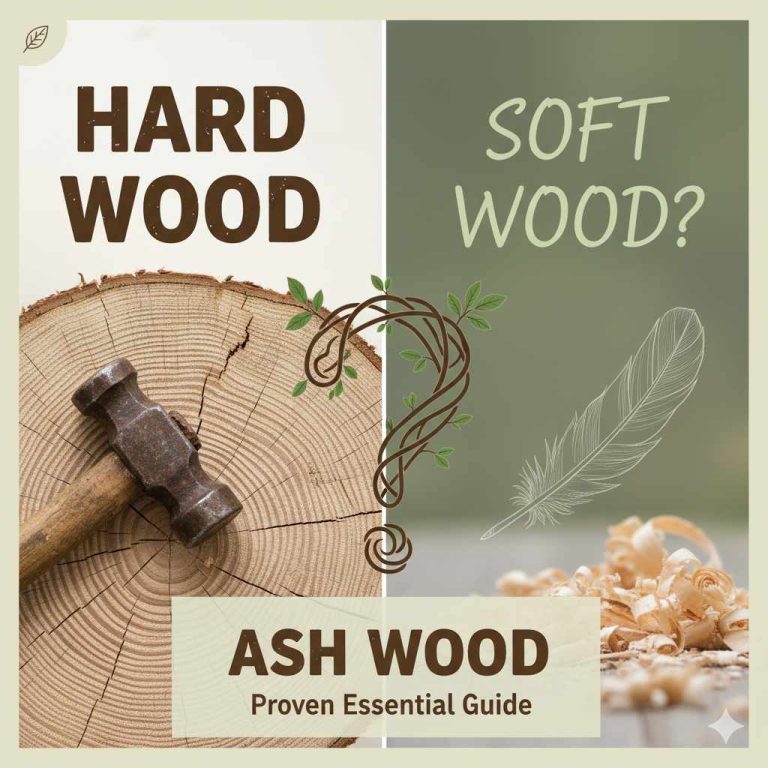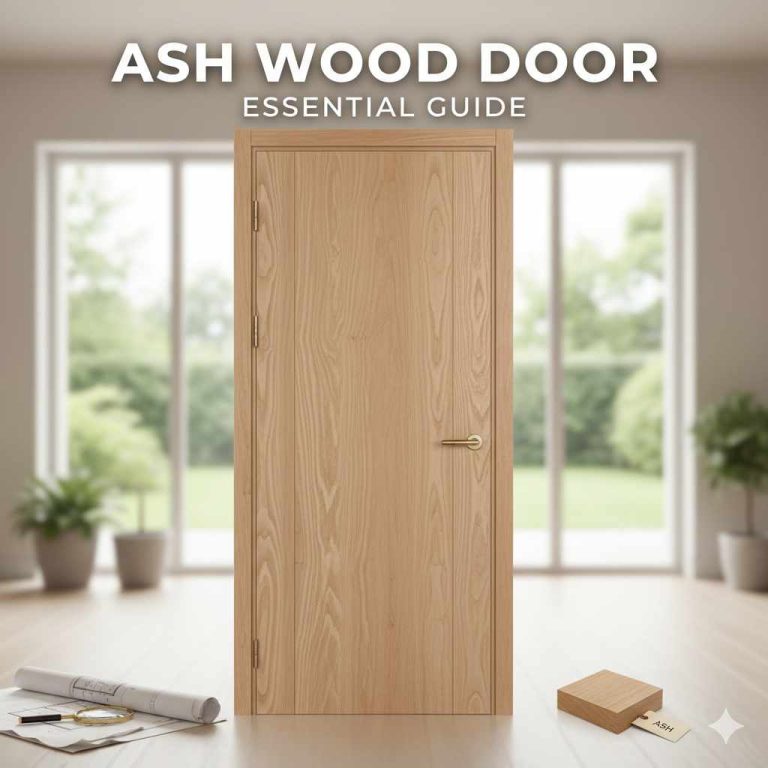
Ash Wood Hardwood: Essential Guide & Proven Durability
Discover Ash Wood: A Durable & Beautiful Choice for Your Next Project. This guide explores ash wood’s strength, looks, common uses, and why it’s a fantastic, reliable hardwood for beginners and seasoned woodworkers alike. Learn its pros and cons to confidently choose ash for lasting beauty and function.
Hey folks! Md Meraj here, your go-to woodworking buddy. Ever look at a piece of furniture or a wooden floor and think, “Wow, that looks great and feels super solid!”? Chances are, you might be admiring the natural beauty and incredible toughness of ash wood. It’s a favorite for a reason – it’s strong, looks fantastic, and doesn’t break the bank. But with so many wood types out there, how do you know if ash is right for your next DIY adventure or home upgrade? Don’t worry, that’s exactly what we’re going to dive into today. We’ll break down everything you need to know about ash wood so you can feel confident making and using it. Get ready to unlock the secrets of this amazing hardwood!
What Exactly is Ash Wood?
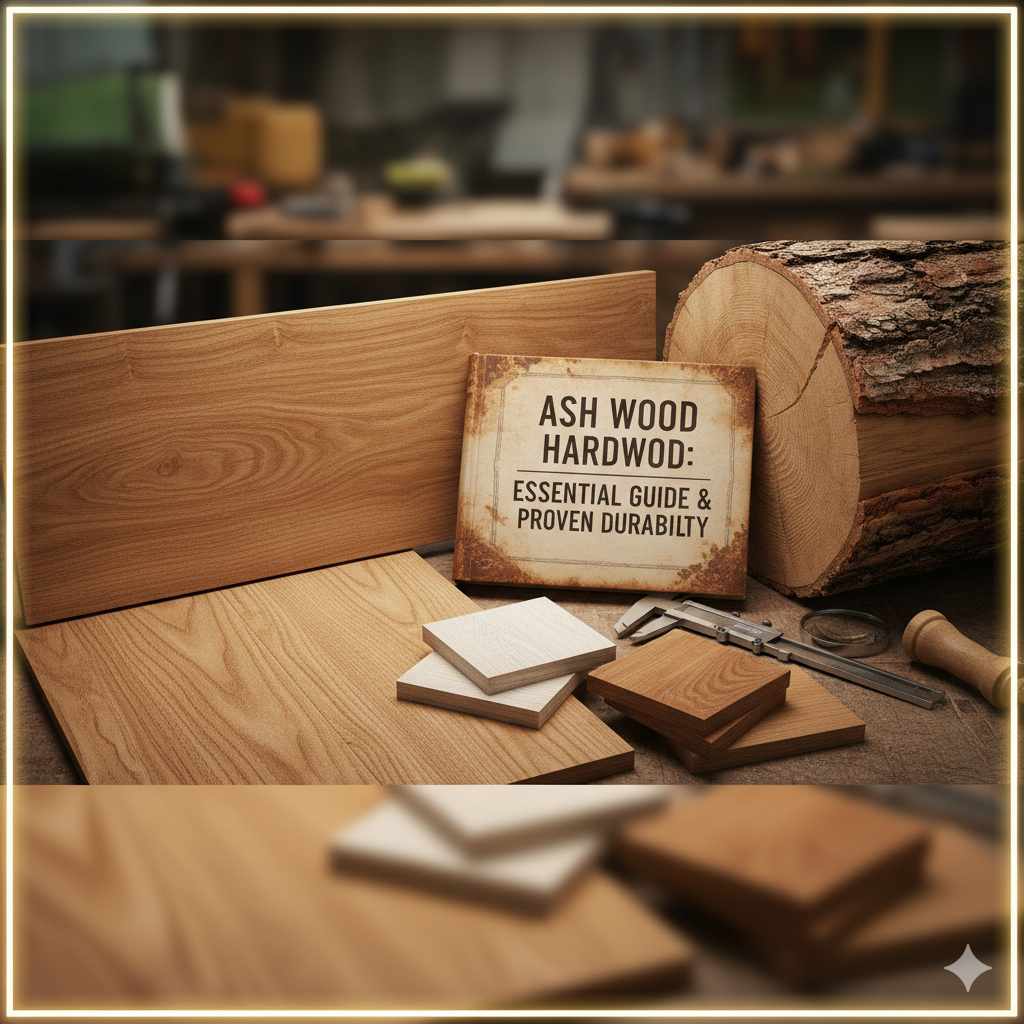
Ash wood comes from ash trees, primarily the Fraxinus genus. These trees are found all over the Northern Hemisphere. Think of it as nature’s tough, yet elegant, building material. When we talk about “ash wood” in woodworking, we’re usually referring to the wood from species like White Ash (Fraxinus americana) or Green Ash (Fraxinus pennsylvanica). These are the workhorses, offering a blend of strength and beauty that makes them super popular.
When you see ash wood, you’ll notice its distinctive grain pattern. It’s often straight and has a coarse, open texture. The color can range from a creamy white to light brown, sometimes with a reddish or grayish tint. This variability is part of its charm! It’s known for its shock resistance, making it ideal for things that take a beating. We’ll get into all its amazing properties next.
The Unbeatable Durability of Ash Wood
When we talk about durability in wood, we’re looking at how well it stands up to wear and tear, dents, scratches, and even moisture. Ash wood really shines in this department! It’s famously strong and tough, often compared to hickory and oak, but generally easier to work with. This balance of strength and workability is a big win for any project.
Hardness and Strength
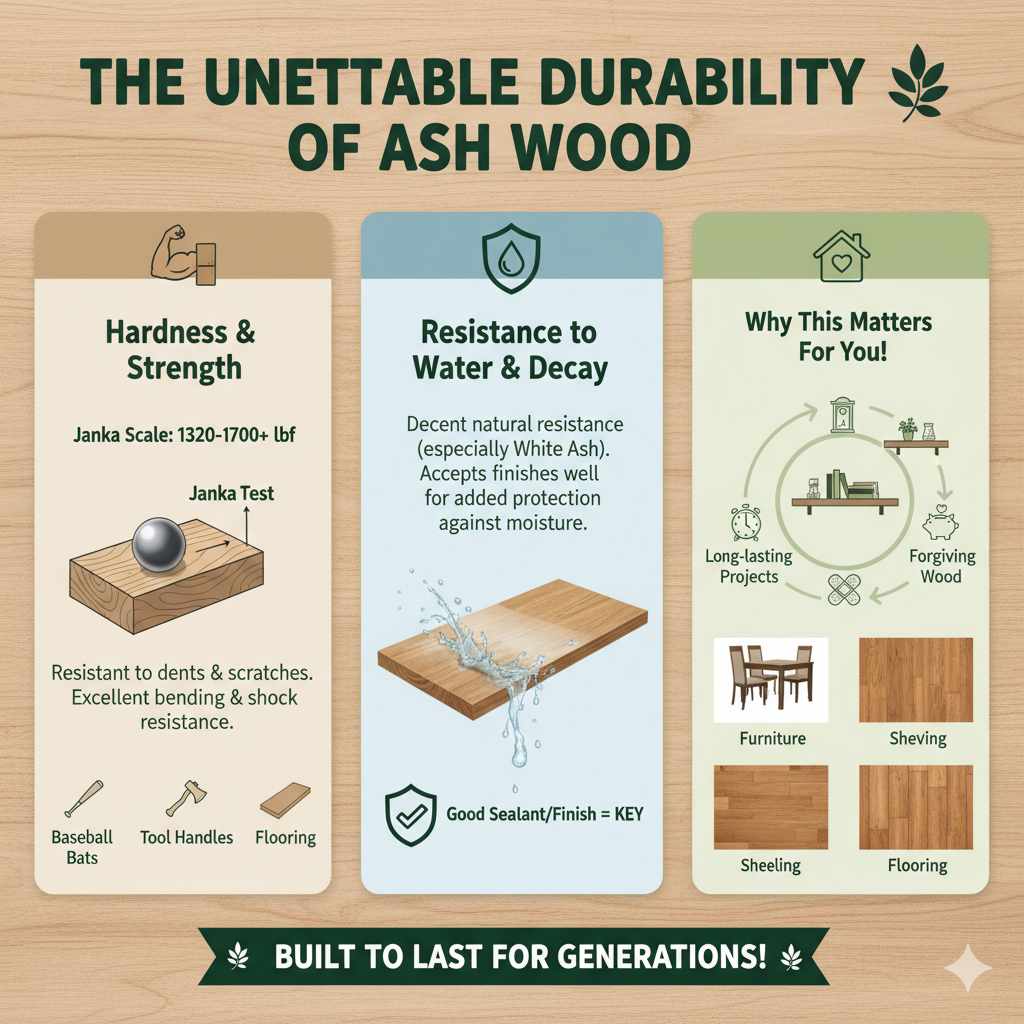
Ash wood scores high on the Janka hardness scale. This scale measures how much force it takes to embed a steel ball halfway into a piece of wood. Higher numbers mean harder wood. Ash typically ranges from about 1320 (for White Ash) to over 1700 lbf (pound-force) for some varieties. This means it’s quite resistant to dents and scratches, which is crucial for things like flooring, tool handles, and furniture that sees a lot of action.
The strength of ash isn’t just about surface hardness. It also has excellent bending and shock resistance. Historically, this made it the go-to wood for baseball bats, tool handles (like axes and shovels), and even the frames of early aircraft. If a material can withstand the impact of a swinging axe or the forces of flight, you know it’s built to last!
Resistance to Water and Decay
While not as naturally resistant to rot and insects as some tropical hardwoods, ash wood (especially White Ash) does have decent resistance. Its open grain can help it accept finishes well, adding an extra layer of protection against moisture. For projects that might be exposed to the elements or high humidity, a good sealant or finish is key. However, for indoor applications, its natural durability is often more than enough.
Why This Durability Matters for You
For DIYers and homeowners, this means ash wood is a smart investment. Projects made with ash are likely to last for generations. Whether you’re building a new dining table, crafting custom shelves, or installing hardwood floors, choosing ash means you’re choosing longevity. It’s a forgiving wood, meaning it can handle the occasional bump or spill without showing significant damage, which is perfect for busy households.
Key Properties and Characteristics of Ash Wood
Ash wood isn’t just strong; it has a unique set of characteristics that make it stand out. Understanding these will help you choose the right projects for it and get the best results.
Grain and Texture
Ash typically has a straight, appealing grain pattern. It’s often described as having a pronounced, open grain. This means you can see and feel the texture of the wood quite clearly. This open grain can be a double-edged sword: it makes the wood easier to stain and finish, but it also means it can hold dirt and moisture more readily if not properly sealed.
The texture is generally referred to as coarse, but it’s smooth when sanded properly. The distinct grain lines give ash a beautiful, natural look that can be enhanced with stains and finishes. It gives projects a classic, sometimes rustic, feel.
Color Variations
The color of ash wood is one of its most attractive features. You’ll often find:
- Creamy White to Light Brown: This is the most common appearance, especially in White Ash sapwood.
- Reddish or Grayish Tints: Heartwood can sometimes have these cooler tones.
- Stripe Effects: The grain can create beautiful striped or wavy patterns, especially when quarter-sawn.
Because ash is a natural material, no two pieces are exactly alike. This variation adds character and uniqueness to your projects. It also means that if you’re matching ash to an existing piece, you might need to select your boards carefully or embrace the subtle differences.
Workability
For a hardwood, ash is relatively easy to work with. It machines, shapes, and turns well. While its hardness can dull tools faster than softer woods, it doesn’t tend to split or splinter easily, which is a huge plus for beginners.
- Cutting and Milling: Ash cuts cleanly with sharp tools.
- Joining: It holds screws and nails well, though pre-drilling is recommended to prevent splitting, especially near edges.
- Gluing: Glues bonds exceptionally well, making it great for laminated projects or repairs.
- Sanding: Sands smoothly to a fine finish.
- Staining: Takes stains beautifully, allowing you to achieve a wide range of colors. The open grain can sometimes lead to blotchy results if not prepared correctly, so using a pre-stain conditioner is often a good idea.
Comparing Ash Wood to Other Hardwoods
Knowing how ash stacks up against other popular hardwoods can help you decide if it’s the best fit for your needs. Here’s a quick comparison with Oak and Maple, two other common choices.
| Feature | Ash Wood | Oak Wood | Maple Wood |
|---|---|---|---|
| Janka Hardness (lbf) | ~1320 – 1700+ | ~1290 (Red Oak) – 1360 (White Oak) | ~1450 (Hard Maple) |
| Grain Pattern | Straight, open, coarse texture | Prominent, often with rays, can be straight or wavy | Fine, straight, sometimes wavy or curly (Figured Maple) |
| Color | Creamy white to light brown, sometimes reddish/grayish | Light brown to reddish-brown (Red Oak), light to dark brown with gray/green tints (White Oak) | Creamy white to light reddish-brown |
| Workability | Good; machines well, holds fasteners, good bending strength | Good, but can be prone to splitting; takes finishes well | Good, but can be challenging with very fine grains; excellent for smooth finishes |
| Cost | Moderate | Moderate to High | Moderate to High |
| Common Uses | Tool handles, baseball bats, furniture, flooring, cabinetry | Furniture, flooring, cabinetry, barrels, architectural millwork | Furniture, flooring, cabinetry, butcher blocks, musical instruments |
As you can see, ash offers a strong middle ground. It’s generally as hard or harder than oak, with a more pronounced grain. It’s often slightly less hard than hard maple but can be more forgiving to work with due to its less dense structure. The choice often comes down to the specific look you want and how you plan to finish the wood.
Common Uses for Ash Wood
Thanks to its combination of strength, flexibility, and good looks, ash wood is used in a wide variety of applications. Here are some of the most common:
Furniture Making
Ash is a popular choice for furniture because it’s both durable and aesthetically pleasing. Its straight grain and attractive coloring work well for everything from sturdy dining tables and chairs to elegant bed frames and cabinets. It holds up well to daily use, making it perfect for high-traffic items.
Flooring
Ash flooring is a fantastic option for homes. It offers a look similar to oak but with its own unique character. Its hardness makes it resistant to dents and scratches, so it can handle busy households with kids and pets. The natural variations in color and grain add warmth and visual interest to any room.
Tool Handles and Sporting Goods
This is where ash’s shock resistance truly shines. For decades, ash has been the material of choice for tool handles (hammers, axes, shovels, etc.) because it can absorb vibrations and impacts without breaking. Similarly, it’s the classic wood for baseball bats for the same reasons – it needs to withstand tremendous forces.
Cabinetry and Millwork
The consistent grain and ability to take stains make ash a great choice for kitchen cabinets, bathroom vanities, and other interior millwork. It can provide a clean, modern look or be stained to achieve a more traditional appearance.
Other Applications
- Bowed Musical Instruments: The flexibility and strength of ash make it suitable for the bows of musical instruments.
- Ladders: Previously used for its strength and shock absorption.
- Children’s Toys: Its durability and non-toxic nature make it a safe choice for robust toys.
Pros and Cons of Using Ash Wood
Like any material, ash wood has its advantages and disadvantages. Weighing these will help you make an informed decision for your projects. Here’s a breakdown:
Pros:
- Excellent Durability: Very strong, hard, and resistant to shock and impact.
- Attractive Appearance: Features a straight, open grain with color variations that can be very appealing.
- Good Workability: Machines, shapes, and takes finishes well for a hardwood.
- Relatively Affordable: Often more budget-friendly than oak or maple.
- Good for Staining: The open grain allows for deep penetration of stains.
- Versatile: Suitable for a wide range of applications, from furniture to flooring.
Cons:
- Susceptible to Pests and Fungal Decay: Less resistant than some other woods if not properly treated or finished, especially to Emerald Ash Borer (EAB).
- Open Grain Needs Care: Can be prone to holding dirt and moisture if not sealed properly; may require a pre-stain conditioner for even staining.
- Can Be Heavy: Due to its density and strength, ash can be heavier than some comparable woods.
- Availability Concerns: The Emerald Ash Borer has devastated ash populations in many areas, potentially affecting long-term availability and price in some regions. You can learn more about invasive species impacting forests from the US Forest Service.
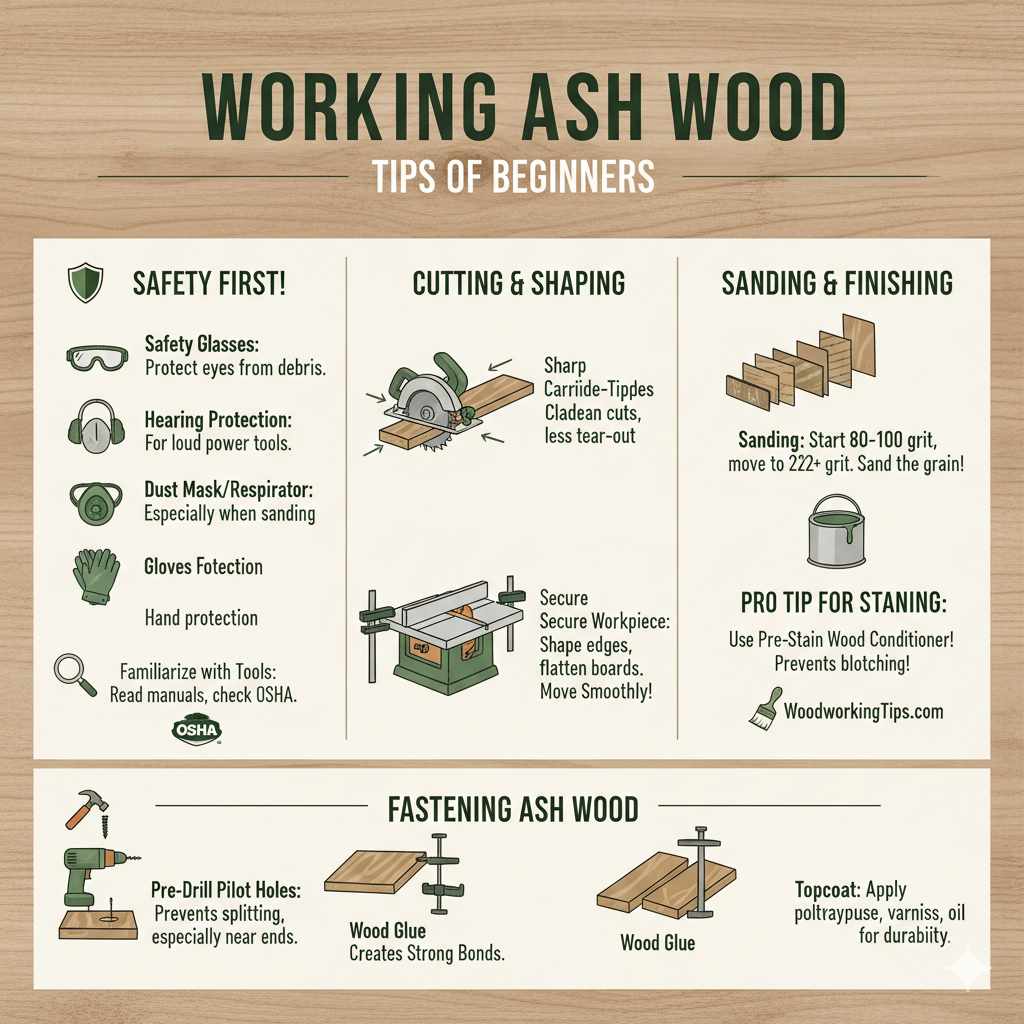
Working with Ash Wood: Tips for Beginners
Alright, let’s talk about getting your hands dirty with ash! As your woodworking mentor, I want to make sure you feel confident and safe. Ash is a great wood to learn on because it’s quite forgiving.
Safety First!
Always remember your safety gear. This includes:
- Safety glasses to protect your eyes from sawdust and debris.
- Hearing protection when using loud power tools.
- A dust mask or respirator, especially when sanding or if you have sensitivities.
- Gloves to protect your hands.
Familiarize yourself with the operation of any tool before you use it. If you’re unsure, check the tool’s manual or find a reputable online guide. The Occupational Safety and Health Administration (OSHA) also provides excellent resources on general workplace safety, which are applicable to your workshop.
Cutting and Shaping Ash
Ash cuts cleanly with sharp blades. For ripping (cutting along the grain) and crosscutting (cutting across the grain), a good quality carbide-tipped blade will give you the best results with minimal tear-out. When using a table saw or miter saw, ensure your workpiece is securely supported. If you’re using hand saws, a sharp saw will make the job much easier.
For shaping, routers and planers work very well with ash. You can create beautiful profiles on edges or flatten boards effectively. Just remember to move the tools confidently and smoothly, letting the tool do the work.
Sanding and Finishing
This is where ash can really shine. Start with a medium grit sandpaper (like 80 or 100 grit) to smooth out any milling marks or rough spots. Gradually move to finer grits (120, 150, 180, and even 220 grit) for a silky-smooth finish. Be sure to sand with the grain.
Pro Tip for Staining: Because ash has an open grain that can sometimes lead to blotching, I highly recommend using a pre-stain wood conditioner. Apply it according to the product instructions before you stain. This helps the stain absorb more evenly, giving you a consistent color. You can find these at any hardware or woodworking store. Read up on best practices from resources like WoodworkingTips.com for more in-depth finishing advice.
Once stained (or if you’re leaving it natural), apply a protective topcoat. Polyurethane, varnish, lacquer, or even a durable oil finish can protect your ash wood project and enhance its natural beauty. Apply multiple thin coats for the best durability and appearance.
Fastening Ash Wood
Ash holds fasteners well, but because it’s dense, you’ll want to pre-drill pilot holes before driving screws or nails, especially near the ends of boards. This prevents the wood from splitting. If you’re using wood glue for joinery, ash creates very strong glue bonds.
Frequently Asked Questions About Ash Wood
Got more questions? That’s perfectly fine! Here are some common ones beginners ask about ash wood, with straightforward answers.
Is ash wood good for beginners?
Yes, ash wood is an excellent choice for beginners! It’s durable, relatively easy to work with using common tools, and forgiving of minor mistakes. It takes finishes well, which is satisfying for new woodworkers.
How does ash wood compare to pine?
Ash is a hardwood, meaning it’s much denser, harder, and more durable than pine, which is a softwood. Pine is easier to cut and carve but dents and scratches much more easily. Ash is better for projects that need to withstand heavy use, while pine is great for lighter-duty projects or when budget is a primary concern.
Is ash wood more expensive than oak?
Generally, ash wood is often comparable in price to oak, and sometimes slightly less expensive, depending on market conditions and specific species. Both are considered mid-range to higher-priced hardwoods compared to softwoods.
How do I prevent ash wood from looking blotchy when stained?
The best way to prevent blotching is to use a pre-stain wood conditioner. Apply it evenly before staining, let it dry for the time recommended on the product, and then apply your stain. This helps the wood absorb the stain more uniformly.
Can ash wood be used outdoors?
Ash wood can be used outdoors, but it’s not naturally as rot-resistant as woods like cedar or teak. For outdoor projects, it’s crucial to use a high-quality exterior-grade finish or sealant that provides excellent protection against moisture, UV rays, and insects. Regular maintenance will be necessary.