Ash Wood Weight Chart by Species
At 12% moisture content, ash usually weighs about 3.5 to 4.2 lb per board foot. Ignore that, and you can misjudge lift limits, freight charges, and whether a top, stair tread, or shelf will sag. This guide compares ash species, density, board-foot weight, and quick load estimates so you can price, move, and spec the lumber with less guesswork.
What ash weight means
Ash weight starts with density, then shifts with moisture content and board size. For lumber, the useful question is not “how heavy is ash?” in the abstract. It is “how much will this board weigh after drying, planing, and acclimating to the shop?”
Density, specific gravity, and board weight
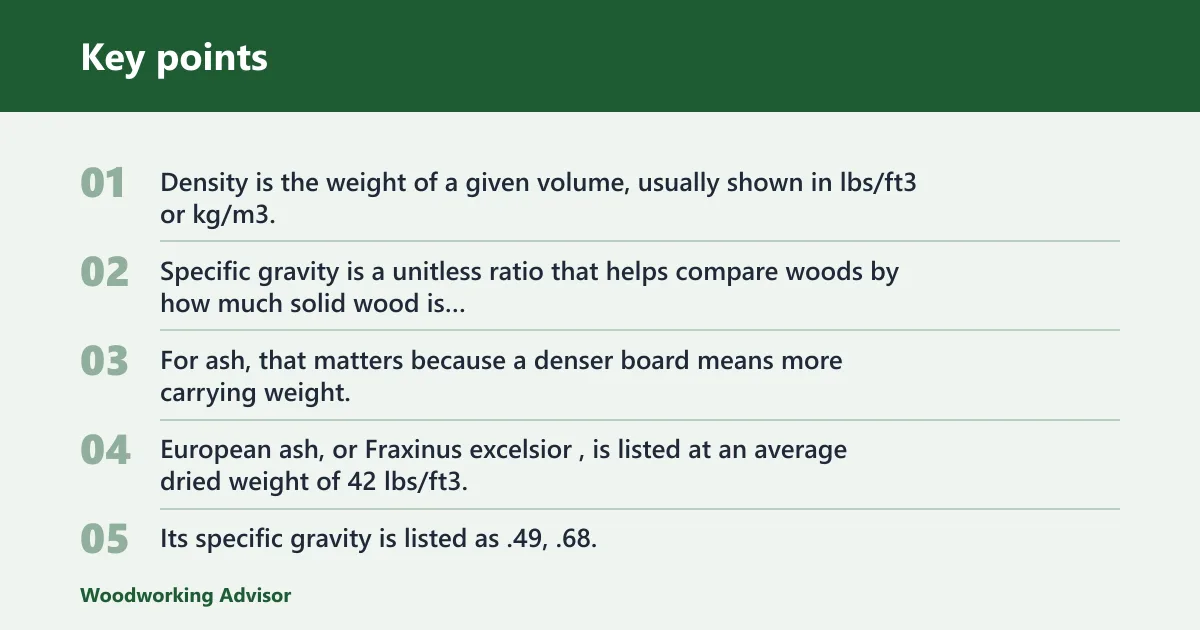
Density is the weight of a given volume, usually shown in lbs/ft3 or kg/m3. Specific gravity is a unitless ratio that helps compare woods by how much solid wood is packed into the same space. For ash, that matters because a denser board means more carrying weight, more shipping weight, and more load on a shelf or wall cleat.
European ash, or Fraxinus excelsior, is listed at an average dried weight of 42 lbs/ft3. Its specific gravity is listed as .49, .68, which tells you the same species can span a wide range depending on how the value is reported and the moisture basis used. That is why a weight chart is more useful than a single “average” number.
Why moisture content changes the number you carry
Moisture content changes apparent weight fast. Green lumber carries more water, so it weighs more than kiln-dried stock of the same size. A 12% moisture content benchmark is useful because it sits near common shop and retail lumber conditions, so it gives you a practical middle point for estimating board weight.
When weight matters most in ash projects
Weight matters most when the part is wide, long, or mounted overhead. A stair tread, a wall shelf, or a long tabletop can be light enough to move by hand and still heavy enough to strain fasteners or sag if you misjudge the span. Ash is still a hardwood with good strength for its weight, but “good” is not the same as “light.”
📊 European ash has an average dried weight of 42 lbs/ft3. Source: Wood-database.
White, green, and European ash
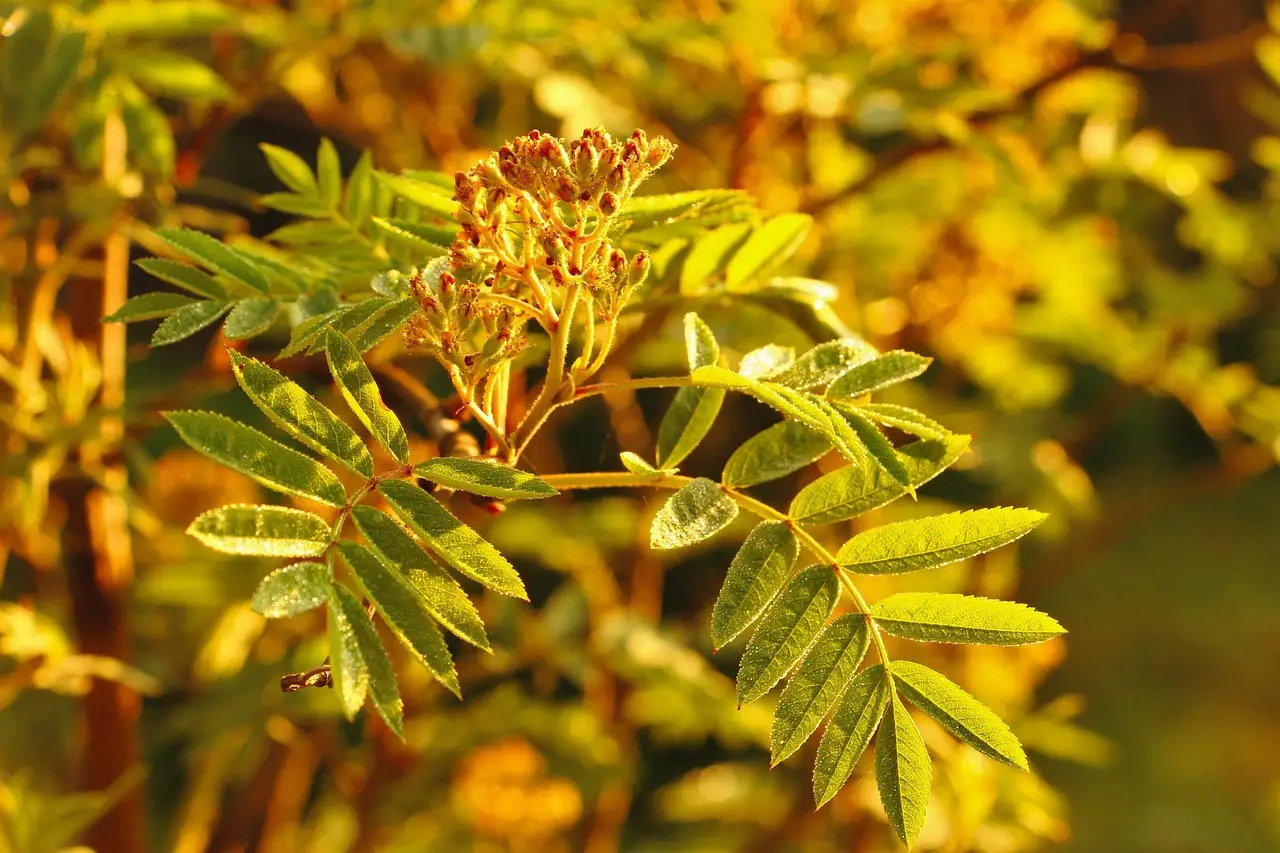
White ash, green ash, and European ash do not weigh exactly the same, and the difference matters when you buy rough stock or choose a part for a handle, bat, or panel. White ash is commonly used for flooring, furniture, bats, and tool handles. Green ash is often chosen for furniture parts and handles where shock resistance matters. European ash is widely used for flooring, millwork, baseball bats, and tool handles.
White ash: species name, density, and common uses
White ash is the North American species most buyers mean when they ask about ash lumber. It is known for straight grain, medium to coarse texture, and strong weight-for-strength behavior. In practical terms, white ash is a good fit for furniture parts, flooring, tool handles, and sporting goods where a hard, resilient wood helps.
White ash is generally in the same weight class as European ash when kiln-dried, so you should plan on board weights close to the chart below rather than assuming a “light” hardwood. Janka hardness for ash is commonly listed in the same range as oak or slightly below it, depending on the species and source.
Green ash: how it compares in weight and handling
Green ash is a species variant used much like white ash, but it is often treated as a practical choice for parts that need toughness without unnecessary bulk. Compared with white ash, it is commonly handled as a similar-weight hardwood, sometimes a little lighter or a little heavier depending on moisture and cut. For furniture and handles, that means it is usually close enough to white ash that the real difference is often species selection, not dramatic lifting weight.
For a shop decision, that means green ash usually does not change your handling plan by much. It still deserves the same caution on long shelves, wide lids, and overhead assemblies.
European ash: Fraxinus excelsior specs and strength-to-weight
European ash has an average dried weight of 42 lbs/ft3, a Janka hardness of 1,480 lbf, a modulus of rupture of 15,020 lbf/in2, an elastic modulus of 1,785,000 lbf/in2, and a crushing strength of 7,400 lbf/in2. It is described as strong for its weight and shock resistant.
That combination explains why it shows up in flooring, millwork, baseball bats, and tool handles. European ash gives you a hard, springy board without the weight penalty that comes with some denser hardwoods.
Ash board weight chart
This chart turns density into estimated board weight at 12% moisture content. It uses common board sizes so you can estimate handling, freight, and bench load before you buy. Values are estimates, not package weights, because real boards vary with exact moisture content, width, grain, and milling loss.
| Species | Estimated density at 12% MC | 4/4 weight per board foot | 8/4 weight per board foot | 1x8x8 board weight |
|---|---|---|---|---|
| White ash | 42 lbs/ft3 | 3.5 lb/bf | 3.5 lb/bf | 18.7 lb |
| Green ash | 40 lbs/ft3 | 3.3 lb/bf | 3.3 lb/bf | 17.8 lb |
| European ash | 42 lbs/ft3 | 3.5 lb/bf | 3.5 lb/bf | 18.7 lb |
For this chart, 4/4 and 8/4 have the same weight per board foot because weight per board foot is a volume-based figure; thickness changes the weight of a given piece, not the weight per board foot. A 1x8x8 board contains about 5.33 board feet, so a 42 lbs/ft3 ash board lands near 18.7 lb at 12% moisture content.
Suppose you are buying two 8/4 ash legs for a workbench base. The lumber yard says each leg is 4 in by 4 in by 36 in. At 12% moisture content, each blank is close to 4.2 board feet, so one piece can weigh well over 14 lb before you cut joinery. That changes how you move the stock and how you plan the assembly.
How moisture changes ash weight
Moisture changes ash weight more than most buyers expect. Green lumber can be much heavier than kiln-dried stock, and the difference shows up in rough handling, shipping charges, and how much a long board wants to bow while it acclimates. A 12% moisture content benchmark gives you a practical middle value for lumber that is no longer green but not fully oven-dry.
Green wood versus kiln-dried stock
Green ash contains more water in the cell structure, so it weighs more than the same board after drying. Kiln-dried ash may land close to the 12% benchmark, while green stock can feel noticeably heavier in the same cross section. That extra water does not add strength in a helpful way; it mainly adds weight and movement risk as the board dries.
Why a 12% MC benchmark is useful
Many buyers receive lumber that is not perfectly dry and not fully green. Twelve percent gives you a workable middle value for estimating what arrives on the truck and what lands on the bench. It is especially useful for rough stock, where surfacing loss will change the finished dimensions but not the original board-foot weight.
How to adjust estimates for wetter or drier lumber
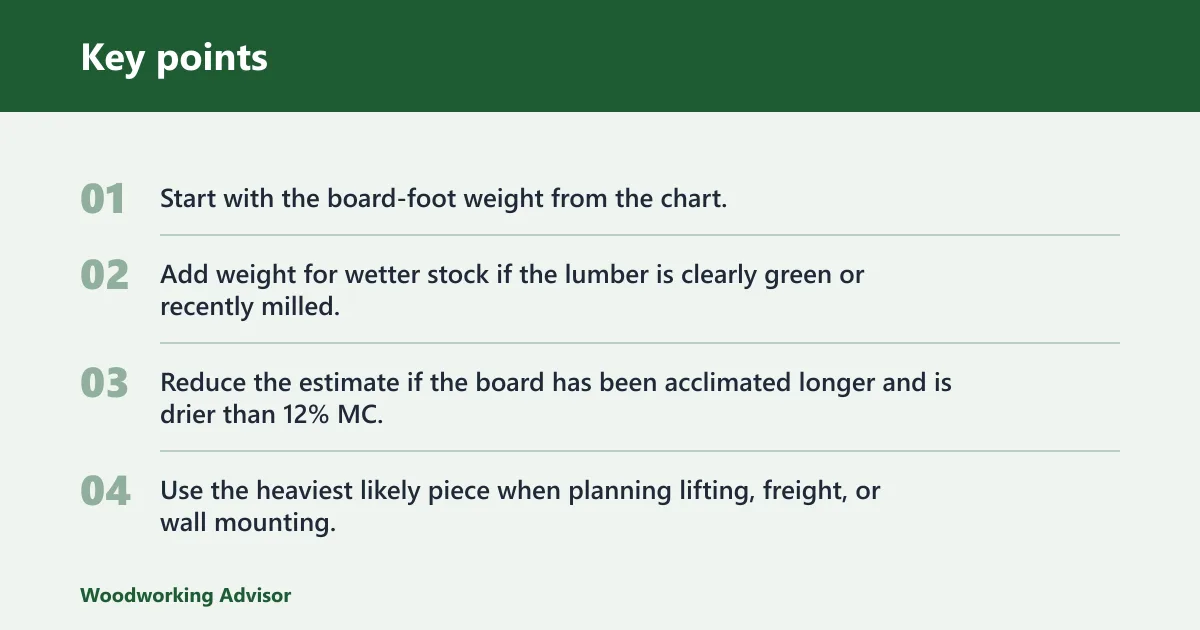
- Start with the board-foot weight from the chart.
- Add weight for wetter stock if the lumber is clearly green or recently milled.
- Reduce the estimate if the board has been acclimated longer and is drier than 12% MC.
- Use the heaviest likely piece when planning lifting, freight, or wall mounting.
A common first-timer mistake is judging ash by feel alone. A 10-foot board can seem manageable in the yard, then feel much heavier once you carry it overhead, align it on a saw, or try to fasten it to a wall cabinet without support.
Is ash stronger than oak?
Ash is often compared with oak because both are hard, workable hardwoods, but strength depends on the species and the property you mean. In Janka hardness, ash can sit near oak or slightly below it. In bending and shock use, ash often earns its place because it combines good strength with lower weight than many hardwoods.
Janka hardness comparison with oak
European ash is listed at 1,480 lbf on the Janka scale. That puts it in the same general working class as many common oaks, though exact oak numbers vary by species. The practical takeaway is simple: ash is hard enough for wear surfaces and handles, but it is not so dense that every project becomes a handling problem.
Modulus of rupture, stiffness, and crushing strength
Those values point to a wood that resists bending, holds shape under load, and tolerates compressive stress well enough for structural parts and hard-use components.
Shock resistance and tool-handle use
Shock resistance is where ash often stands out. Tool handles, bats, and similar parts need a wood that will flex and recover instead of failing abruptly. That is why ash has long been used for handles and bats, and why weight alone should not push you away from it when the part needs impact resistance.
Picture a wall-mounted shelf 10 feet long made from ash. If the board is heavy and the span is weak, the issue is not only sag. The mounting screws also carry more load, so the safer move is to check both weight and stiffness before you cut the board to final size.
How ash weight affects projects
Ash weight changes how a project feels at every stage: moving boards, gluing up panels, mounting shelves, and carrying finished work through a shop door. A board that looks modest in size may still be heavy enough to require extra support during assembly.
Furniture, wall-mounted pieces, and shelving
For furniture, ash gives a good balance of weight and stiffness. For wall-mounted pieces and shelving, that balance only works if you account for the full assembly weight, including thick tops and solid stretchers. Heavier boards create more load on fasteners, brackets, and long spans.
Handles, bats, and other high-shock parts
Handles and bats reward ash’s shock resistance more than they punish its weight. A handle that is too light can fail in use, while a handle that is too heavy becomes tiring. Ash often lands in the useful middle, especially when you need a tough part that still feels workable in the hand.
Shipping, lifting, and bench-load planning
For shipping and lifting, the board-foot estimate is your first check. For bench-load planning, total project weight matters more than the species name on the invoice. If a stack of ash parts will sit on a finishing table or move through a joinery jig, add up the likely weight before you commit to the setup.
Volcanic ash is not wood ash, and it has nothing to do with lumber weight. Wood ash is a combustion residue. Ash wood is a hardwood species. If you are buying boards, only the tree species and its moisture content matter here.
Frequently asked questions
How heavy is ash wood
Ash wood is usually in the medium-heavy hardwood range. At 12% moisture content, a practical estimate is about 3.3 to 3.5 lb per board foot for the common species covered here, with white ash and European ash near the heavier end of that range. Green stock will weigh more.
How much does ash weigh?
It depends on species, moisture content, and size. A 1x8x8 ash board at 12% moisture content is typically around 17.8 to 18.7 lb in this guide’s estimates. For rough lumber or green stock, expect more weight than the chart shows.
How strong is ash wood
Ash is strong for its weight, which is why it is used for handles, bats, flooring, and millwork.
How hard is ash wood
European ash has a Janka hardness of 1,480 lbf. That places it in a hard, serviceable range for furniture and wear surfaces. It is hard enough for many shop uses, but the bigger advantage is often its balance of hardness, toughness, and weight.
What is the density of ash wood?
European ash has an average dried weight of 42 lbs/ft3. In specific gravity terms, it is listed as .49, .68. Those figures help you estimate board weight, but moisture content still changes what you actually carry, cut, or ship.
Is ash wood stronger than oak?
Ash and oak are close enough that the answer depends on the species and the property you compare. Ash can be comparable in hardness and is often favored for shock resistance and weight-for-strength behavior. Oak may be denser in some species, so weight and strength do not always track the same way.
Which ash species is heaviest?
Among the ash species covered here, white ash and European ash sit at the heavier end of the common lumber range at about 42 lbs/ft3 in dried form. Green ash is often treated as similar but can vary by source and moisture condition. The heaviest board is the one with the highest moisture content.
Volcanic ash vs wood ash
Volcanic ash is mineral material from an eruption. Wood ash is the residue left after wood burns. Neither is the same as ash lumber, which is a hardwood species used for boards, handles, flooring, and furniture. Only the wood species tells you how heavy the board will be.
Sponsored / affiliate links. As an Amazon Associate I earn from qualifying purchases. I may earn additional commission from eligible campaigns.