Best Composite Decking Brands for Coastal Climates: we compared
TimberTech AZEK is often considered a strong premium option for harsher coastal exposure, while Trex Transcend Lineage can also be a good choice for milder salt-air sites; stainless hardware is still a sensible option either way. Pick the wrong board and you can face faster fading, hotter underfoot surfaces, fastener corrosion, and earlier replacement. This guide compares coastal-suitable brands and product lines by salt-air durability, fade resistance, heat, and hardware compatibility.
Quick comparison
| Product | Badge | Best for | Price | ||
|---|---|---|---|---|---|
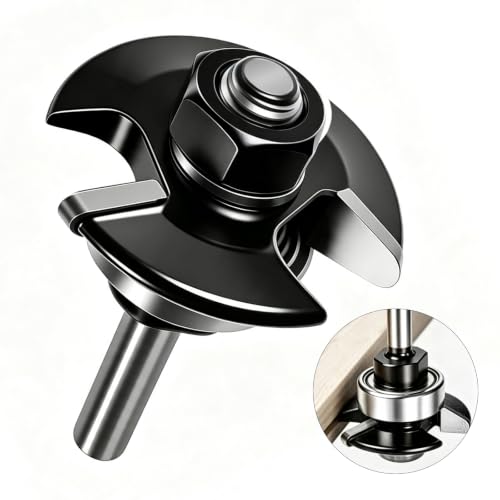 |
Router Bit Groove Cutter for Trex Decking Boards – 1/4"Mekfitcore | Pair with it | 1/4 in shank carbide triple wing bit | $53.49
Price as of 12 Oct 2026
|
View |
 |
75 Plugs Original Composite Decking Fiberon Deck –Generic | Also great | Sanctuary Latte composite decking plugs | $24.99
Price as of 12 Oct 2026
|
View |
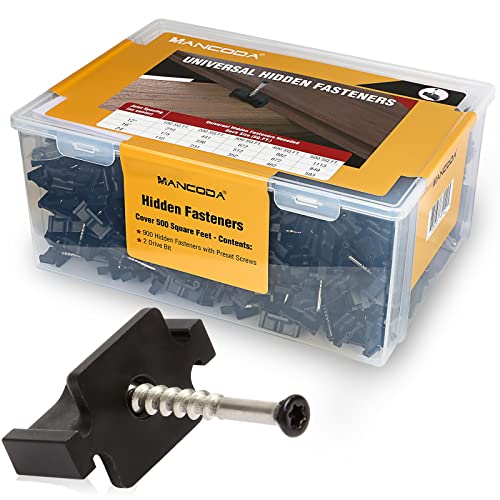 |
ManCoda Hidden Deck Fasteners for Composite Decking Board,ManCoda | Our pick | Universal hidden fasteners with stainless screws | $239.00
Price as of 12 Oct 2026
|
View |
 |
Hidden Deck Starter Clips 50Pack for Composite Decking withHengengood | Budget pick | Stainless steel starter clips 50-pack | $16.49
Price as of 12 Oct 2026
|
View |
The core trade-off is simple: capped composite usually gives better color stability and less upkeep than older uncapped boards, while PVC gives the strongest moisture resistance but often runs hotter in direct sun. Coastal success depends on matching the board to salt exposure, shade, ventilation, and the fastener system.
For a beachfront deck, the board is only half the system. Salt air attacks screws, clips, rail hardware, and cut edges, so the right fastener package can matter as much as the board brand.
How we chose
We compared coastal-suitable product lines by cap technology, moisture absorption behavior, fade and stain coverage, heat retention, slip texture, and fastening compatibility. We also looked at what the warranty actually covers in wet, sunny, salt-air conditions, because salt exposure can expose gaps in coverage that generic “low-maintenance” claims leave out.
The ranking changes by use case. A full-sun beachfront deck needs different priorities than a shaded bayfront dock or a humid inland patio a few miles from the water.
| Product line | Salt-air resistance | Fade and stain coverage | Moisture handling | Heat retention | Slip resistance | Recommended fastener or hardware |
|---|---|---|---|---|---|---|
| Trex Transcend Lineage | High for coastal use when paired with corrosion-resistant hardware | Strong fade and stain warranty positioning; verify registration and exclusions | Low water absorption for a capped composite; needs proper gapping and airflow | Moderate to warm in full sun, especially darker colors | Good on textured capped surfaces, but still clean algae and salt film regularly | Stainless steel or coastal-rated coated screws; follow hidden-fastener instructions |
| TimberTech AZEK | Very high for wet, salty sites because PVC does not absorb water like wood fibers do | Strong fade protection is a major selling point; lighter colors still age under UV | Excellent moisture resistance; useful where splash, rain, and shade create mildew risk | Can run hot in direct sun, especially on dark or dense colors | Varies by surface texture; cleaning matters more on shaded, wet areas | Corrosion-resistant fasteners and hardware compatible with PVC installation guidance |
| Fiberon Paramount | Good for humid coastal zones and frequent rain, less specialized for direct surf spray | Solid coastal-friendly warranty position; confirm color and finish terms | Strong moisture handling for damp climates; good fit where mold pressure is high | Usually more comfortable than darker PVC in direct sun, depending on color | Useful where decks stay damp, though wet traction still depends on cleaning | Stainless or coastal-rated fasteners; confirm hidden-clip compatibility before ordering |
Top picks at a glance by use case
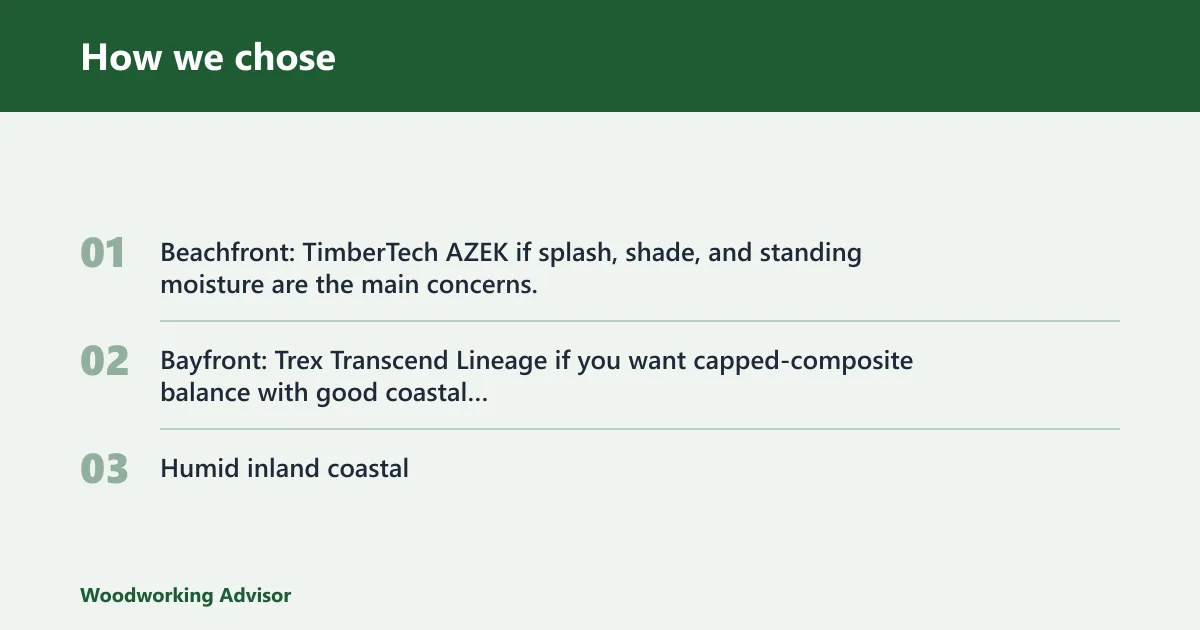
- Beachfront: TimberTech AZEK if splash, shade, and standing moisture are the main concerns.
- Bayfront: Trex Transcend Lineage if you want capped-composite balance with good coastal durability.
- Humid inland coastal: Fiberon Paramount if rain, humidity, and mildew pressure matter more than direct surf exposure.

Is capped composite better than PVC near the coast?
Capped composite is often the better all-around coastal choice when you want a realistic balance of price, color options, and moisture resistance. PVC is the stronger pick when water exposure is constant or the deck stays damp for long periods, but it can run hotter in full sun and may need more attention to barefoot comfort.
Capped composite: where it fits best
Capped composite uses a protective outer shell over a wood-fiber core. That shell helps resist stains, fading, and moisture better than older uncapped boards, which is why it is common on wet coastal decks. It still needs proper gapping, ventilation under the deck, and careful fastening so trapped moisture does not stay in the structure.
PVC: when full synthetic makes more sense
PVC decking is synthetic and generally has lower water absorption than wood-fiber composite. That makes it a strong answer for beachfront conditions, shaded splash zones, and decks that stay damp after storms. The trade-off is heat: in direct sun, PVC can feel hotter under bare feet than many capped composite boards.
Heat, slip, and color considerations for each
Dark colors absorb more heat on both materials, and lighter colors can still fade over time under strong UV. Slip resistance also depends on surface texture and cleaning; salt film, algae, and mildew reduce traction whether the board is composite or PVC. On a pool-adjacent coastal deck, a textured cap and regular washing matter as much as the brand name.
Trex Transcend Lineage: best for salt-exposed decks
Trex Transcend Lineage is a strong fit for bayfront and moderately exposed salt-air decks because capped composite gives you better stain and fade resistance than older uncapped boards, without moving all the way to PVC. It also works well when you want a familiar composite feel, paired with hidden clips and stainless fasteners that meet the manufacturer’s instructions.
What stands out is the coastal balance: low-maintenance surface behavior, broad installer familiarity, and a product family that is often specified with hidden-fastener systems. That matters because fastener corrosion is one of the first failures in marine air, and hidden clips still need stainless screws or coastal-rated coated hardware.
The drawback is that it is still a wood-fiber composite, so it is not immune to moisture cycling, mildew on shaded boards, or heat gain on dark colors. Buyers should also verify the exact fade and stain warranty terms, because registration steps and exclusions can affect coverage near the coast.
TimberTech AZEK: best for full-sun beachfronts
TimberTech AZEK is the safest premium choice when the deck sits in direct sun, takes wind-driven spray, and needs the best moisture resistance available in this group. PVC does not absorb water the way wood-fiber boards do, which makes it a good answer for beachfronts, bathhouse decks, and other highly exposed coastal builds.
What stands out is the moisture side of the equation. In damp, salty locations, lower water absorption helps reduce swelling, biological growth, and the kind of surface issues that show up on shaded boards after repeated wet-dry cycles.
The honest drawback is heat. PVC can run hotter than many capped composites in bright sun, so a south-facing beachfront deck may need lighter colors, shade, or footwear-friendly planning. Confirm the fastening method early, because hardware compatibility still depends on the installation guide and corrosion-resistant screws.
Fiberon Paramount: best for humid inland coastal homes
Fiberon Paramount is a practical fit for humid inland coastal homes where rain, shade, and mildew pressure matter as much as salt spray. In that setting, the deck spends more time damp than blasted by surf, so moisture handling and cleanup frequency become key buying criteria.
What stands out is its usefulness in a climate where algae and mildew show up first on shaded boards, stair treads, and north-facing sections. For those conditions, a capped or PVC-style product line with good moisture control usually performs better than older uncapped composites.
The drawback is that this type of deck still needs regular washing to keep slip resistance acceptable. Warranty details also need careful reading, because fade and stain coverage can differ by color and finish, and coastal homeowners should not assume every finish gets the same protection.
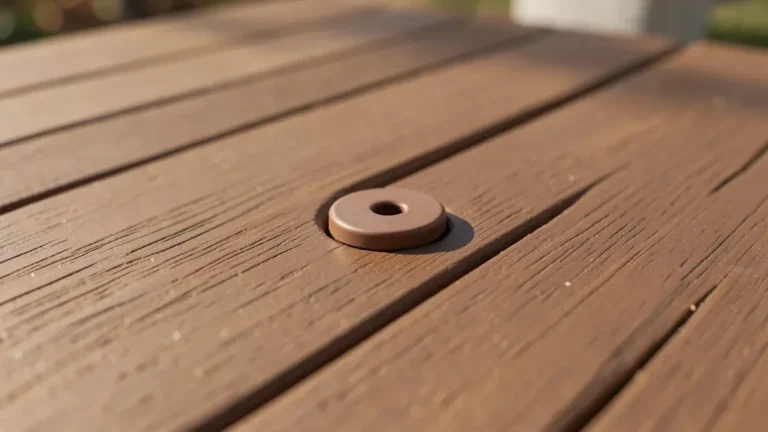
ManCoda hidden fasteners are a logical accessory when you are installing grooved composite boards and want a cleaner face with stainless screws already included. Hidden fastening is often preferred on coastal decks because exposed screw heads are one more place for corrosion to start.
What stands out is the included stainless steel screw package and the universal hidden-clip format for grooved decking. That is useful in salt air, where corrosion-resistant fasteners are not optional.
The drawback is that hidden systems still depend on correct board spacing, framing flatness, and manufacturer-approved edge grooves. If the deck is not framed and ventilated properly, hidden clips will not fix cupping, trapped moisture, or poor drainage.
Hengengood starter clips: best for first-row installation
Starter clips are a small part of the deck, but they matter on coastal builds because the first row sets the alignment for the whole layout. These stainless starter clips are useful where corrosion resistance and compatibility with grooved composite or hardwood edges are priorities.
What stands out is the stainless steel construction and the included screws and drive bits, which can simplify the first-course installation. In salt air, that corrosion resistance matters more than many homeowners expect.
The drawback is that starter clips do not solve bigger coastal problems such as poor ventilation, wrong slope, or improper gapping. They are only one piece of an installation that still needs marine-grade fastener choices and careful layout.
Which one should you buy?
Choose by exposure first, not by marketing language. Beachfront decks usually favor TimberTech AZEK because lower water absorption matters most where spray, humidity, and shade combine; bayfront decks often fit Trex Transcend Lineage because capped composite gives a good durability-to-heat balance; humid inland coastal homes can lean toward Fiberon Paramount when mildew pressure is the main problem.
Choose by budget next. Premium PVC costs more, but it is easier to justify where salt, water, and shade are constant. Midrange capped composite is often the smarter value when the deck gets strong sun but only occasional splash.
Then check the install system. Use stainless steel or coastal-rated coated screws, hidden clips only where the manufacturer allows them, and enough ventilation under the deck to dry the structure. Say your deck is 12 by 16 feet, sits 30 feet from the surf, and gets afternoon sun plus windblown salt; in that case, a capped or PVC board with corrosion-resistant hidden fasteners is the safer shortlist.
Choose TimberTech AZEK if…
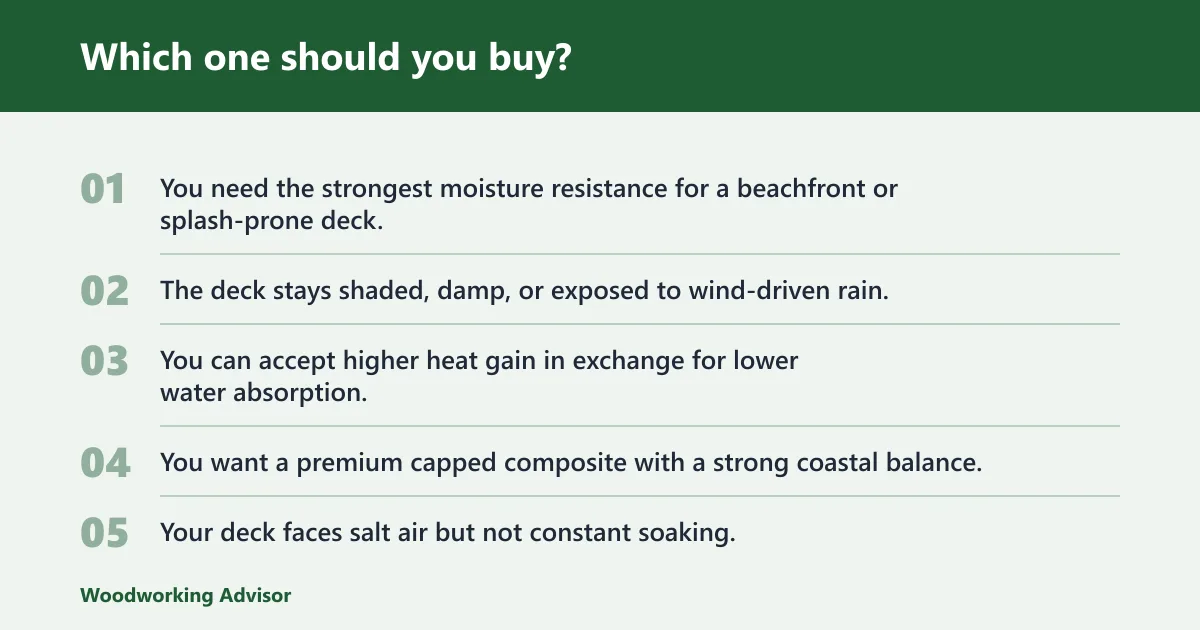
- You need the strongest moisture resistance for a beachfront or splash-prone deck.
- The deck stays shaded, damp, or exposed to wind-driven rain.
- You can accept higher heat gain in exchange for lower water absorption.
Choose Trex Transcend Lineage if…
- You want a premium capped composite with a strong coastal balance.
- Your deck faces salt air but not constant soaking.
- You want better barefoot comfort than many darker PVC installs can provide.
Choose Fiberon Paramount if…
- Humidity and regular rain are the bigger problems than direct surf exposure.
- You want a moisture-conscious option for shaded patios and inland coastal homes.
- You are willing to clean mildew-prone areas on a schedule.
Choose the accessory hardware if…
- You are using grooved boards and need hidden fastening.
- You want stainless components near salt water.
- You need a cleaner face on the deck and accept that installation accuracy still matters.
What is the best composite decking brand for coastal climates?
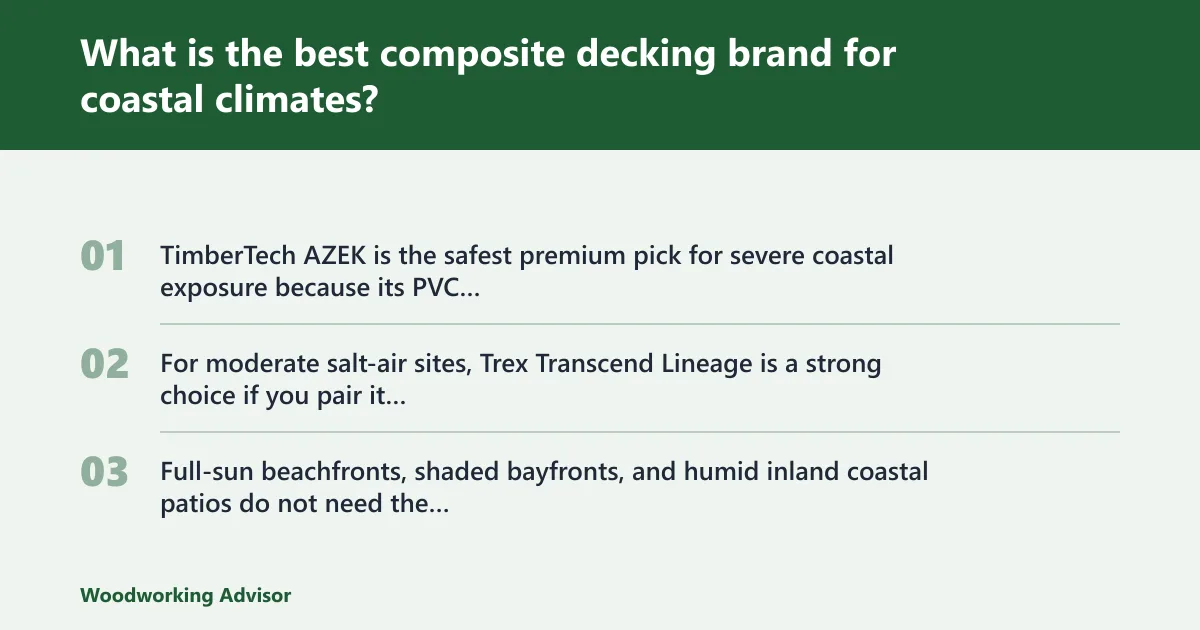
TimberTech AZEK is the safest premium pick for severe coastal exposure because its PVC construction handles water better than wood-fiber composite in persistent damp conditions. For moderate salt-air sites, Trex Transcend Lineage is a strong choice if you pair it with corrosion-resistant fasteners and follow the installation guide closely.
The best brand depends on exposure. Full-sun beachfronts, shaded bayfronts, and humid inland coastal patios do not need the same board.
Which composite decking holds up best in salt air?
PVC boards typically hold up best where salt spray, humidity, and wet conditions stay constant, because they absorb less water and resist moisture-related movement better. Among capped composites, higher-end product lines with strong cap technology and clear coastal hardware guidance usually perform better than older or lower-tier boards.
Salt air also attacks metal first. A deck can fail at the screws, clips, or rail hardware before the boards themselves show serious wear.
Does composite decking fade or stain faster near the ocean?
It can, especially on south- and west-facing decks with intense UV, salt film, and regular foot traffic. Capped composite resists fade and stain better than uncapped board stock, but light colors still change over time, and dark boards can show heat-related wear more quickly in bright sun.
Regular washing helps stop that build-up. It also removes salt residue that can hold grime and feed mildew on shaded boards.
What decking brands have the best moisture and mold resistance?
PVC product lines generally offer the strongest moisture resistance, followed by high-quality capped composites with dense cores and reliable caps. In humid coastal zones, the difference shows up most on shaded steps, low-slope areas, and boards that dry slowly after storms or irrigation overspray.
Mold resistance still depends on cleaning. Even the best board will grow surface grime if salt, pollen, and moisture sit for weeks.
Is capped composite better than uncapped near the coast?
Yes. Capped composite is usually the better coastal choice because the outer shell improves stain and fade resistance and helps limit water uptake at the surface. Uncapped boards are more vulnerable to moisture, staining, and color change, which makes them a weaker pick for salt-air exposure.
That said, capped boards still need correct gapping and ventilation. If water cannot drain and air cannot move, the deck will still age poorly.
Which composite decking has the longest warranty in humid climates?
Warranty length varies by brand, product line, and color, and the longest structural term is not always the best coastal warranty. What matters most is fade and stain coverage, whether registration is required, and whether salt-air or marine exclusions limit protection in your exact setting.
Read the fine print. A long structural warranty does not help much if the finish coverage is short or the installation conditions were not followed.
How much maintenance does coastal composite decking need?
Less than wood, but not zero. Coastal decks still need regular washing, inspection of hidden fasteners and rail hardware, and prompt cleaning of mildew, salt film, pollen, and food stains. Shaded decks and pool-adjacent decks often need more frequent attention than sunny, open-air decks.
A common first-timer mistake is waiting until the deck looks dirty. By then, salt residue and mildew may already be affecting traction and appearance.
Should I choose PVC instead of composite for a beachfront deck?
Often yes, if the deck sits in full exposure, gets blown salt, or stays wet after storms. PVC is a strong beachfront choice because of its low water absorption, but you should plan for higher heat in direct sun and confirm that the selected color will still feel comfortable underfoot.
If the deck gets strong sun but only occasional splash, a premium capped composite may be the better balance of heat, cost, and coastal durability.
Sponsored / affiliate links. As an Amazon Associate I earn from qualifying purchases. I may earn additional commission from eligible campaigns.