Best Deck Screws for Pressure Treated Wood 2026: we compared
For pressure-treated decking, buy 316 stainless for coastal decks, 305 stainless for humid inland decks, and AC257-certified coated screws for dry inland budgets if the package clearly says they are rated for treated wood. Wrong screws corrode, stain the wood, and loosen deck boards faster than the deck should age. This guide tells you exactly which material and length to buy by climate and board thickness.
Quick comparison
| Product | Badge | Best for | Price | ||
|---|---|---|---|---|---|
 |
#10 x 2-1/2" Stainless Steel Wood Screws,304HC3 ExteriorYOKUSO | Budget pick | #10 × 2-1/2" · 80 pcs · 304 stainless | $20.92
Price as of 13 Oct 2026
|
View |
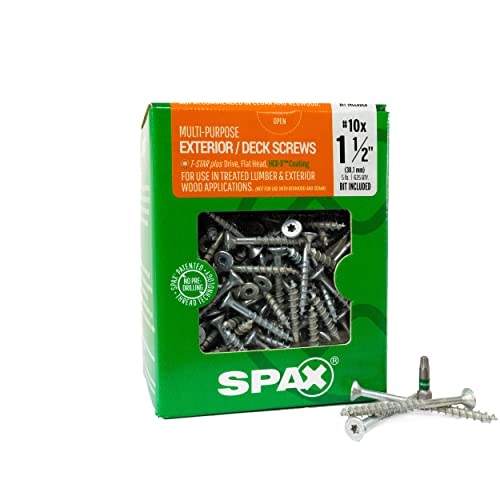 |
SPAX #10 x 1-1/2" Exterior Flat Head Deck Wood ScrewsSPAX | Best value | #10 × 1-1/2" · 625 pcs · HCR coated | $62.99
Price as of 13 Oct 2026
|
View |
 |
Simpson Strong-Tie T10250WP1 Deck-Drive DWP Wood SS Screw.Simpson Strong-Tie | Upgrade pick | #10 × 2-1/2" · 1 lb · Type 316 stainless | $32.91
Price as of 13 Oct 2026
|
View |
 |
The Hillman Group 47689 8-Inch x 2-1/2-Inch Galvanized DeckHillman | Most affordable | Galvanized · 2-1/2" · 1 lb | $10.82
Price as of 13 Oct 2026
|
View |
 |
#10×2-1/2 Inch 304 Stainless Steel Deck Screws 500 PCS –RVSurve | Our pick | $56.99
Price as of 17 Oct 2026
|
View |
316 stainless is often the safest default near salt air. For many inland decks, 305 stainless is a practical all-around upgrade, and AC257-certified coated screws can be the budget choice when the label says they are compatible with treated wood.
How we chose
We compared four things: corrosion resistance against ACQ pressure-treated lumber, screw length for 5/4 and 2x decking, drive style that resists cam-out, and whether the package clearly states treated-wood compatibility. That last point matters. If the box does not say AC257 or treated-wood compatible, skip it.
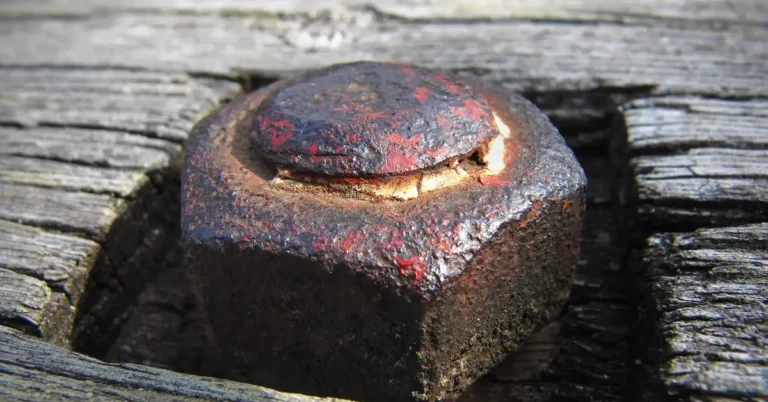
ACQ pressure-treated lumber uses copper-based treatment, and copper in the treatment reacts electrolytically with the coating on ordinary screws. Standard zinc-plated screws can corrode within a season in ACQ pressure-treated lumber, and wrong fasteners can leave rust streaks and fail in 2-3 years.
A good deck screw should seat cleanly with steady pressure. Star-drive and square-drive heads move torque better than common slotted or Phillips heads, which helps reduce cam-out and stripping during installation.
305 stainless steel screws: best for humid inland decks
Choose 305 stainless when your deck sees humidity, shade, or frequent wet-dry cycles but not constant salt spray. As a 300-series stainless option, it gives strong corrosion resistance for exterior wood use, and it is a smarter long-term move than coated screws when the deck sits in a damp inland climate.
This YOKUSO #10 x 2-1/2 inch 304 stainless screw is a close compare point for that use case. It has a Torx drive that helps control cam-out, and the reinforced core helps reduce breakage. The drawback is simple: 304 stainless is not the same as 305 or 316, so buyers should not treat every stainless screw as equal for treated lumber or coastal exposure.
Best fit: inland decks with humidity, covered porches, and projects where you want stainless without paying for marine-grade 316 on every board.
316 stainless steel screws: best for coastal decks
Use 316 stainless when the deck lives near salt air, tidal moisture, or any coastal exposure where corrosion risk stays high year-round. It is the safest long-term choice for treated lumber because 316 resists corrosion better than coated options and is the stronger pick when failure would be expensive or hard to repair.
The Simpson Strong-Tie T10250WP1 is a strong example: #10 x 2-1/2 inch, Type 316, with a T25 drive and flat head. Based on the spec sheet and reviews, the box-thread design helps reduce driving torque, and the 6-lobe drive helps limit cam-out. The drawback is cost; 316 usually costs more than coated deck screws.
Best fit: seaside decks, docks, barrier-island projects, and treated boards that will see long service life under salty air.
AC257-certified coated screws: best for budget builds
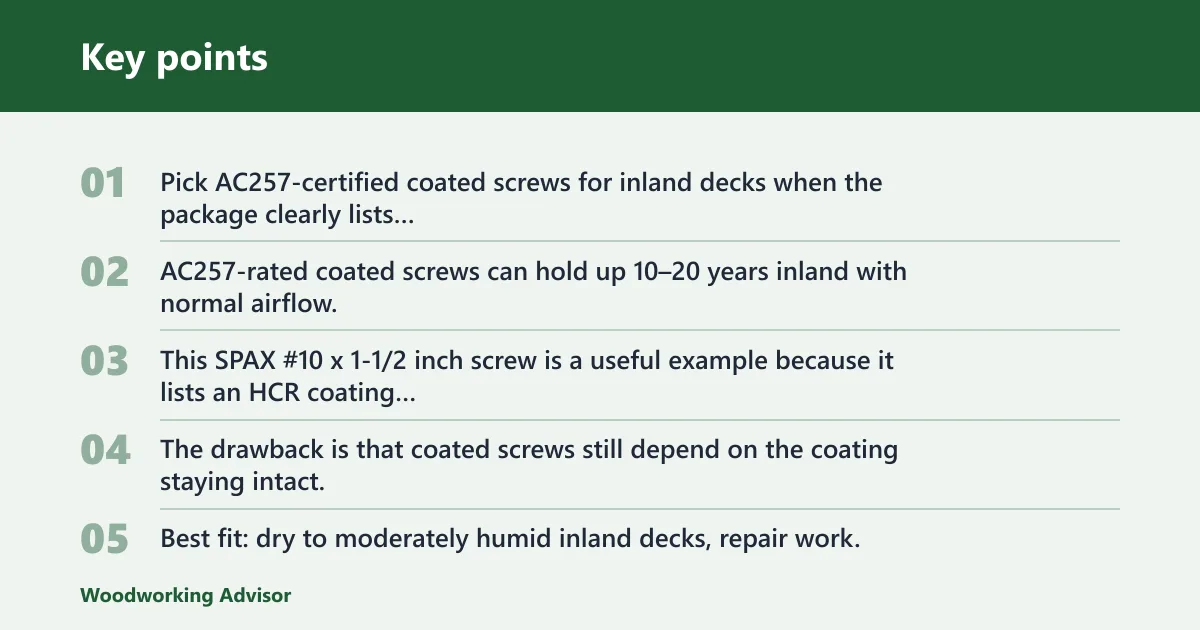
Pick AC257-certified coated screws for inland decks when the package clearly lists treated-wood use and the project needs a lower upfront cost than stainless. AC257-rated coated screws can hold up 10–20 years inland with normal airflow, which makes them a practical budget option for many backyard decks away from salt exposure.
This SPAX #10 x 1-1/2 inch screw is a useful example because it lists an HCR coating rated for pressure-treated lumber, a Torx drive, and a self-drilling point that helps reduce splitting. The drawback is that coated screws still depend on the coating staying intact, so they are less forgiving than stainless in wet or coastal conditions.
Best fit: dry to moderately humid inland decks, repair work, and projects where price matters but the label still proves treated-wood compatibility.
What screw length do you need for pressure-treated decking?

For many 5/4 pressure-treated decking applications, about 2-1/2 inch screws are a common choice. For many 2x boards, a roughly 3-inch screw is often a safer starting point because board thickness affects how much fastener length remains for joist engagement. A shorter screw can hold the board, but it must still bite into the joist enough to stay secure.
Do not blur board thickness with screw length. A 1-inch board and a 1-1/2-inch board need different fastener reach, and the goal is not to max out length. The goal is enough penetration into the framing without wasting money on excess length or creating a split at the board face.
2-1/2 inch screws for most 5/4 decking
Most 5/4 boards are close to 1 inch thick in common deck-use language, so 2-1/2 inch screws usually give a workable balance between hold and ease of driving. They are long enough for standard deck fastening while leaving useful thread engagement in the joist below.
3 inch screws for many 2x boards
Many 2x deck boards are about 1-1/2 inches thick, so 3 inch screws are the better match. Say your deck uses 2x lumber on a humid patio edge. A 2-1/2 inch screw may feel secure during install, but a 3 inch screw gives more margin for joist bite.
Why joist penetration matters
Deck screws must reach beyond the board and into the joist. If the screw is too short, boards can loosen with seasonal movement. If it is too long, you may create unnecessary breakout below the framing or make installation harder than needed.
Buying matrix for inland, humid, and coastal decks
This is the one-page buying matrix that turns climate and board thickness into a fast purchase decision. Use it before you buy, and check the package against the labels listed here. If the box does not pass the checklist, do not substitute a similar-looking screw.
| Environment | Board thickness | Recommended screw material | Recommended length | Risk level |
|---|---|---|---|---|
| Dry inland deck | 5/4 decking | AC257-certified coated screw | 2-1/2 inch | Low if labeled for treated wood |
| Dry inland deck | 2x decking | 305 stainless or AC257-certified coated screw | 3 inch | Low to moderate |
| Humid inland deck | 5/4 decking | 305 stainless | 2-1/2 inch | Low |
| Humid inland deck | 2x decking | 305 stainless | 3 inch | Low |
| Coastal or salt-air deck | 5/4 decking | 316 stainless | 2-1/2 inch | Very low |
| Coastal or salt-air deck | 2x decking | 316 stainless | 3 inch | Very low |
Package-label yes/no checklist
- Does the package say treated-wood compatible or AC257?
- Does it list 305 stainless, 316 stainless, or an approved coated system?
- Does the head style resist cam-out, such as star-drive or square-drive?
- Does the length match your board thickness: 2-1/2 inch for most 5/4 boards, 3 inch for many 2x boards?
- Does the product avoid bare zinc, generic zinc-plated, or unlabeled “exterior” claims only?
Should I use stainless steel or coated deck screws?
Use stainless steel when corrosion resistance matters more than price, especially near humidity or salt air. Use AC257-certified coated screws when the deck is inland, the package clearly lists treated-wood use, and the lower price matters. Do not treat any coating as interchangeable unless the label proves it.
Picture a shaded backyard deck built with ACQ lumber and 5/4 boards. A coated screw with the correct treated-wood rating can be a reasonable buy. Picture the same deck a few miles from salt water, and stainless becomes the safer choice because the coating margin disappears faster there.
What are the best deck screws for pressure treated wood?
A practical deck-screw choice for pressure-treated wood is 316 stainless for coastal sites, 305 stainless for humid inland sites, and AC257-certified coated screws for inland budgets when the package says they are approved for treated lumber. Stainless is the safest long-term choice, while coated screws are the value pick only when labeling is explicit.
Based on the spec sheet and reviews, the SPAX #10 x 3 inch Stainless Steel Deck Screw is the best overall pick here. It is a German-engineered 300-series stainless star-drive screw, which makes it a strong all-around option when you want corrosion resistance, torque control, and enough length for common decking.
The drawback is price, and the 3-inch length is not ideal for every board. On thin stock, that extra length may be more than you need.
Which one should you buy?
For a budget inland deck, start with AC257-certified coated screws that clearly say they are rated for treated lumber. For a humid or shaded deck, buy 305 stainless and match the length to the board thickness. For a coastal or salt-air deck, choose 316 stainless and do not compromise on the label.
If you are buying for 5/4 decking, look first at 2-1/2 inch screws. If you are fastening many 2x boards, move to 3 inch screws. If a project calls for structural connection strength, do not assume a standard deck screw is enough; use structural screws only when the code, engineer, or manufacturer specifies them.
A common first-timer mistake is buying generic “exterior” screws because the box looks similar. A 2×12 pressure-treated step board on a damp side yard may hold for a while, then show rust streaks near the heads and loosen after repeated wet-dry cycles. That is the wrong fastener doing exactly what it tends to do.
How to install treated decking without splitting or stripping
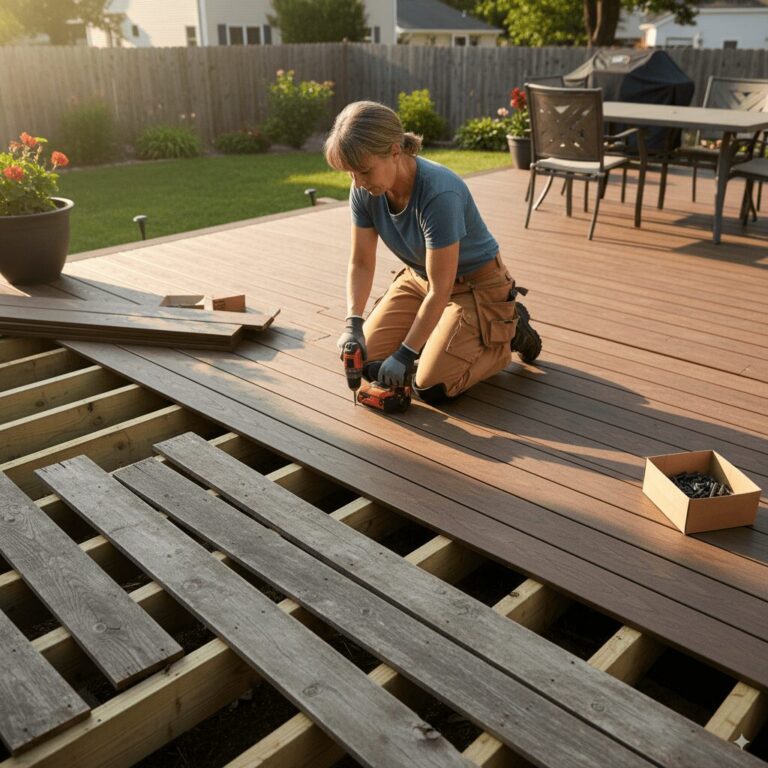
Pre-drill near board ends, in dense stock, and anywhere the screw is close to the edge. Countersinking helps the head sit flush and reduces raised fibers around the fastener. These steps matter more on treated lumber because the wood can be wet, dense, or uneven in moisture content.
Use a drive style that resists cam-out. Star-drive and square-drive heads are common for exterior decking because they transfer torque better than basic heads. Stop driving when the head seats flush. Overdriving can crush fibers and weaken the holding power.
For dense boards, pilot holes can also reduce breakage. That matters with longer screws and with treated stock that has dried unevenly after purchase.
Can I use regular screws on pressure-treated wood?
No. Regular steel and generic zinc-plated screws are a bad fit for pressure-treated lumber because ACQ treatment contains copper, and that copper reacts with the coating. Standard zinc-plated screws can corrode within a season in ACQ pressure-treated lumber, which can lead to rust streaks, stripping, and early failure.
Are galvanized screws okay for pressure-treated lumber?
Sometimes, but only when the exact product label proves treated-wood compatibility. Galvanized fasteners are not a universal answer, and compatibility depends on the coating system and the label. If the package does not clearly state treated-wood use, AC257, or an equivalent approved rating, do not assume it is acceptable.
Frequently asked questions
Are deck screws good for pressure treated wood?
Yes, if they are corrosion-resistant and labeled for treated lumber. The right choices are 305 stainless, 316 stainless, or AC257-certified coated screws. Bare zinc and generic screws are poor choices because ACQ pressure-treated lumber can corrode them quickly and leave visible stains.
What screws do I use for pressure treated wood?
Use 316 stainless near salt air, 305 stainless for humid inland decks, and AC257-certified coated screws for budget inland projects with clear treated-wood labeling. Match the length to the board thickness: 2-1/2 inch for most 5/4 decking and 3 inch for many 2x boards.
Do you need special screws for pressure treated wood?
Yes. Pressure-treated lumber needs corrosion-resistant fasteners because the treatment chemistry can attack ordinary coatings. The package should explicitly say treated-wood compatible or show AC257-type compliance. Do not rely on generic “interior/exterior” language.
Should I pre-drill pressure-treated decking before screwing it down?
Pre-drill near ends, in dense boards, and wherever splitting is a risk. Countersinking helps the head sit cleanly and reduces tear-out around the screw. On wider boards with plenty of distance from the edge, pilot holes may be optional if the screw has a self-drilling point.
What size screws are best for 2x deck boards?
For many 2x deck boards, 3 inch screws are the better match because the extra board thickness needs more fastener reach. The exact choice still depends on the framing below, but 3 inch is the practical starting point for 2x pressure-treated decking.
what screws do i use for pressure treated wood
Use corrosion-resistant deck screws made for treated lumber, not generic screws. Start with 316 stainless for salt air, 305 stainless for humid inland areas, and AC257-certified coated screws for inland budgets. Then match length to the board: 2-1/2 inch for most 5/4 decking and 3 inch for many 2x boards.
Sponsored / affiliate links. As an Amazon Associate I earn from qualifying purchases. I may earn additional commission from eligible campaigns.