Best Deck Sealer for High-Traffic Areas
For high-traffic wood decks, the best sealer is a penetrating, low-build exterior sealer with water repellency, UV inhibitors, and abrasion resistance; if wear is concentrated on stairs and entry paths, recoat those zones first rather than choosing by brand. If you ignore traffic wear, the finish fails at the steps, door landing, and furniture zones first, leaving bare wood to gray, splinter, and absorb moisture. This guide shows how to match sealer type to traffic patterns, compare oil-based and water-based options, and spot products that hold up under foot traffic.
Best deck sealer for busy decks



The top pick for mixed traffic is Seal-Once Marine Premium Wood Sealer, which Bob Vila lists as the best overall pick and as a water-based formula that needs two coats. For pressure-treated boards, Thompson’s WaterSeal Transparent Wood Sealer is the pressure-treated wood pick, while Rust-Oleum Varathane Spar Urethane Deck Sealer is the best bang for the buck pick and is listed as oil-based with two to three coats.
Best overall for mixed traffic
Seal-Once Marine Premium Wood Sealer fits decks that see daily foot traffic, moved chairs, and steady sun. A water-based sealer like this usually means faster cleanup and lower odor, which matters on walkable decks where you do not want lingering fumes near doors or windows.
Best for stairs and walkways
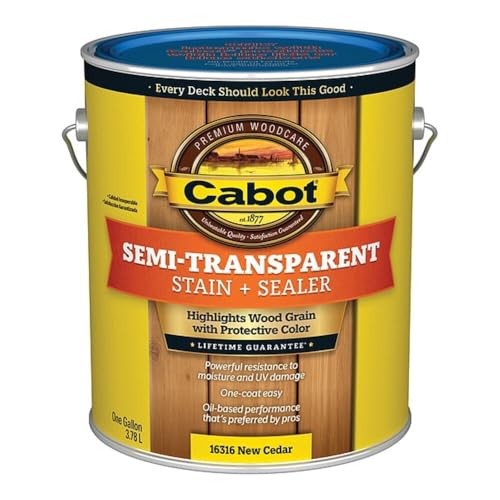
For stairs, door thresholds, and main walk paths, the best choice is usually a penetrating sealer with a low film build, because scuffs show less than on a hard surface coat. Cabot Australian Timber Oil is specifically recommended by the Ontario article for high-traffic decks, and it is described there as resisting scuffing from furniture, foot traffic, and snow shoveling.
Best for pressure-treated wood
Thompson’s WaterSeal Transparent Wood Sealer is the pressure-treated wood pick, and it is listed as water-based with one coat, or two for deeper color. That makes it a practical choice when you want quick coverage on treated pine, but you still need to check wood moisture before sealing so you do not trap water in the board.
Best for older weathered boards
Older decks usually need a product that tolerates rough surfaces and does not depend on a thick film to do the work. An oil-based penetrating formula is often easier to manage on weathered boards because it can soak into dry wood fibers better than a surface coating, but the wood must still be dry enough to accept it.
Quick picks
These picks line up with common high-traffic needs rather than brand reputation alone. Match the formula to the wear zone first, then to your cleanup, drying, and recoat schedule.
- Water-based pick: Seal-Once Marine Premium Wood Sealer. Good when you want lower odor, faster cleanup, and a walkable surface with UV and moisture protection.
- Oil-based pick: Rust-Oleum Varathane Spar Urethane Deck Sealer. Better when you want deeper penetration and can wait through a longer drying window.
- Clear sealer pick: Olympic Maximum Oil-Based Clear Waterproofing Sealant. Presented as best for longevity, with a clear look that leaves more grain visible but gives up some UV protection compared with tinted formulas.
- Pressure-treated pick: Thompson’s WaterSeal Transparent Wood Sealer. A straightforward option for treated boards when moisture has dropped enough to seal.
High-traffic deck sealer decision table
This table turns wear patterns into a maintenance decision. A product that lasts on a quiet back corner may fail quickly on stairs, grill stations, or a furniture drag lane.
| Traffic zone | Common failure risk | Recommended sealer type | Expected recoat window | Estimated cost per 100 sq ft |
|---|---|---|---|---|
| Main walkway | Scuff wear, sheen loss, tracked dirt | Penetrating water-based or oil-based sealer | 12 to 24 months, sooner in full sun | $25 to $55 |
| Stairs | Abrasion on edges, worn tread noses, slip risk | Penetrating sealer plus slip resistance additive | 6 to 12 months | $30 to $65 |
| Dining area | Chair drag marks, water rings, dull patches | Water-based low-build sealer or tinted penetrating sealer | 12 to 18 months | $25 to $60 |
| Grill zone | Heat exposure, grease spots, repeated cleaning | Oil-based penetrating sealer with UV resistance | 9 to 15 months | $30 to $70 |
What a deck sealer does under heavy foot traffic
Unsealed wood takes damage from sun, rain, snow, and repeated walking. A good sealer helps reduce cracking, splintering, fading, and rot by slowing moisture uptake and sun damage, but traffic zones fail faster than open boards because shoes, chairs, and cleaning tools wear the surface first.
Where finishes wear first
Wear usually starts at door thresholds, stair treads, the outer edge of landings, and the lanes people take most often from house to yard. Grill areas also fail early because they get foot traffic, grease cleanup, and heat exposure in the same small zone.
Scuff wear versus peeling
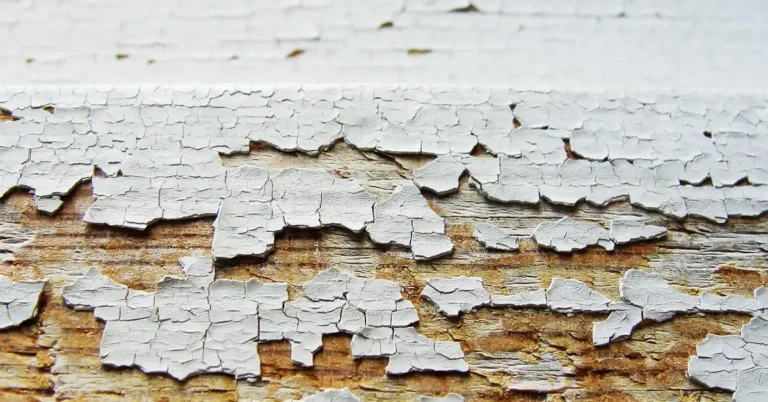
Scuff wear shows up as dull spots, thin patches, and loss of color before the wood looks bare. Peeling is different; it points to a film-forming product that has lost adhesion, often because the surface moved, held moisture, or got too much wear for a hard coating.
Why traffic zones fail faster than open boards
Open boards can keep a fresh look longer because they are not receiving the same abrasion. Stairs, dining areas, and furniture drag lanes get repeated pressure, so the finish there should be chosen for maintenance timing as much as appearance.
Which sealer type fits your deck?
The best sealer type depends on how the deck wears, not only on whether water beads on day one. A film that looks good on a low-use patio can fail early on stairs or a path to the grill.
Water-based deck sealer
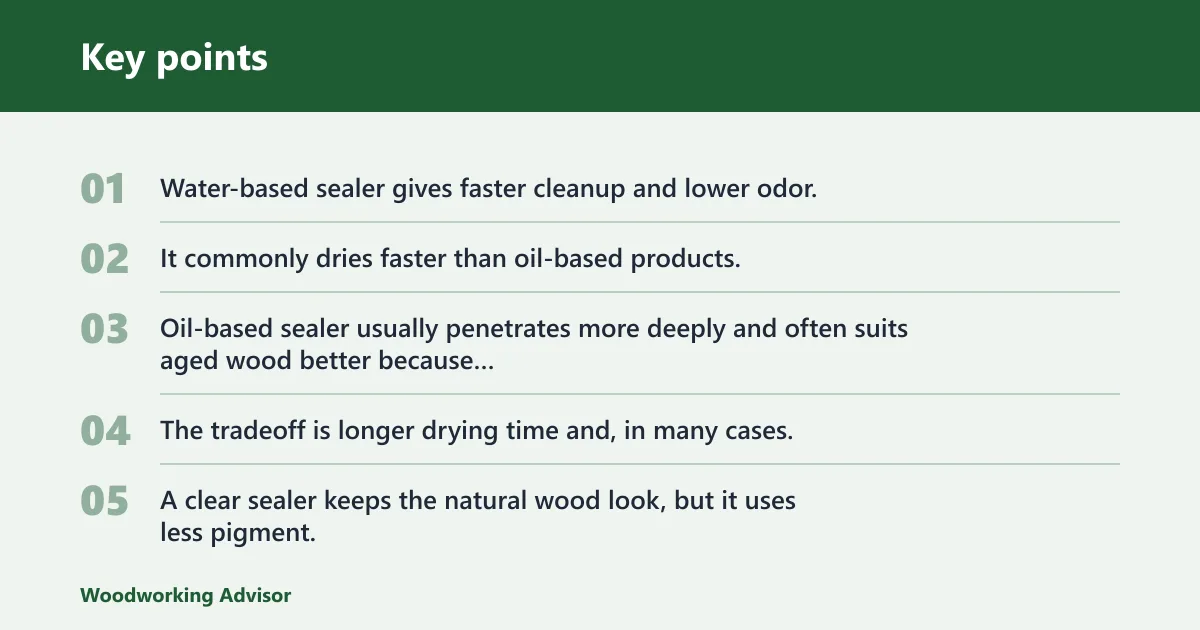
Water-based sealer gives faster cleanup and lower odor, so it fits walkable decks where you want less disruption. It commonly dries faster than oil-based products, and it is a practical choice when you need UV and moisture protection without a long shutdown period.
Oil-based deck sealer
Oil-based sealer usually penetrates more deeply and often suits aged wood better because it can reach into dry fibers. The tradeoff is longer drying time and, in many cases, a longer maintenance interval only when the deck is kept out of heavy wear and standing moisture.
Clear sealer
A clear sealer keeps the natural wood look, but it uses less pigment, so UV protection is usually weaker than with tinted options. On a high-traffic deck, clear products can be fine in shaded areas, yet sun-exposed boards usually need more frequent recoat timing.
Penetrating sealer versus film-forming sealer
Penetrating sealer soaks into wood fibers and leaves less surface film, so it wears more evenly on traffic lanes. Film-forming sealer creates a top coating with better abrasion resistance at first, but once it breaks down, it can peel in sheets and needs more prep before recoating.
Say the deck has a path about 4 feet wide from the kitchen door to the steps, plus two chairs that get moved about twice a day. That path should get the most wear-focused product and the earliest recoat, even if the rest of the deck still looks acceptable.
How do you choose for your deck?
Start with wood type, then check moisture, then decide whether you want color, traction, or easy maintenance. For high-traffic areas, the right product is the one you can recoat on schedule without full stripping.
Pressure-treated wood checks
Pressure-treated wood needs dry-down time before sealing. If the boards still hold construction moisture, the sealer can trap that moisture and shorten coating life, especially at end grain, stair noses, and board edges.
Moisture meter reading before sealing
A moisture meter gives you a wood moisture percentage before you commit to the finish. Most manufacturers want wood that is dry enough to seal without trapping water, so a reading that is still high should send you back to dry-down, not straight to the pail.
Tinted versus clear finish
On a busy deck, tinted sealer usually outlasts clear sealer in sun because pigment blocks more UV. Clear is the better look if you want bare wood appearance, but tinted is the safer choice where fading and surface wear happen faster.
Slip resistance additive choice
For stairs and wet walkways, add a slip resistance additive made with fine polymer grit or aluminum oxide-type grit, following the label rate. The goal is extra traction when wet without creating a rough surface that traps dirt or makes cleaning harder.
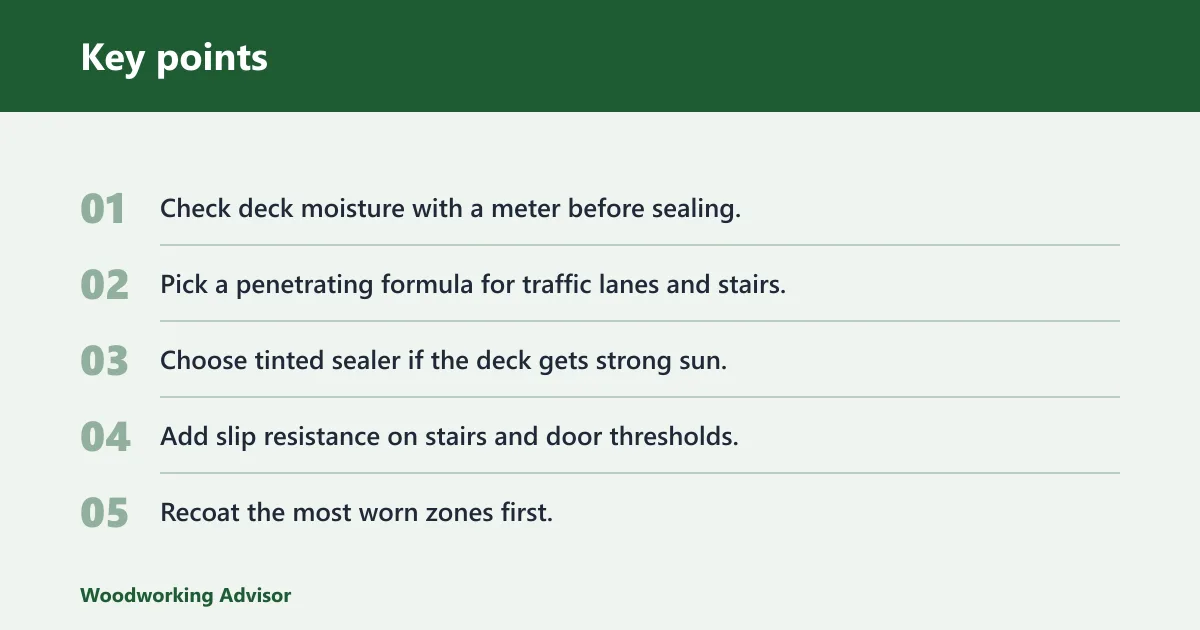
- Check deck moisture with a meter before sealing.
- Pick a penetrating formula for traffic lanes and stairs.
- Choose tinted sealer if the deck gets strong sun.
- Add slip resistance on stairs and door thresholds.
- Recoat the most worn zones first.
How often should a high-traffic deck be resealed?
High-traffic decks usually need earlier recoat timing than low-use decks, especially on stairs, thresholds, and sun-exposed boards. Water-based products often fit faster maintenance cycles, while oil-based formulas may last longer in sheltered zones if the wood stays dry.
Recoat timing by sealer type
For busy decks, plan on roughly 6 to 12 months for stairs and other hard-wear spots, and about 12 to 24 months for the main walkway when the finish is still intact. The Ontario article says Thompson’s WaterSeal is better for low-traffic decks and needs yearly reapplication in high-traffic areas.
Signs the finish is failing
Watch for dull patches, water no longer beading evenly, color loss on the tread edges, and rough fibers lifting underfoot. If a film-forming product starts to flake, treat that as peeling, not normal wear, and plan for more prep before the next coat.
How sun and water shorten the interval
Full sun shortens recoat timing because UV breaks down the finish and bleaches pigment. Standing water, snow melt, and shaded mildew-prone corners also shorten the interval because moisture lingers on the surface and keeps the coating under stress.
Suppose a landing of about 200 sq ft sits over the backyard steps and gets afternoon sun. Even a strong sealer can need a touch-up on the tread edges before the shaded rear board field needs anything, because the traffic pattern is doing the damage first.
How much deck sealer do you need?
Coverage depends on wood porosity, coat count, and waste, so the safest plan is to estimate by square footage and then add margin for thirsty boards and stair rails. For a typical deck, one gallon may not be enough once you account for two coats or for rough, weathered wood.
Coverage per 100 sq ft
Most deck sealers list coverage by the surface condition of the wood, but a practical buying method is to budget per 100 sq ft and then multiply by the number of coats. Rough or older boards usually soak up more product than smooth, newer lumber.
Coat count and waste allowance
Bob Vila lists Seal-Once as needing two coats, Rust-Oleum Varathane as needing two to three coats, and Thompson’s WaterSeal Transparent Wood Sealer as needing one coat, or two for deeper color. Add a small waste allowance for brush loading, corners, and rail posts, especially on stair-heavy decks.
Cost estimate by traffic zone
Using the table above, a main walkway may run about $25 to $55 per 100 sq ft, while stairs often cost more because of extra edges and a slip additive. That difference matters because the most abused areas often need the shortest recoat window, not the cheapest label.
Frequently asked questions
What is the longest lasting deck sealer?
For longevity, Olympic Maximum Oil-Based Clear Waterproofing Sealant is presented as best for longevity. That does not mean it is best for every deck; clear products often give up some UV protection, so a sun-heavy deck may still need earlier maintenance than a tinted penetrating sealer.
What is the best sealer for pressure treated decks?
Thompson’s WaterSeal Transparent Wood Sealer is the pressure-treated wood pick and is listed as water-based. It is a straightforward choice when the boards have dried enough to seal, and it can be a better fit than a heavy film on a deck that sees regular foot traffic.
What deck sealer lasts longest on a busy deck
The longest practical life on a busy deck usually comes from a penetrating oil-based sealer in the hardest-worn zones, because it handles scuffing better than a brittle film. On stairs and walkways, durability also depends on recoat timing; no coating lasts well if it is left past its maintenance window.
Should I use a clear sealer or a tinted deck sealer on a high-traffic deck?
Tinted sealer is usually the safer choice for high-traffic decks because pigment improves UV protection and helps hide early wear. Clear sealer keeps the natural look, but it tends to need more frequent recoating on sun-exposed boards and in traffic lanes that dull quickly.
How often should a high-traffic deck be resealed: plan on about 6?
Plan on about 6 to 12 months for stairs, thresholds, and other hard-wear zones, and about 12 to 24 months for less abused areas if the finish still beads water and looks even. Full sun, standing moisture, and chair drag shorten those intervals.
Which deck sealer is easiest to apply on an older deck?
Eco Advance Exterior Wood Water Repellent Concentrate is presented as easiest to use, and water-based formulas are often simpler to clean up on older boards. For weathered wood, the easier application is still the one that matches the wood’s moisture level and does not leave a thick film that later peels.
What features matter most in a deck sealer for stairs and walkways
For stairs and walkways, look for abrasion resistance, good water repellency, UV protection, and a low-build finish that does not peel. Add a slip resistance additive where surfaces get wet, and favor products that can be recoated in zones instead of forcing a full-strip refinish.
Sponsored / affiliate links. As an Amazon Associate I earn from qualifying purchases. I may earn additional commission from eligible campaigns.