Wood Glue vs CA Glue for Small Repairs: Which to Use
Use CA glue for tiny cosmetic fixes, hairline chips, and edge splits that need instant set; use wood glue for joints or repairs that must hold long term, especially if the piece will be loaded. Pick wrong, and the repair can print through, fail under stress, or crack again after a few seasons. This guide gives a repair-first decision matrix, plus when each glue wins on speed, strength, and cleanup.
Wood glue vs CA glue for small repairs: the fast choice is not always the right one


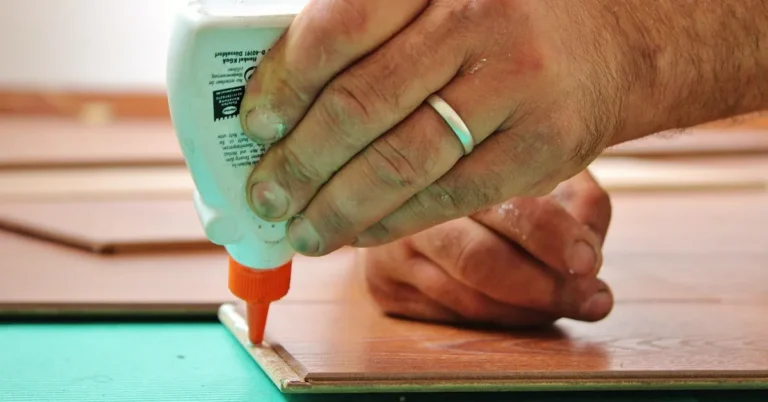
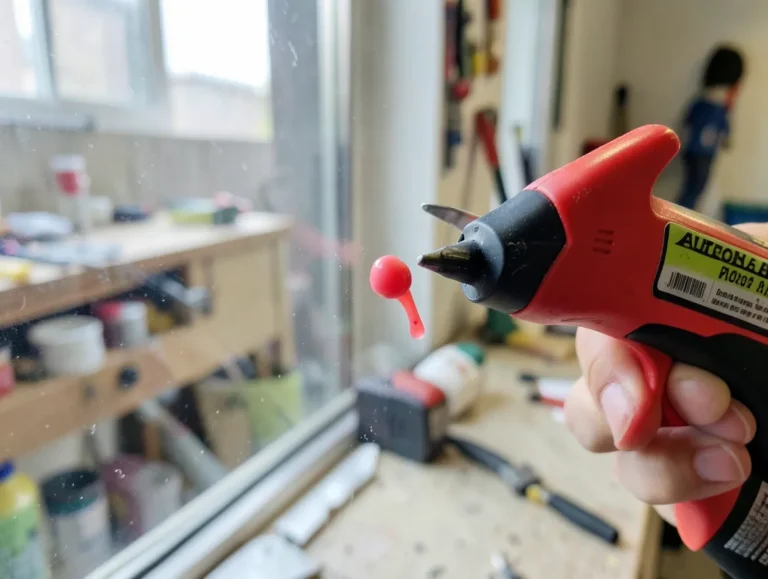
CA glue and PVA wood glue are used for different repair problems. CA glue is an instant-bond adhesive for quick fixes, tiny cracks, and cosmetic work where clamp time is limited. PVA wood glue is the standard woodworking adhesive for wood-to-wood joints that need more assembly time and a better long-term bond.
The real trade-off is speed and precision versus joint quality and working time. For small repairs, that usually means CA glue wins on fast cosmetic stabilization, while wood glue wins when the repair behaves like a real joint.
| Decision factor | Wood Glue | CA Glue for Small Repairs | Winner |
|---|---|---|---|
| Bond speed | Slower assembly and clamp time | Instant bond, with one product copy listing 30-60 second drying time and 24-hour full cure | CA Glue for Small Repairs |
| Best fit for small cosmetic fixes | Works, but usually more cleanup and waiting | Better for hairline cracks, tiny chips, and in-place touch-ups | CA Glue for Small Repairs |
| Wood-to-wood bond for load-bearing repairs | Better baseline for joints and furniture repair | Useful in some micro-repairs, but not a substitute for a real joint | Wood Glue |
| Gap filling | Limited in small voids; prefers close-fitting joints | Thick CA is gap-filling for woodworking, but still limited compared with structural repair | Tie |
| Visible-surface cleanup | Usually easier to sand after cure | Higher risk of shine, residue, and finish cleanup trouble if overused | Wood Glue |
Bond speed
CA glue is the fastest choice I reach for. One product is described as an “instant bond” adhesive, and another lists a “30-60 second drying time,” with full cure at 24 hours. Wood glue asks for more patience, because the joint usually needs clamp time and then a full cure window.
Best fit for small cosmetic fixes
Small cracks, chipped corners, and loose veneer patches favor CA glue because the adhesive can be placed precisely and set fast. That matters when the repair is visible and movement is low. Wood glue can work, but the slower workflow is harder to justify for tiny, in-place touch-ups.
Wood-to-wood bond for load-bearing repairs
PVA wood glue stays the safer baseline when the repair acts like part of the structure. Chair parts, small joints, and end-grain repairs need a bond that behaves more like a woodworking joint than a spot fix. CA glue can hold a repair together, but it is not the same as a proper wood-to-wood joint under repeated load.
Gap filling
Thickness matters. Thin CA moves into hairline cracks; medium CA sits between penetration and body; thick CA is the option described as gap-filling for woodworking. Even then, gap filling is not the same as structural repair, so a loose joint with movement still belongs to wood glue and clamps, not a thickened spot fill.
Visible-surface cleanup
Wood glue is usually more forgiving on a visible repair because cured squeeze-out sands and scrapes more predictably. CA glue can leave glossy residue, hard edges, and a repair line that prints through a finish if it is overapplied. On show surfaces, that cleanup risk often decides the job.
According to 10 Expert-Recommended Cyanoacrylate Wood Glue for Quick Repairs… — One medium CA glue listing specifies ‘150 CPS Viscosity’.
CA glue and PVA wood glue: side-by-side comparison
Viscosity, penetration, and gap filling
Thin CA is the best choice for hairline cracks because it wicks into tight spaces. Medium CA, including a listing with “150 CPS Viscosity,” gives a bit more body for small repairs. Thick CA is better for tiny voids and chips, but it still should not be treated like a structural filler.
PVA wood glue is less about viscosity categories and more about joint fit. It prefers clean wood-to-wood contact and enough clamping pressure to bring the pieces together. That is why it remains the standard for furniture repair.
Cleanup, squeeze-out, and visible-surface risk
CA glue needs disciplined application. Microtips help on a hairline split, and an anti-clog cap matters because CA can block a nozzle fast once air and moisture get involved. If the glue bleeds onto the surrounding surface, cleanup gets harder, especially before finishing.
Wood glue is simpler to manage on larger areas because squeeze-out is familiar and usually easier to sand once cured. For a repair that will be stained or topcoated, that cleanup advantage often matters more than speed.
Water resistance and repair environment
Some CA products claim waterproof performance, and a listed product also claims heat resistance. Those claims help only in context. Kitchen and bathroom exposure changes the choice, but water resistance is not the same as a bond that should live in a wet, moving joint for years.
PVA wood glue can be suitable for many indoor repairs, but the environment still matters. If a repair will see moisture, heat, or repeated handling, the safer call is to match the adhesive to the exposure rather than assume one glue solves everything.
When is CA glue better than wood glue?
CA glue is better when the repair is tiny, the pieces already fit, and clamp time needs to be near zero. It excels on hairline cracks, small edge chips, and in-place cosmetic fixes where the goal is to stabilize the damage fast and keep the repair line small.
It also makes sense when a finish-friendly touch-up needs precision. Thin or medium CA can be placed with microtips into a crack, and an activator can speed bonding when the repair must be handled right away. That same activator can shorten working time so much that cleanup gets harder, so it is best reserved for repairs where speed matters more than surface perfection.
Hairline cracks and tiny edge chips
For hairline cracks, thin CA is usually the first choice because it penetrates best. For tiny edge chips, medium or thick CA gives enough body to stay put without flooding the area. The narrower the damage, the more CA makes sense.
Loose veneer and fast cosmetic fixes
Loose veneer and quick touch-ups often favor CA glue because it can be applied in place with minimal clamp pressure. The repair can be pressed flat, set fast, and moved on. If the veneer patch is larger or the substrate is uneven, wood glue may be the safer long-term option.
When an activator helps and when it hurts
Activator is useful when the repair must lock quickly, such as a tiny split that will not stay aligned under hand pressure. It can also help on porous spots where waiting is not practical. The downside is less working time and a higher chance of finish problems if the glue is pushed around before it sets.
When is wood glue the safer choice?
Wood glue is the safer choice when the repair needs a true wood-to-wood bond, more open time, or a joint that will see load. It is the default for many furniture repairs because it gives the user time to position the parts, apply clamps, and let the bond cure as a joint rather than as a spot fix.
This matters most on larger bond areas and in repairs where movement is part of the problem. If the pieces flex, twist, or separate under use, PVA wood glue is usually the better starting point.
End grain and larger contact areas
End grain soaks up adhesive and can weaken a repair if the glue choice is wrong. Wood glue still needs good surface prep and clamp pressure, but it behaves more like a woodworking bond than a brittle surface patch. On larger contact areas, that matters a great deal.
Chair repair and small joints
Chair repair is where false confidence gets people into trouble. A chair joint moves every time someone sits down, shifts, or rocks back. CA glue can help hold a loose sliver or stabilize a tiny split, but it should not be the main adhesive in a joint that flexes.
Repairs where clamp time matters more than speed
When the repair can wait, wood glue pays off. The slower assembly window lets the pieces be aligned properly, wiped clean, and clamped without racing the clock. For many furniture repairs, that controlled process matters more than a fast set.
Can CA glue replace wood glue for chair repair?
CA glue cannot fully replace wood glue for chair repair when the joint carries load or flexes. It can help on tiny cracks, split edges, or as a helper adhesive for a non-structural chip, but a chair joint needs a bond that tolerates movement and clamps into a proper mating surface.
The failure mode is simple. CA glue can look fixed while the joint is still wrong, then crack again under repeated use. For chairs, that brittle line failure is the risk to watch.
Why brittle bond behavior matters on moving furniture
CA glue cures hard and fast. That is useful for tiny repairs, but a hard bond can fail at the edge when the joint flexes. Furniture parts that move under load need a repair that behaves with the wood, not one that merely freezes the crack line.
When CA glue can help as a helper adhesive
CA glue is useful as a helper when a loose chip needs to be tacked in place before a better structural repair is made. It can also stabilize a split so the real repair is easier to clamp. That is different from trusting CA glue to carry the joint on its own.
What to avoid on joints that flex
Avoid relying on thin CA to rescue a loose chair rung, broken apron, or other moving joint. Avoid overusing activator as a way to skip fit-up or clamping. And avoid the idea that a fast set means a finished repair; with chair work, that mistake tends to show up later.
Repair decision table: what to use by repair type
| Repair type | Gap size | Visible-surface risk | Clamp need | Recommended adhesive choice |
|---|---|---|---|---|
| Hairline crack in a trim edge | Tiny | High | Low | CA |
| Loose veneer spot | Tiny to small | High | Low to moderate | CA or both |
| Chipped corner on a show surface | Small | High | Low | CA |
| End-grain furniture repair | Small | Moderate | Moderate | Wood glue |
| Chair joint with movement | Small to moderate | Moderate | High | Wood glue |
| Tiny void that needs quick fill | Small | High | Low | Thick CA or both |
Quick cleanup checklist
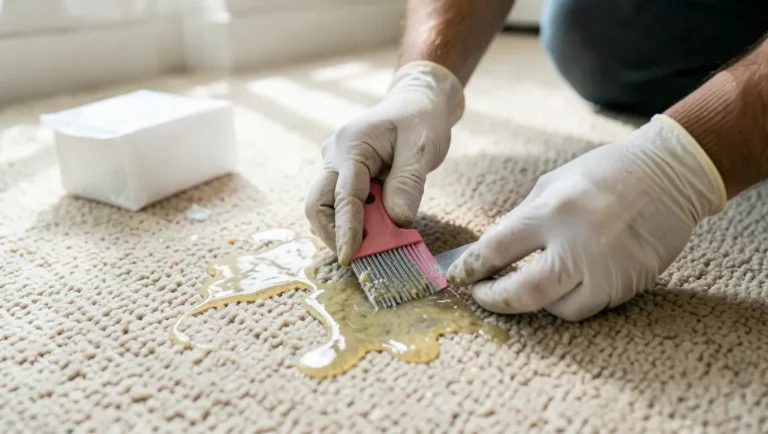
- Wipe away excess before it hardens.
- Keep CA off surrounding finish when possible.
- Use microtips for tighter control on cracks and chips.
- Watch for shine, haze, or residue on visible surfaces.
- Let cured glue sand cleanly before final finishing.
Quick cure-time checklist
- CA glue can grab in seconds and may be ready for light handling fast.
- Some CA products list a 5-10 Sec Cure.
- Other CA products list 30-60 second drying time.
- Full cure for many CA products is around 24 hours.
- PVA wood glue also needs clamp time and a full cure window.
Choose Wood Glue if… / Choose CA Glue for Small Repairs if…
Choose Wood Glue if the repair is a joint, a chair part, an end-grain bond, or any fix that will be loaded over time. Choose it when clamp time is acceptable and when a cleaner long-term wood-to-wood bond matters more than instant set.
Choose CA Glue for Small Repairs if the damage is a hairline crack, a tiny chip, a loose veneer spot, or a cosmetic fix on a visible surface. Choose thin CA for cracks, medium for general micro-repair, and thick CA for small voids where body matters more than penetration.
Frequently asked questions
Is CA glue or wood glue better for small wood repairs?
CA glue is better for small cosmetic repairs that need fast set, tight control, and minimal clamping. Wood glue is better when the repair is really a joint, especially if the part will be loaded later. The right answer depends on whether the damage is a surface fix or a structural bond.
When should I use CA glue instead of PVA wood glue?
Use CA glue when the crack is tiny, the parts already fit well, and you need quick stabilization with low clamp pressure. It is also useful for small chips, veneer touch-ups, and repair work that would be awkward to hold for long. If the joint must be reassembled, wood glue is usually safer.
Does CA glue hold as well as wood glue on end grain?
Not in the same way. End grain is a tricky surface, and the bond quality depends heavily on fit and repair type. CA glue can stabilize a small end-grain crack, but wood glue is the better baseline when the repair needs a true wood-to-wood joint and more dependable long-term performance.
What viscosity CA glue is best for hairline cracks in wood?
Thin CA is often a good choice for hairline cracks because it can wick into tight spaces. Medium CA is a middle ground when the crack is a little wider or the repair needs more control. Thick CA is better for tiny gaps, not for the finest cracks where penetration matters most.
How fast does CA glue cure compared with wood glue?
CA glue cures much faster at the start. One product copy lists a 5-10 Sec Cure, and another lists 30-60 second drying time with full cure at 24 hours. Wood glue works more slowly and depends on clamp time plus a longer cure window before the joint should be stressed.
Can I use CA glue on furniture repairs that need a clean finish?
Sometimes, but it is risky on visible surfaces. CA glue can leave residue, shine, or a repair line that prints through the finish if it is overused. For clean-looking furniture work, wood glue is often easier to clean up, while CA is best reserved for tiny, controlled repairs.
What are the downsides of using CA glue for wood repairs?
The main downsides are brittle failure, difficult residue cleanup, and too little working time on anything larger than a micro-repair. Activator can help speed the bond, but it can also make cleanup and finish quality harder. CA glue is excellent for fast cosmetic fixes, not for every wood repair.
Sponsored / affiliate links. As an Amazon Associate I earn from qualifying purchases. I may earn additional commission from eligible campaigns.