Best Wood Glue for Outdoor Furniture (2026): we compared
For outdoor furniture, the best wood glue for most tight wood-to-wood joints is Titebond III Ultimate Wood Glue, because it gives a waterproof Type I PVA bond with simple cleanup and a cure schedule that fits common patio repairs. Choose the glue for the joint, and you prevent most failures that loosen chairs and split tabletops.
This guide is part of our Wood glue essentials: types, uses, and cure times series.
That means tight mortise-and-tenon joints usually want Type I PVA, slightly imperfect joints often do better with polyurethane, and damaged or gappy repairs are safer with epoxy. Outdoor furniture fails from moisture, movement, and poor fit as much as from weak adhesive.
Quick comparison
| Product | Badge | Best for | Price | ||
|---|---|---|---|---|---|
 |
Gorilla Wood Glue, Natural Wood Color, 4 Ounce Bottle (PackGORILLA | Budget pick | 4 oz · 20-30 min clamp · Water resistant | $3.11
Price as of 26 Sep 2026
|
View |
 |
Titebond III Ultimate Wood Glue, 16-Ounces #1414Titebond | Our pick | 16 oz · Stronger than wood · Non-toxic | $9.58
Price as of 26 Sep 2026
|
View |
 |
Loctite PL Premium Polyurethane Construction Adhesive, 4 flLoctite | Upgrade pick | 4 oz · 8X stronger · Polyurethane | $7.58
Price as of 26 Sep 2026
|
View |
 |
Gorilla Original Glue, Waterproof Polyurethane, Brown, 8 ozGORILLA | Also great | 8 oz · Waterproof · Temp resistant | $9.98
Price as of 26 Sep 2026
|
View |
 |
Krylon Fusion All-In-One Gloss Spray Paint & Primer, ClearKrylon | Our pick | $6.98
Price as of 20 Oct 2026
|
View |
This quick matrix is based on real outdoor furniture conditions, not brand claims. The right choice changes with joint fit, moisture, and how much weather the piece will actually see.
Use it as a first pass before you buy a bottle. Then inspect the joint itself; a bad fit can beat even a good adhesive.
According to inspiringyard.com — Gorilla Wood Glue has a clamp time of 20 to 30 minutes.
How we chose
The comparison favors waterproof performance first, because outdoor furniture needs waterproof glue, not merely water-resistant glue. It also weighs joint fit, open time, clamp time, cure speed, cleanup, cost per repair, and whether the adhesive fits wood-to-wood, damp wood, or mixed-material repairs.
That matters because a chair rung, a bench slat, and a table edge do not fail the same way. Sun-baked joints, standing-water exposure, loose glue lines, and wood movement each punish different adhesive families.
Type I waterproof pva: best for tight wood-to-wood joints
Titebond III Ultimate Wood Glue is the right pick for tight outdoor joints where the parts already fit well and the bond line can stay thin. It is an ANSI/HPVA Type I waterproof wood glue, and it is the cleanest answer for chairs, benches, and tabletops made from sound wood with good joinery.
What stands out is the balance of waterproofing and working time. One roundup lists 4,000 psi bond strength and 8 to 10 minutes of open assembly time, which helps when a glue-up needs a little alignment time but not a long cure strategy.
The drawback is simple: it wants tight joints. On loose fit, on damaged edges, or on oily species that were not prepped well, PVA can starve the joint or fail where movement and moisture keep working the glue line.
Where it works well on outdoor furniture
Type I PVA is best on wood-to-wood joints that close fully under clamp pressure. It fits chair aprons, bench frames, table rails, and slat connections where the joint surfaces mate cleanly and the wood moisture is already under control.
For this family of glue, a full cure around 24 hours is a common benchmark. Do not handle the piece early just because the squeeze-out feels dry; hidden weakness often shows up after the first wetting cycle.
When it fails
It is the wrong tool for loose mortises, cracked shoulders, standing-water exposure, and badly weathered repairs. It also struggles when the wood is too wet, because moisture movement can keep the joint from stabilizing while the adhesive cures.
Oily species such as teak need prep before any water-based glue is trusted. If the joint is open, contaminated, or stressed by freeze-thaw cycles, epoxy is the safer answer.
Polyurethane glue: best for damp wood and small gaps
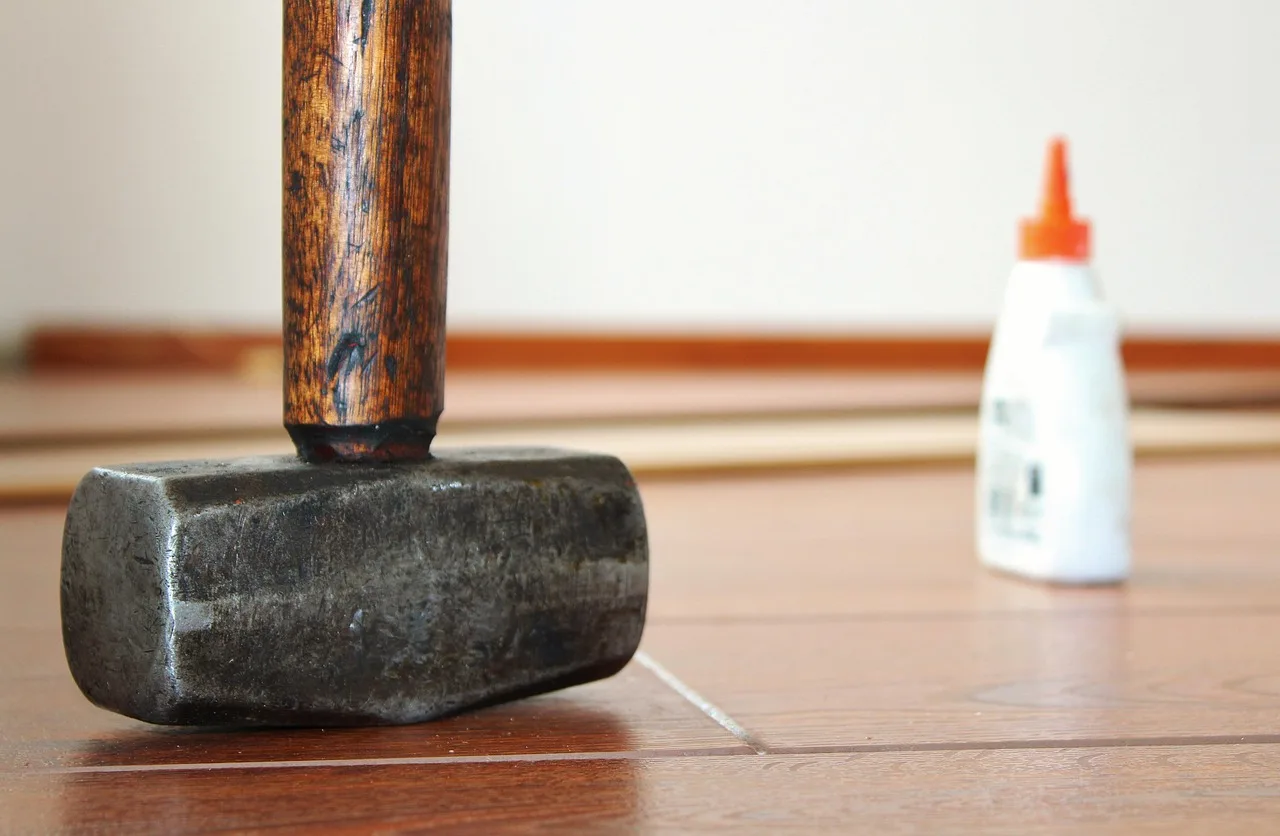
Loctite PL Premium Polyurethane Construction Adhesive fits repairs where the wood is slightly damp, the joint is imperfect, or you need a glue that tolerates a little field reality. Polyurethane cures by moisture activation, so it can work where a dry-shop PVA joint would be less forgiving.
Its advantage is gap tolerance. Polyurethane expands to about three times its original volume while curing, which can help it bridge small voids that a tight-fitting PVA joint would not fill well.
The drawback is the foam. If the joint is overfilled, squeeze-out can swell into a mess, and cleanup gets harder once it starts to set. It is useful, but it rewards discipline.
Why moisture activation helps on outdoor repairs
Outdoor furniture is often repaired after a storm, a damp night, or a season of storage. Polyurethane can handle that situation better than many standard wood glues because a little moisture helps it cure rather than ruin the bond.
That makes it useful for garden furniture, fence-adjacent pieces, and repairs where the wood is not perfectly dry but is not soaked either. It still needs sound preparation and clamping.
The foam issue and how to keep squeeze-out under control
Foaming is not a virtue by itself. It can help fill tiny gaps, but it can also push the joint out of alignment if the parts are poorly clamped or the surfaces are already loose.
Use only enough adhesive to wet the joint faces, then clamp firmly and clean squeeze-out before it hardens. If the joint needs a lot of fill, epoxy is usually the better repair.
When not to use polyurethane on furniture joints
Do not choose polyurethane for precision show joints when you want easy cleanup and a thin glue line. It is also a poor fit for joints that will be visible and refined later, because cured foam can leave a rough edge.
If the connection is large, flat, and fully closed, a waterproof PVA is usually simpler and cleaner. If the joint is damaged or irregular, epoxy usually wins.
Marine-grade epoxy: best for gaps and mixed materials
Gorilla Original Glue is the better choice when the repair has gaps, irregular surfaces, or wood-to-metal contact that a wood glue should not be asked to solve alone. Marine-grade epoxy is the top choice for the toughest outdoor bonds, and it is the most sensible option when the joint is beyond neat wood-to-wood repair.
Its strength is in the chemistry and the fill. A two-part resin-and-hardener system can bridge voids, bond dissimilar materials, and hold where a regular glue line would be too thin or too uneven to trust.
The drawbacks are cost and patience. Epoxy tends to cure more slowly, can cost more per repair, and usually requires more careful cleanup than PVA or polyurethane.
Why epoxy is the safer pick for loose or irregular joints
When the joint is loose, the adhesive has to do more than stick. It has to rebuild shape, stabilize the connection, and survive movement through wet and dry seasons.
That is why epoxy is often safer for old garden furniture, tired bench corners, and repairs that no longer close tightly. It is especially useful when the bond line would otherwise be too thin in one spot and too thick in another.
Wood-to-metal connections and repaired hardware areas
Epoxy is the best of this group for wood-to-metal compatibility. If a chair or bench has a metal bracket, embedded fastener, or mixed-material repair area, epoxy handles the job more reliably than wood-focused PVA.
That does not mean it fixes bad structure. It means the adhesive is less likely to be the weak link when the repair crosses material boundaries.
Tradeoffs: slow cure, higher cost, and cleanup
Epoxy is the expensive answer for a reason. You buy extra working freedom and gap-filling ability, but you pay in price, mix accuracy, and slower turnaround before use.
For large furniture pieces, that slower schedule can matter more than the adhesive label. If the joint already fits well, epoxy may be overkill.
Which glue should you buy for your project?
For most chairs and benches with tight mortise-and-tenon or dowel joints, buy a Type I waterproof PVA such as Titebond III. For tabletops and slats that will see rain but still fit well, that same family is usually the cleanest choice.
Use polyurethane when the wood is slightly damp or the joint has tiny gaps. Use epoxy when the repair is loose, damaged, mixed-material, or exposed to standing water and repeated movement.
Best choice for chairs and benches with tight mortise-and-tenon joints
Choose Type I waterproof PVA. It bonds wood to wood cleanly, clamps well, and gives the least fuss on tight furniture joinery. This is the best match when the joint is precise and the repair needs a tidy finish schedule.
Best choice for tabletops and slats exposed to rain
Choose Type I waterproof PVA for tight parts, and move to polyurethane if the joint is slightly imperfect or the wood is a little damp. Tabletops and slats fail often from movement and edge stress, so the fit matters as much as the waterproof label.
Best choice for teak, cedar, and other difficult species
Teak is oily, cedar can move a lot, and many hardwoods move more than people expect outdoors. For teak and other oily woods, prep the surface carefully and consider epoxy if the bond area is not pristine. For cedar, a tight joint with Type I PVA may work, but the wood must be dry and clean.
Best choice when the joint already has a gap or damage
Choose epoxy. If the joint is crushed, warped, or worn loose, the adhesive has to compensate for lost fit. PVA is not meant to rebuild that missing material, and polyurethane only covers small imperfections before the joint becomes unreliable.
How do clamp time and cure time change the outcome?
Clamp time is the period when the joint must stay held securely so the adhesive can grab without shifting. Full cure is the point when the bond has reached usable strength, and opening the piece early can create a hidden failure that shows up later outdoors.
Open time is the working window before the adhesive skins over. For complex glue-ups, more than a few minutes of open time helps alignment; in outdoor furniture work, a clamp window of roughly 20 to 45 minutes is often used, though the exact number depends on the product.
Open time vs clamp time vs full cure
Open time tells you how long you have to position parts. Clamp time tells you how long you must keep pressure on the joint. Full cure tells you when the piece can face real use without being stressed too early.
Those are not the same thing. A glue can feel set, yet still fail under load if the cure is incomplete.
Why 20 to 45 minutes is a common clamp window
That window is long enough to hold the parts securely while the adhesive grabs, but short enough to keep shop time practical. Some products will clamp faster, some slower, and epoxies often break this pattern with much longer schedules.
The important point is pressure, not brute force. Clamp firmly enough to hold the joint in full contact, but do not squeeze out so much glue that the bond line starves.
Outdoor furniture is especially vulnerable because the first wet-dry cycle arrives soon after repair. A joint that looked fine in the shop can creep, open, or crack once humidity and sun heat it up.
That is how a repair fails without drama. The piece just loosens a little more each week until the joint is visibly gone.
What glue works best for teak, cedar, or hardwood outdoor furniture
For teak, cedar, and outdoor hardwoods, the best glue depends on surface condition as much as species. Teak often needs the most caution because oil can interfere with bond quality, cedar asks for good clamping and dry stock, and hardwoods usually reward the tightest fit you can build.
If the joints are clean and tight, Type I waterproof PVA is usually the first choice. If the wood is slightly damp or the fit is not perfect, polyurethane can help. If the species is oily or the joint is already failing, epoxy is the safer repair.
What to treat outdoor wooden furniture with
Outdoor wooden furniture should be treated with a finish or coating that suits the species and exposure, but coating does not replace the right glue. A protective finish slows moisture exchange; it does not rescue a weak joint or a bad bond line.
That is why glue choice still starts with fit and exposure. The coating comes after the joint is sound.
Should I use polyurethane, PVA, or epoxy for outdoor furniture?
Use PVA for tight wood-to-wood joints, polyurethane for slightly damp wood and tiny gaps, and epoxy for loose, damaged, or mixed-material repairs. Each one has a job. The wrong choice usually shows up first in movement, not in a neat failure right away.
How long should outdoor wood glue cure before use?
Many outdoor glue jobs should sit for 24 hours before handling, and epoxies can need longer. That full cure window matters more than the clamp time alone, because a partly cured bond is easy to overload when the furniture is moved or sat on too soon.
Does Gorilla Glue work on wood?
Yes, Gorilla-branded wood and polyurethane glues can work on wood, but the fit matters. For tight wood joints, Gorilla Wood Glue is a water-resistant PVA option with a 20 to 30 minute clamp time. For gap filling and mixed-material work, Gorilla Original Glue is the more flexible choice.
Is wood glue strong enough for furniture?
Yes, when the joint fit is good and the adhesive matches the exposure. Furniture fails when the joint is loose, the wood is too wet, or the piece sees more movement than the glue line can tolerate. Good joinery plus the right adhesive is what matters.
Frequently asked questions
what is the best waterproof wood glue for outdoor furniture
For most tight outdoor furniture joints, a Type I waterproof PVA such as Titebond III is the best starting point. It is built for wood-to-wood joints, cleans up more easily than epoxy, and is a better fit than a standard indoor glue when the piece will live outside.
which adhesive is best for joining wood
For tight joints, waterproof PVA is usually best because it bonds wood cleanly and keeps the glue line neat. For damp wood or minor gaps, polyurethane is more forgiving. For loose, damaged, or mixed-material repairs, epoxy is the safer adhesive.
Sponsored / affiliate links. As an Amazon Associate I earn from qualifying purchases. I may earn additional commission from eligible campaigns.