Best Paint for Rusty Metal: Primer, Converter, or Direct-to-Rust?
The right paint for rusty metal depends on how bad the rust actually is, because three genuinely different products solve three different problems. A rusty-metal primer bonds directly over light, tight rust after you’ve removed loose scale. A rust converter chemically transforms rust into a stable coating rather than just sealing over it, better for moderate flaking rust. An epoxy-based coating like POR-15 is the step up for structural or high-stress parts (frames, trailers, tanks) where maximum durability matters more than cost or ease of application.
Three Real Options, Not One “Best” Answer
The Standard Choice For Light-To-Moderate Rust
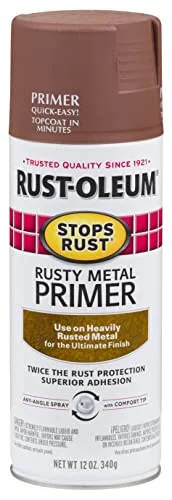 |
Rust-Oleum Stops Rust Rusty Metal Primer, 12 oz – $6.47 Formulated to bond directly over light, tight rust after wire-brushing loose scale — the right tool for most fences, tools, and outdoor furniture.
|
A standard rusty-metal primer like Rust-Oleum’s Stops Rust line is formulated with additives that let it bond to iron oxide directly, unlike ordinary paint or primer which needs a fully clean, bare surface to adhere properly. This makes it the right choice for the majority of household rust jobs — fences, patio furniture, tools, railings — where the rust is surface-level and tight, not flaking or pitted. It’s also the most affordable and widely available option, and a topcoat enamel in the same product line handles color and final protection in one or two coats.
When A Rust Converter Is The Better Tool
A rust converter (Rust-Oleum’s “Rust Reformer” line is the common consumer version) works differently — it’s a chemical reaction, typically using tannic acid, that converts the reddish-brown iron oxide into a stable black iron tannate coating, which then becomes the paintable base itself. This matters when rust is more established or flaking rather than a light surface haze: a straight primer relies on mechanical bonding to whatever rust is left after brushing, while a converter actually changes the chemistry of the rust into something more paint-stable. If your metal has visible pitting, flaking, or a rough scaly texture even after wire-brushing, a converter is the more reliable step before painting, not the primer alone.
When To Step Up To An Epoxy Coating
Products like POR-15 use a moisture-cured polyurethane/epoxy chemistry that’s meaningfully more durable and abrasion-resistant than a consumer spray primer or converter — the tradeoff is a more involved application process (often multiple coats, specific surface prep, and a topcoat requirement since some formulas aren’t UV-stable on their own) and a higher price. This category makes sense for parts under real mechanical stress or long-term severe exposure — vehicle frames, trailers, tanks, equipment that lives outdoors year-round — where the extra durability justifies the extra cost and effort. For a patio chair or garden fence, it’s overkill; for a truck frame, it’s the right call.
Spray Vs. Brush-On
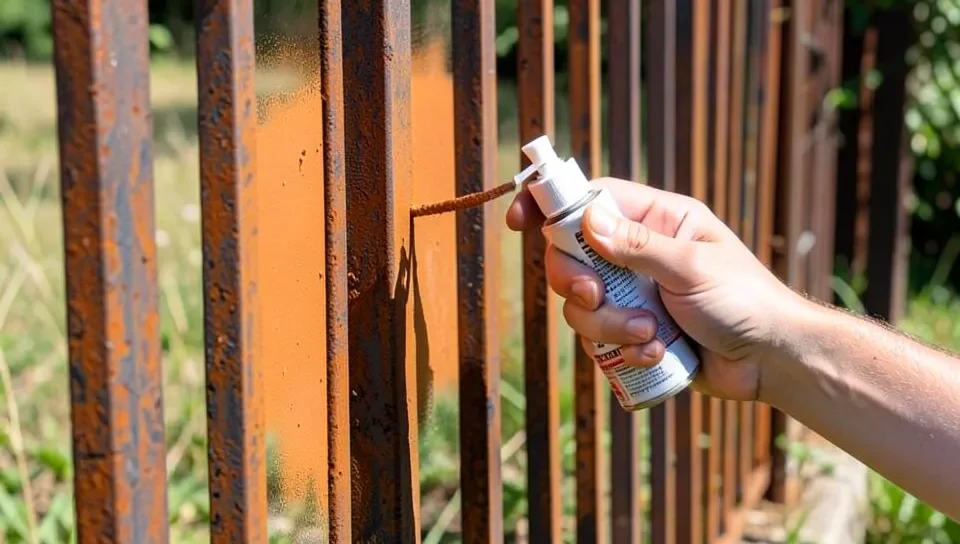
Both application methods exist across all three product categories, and the choice is mostly practical rather than a performance difference. Spray cans cover irregular shapes (railings, fencing, decorative ironwork) faster and more evenly, but they waste more product on small or detailed pieces and require more careful masking of anything nearby. Brush-on formulas give more control on flat panels and large surfaces, let you work the product into pits and seams more deliberately, and waste less on a small job. Either gets the same underlying chemistry onto the metal — pick based on the shape of what you’re painting, not an assumption that one performs better than the other.
How Long It Actually Lasts
A properly prepped and applied rusty-metal primer with a matching topcoat commonly holds up for several years of outdoor exposure before it needs attention again, though exact longevity depends heavily on climate (coastal salt air and freeze-thaw cycles both shorten the interval) and how much direct sun and moisture the piece sees. A rust converter’s black coating is generally considered more permanent once cured, since it’s chemically part of the surface rather than a layer sitting on top of it. Either way, the real failure point is almost always physical damage (a scratch or chip) that exposes bare metal again, not the coating simply wearing out on its own — touching up damage promptly matters more than the product choice for long-term protection.
Prep Matters More Than The Product
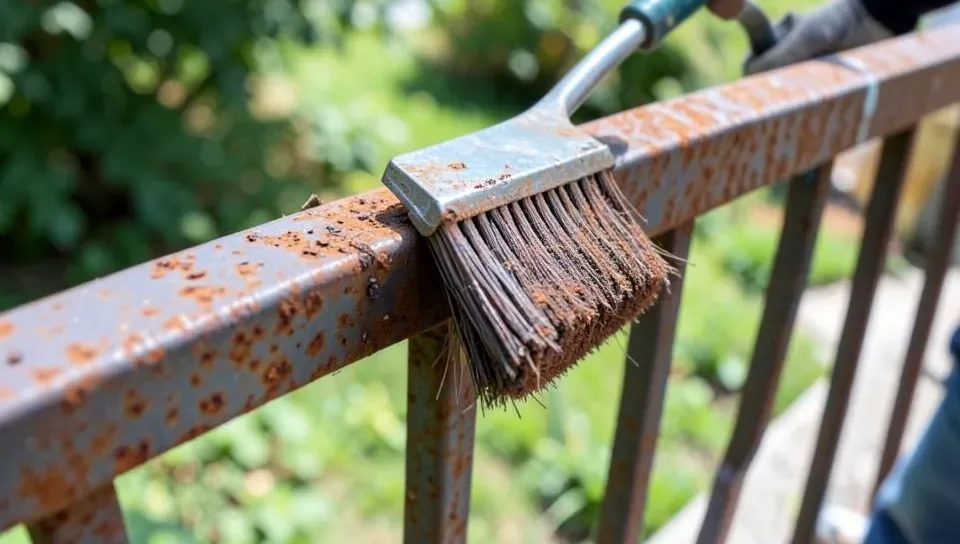
None of these three products perform to their real potential over unprepped rust. Remove all loose, flaking material with a wire brush, wire wheel, or sandpaper first — the goal isn’t to remove every trace of rust (a rusty-metal primer is designed to handle the tight rust that’s left), but to eliminate anything that will flake off and take the new coating with it. Clean off dust, grease, and residue afterward, and let the surface fully dry before applying any product. Skipping prep is the single most common reason a “rust paint” job fails early, regardless of which of the three products above gets used.
For the full step-by-step process of prepping and painting rusty metal, see our guide on spray painting over rust.
Common Mistakes
- Using a standard primer on heavily flaking rust: a rusty-metal primer is built for light, tight rust — loose or scaly rust needs a converter or full mechanical removal first.
- Skipping wire-brushing because “the primer is made for rust”: the primer handles what’s left after you remove loose material, not rust in general.
- Painting over rust that’s still damp: trapped moisture under a coating accelerates corrosion rather than stopping it.
- Choosing an epoxy coating for a simple furniture touch-up: the extra cost and application complexity isn’t necessary for light household rust.
Frequently Asked Questions
What is the best paint for rusty metal?
It depends on the rust’s severity. Light, tight rust: a rusty-metal primer like Rust-Oleum Stops Rust. Moderate flaking rust: a chemical rust converter. Heavy structural or high-stress applications: an epoxy coating like POR-15.
How do I prepare rusty metal for painting?
Remove all loose, flaking rust with a wire brush or wire wheel, clean off dust and grease, and let the surface fully dry before applying primer, converter, or paint. Skipping this step is the most common reason a rust paint job fails early.
Can I use regular paint on rusty metal?
Not reliably. Ordinary paint isn’t formulated to bond to iron oxide and will adhere poorly, peeling or bubbling as the rust continues underneath. A product specifically formulated for rusty metal (primer, converter, or epoxy) is necessary for lasting results.
What’s the difference between a rust converter and a rusty-metal primer?
A primer bonds mechanically over the rust that’s left after cleaning. A converter chemically reacts with the rust (commonly using tannic acid) to turn it into a stable, paintable black coating. Converters are the better choice for more established or flaking rust.
Conclusion
There’s no single “best” rust paint — the right choice depends on how bad the rust is and what the metal has to withstand. For most household jobs, a rusty-metal primer and matching topcoat is exactly the right amount of product; save the converter and epoxy options for rust and stress levels that actually need them.
Sponsored / affiliate links. As an Amazon Associate I earn from qualifying purchases. I may earn additional commission from eligible campaigns.
 #10 x 3 (30 Pack) Flat Head Sheet Metal Screws Phillips Drive Fast Self-Tapping Screw Wood Screws, High-Strength 410 Stainless Steel, Black Oxide
 Wensilon 3/8" x 4" Black Rust Resistant Epoxy Coated Plated Large Diameter Concrete Screw Actual Thickness 1/2"(12mm) for Anchoring to Masonry, Brick or Block (100 pcs)