Big-Leaf Mahogany: Identification, Uses & Sourcing
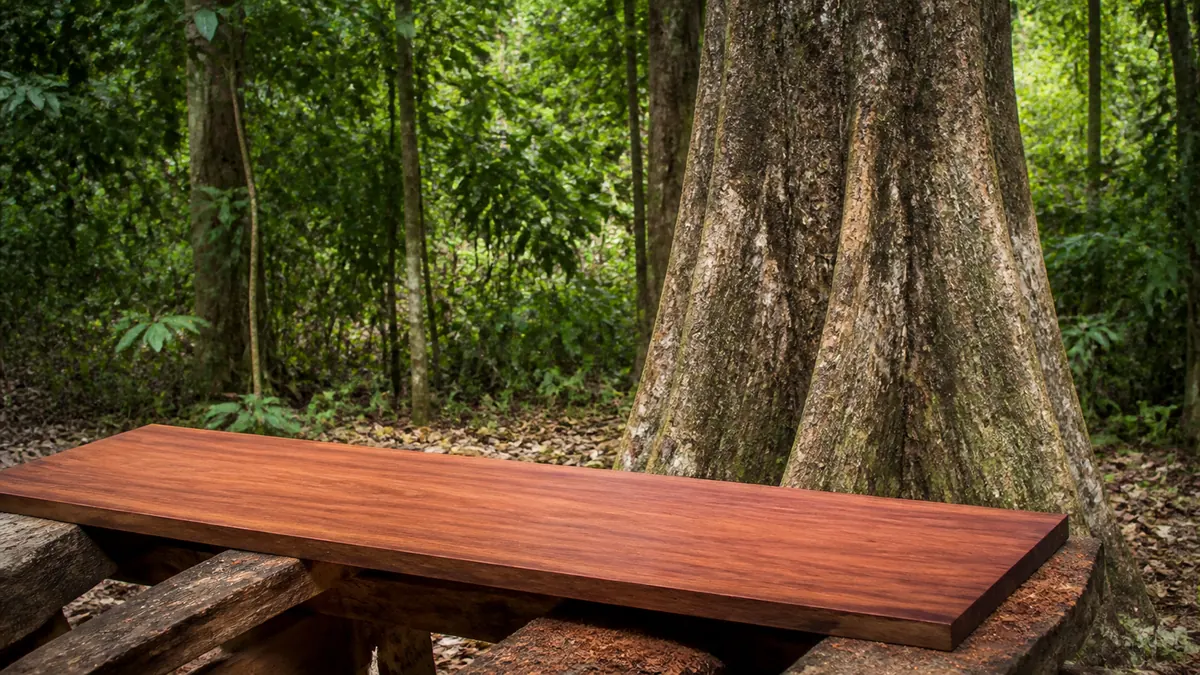
Big-leaf mahogany usually means Swietenia macrophylla, a tropical hardwood valued for stable, attractive furniture lumber and veneer. It is not a guarantee that every reddish-brown board sold as “mahogany” is that species. Trade names are used loosely, so the most useful buying evidence is the scientific name and documented origin—not color alone.
For a furniture or millwork project, genuine big-leaf mahogany is prized for its workability, finishing qualities, and interlocking grain. For a responsible purchase, treat the paperwork as part of the material specification: ask for the species, country of harvest, supplier record, and any relevant legal or certification documentation before ordering.
Big-Leaf Mahogany: Quick Answer
Use big-leaf mahogany for fine furniture, cabinetry, interior trim, and decorative veneer when its grain and budget suit the project. Confirm Swietenia macrophylla on the invoice and buy from a supplier that can explain the material’s origin; visual appearance cannot reliably identify a logged board.
What Makes It Big-Leaf Mahogany
Big-leaf mahogany is the species Swietenia macrophylla. U.S. Forest Service references describe it as a valuable wood for furniture, veneer, millwork, and crafts. Its native range spans tropical parts of the Americas, and the species is regulated in international trade under CITES Appendix II.
This matters because “mahogany” may also refer to African mahogany (Khaya species), sapele, Philippine mahogany, or other lookalikes. Those woods can be useful, but they are not interchangeable in density, grain behavior, durability, price, or paperwork.
How to Evaluate a Board Before Buying
| Check | Why it matters |
|---|---|
| Scientific name on the invoice | Separates big-leaf mahogany from loosely named substitutes. |
| Source and chain of custody | Helps you evaluate legal and responsible sourcing. |
| Face, edge, and end-grain quality | Reveals color variation, grain direction, defects, and usable yield. |
| Moisture content and milling | Affects movement, glue-up, and finishing in your shop. |
A board’s warm color and straight-looking grain can support a seller’s description, but they do not prove species. If species identity is important for a regulated, conservation, insurance, or high-value project, use a specialist or laboratory method rather than a visual guess.
Working Properties and Best Uses
- Fine furniture and cabinet components where a smooth finish matters.
- Interior trim, paneling, and architectural millwork.
- Decorative face veneer and turned details.
- Projects that benefit from stable, readily worked hardwood—after checking the specific stock.
Work with sharp cutters and make a test finish on an offcut. Interlocked grain can tear out, and color can vary between boards. Do not assume the same outdoor or marine performance from every “mahogany” substitute; choose the wood and finish for the actual exposure.
Big-Leaf Mahogany vs. Common Alternatives
Buyers regularly encounter several woods sold under the “mahogany” name, and confusing them can throw off a project’s budget, working characteristics, and finish. Here is how the most common lookalikes actually compare.
| Wood | Scientific Name | Relative Price | Notable Difference |
|---|---|---|---|
| Big-leaf mahogany | Swietenia macrophylla | High | The genuine, historically prized cabinet wood; regulated under CITES. |
| African mahogany | Khaya spp. | Medium | Similar color and workability, often slightly more open-grained and less stable. |
| Sapele | Entandrophragma cylindricum | Medium | Denser and harder, with a more pronounced ribbon-figure grain. |
| Philippine mahogany (Luan/Meranti) | Shorea spp. | Low | Not a true mahogany at all; softer, less stable, and much less expensive. |
Price alone is a useful red flag: genuine big-leaf mahogany priced like a big-box-store “mahogany” board is worth double-checking against the invoice’s species name before you buy.
What Big-Leaf Mahogany Costs
Because big-leaf mahogany is regulated, increasingly scarce from legal old-growth sources, and often plantation-grown today, pricing varies more than with common domestic hardwoods. As a rough planning guide, expect genuine, documented big-leaf mahogany lumber to run noticeably higher per board foot than walnut or cherry, with plantation-grown stock generally costing less than old-growth material and veneer costing a fraction of solid lumber per square foot of coverage. Always get a current quote from the supplier rather than relying on older published price guides, since availability and regulation status shift the market.
Finishing Big-Leaf Mahogany
- Its natural color deepens attractively with age and UV exposure, so many finishers use a clear oil or thin shellac wash coat rather than a heavy stain that would mask the wood’s own color shift.
- Open pores benefit from a grain filler if a perfectly smooth, glass-like finish is the goal, particularly for tabletops.
- Interlocked or figured grain can tear out under a hand plane; a scraper or very sharp, high-angle plane iron gives cleaner results on figured boards.
- Test any stain or finish on an offcut first — color can vary noticeably between boards even from the same supplier batch.
Frequently Asked Questions
How can you tell real mahogany from a substitute?
The only reliable way is documentation: a supplier invoice listing the scientific name Swietenia macrophylla and the country of harvest. Color, weight, and grain appearance alone are not conclusive, since several unrelated species look similar.
Is big-leaf mahogany more expensive than African mahogany?
Generally yes. Big-leaf mahogany typically commands a higher price than African mahogany (Khaya species) due to its regulated status, more limited legal supply, and long-standing reputation as the historic “genuine mahogany.”
Can I use big-leaf mahogany outdoors?
It has reasonable natural decay resistance, but it is generally reserved for interior furniture, trim, and boat interiors rather than full outdoor exposure, where woods rated specifically for ground contact or weather perform more predictably.
Responsible Sourcing Checklist
- Ask the supplier to list Swietenia macrophylla and the country of harvest on the sales record.
- Request relevant legality, import, or certification information before committing to a large order.
- Compare several boards for grain, moisture content, and defects instead of selecting by color from a screen.
- Keep the invoice and source information with the project records.
For background on species confusion and trade controls, consult the Forest Products Laboratory research on big-leaf mahogany identification.
Bottom Line
Big-leaf mahogany is a premium cabinet and veneer wood, but the name alone is not a specification. Buy by scientific name, source documentation, board quality, and intended use. That approach protects both your project and a responsible supply chain.
Frequently Asked Questions
Is big-leaf mahogany real mahogany?
Yes. Big-leaf mahogany is the common name for Swietenia macrophylla, one of the species commonly called genuine mahogany.
Can I identify it by color alone?
No. Many woods share a reddish-brown appearance. Confirm the scientific name and source documents instead.
What is big-leaf mahogany used for?
It is commonly used for fine furniture, cabinetry, interior trim, decorative veneer, millwork, and turned objects.
Is big-leaf mahogany regulated?
International trade in Swietenia macrophylla is regulated under CITES Appendix II. Ask the supplier for current, applicable documentation.
Is African mahogany the same wood?
No. African mahogany normally refers to Khaya species. It can be a useful alternative but has different species identity and properties.
Sponsored / affiliate links. As an Amazon Associate I earn from qualifying purchases. I may earn additional commission from eligible campaigns.