Can Baking Soda Get Rid of Stains Really? Cleaning Guide
Are you wondering, Can Baking Soda Get Rid of Stains? It’s a question many people have when they’re facing a tough cleaning challenge. It seems simple enough, but different types of stains and surfaces can make things tricky. Don’t worry, this guide will help you understand how to use this common household item to tackle those pesky marks. We’ll break down the process step-by-step to make it easy to follow. Let’s see how baking soda can help!
Baking Soda’s Stain-Fighting Powers
Baking soda, also known as sodium bicarbonate, is a versatile cleaner and deodorizer found in nearly every home. It works well because it’s a mild abrasive, meaning it can gently scrub away dirt without causing serious damage to surfaces. Also, it has alkaline properties that help neutralize acids, making it effective against certain stains. The effectiveness of baking soda depends heavily on the type of stain, the material it is on, and how quickly you act. Using baking soda correctly, along with some elbow grease, can work wonders. Remember to always test a small, hidden area first to ensure it does not harm the material.
How Baking Soda Works Its Magic
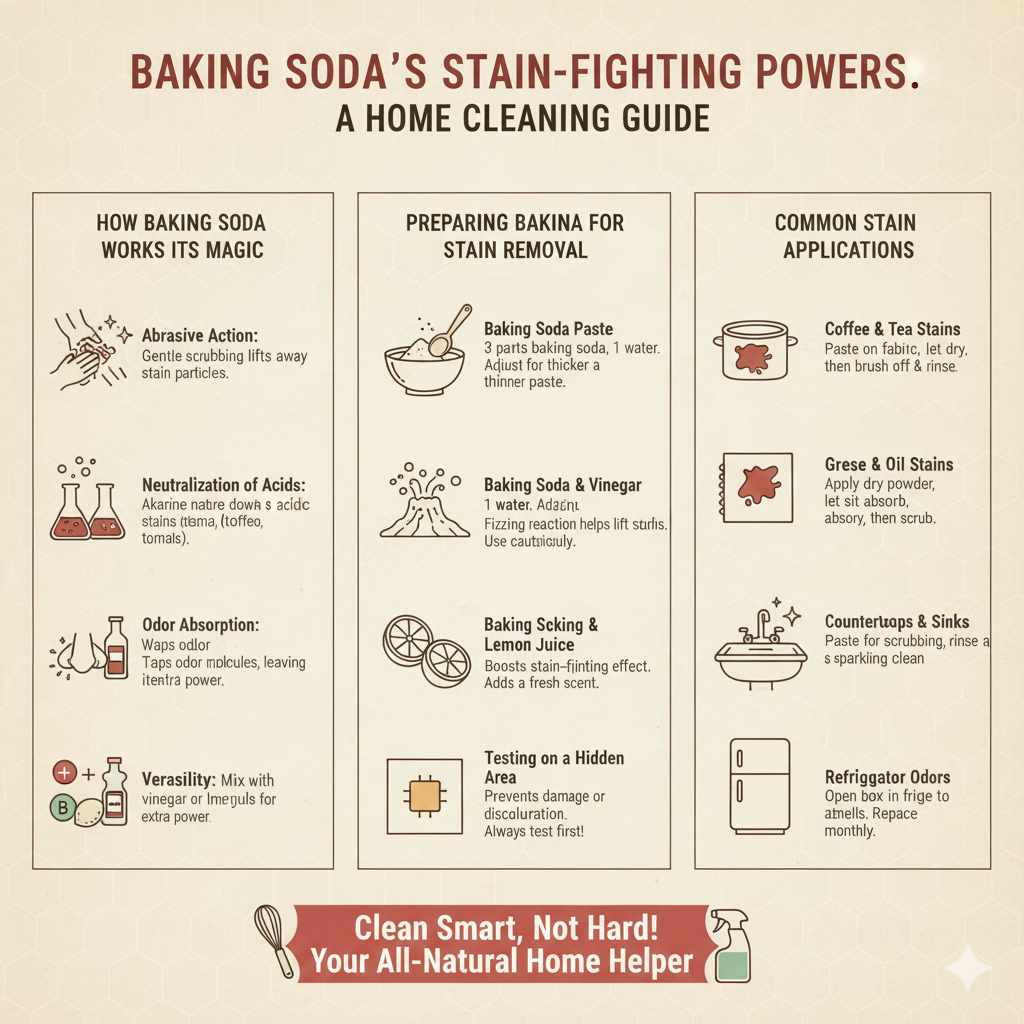
Baking soda works on stains through a few key actions. First, its slight abrasiveness helps to lift away the stain particles. Next, as a mild alkali, it can react with acidic stains, like those from coffee or tomato sauce, to break them down. This reaction makes the stain easier to remove. Additionally, baking soda absorbs odors, meaning it can help to get rid of the lingering smells that often come with stains. Understanding these properties will assist you in applying baking soda in a way that maximizes its stain-fighting abilities.
- Abrasive Action: The gritty texture of baking soda helps to scrub away stains. When mixed with water to make a paste, it’s gentle enough not to scratch most surfaces but strong enough to dislodge grime.
- Neutralization of Acids: Baking soda’s alkaline nature can neutralize acidic compounds present in many stains. This chemical reaction weakens the bond between the stain and the material.
- Odor Absorption: Baking soda absorbs smells, which is useful for eliminating odors left behind by stains. It traps the odor molecules, leaving the item smelling fresher.
- Versatility: Baking soda can be mixed with various other substances, like vinegar or lemon juice, to boost its cleaning power. This versatility makes it useful for a wide array of stain types.
Preparing Baking Soda for Stain Removal
Getting baking soda ready to fight stains is easy. The main step is to create a paste by mixing baking soda with water. The consistency of this paste may need to change depending on the stain and the material. For example, a thicker paste can work well on tougher stains, while a thinner mixture might be more suited for delicate fabrics. You can also mix in other ingredients like vinegar or lemon juice for added cleaning power. Experimenting will help you find the best formula for each cleaning task.
- Baking Soda Paste: The most common method involves mixing baking soda with water. The ratio typically is three parts baking soda to one part water, but adjust as needed for a spreadable consistency.
- Baking Soda and Vinegar: Mixing baking soda with vinegar creates a fizzing reaction that can help lift stains. Use this mixture cautiously, as it could damage some surfaces.
- Baking Soda and Lemon Juice: Like vinegar, lemon juice has cleaning properties. Combining it with baking soda can boost the stain-fighting effect. This combination also adds a fresh scent.
- Testing on a Hidden Area: Always try your baking soda mixture on a hidden area of the item you want to clean. This test prevents potential damage or discoloration before applying it broadly.
Effective Ways Baking Soda Can Get Rid of Stains
Baking soda shines when used on various stains. It works particularly well on grease, oil, and coffee stains. However, it’s crucial to apply the right method for the best results. For example, for grease stains on fabric, you can sprinkle baking soda and let it sit before washing. On hard surfaces, a paste can be applied and scrubbed. Baking soda’s effectiveness varies, so understanding how to use it differently in each situation is vital. Remember, it may not be effective on all stains.
Cleaning Fabrics With Baking Soda
Baking soda can be very helpful in removing stains from your clothes, carpets, and upholstery. It’s important to treat stains quickly to prevent them from setting. For clothes, you can pre-treat stains with a baking soda paste before washing. On carpets, sprinkle baking soda, let it sit, then vacuum. Upholstery can be cleaned similarly to carpets but needs gentler scrubbing to prevent damage. Always check the item’s label before trying any cleaning method to avoid problems.
- Pre-treating Clothing Stains: Make a paste of baking soda and water and apply it directly to the stain. Let it sit for a while, then wash the item as usual. This method is effective for sweat stains and other common marks.
- Removing Carpet Stains: Sprinkle baking soda on the stain and let it sit for a few hours or even overnight. Then, vacuum up the baking soda. This is suitable for minor spills and pet stains.
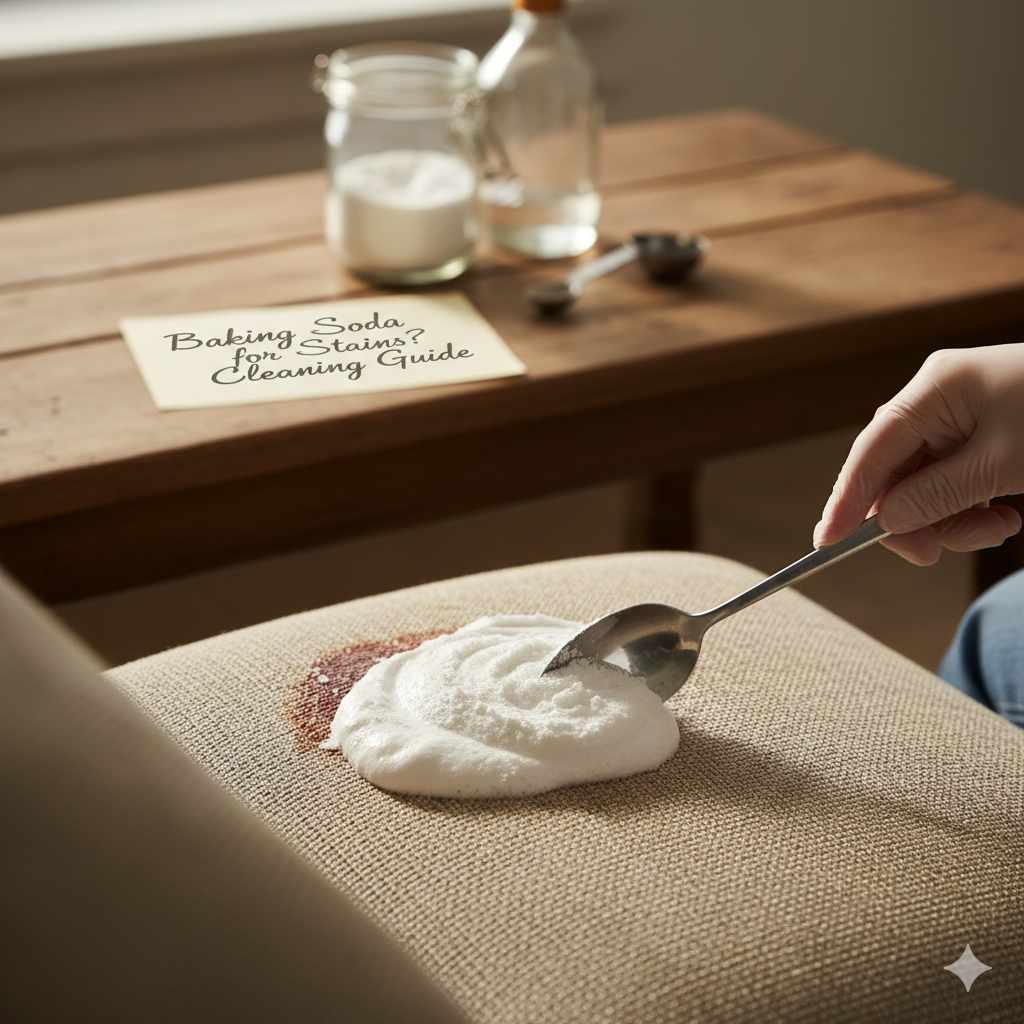
- Cleaning Upholstery: Mix baking soda with water to make a paste and apply it to the stain. Gently scrub the area and wipe it clean with a damp cloth. Make sure not to saturate the fabric.
- Dealing with Odors: Baking soda helps to absorb odors that often stick with stains. Sprinkle it on the affected area, let it sit, and then vacuum or wipe it up. This will refresh your fabrics.
Removing Stains From Hard Surfaces
Baking soda works wonders on hard surfaces such as countertops, tiles, and appliances. For stains on these surfaces, a paste of baking soda and water is a great solution. Apply the paste, let it sit for a short time, then scrub gently with a soft sponge or cloth. For stubborn stains, you can combine baking soda with vinegar or lemon juice to increase the cleaning power. Remember to always rinse the area thoroughly after cleaning to remove any residue.
- Countertop Stains: Create a baking soda paste and gently scrub away stains. Use a soft cloth to avoid scratching the surface. This is good for coffee spills or food marks.
- Tile and Grout Cleaning: Mix baking soda with water to make a paste and apply it to the grout. Let it sit and then scrub with a toothbrush or grout brush. This removes dirt and mildew.
- Appliance Cleaning: Use baking soda paste to clean the inside of your refrigerator, microwave, or oven. It’s gentle enough for use on appliances and helps remove odors.
- Stain Removal on Stainless Steel: Make a paste of baking soda and water, apply, and gently scrub the surface in the direction of the grain. Rinse well afterward. This keeps your appliances clean.
How Can Baking Soda Get Rid of Stains? Step-by-Step
To use baking soda effectively, it is essential to follow a step-by-step approach. This will help you get the best results while keeping your items safe from damage. First, identify the stain type and the material it is on. Then, prepare your baking soda mixture as needed. Apply the mixture, let it sit, and scrub if needed. Finally, rinse or wash the item to remove any residue. Proper technique will increase your chances of success and keep your cleaning process under control.
Step 1: Identifying the Stain and Material
The first step in removing stains with baking soda is to determine the stain type and the material it is on. Understanding what caused the stain helps you choose the correct method. For example, oil-based stains will need a different approach than water-based stains. Also, think about the material of the item you want to clean. Some materials are more delicate and may need a gentler approach. Checking labels on clothes or furniture will show you any special care instructions before you start.
- Stain Type: Is it oil, food, ink, or something else? Knowing the stain type helps you figure out the best cleaning approach.
- Material Type: Is it fabric, tile, or something else? Knowing the material helps you choose a safe cleaning method.
- Check the Label: Always check the care instructions on clothing or furniture before starting. This helps you prevent damage.
- Test in an Inconspicuous Area: Before applying baking soda to the whole item, test it on a hidden area. This checks if the baking soda will cause any problems.
Step 2: Preparing Your Baking Soda Mixture
Once you’ve identified the stain and material, you can prepare the baking soda mixture. This is generally a simple process. The basic mixture involves baking soda and water. The amount of each ingredient may need adjustment based on the stain and surface. For tougher stains, you might want to add other cleaning agents, like vinegar or lemon juice, to the mix. It’s best to mix the ingredients right before you need them to keep the mixture at its peak effectiveness.
- Basic Paste: The usual ratio is three parts baking soda to one part water. Mix these to make a paste.
- Vinegar Mixture: Adding vinegar can boost the cleaning power but might not be safe for all surfaces. Use it with caution.
- Lemon Juice Mixture: Like vinegar, lemon juice can increase the mixture’s effectiveness. It’s a great option for hard surfaces.
- Consistency Matters: Adjust the consistency of the paste. A thicker paste works well for tougher stains, while a thinner mixture suits delicate fabrics.
Step 3: Applying and Scrubbing
Now, apply your baking soda mixture to the stain. For fabrics, gently rub the paste into the stain. For hard surfaces, you might need to scrub with a sponge or brush. Allow the mixture to sit for a while to let it do its job. The amount of time depends on how tough the stain is. Don’t be too rough when scrubbing to prevent damage. If the stain is still there after the first try, you can repeat the process. Patience is key when using baking soda, as it often needs some time to work effectively.
- Gentle Application: Rub the paste onto the stain gently, using a cloth or sponge.
- Allow Time to Work: Let the mixture sit for a set period. This lets the baking soda break down the stain.
- Scrubbing: If needed, use a soft brush or cloth to scrub the area. Be gentle to prevent damage.
- Repeat if Needed: If the stain remains, apply more mixture and try again. Sometimes, it takes a few tries.
Step 4: Rinsing and Washing
Once the baking soda mixture has done its job, it’s time to rinse or wash the item. On hard surfaces, thoroughly rinse the area with water to remove any remaining baking soda residue. For fabrics, wash the item according to the care label instructions. Ensure all traces of the baking soda are gone to avoid buildup or damage. If the stain is gone, you can dry the item as usual. If the stain persists, you might have to repeat the cleaning steps or try a different approach.
- Thorough Rinsing: Rinse hard surfaces completely with water. This removes the baking soda and any stain residue.
- Washing Fabrics: Wash the item in a washing machine, following the care label.
- Checking for Stain Removal: Examine the item after washing to see if the stain is gone.
- Drying: Dry the item as usual if the stain is gone. Avoid using heat until the stain is fully removed.
Real-Life Examples of Baking Soda in Action
Many examples show how effective baking soda is for stain removal. Here are some real-life situations where baking soda successfully eliminated stains. These examples will show you how to apply the methods we discussed in the steps. Seeing baking soda’s success in these cases shows its usefulness.
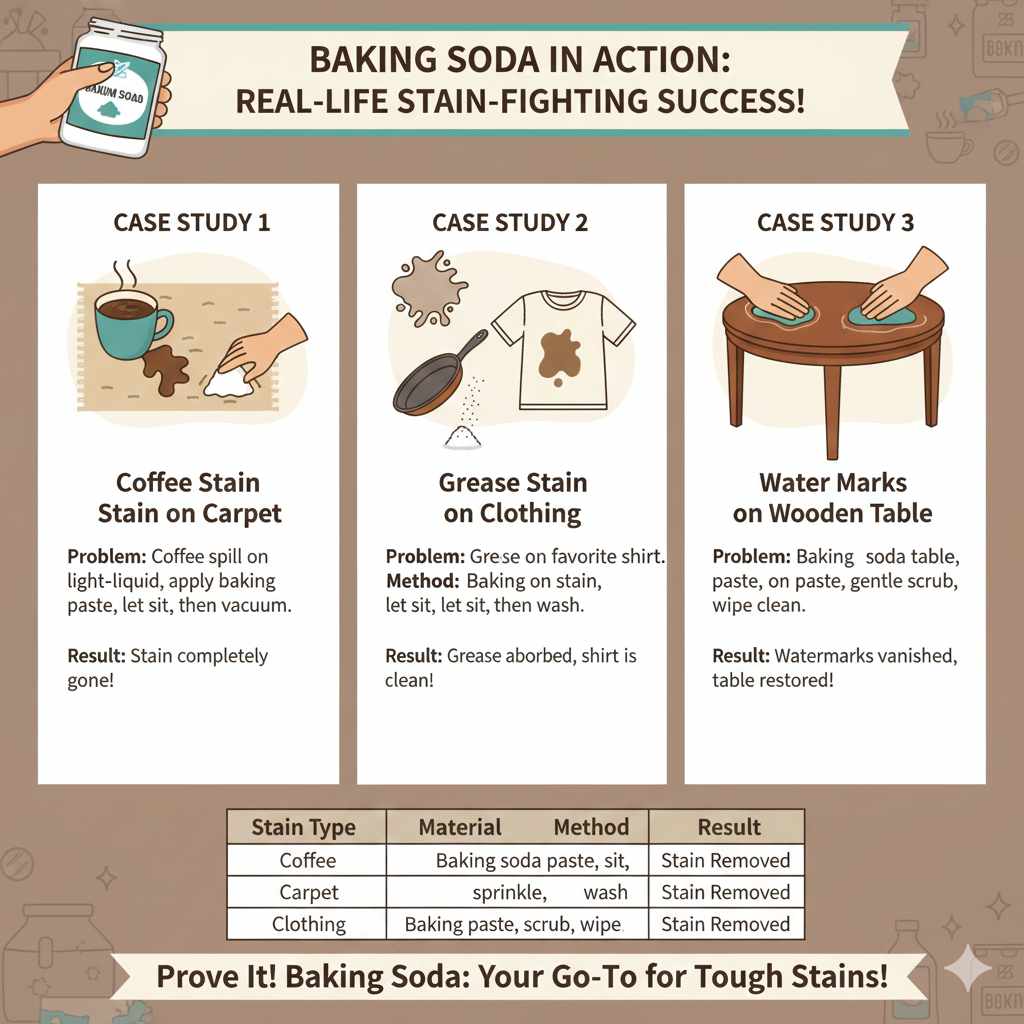
Case Study 1: Removing Coffee Stains From a Carpet
A homeowner spilled coffee on a light-colored carpet. The coffee left a dark stain that seemed difficult to remove. They immediately blotted the spill with a clean cloth, removing as much liquid as possible. Next, they made a baking soda paste and gently applied it to the stain. After letting the paste sit for a couple of hours, they vacuumed it up. The stain was gone. The carpet was fresh, without any coffee residue. This case study demonstrates how quickly and efficiently baking soda could remove a common stain with the proper technique.
Case Study 2: Cleaning Grease Stains From Clothing
Someone got grease on their favorite shirt while cooking. They acted fast, sprinkling baking soda directly onto the stain. After letting it sit for several hours, they washed the shirt in the washing machine. The baking soda absorbed the grease, and the shirt looked great. This example shows that baking soda can often be used to treat oily stains on clothes before they become permanent. It’s a great example of how simple actions can prevent big problems. It also shows the importance of quick action.
Case Study 3: Removing Water Marks From a Wooden Table
A wooden table developed water rings from cups. The homeowner mixed baking soda and water into a paste and applied it to the marks. They rubbed the paste gently, then wiped the area with a damp cloth. The watermarks vanished, and the table looked as good as new. Baking soda can be used carefully to protect and restore wooden surfaces. They needed to dry the surface completely afterward to prevent future water damage. It is a good example of how to make surfaces look better.
| Stain Type | Material | Method | Result |
|---|---|---|---|
| Coffee | Carpet | Baking soda paste, sit, vacuum | Stain Removed |
| Grease | Clothing | Baking soda sprinkle, wash | Stain Removed |
| Water Marks | Wooden Table | Baking soda paste, scrub, wipe | Stain Removed |
Frequently Asked Questions
Question: Does baking soda work on all types of stains?
Answer: No, baking soda is effective on many common stains like grease, coffee, and watermarks, but it’s not a universal solution. Some stains, like those from permanent markers or certain dyes, may be too strong for baking soda.
Question: Can I use baking soda on delicate fabrics?
Answer: Yes, you can use baking soda on delicate fabrics, but you must be careful. Always test it on a hidden area first. Use a gentle touch when applying and scrubbing, and don’t let the mixture sit for too long.
Question: Can baking soda damage surfaces?
Answer: Baking soda is a mild abrasive, so it’s usually safe. However, scrubbing too hard can scratch surfaces. Always test in an inconspicuous spot first and use caution on sensitive materials.
Question: What can I mix with baking soda to boost its cleaning power?
Answer: Vinegar or lemon juice can be mixed with baking soda to boost its power. These can create a fizzing action. Be careful when using these mixtures, as they might not be good for all surfaces.
Question: How long should I let the baking soda mixture sit on the stain?
Answer: The time depends on the stain type and material. For most stains, letting the mixture sit for 15 minutes to a few hours will work. For tough stains, you might want to leave it overnight.
Final Thoughts
So, Can Baking Soda Get Rid of Stains? The answer is a resounding “yes,” but it is crucial to use it correctly. Baking soda is a great cleaning agent that is easy to find and use. Remember that the way you use it affects how well it works. Before you begin, identify the stain and surface type. Mix baking soda with water to make a paste and apply it carefully. Following the right steps, you can remove many stains from fabrics, hard surfaces, and more. When in doubt, always test it in a hidden spot. Armed with a little knowledge, you’re well on your way to a cleaner home. Start by tackling your first stain today!