Behr Cedar Fence Stain Review: Is It Worth It?
For cedar fences, BEHR is a workable choice. The safer default is the semi-transparent route if you want the grain visible. Use a solid finish when the fence is older, patched, sun-baked, or uneven enough that cedar’s color variation would read blotchy instead of natural.
Verdict
That verdict depends on prep. Cedar can absorb stain unevenly, and skipped cleaning or sanding shows up fast as patchiness, early fading, or weak water beading. If you want the most forgiving result, BEHR Premium Solid Color Waterproofing Stain & Sealer is the safer buy for tired vertical cedar. If you want more wood character, BEHR Semi-Transparent Exterior Wood Stain can work well on new, even boards with careful prep.
Specs at a glance
| Item | What matters for cedar fences |
|---|---|
| BEHR Exterior Wood Stain | Water-based formula for decks, fences, siding, and pergolas; dries in 2 to 4 hours; cleans up with soap and water. |
| Solid-color option | 100% acrylic formula fortified with silicone; solid-color coverage hides flaws better and is marketed with UV and moisture resistance. |
| Solid durability claim | Up to 10 years on decks and 25 years on vertical surfaces, with real-world fence life affected by sun, texture, and prep. |
| Semi-transparent option | Shows more grain than solid stain, but needs better prep and more even wood to avoid mottling on cedar. |
| Coverage planning | About 200-400 square feet per gallon with two coats; rough cedar and end grain usually need a waste factor. |
| Prep cleaner | BEHR NO. 63 All-In-One Wood Cleaner is recommended before staining. |
| Application | Brush, roller, or sprayer; back-brushing matters on cedar to even out uptake. |
| Color range | BEHR offers over 1,600 custom colors, including cedar-toned and neutral options. |
Cedar’s reddish tone changes how stain reads. A warm cedar color can look natural on fresh boards, while gray-brown or neutral shades can calm a busy grain pattern. On a fence, color choice should follow the wood’s age, how much sun it takes, and how much grain you want visible.
Who it
BEHR fits three fence owners best: people with new cedar who want visible grain, owners of weathered cedar who need coverage over flaws, and anyone who wants a water-based stain with simple cleanup. It is a weaker fit for severely uneven cedar if you want a transparent look, because surface variation will still show through.
New cedar fences
Fresh cedar with even milling is the best case for a semi-transparent finish. Sanding off mill glaze and cleaning dust first helps the stain soak consistently, which matters more on cedar than on more uniform lumber.
Older cedar with wear
Older fences with gray panels, patch repairs, or sun-faded boards usually do better with solid color. The extra coverage hides mismatched boards and softens tannin-related color swings that can make semi-transparent stain read uneven.
Owners who want low-maintenance color
If you want fewer visible touch-ups, a solid finish is the better maintenance choice. It still needs washing and eventual recoating, but it usually masks wear patterns longer than semi-transparent stain on a vertical fence.
What works
BEHR’s strongest cedar-fence argument is coverage. The solid-color version is made to hide surface flaws, and the water-based formula makes cleanup straightforward. For a fence in full sun, the UV and moisture resistance matter more than on a shaded fence, because cedar grays and dries out faster when exposure is harsh.
Pros and cons
- Pros: solid-color coverage hides imperfect cedar; water-based cleanup uses soap and water; brush, roller, or sprayer application suits DIY fence work.
- Pros: the formula dries in 2 to 4 hours, and vertical-surface wear claims are strong on paper.
- Cons: semi-transparent stain is less forgiving on blotchy cedar; skipped prep can lead to uneven absorption or peeling.
- Cons: the longest durability claims come from vertical surfaces in ideal conditions, not from neglected, rough, or heavily weathered boards.
Picture a 6-foot cedar privacy fence facing afternoon sun. If the boards are fairly even and you want the grain to show, a semi-transparent cedar tone can look right, but only after cleaning and sanding. If the fence has repair patches and mixed-age boards, a solid finish is the safer visual choice.
BEHR’s stain also suits fence work because it is intended for exterior wood, not only decks. That matters less in marketing than in use: fence boards are vertical, often rougher than decking, and more exposed to wind-driven rain and sun. The product needs to handle that pattern of wear, not just foot traffic.
What does not?
The weak point is prep sensitivity, especially on cedar. Semi-transparent stain can look uneven if the board surface has mill glaze, grime, mildew, or varying density from one picket to the next. If the surface is not cleaned and sanded properly, cedar may absorb more stain in soft grain than in hard grain, which creates blotching.
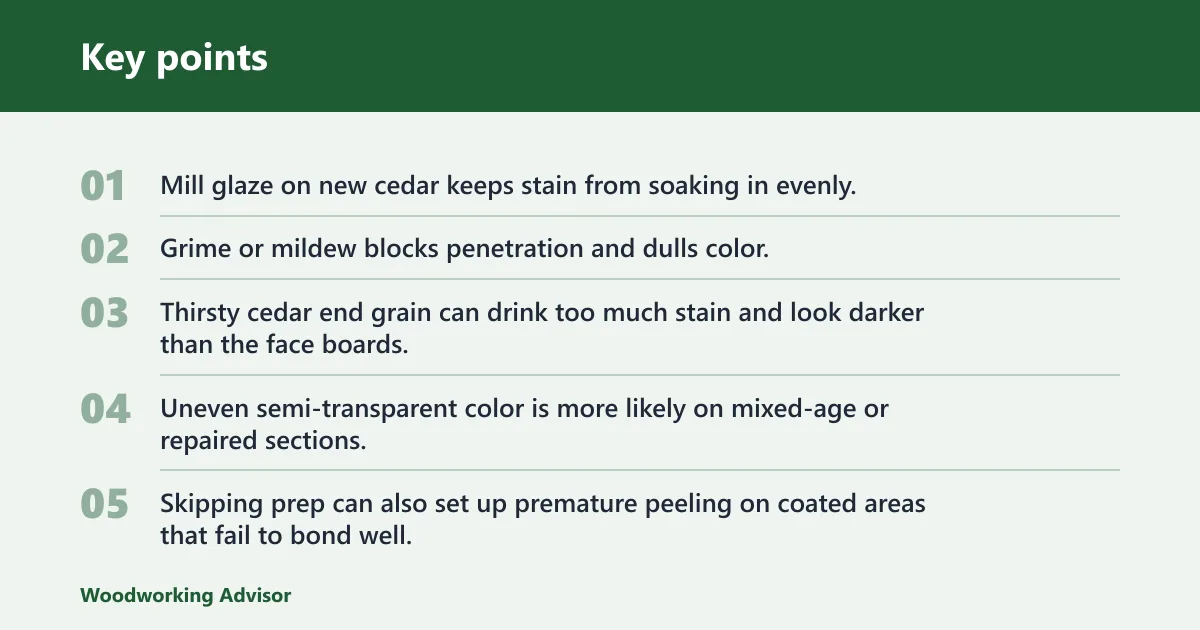
Common failure points
- Mill glaze on new cedar keeps stain from soaking in evenly.
- Grime or mildew blocks penetration and dulls color.
- Thirsty cedar end grain can drink too much stain and look darker than the face boards.
- Uneven semi-transparent color is more likely on mixed-age or repaired sections.
- Skipping prep can also set up premature peeling on coated areas that fail to bond well.
Suppose a 12-foot repair section is inserted into a weathered cedar run. The new boards will usually stain differently from the older boards unless you sand, clean, and balance absorption first. A solid finish can hide some of that mismatch; a semi-transparent finish will not.
Cedar prep that matters
- Wash the fence with BEHR NO. 63 All-In-One Wood Cleaner to remove mildew and grime.
- Rinse fully and let the wood dry before coating.
- Sand new cedar lightly to remove mill glaze and open the surface.
- Spot-sand rough repair areas and raised grain.
- Stir the stain well and keep a wet edge while applying.
- Back-brush after spraying or rolling so the stain penetrates evenly.
Cedar fence decision table
The table below matches fence condition to finish type, prep level, and estimated gallon count for common fence lengths. The gallon numbers assume two coats and include a modest waste factor for rough cedar, end grain, and application loss. Coverage still varies with porosity and texture.
| Product | Badge | Best for | Price | ||
|---|---|---|---|---|---|
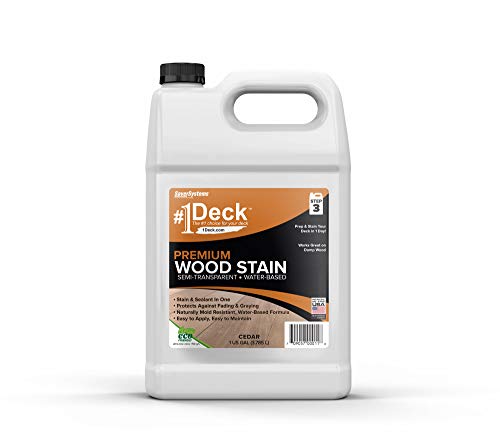 |
SaverSystems #1 Deck Premium Semi-Transparent Outdoor WoodSaverSystems | Our pick | 1 Gallon · Cedar · Semi-transparent | $37.99
Price as of 17 Oct 2026
|
View |
 |
1 Gallon Seal Stain & Sealer & Preservative for Wood,STF ShangTianFeng | Budget pick | 1 Gallon · Dark Walnut · All-in-one | $56.99
Price as of 17 Oct 2026
|
View |
 |
Magimate 4 Inch Shed Fence Paint Brush for Walls, Siding &Magimate | Pair with it | 4 Inch · 90/10 Bristle · Threaded Handle | $12.99
Price as of 17 Oct 2026
|
View |
| Fence condition | Sun exposure | Grain visibility goal | Maintenance tolerance | Recommended BEHR finish | Prep steps | 100 ft | 200 ft | 300 ft |
|---|---|---|---|---|---|---|---|---|
| New cedar, even boards | Low to moderate | High | Moderate | Semi-transparent | Clean, dry, light sanding to remove mill glaze | 1-2 gal | 2-3 gal | 3-4 gal |
| New cedar, full sun | High | Medium | Moderate to low | Semi-transparent only if finish quality matters more than long wear; otherwise solid color | Clean, sand, and back-brush carefully | 1-2 gal | 2-4 gal | 4-6 gal |
| Weathered cedar, mixed color | High | Low to medium | Low | Solid color | Wash with cleaner, dry, spot-sand, address loose fibers | 2-3 gal | 3-5 gal | 5-7 gal |
| Repaired cedar, patchy absorption | Any | Low | Low | Solid color | Clean, sand repairs, feather transitions, test a small section | 2-3 gal | 3-5 gal | 5-7 gal |
| Older cedar, shade or partial shade | Low | Medium | Moderate | Semi-transparent or solid, depending on how much grain you want to keep | Clean thoroughly, dry fully, sand rough spots | 1-2 gal | 2-4 gal | 3-6 gal |
How much stain do you need?
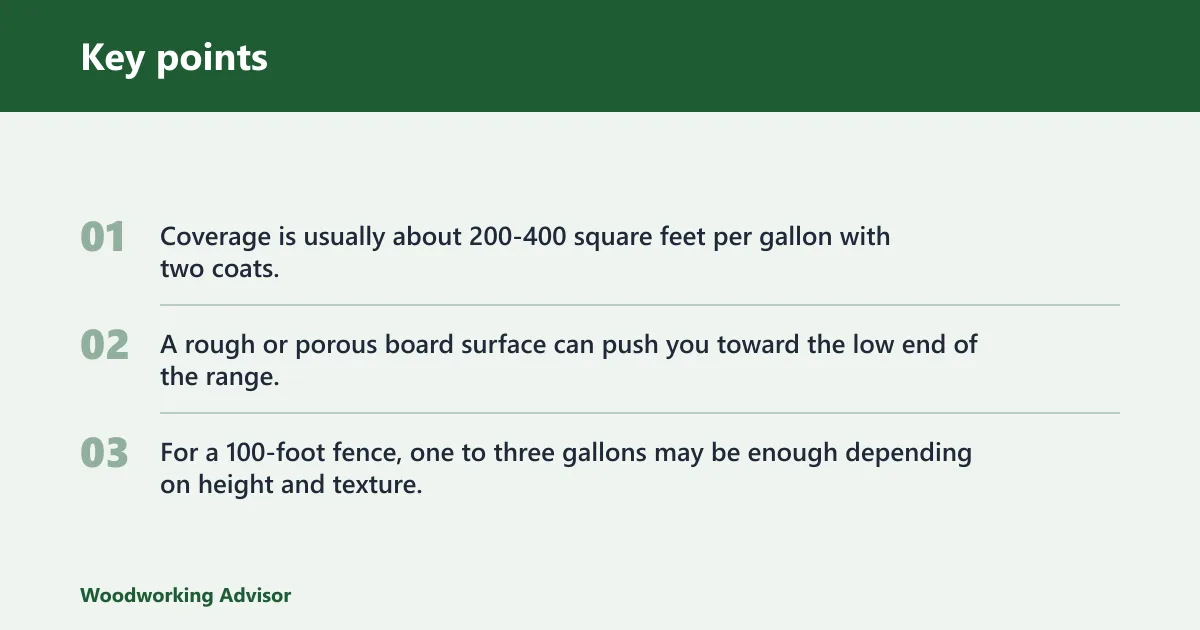
Coverage is usually about 200-400 square feet per gallon with two coats, but cedar fence math is rarely that clean. A rough or porous board surface can push you toward the low end of the range, and end grain can increase waste. For a 100-foot fence, one to three gallons may be enough depending on height and texture; a 300-foot run often needs several gallons more than a smooth estimate suggests.
What color should you choose for cedar?
Choose the color based on the cedar tone you want to keep, not just the label. Warm cedar shades read closest to fresh lumber and preserve a natural reddish cast. Gray-brown and neutral colors calm the redness, which helps when the fence sits beside brick, stone, or darker trim.
Warm cedar tones
Warm cedar colors work best when the fence is newer and the goal is to keep the wood looking like cedar, not paint. They can read slightly deeper or redder on cedar than on pine, so test on an off-cut or a hidden board first.
Gray-brown and neutral options
Neutral cedar-adjacent tones can make a fence read softer and less orange in bright sun. They are also a practical choice when the fence sits near cool-toned siding, gravel, or concrete, where a reddish stain can look louder than expected.
Matching trim or hardscape
If the house trim is white, charcoal, or muted taupe, a neutral solid stain often looks cleaner over time. If the fence borders tan stone or warm siding, a cedar-toned semi-transparent color usually keeps the yard materials in the same temperature range.
Alternatives
SaverSystems #1 Deck Premium Semi-Transparent Outdoor Wood Stain and Sealer in Cedar is a direct alternative when you want a semi-transparent look and clearer grain. Based on the listed product details and buyer feedback, the main tradeoff is the same one cedar always brings: it will not hide uneven absorption as well as a solid finish, so prep and color consistency still matter.
STF ShangTianFeng Seal Stain & Sealer & Preservative in Dark Walnut is the stronger pick when waterproofing and broader wood compatibility matter more than a cedar-matched tone. The drawback is visual: dark walnut can move the fence away from a natural cedar read, and lower-visibility grain may be the price of that coverage.
Magimate 4 Inch Shed Fence Paint Brush is not a stain alternative, but it is the kind of tool that matters on cedar. A brush helps you work stain into the grain and control overlap lines. The limitation is simple: by itself it will not fix poor prep or a finish choice that does not suit the fence.
Should you buy it?
Buy BEHR if your cedar fence needs a finish with clear finish-type options, water-based cleanup, and a strong solid-color fallback for aged or uneven boards. Pass if you want a transparent result on rough cedar without doing prep work, because the wood itself will dictate the final look more than the label will.
For most cedar fences, the safe recommendation is this: choose semi-transparent only on newer, even boards when grain matters, and choose solid color when the fence is older, patchy, or faces hard sun. That split is the best way to keep cedar from blotching while still getting a finish that matches how the fence actually looks.
Recoat timing depends on exposure, but a vertical cedar fence should be checked every season for chalking, water soak-in, and wear on the sun side. Wash-down frequency can be light, yet the fence should be cleaned before dirt builds into a new coating problem. Touch-ups work best on isolated boards rather than on the whole run at once.
Frequently asked questions
Is BEHR fence stain good?
It is a good fit when you match the finish to the cedar condition. The solid-color product is the more forgiving choice for worn or uneven boards, while the semi-transparent option is better when grain visibility matters and the fence has been cleaned and sanded well.
What color should I stain my cedar fence?
Pick warm cedar if you want the fence to keep its reddish wood character. Choose gray-brown or neutral tones if the fence sits next to cool siding, stone, or darker trim. The right color depends on how much natural cedar color you want to keep showing.
What BEHR wood fence stain colors work best on cedar?
Warm cedar-like shades usually look the most natural on new cedar, while gray-brown and muted neutral shades help older fences read less red. Solid colors are better when the board color varies a lot, because they reduce the distraction of patchy cedar tone shifts.
How long does BEHR fence stain last on a cedar fence?
BEHR Premium Solid Color Waterproofing Stain & Sealer claims up to 25 years on vertical surfaces, but cedar fences rarely reach that in real use without ideal prep and moderate exposure. Semi-transparent finishes usually need earlier refreshes, especially on sunny, rough, or porous cedar.
Should I use a solid or semi-transparent stain on cedar?
Use semi-transparent if the fence is newer, evenly milled, and you want the grain visible. Use solid when the cedar is older, repaired, or sun-faded. Solid stain is also the safer choice when you want to hide blotching and color mismatch.
What prep does cedar need before staining with BEHR?
Clean cedar with BEHR NO. 63 All-In-One Wood Cleaner, rinse well, let it dry, and sand new wood to remove mill glaze. That prep matters because cedar absorbs stain unevenly when the surface is dirty, sealed by mill glaze, or rough in only part of the fence.
How much stain do I need for a cedar fence?
A common planning range is about 200-400 square feet per gallon with two coats, but rough cedar can move you toward the lower end. For fence length planning, use the decision table above and add extra for porous boards, end grain, and waste from application method.
Is BEHR exterior wood stain worth it for fences?
It is worth considering when you want a water-based fence stain with straightforward cleanup, quick drying, and a choice between solid coverage and more visible grain. It is less attractive if you want a forgiving finish on poorly prepped cedar, because the wood condition still controls the result.
Sponsored / affiliate links. As an Amazon Associate I earn from qualifying purchases. I may earn additional commission from eligible campaigns.