Best Wood Cutting Boards (2026): End-Grain vs. Edge-Grain Picks
Dense, closed-grain hardwoods — maple, walnut, and cherry — make the best wood cutting boards, and end-grain construction (like John Boos’s reversible maple blocks) protects knife edges better than any other build. Skip softwoods and thin edge-grain boards under 1 inch; both warp and dull blades faster. This guide covers wood hardness by the numbers, end-grain vs. edge-grain construction, the board size that actually stays put, and the monthly oiling routine that keeps a board working for decades.
How to Choose a Wood Cutting Board
Best Overall Cutting Board Pick
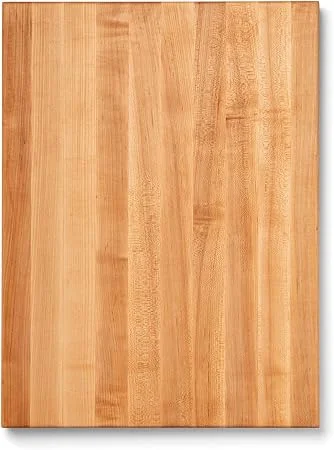 |
John Boos R-Board Maple Cutting Board 24×18 – $154.95 A 1.5-inch-thick edge-grain hard maple board, reversible with finger grips on both sides — the size and thickness this guide recommends for serious daily use.
|
Selecting the right cutting board is about more than picking a surface to chop on — it has to be kind to your knives, resist bacteria, and hold up to daily washing. Wood cutting boards deliver all three when you pick the right species and construction.
Wood Types for Cutting Boards
The wood species used for a cutting board determines its durability, its look, and how gentle it is on your knife edge. Hardwoods are the standard for cutting boards because they’re denser and less prone to knife damage than softwoods like pine, which are porous, scratch deeply, and absorb moisture and bacteria.
Maple, walnut, and cherry are the three hardwoods that dominate quality cutting boards. Hard maple is the densest of the three and the most knife-friendly for daily chopping. Walnut is noticeably softer but still durable, and gives a darker, richer look. Cherry starts lighter and darkens into a deep patina over years of use and oiling.
End-Grain vs. Edge-Grain vs. Face-Grain Construction
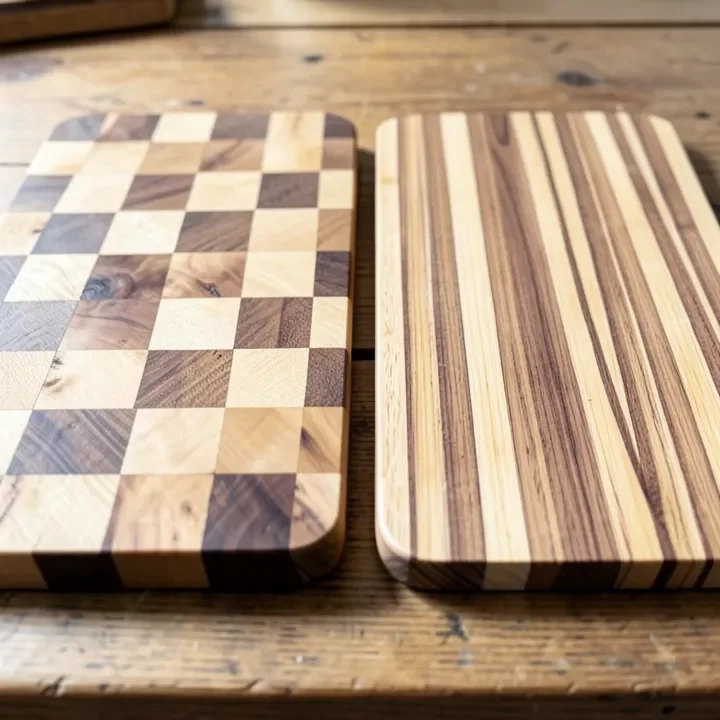
How a board is built matters as much as the wood species. End grain boards are cut so the wood fibers stand vertically, so a knife blade parts the fibers instead of severing them — the cuts close back up between uses, which is why end-grain boards are often called “self-healing.” That makes them the gentlest option for your knife edge, but the labor-intensive glue-up also makes them the most expensive.
Edge grain boards are made by gluing strips of wood together with the grain running parallel to the cutting surface. They’re more affordable than end grain and still noticeably tougher than face grain boards, which are just wide planks glued face-to-face — the cheapest, least durable option, and the one that shows knife marks fastest.
Cleaning, Oiling, and Removing Stains
Wash a wood cutting board by hand with warm water and mild dish soap right after use, then stand it on its edge to air dry. Never soak it and never run it through a dishwasher — the heat and standing water will warp, crack, or delaminate the glue joints within a few cycles.
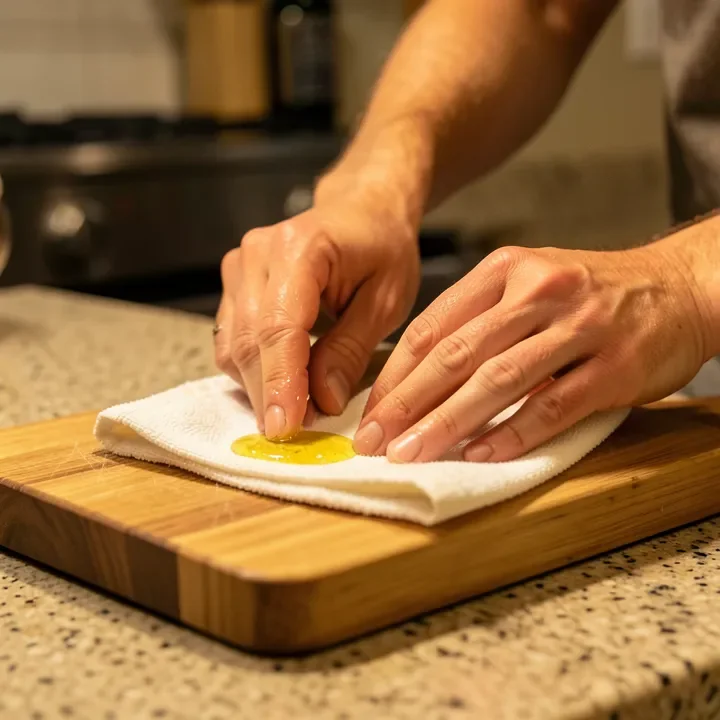
- Oil the board about once a month, or whenever the surface looks dry or dull, with food-grade mineral oil applied liberally and left to soak in overnight before wiping off the excess.
- For stubborn stains, work a baking-soda paste into the spot for 10-15 minutes, then scrub gently and rinse. For odors, a cut lemon or a diluted white-vinegar wipe-down handles most kitchen smells.
Best Wood Cutting Board Picks by Brand
Boos Blocks is the name most professional kitchens default to, with maple, cherry, and walnut boards in both end-grain and edge-grain builds. The John Boos Maple reversible edge-grain board (our pick above) is a 24″x18″, 1.5″-thick block that’s heavy enough to stay put on a counter without a mat.
Teakhaus builds its boards from teak, a wood with high natural oil content that resists water and bacteria without needing frequent oiling. The Teakhaus Edge Grain Reversible board is a mid-priced, USA-assembled option that trades a bit of maple’s knife-friendliness for lower maintenance.
Catskill Craftsmen covers the budget-to-mid range with solid maple end-grain and edge-grain boards made in the USA — a reasonable step up from face-grain boards without end-grain pricing. For a genuinely inexpensive option, edge-grain acacia boards (commonly under $80) hold up fine for occasional cooking, though acacia’s higher hardness is tougher on knife edges than maple.
Sur La Table is another specialty retailer worth checking — it sells its own house-branded maple boards starting around $60, plus curated picks from several of the brands above. See our Sur La Table wood cutting board breakdown for real prices across its full lineup.
Key Features to Check Before You Buy
A board at least 12″x18″ and 1.5″-2″ thick handles most home cooking without flexing or sliding around; for a full breakdown by grain type, see our wood cutting board size guide. Thicker, heavier boards stay put on the counter on their own weight; anything under 1 inch usually needs a damp towel or non-slip mat underneath.
Rounded or beveled edges resist chipping and are more comfortable to carry. A juice groove around the perimeter is worth it if you cut a lot of meat or juicy produce — it’s the difference between a clean counter and a puddle.
Which Wood Cutting Board Fits Your Kitchen
The “best” board depends on how you actually cook, not just what looks impressive.
For the Serious Home Cook
If you cook daily and care about your knife edges, an end-grain maple or walnut board at 18″x24″ or larger is worth the higher price. The self-healing surface keeps expensive knives sharper between sharpenings, and the extra size gives you room to prep multiple ingredients at once.
For Everyday Versatility
An edge-grain maple board around 14″x20″ and about 1 inch thick covers most everyday chopping without the end-grain price tag. Bamboo is a reasonable alternative here — it’s technically a grass, not a wood, but it’s hard, sustainable, and easy to maintain, even if it’s tougher on knife edges than maple.
For Serving and Presentation
Face-grain boards with striking grain patterns, often called charcuterie or cheese boards, are built for looks and light slicing rather than heavy daily chopping. Exotic woods like olive or acacia are popular here since the natural grain pattern is the whole point.
Wood vs. Plastic, Bamboo, Glass, and Metal Cutting Boards
Wood vs. Plastic: Which Is More Hygienic?
Plastic looks easier to sanitize, but knife cuts create microscopic grooves that trap food and bacteria even after washing. Wood behaves differently: bacteria get pulled down into the wood’s capillary structure and die off there rather than surviving on the surface. Our full breakdown of the wood-vs-bacteria research covers the underlying UC Davis food-safety study in more detail.
Knife care follows the same pattern: wood’s give lets a blade part the fibers instead of grinding against a harder, more resistant surface, so it dulls knives more slowly than plastic, glass, or metal.
Wood vs. Bamboo
Bamboo grows to harvest size in about 3-5 years versus decades for hardwood trees, which makes it the more sustainable choice. Our bamboo vs. wood cutting board guide has the full hardness comparison, but the short version: bamboo’s extra hardness resists scratches well but dulls knife edges noticeably faster than maple or walnut.
Wood vs. Wood-Fiber Composite
Wood-fiber composite boards (paper layers bonded with resin under heat and pressure) trade the natural grain look for dishwasher durability solid wood can’t match, since their engineered construction doesn’t expand and contract the way solid lumber does. Our wood-fiber cutting board safety guide covers what the material is actually made of and how it holds up against solid wood long-term.
Wood vs. Glass or Metal
Glass and metal boards are easy to wipe down, but both are harder than steel knife blades, which means they dull a sharp knife within a few uses. Glass boards are also genuinely dangerous — they’re slippery underfoot on a counter and will chip or shatter if dropped. Neither is a serious option if you care about your knives.
Frequently Asked Questions
What is the best type of wood for a cutting board?
Hard maple is the best all-around choice at 1,450 lbf on the Janka hardness scale — dense enough to resist deep knife scarring while still being gentle on blade edges. Walnut and cherry are softer but still durable, and both develop a richer color with age and oiling.
How do I clean a wood cutting board?
Wash it by hand with warm water and mild dish soap right after use, then stand it on its edge to air dry completely. Never soak it or put it in the dishwasher — both will warp or crack the wood within a few cycles.
How often should I oil my wood cutting board?
About once a month, or whenever the surface starts to look dry, pale, or dull. Boards used daily or kept in a dry climate may need oiling every two to three weeks. Food-grade mineral oil is the standard choice; avoid cooking oils, which go rancid.
Can wood cutting boards harbor bacteria?
Less than most people assume. UC Davis food-safety research found bacteria like E. coli and Salmonella die off inside wood’s capillary structure within minutes to hours, while the same bacteria survive and multiply far longer in the knife-scarred grooves of a plastic board. Regular cleaning and oiling still matter for both materials.
What’s the difference between end grain and edge grain cutting boards?
End-grain boards expose the vertical wood fibers on the cutting surface, so a knife parts the fibers rather than cutting across them, making end grain gentler on blades and more resistant to permanent marks. Edge-grain boards run the grain parallel to the surface — still durable, but they show knife marks sooner and cost less.
Conclusion
An end-grain hard-maple board is the best all-around choice for daily cooking, while a solid edge-grain maple or acacia board covers everyday use for less money. Whatever wood you choose, hand-washing and monthly mineral-oil conditioning are what actually determine whether it lasts five years or fifty.
Sponsored / affiliate links. As an Amazon Associate I earn from qualifying purchases. I may earn additional commission from eligible campaigns.