
Can Wood Stain Fumes Kill You? Proven Dangers
While extremely rare in typical DIY situations, death from wood stain fumes is possible under severe conditions, such as working in a completely sealed, unventilated space for a prolonged period or through intentional misuse. The primary danger comes from high concentrations of Volatile Organic Compounds (VOCs), which can cause serious health issues.
Hello, fellow makers! It’s Md Meraj here. I know that feeling well. You’ve just finished sanding a beautiful piece of furniture. It’s smooth, perfect, and ready for that rich color. You pop open a can of wood stain, and an overpowering chemical smell fills the air. Suddenly, your excitement is mixed with a little worry. You might wonder, “Is this stuff safe to breathe? Can these strong fumes actually be harmful?”
It’s a great question to ask, and it shows you’re thinking like a true craftsperson—with safety first. The short answer is that yes, wood stain fumes can be dangerous, but managing them is simple. You don’t need to be scared, you just need to be prepared. In this guide, I’ll walk you through exactly what’s in those fumes, the risks involved, and the easy, practical steps you can take to keep yourself safe. Let’s make your next project both beautiful and safe.
What Are You Actually Breathing? Unpacking Wood Stain Fumes
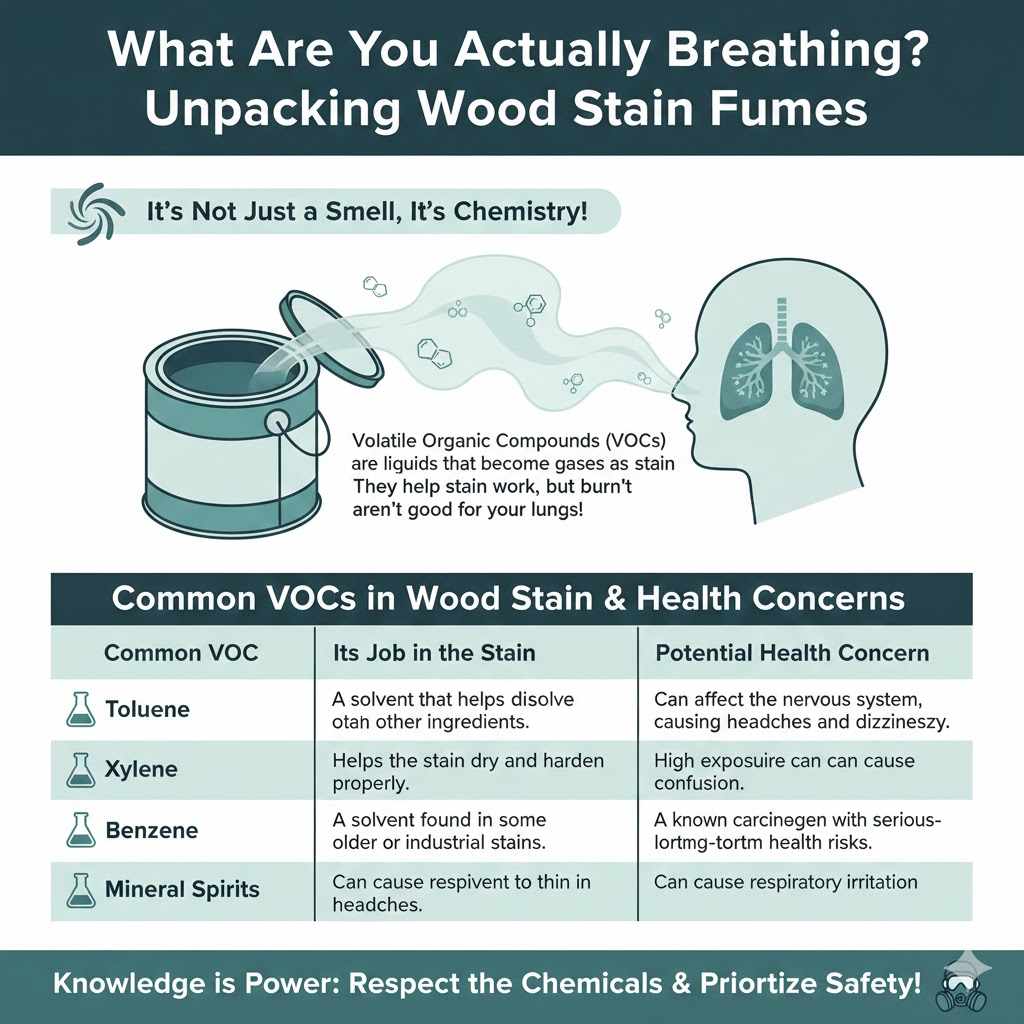
When you open a can of stain, that strong smell comes from chemicals called Volatile Organic Compounds, or VOCs for short. Think of VOCs as liquids that want to become a gas. As the stain dries on your wood, these VOCs evaporate into the air, releasing fumes. This is a normal part of the process for many oil-based and even some water-based products.
So, what exactly are these VOCs? They are solvents and other chemicals added to the stain to help it spread evenly, penetrate the wood, and dry correctly. While they do a great job for our projects, they aren’t so great for our lungs or our overall health without proper precautions.
Here are some of the common VOCs found in wood stains and what they do:
| Common VOC | Its Job in the Stain | Potential Health Concern |
|---|---|---|
| Toluene | A solvent that helps dissolve other ingredients. | Can affect the nervous system, causing headaches and dizziness. |
| Xylene | Helps the stain dry and harden properly. | Irritates eyes, nose, and throat. High exposure can cause confusion. |
| Benzene | A solvent found in some older or industrial stains. | A known carcinogen with serious long-term health risks. |
| Mineral Spirits | A common solvent used to thin the stain. | Can cause respiratory irritation and headaches. |
Seeing a list like this can feel a little intimidating, but knowledge is power. Understanding what’s in the can helps us understand why safety steps like ventilation are so incredibly important. You’re not just dealing with a bad smell; you’re dealing with chemicals that need to be respected.
The Health Risks: From a Simple Headache to Serious Dangers
The health effects from wood stain fumes depend on a few key things: how much you breathe in, for how long, and your personal sensitivity. We can break the risks down into two main categories: short-term effects and long-term effects.
Short-Term (Acute) Exposure Symptoms
These are the effects you might feel during or shortly after your staining project, especially if you’re working in a space without good airflow. They are your body’s immediate warning signals telling you to get some fresh air.
- Headaches
- Dizziness or feeling light-headed
- Nausea or feeling sick to your stomach
- Irritation in your eyes, nose, or throat
- Difficulty breathing or feeling short of breath
- Loss of coordination
If you start to experience any of these symptoms, don’t try to tough it out! The solution is simple: stop what you are doing immediately and move to an area with fresh air. These symptoms usually go away once you are away from the fumes.
Long-Term (Chronic) Exposure Dangers
Long-term risks are associated with breathing in stain fumes regularly over months or years without proper safety gear. This is less of a concern for the occasional DIYer but is a serious issue for professionals or hobbyists who work with stains frequently in poorly ventilated areas.
According to the U.S. Environmental Protection Agency (EPA), prolonged exposure to high levels of certain VOCs can lead to more severe health problems, including:
- Damage to the central nervous system
- Liver or kidney damage
- Long-term respiratory issues
- An increased risk of certain types of cancer (especially from chemicals like benzene)
So, Can the Fumes Actually Be Fatal?
This brings us back to our main question: Can wood stain fumes kill you?
For a typical home project, the answer is that it is incredibly unlikely. Fatalities related to wood stain fumes are extremely rare and almost always happen under extreme circumstances you are unlikely to encounter in a DIY setting. These scenarios include:
- Working in a Confined, Sealed Space: This would mean staining in a small room with no windows, no doors open, and no airflow whatsoever for a very long time. The high concentration of fumes could displace oxygen and lead to asphyxiation.
- Intentional Misuse (Inhalation Abuse): Deliberately concentrating and inhaling the fumes for their narcotic effect, which is incredibly dangerous and can be fatal.
- A Massive Spill in an Enclosed Area: A large industrial-sized spill could create a hazardous level of fumes very quickly.
So, while it’s technically possible, it is not a realistic danger for the cautious DIYer. The real focus for us should be on preventing the short-term and long-term health issues, which is completely achievable with the right approach.
Your Safety Checklist: How to Stain Wood Smartly and Safely
Now for the most important part! Here are the simple, actionable steps you can take to ensure every staining project is a safe one. Think of this as your pre-flight checklist before you get started.
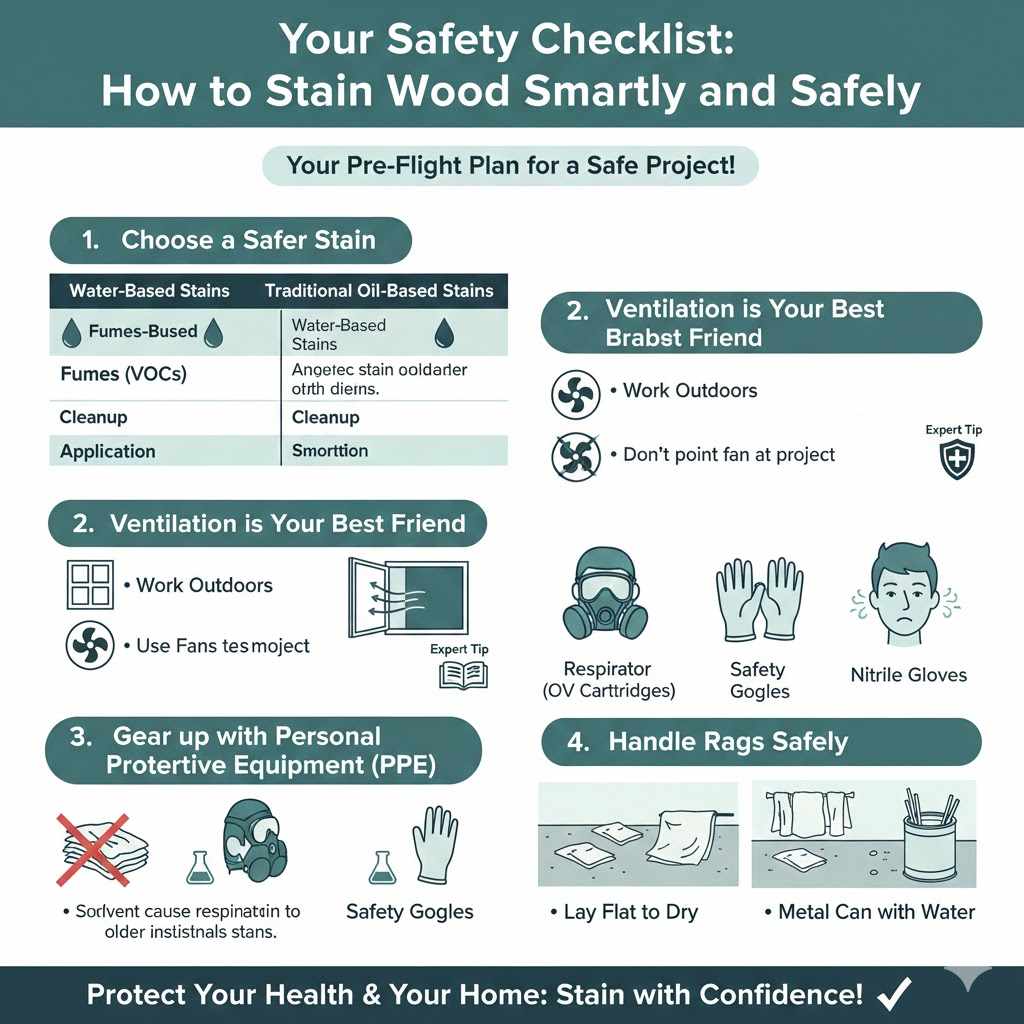
1. Choose a Safer Stain
Your safety starts at the hardware store. Not all stains are created equal when it comes to VOCs. You have options!
- Water-Based Stains: These have come a long way! They have significantly lower VOCs than their oil-based cousins, which means fewer harmful fumes. They also clean up easily with soap and water and dry much faster.
- Low-VOC or Zero-VOC Oil-Based Stains: Manufacturers are getting better at creating effective stains that are safer for you and the environment. Look for labels that say “Low-VOC” to reduce your exposure.
Here’s a quick comparison to help you decide:
| Feature | Water-Based Stains | Traditional Oil-Based Stains |
|---|---|---|
| Fumes (VOCs) | Low to very low | High |
| Dry Time | Fast (often under an hour) | Slow (6-24 hours) |
| Cleanup | Soap and water | Mineral spirits or paint thinner |
| Penetration | Colors the surface, less penetration | Penetrates deep into the wood grain |
| Application | Can dry quickly, making it tricky to avoid lap marks. | Easier to apply evenly due to longer working time. |
2. Ventilation is Your Best Friend
This is the single most effective way to stay safe. Your goal is to keep fresh air moving in and fume-filled air moving out.
- Work Outdoors: If possible, take your project outside. You can’t beat the open air for ventilation.
- Open Windows and Doors: If you must work indoors, open as many windows and doors as you can to create a cross-breeze.
- Use Fans: Place a box fan in a window pointing outwards. This will actively pull the fumes from your room and exhaust them outside. Don’t point the fan at your project, as this can kick up dust and make the stain dry too quickly.
3. Gear Up with Personal Protective Equipment (PPE)
Your lungs, eyes, and skin deserve protection. Investing in a few key pieces of PPE is one of the smartest things a woodworker can do.
- Respirator: A simple paper dust mask is not enough! Dust masks are for particles like sawdust, not chemical fumes. You need a respirator with organic vapor (OV) cartridges. It should fit snugly on your face, creating a seal. The National Institute for Occupational Safety and Health (NIOSH) certifies respirators, so look for “NIOSH-approved” on the packaging.
- Safety Goggles: Protect your eyes from accidental splashes and airborne fumes that can cause irritation.
- Chemical-Resistant Gloves: Solvents in oil-based stains can break down latex gloves. Use nitrile gloves to protect your skin from absorbing the chemicals.
4. Handle and Dispose of Rags Safely
This is a safety tip that even some experienced woodworkers forget. Rags soaked in oil-based stain can spontaneously combust—meaning they can catch fire all by themselves as they dry.
NEVER bunch up used stain rags and throw them in the trash. Here is the safe way to dispose of them:
- Lay the rags out flat on a non-flammable surface like a concrete floor or driveway, away from direct sunlight.
- Let them dry completely until they are stiff. This can take a day or two.
- Once they are fully dry and hardened, you can safely dispose of them in your regular trash. Alternatively, you can place the wet rags in a metal can, fill it with water, and seal the lid before taking it to a hazardous waste disposal facility.
Frequently Asked Questions (FAQ)
1. How long do wood stain fumes last after application?
The strongest fumes are present during and immediately after application. They will decrease significantly as the stain dries, usually within 24 to 72 hours. However, the full “curing” process, where all VOCs are released, can take up to 30 days. Keep the area well-ventilated during this time.
2. Is it safe to sleep in a house after staining wood inside?
It is strongly recommended not to sleep in the same room or even the same house if the smell is strong, especially for the first 48-72 hours. If you must stay in the house, ventilate the stained area thoroughly by using fans to exhaust air outside and isolate the room by closing doors.
3. Are water-based stains completely safe and fume-free?
Water-based stains are much safer and have far fewer VOCs, but they are not completely “fume-free.” They still contain some chemicals and can cause irritation for sensitive individuals. It’s always a good practice to use them with good ventilation, even if you don’t need a respirator.
4. I have a paper dust mask. Is that good enough for staining?
No. A dust mask is designed to filter out particles like dust and pollen. It does nothing to protect you from the chemical gas of VOCs. You need a respirator with cartridges specifically rated for organic vapors to be protected.
5. What if I can still smell the stain on my furniture weeks later?
A lingering smell usually means the stain hasn’t fully cured yet. This can be due to thick application, high humidity, or poor airflow. Increasing air circulation and raising the temperature slightly can help speed up the curing process. Applying a topcoat like polyurethane will also seal in any remaining odor.
6. Do I still need safety gear if I’m staining outside?
Yes! While outdoor ventilation is excellent, it’s still a good idea to wear gloves and eye protection. If there’s not much of a breeze or if you’re sensitive to smells, wearing a respirator is also recommended, as fumes can still concentrate around your face as you work.
Conclusion: Craft with Confidence and Care
So, let’s circle back to that can of stain. Is it something to be feared? Not at all. Is it something to be respected? Absolutely.
Wood stain fumes contain powerful chemicals, and the risks they pose are real. But the good news is that they are entirely manageable. By choosing a safer product when you can, ensuring you have plenty of fresh air, and wearing the right protective gear, you turn a potentially hazardous task into a safe, enjoyable, and rewarding part of your woodworking journey.
You don’t have to choose between a beautiful finish and your health. With these simple practices, you can have both. Now you can get back to that project with the confidence of knowing you’re not just creating something beautiful—you’re doing it the smart, safe, and professional way. Happy building!