Can You Bring Drill Bits on a Plane? TSA’s Carry-On vs. Checked Rule
According to TSA’s own item-by-item guidance, drill bits are not allowed in carry-on bags under any circumstance – checked luggage is the only place for them. It’s a flat rule with no size or dullness exception, which trips up a lot of travelers packing for a job site or a weekend project at their destination.
That surprises people because TSA’s rules for other pointed tools, like screwdrivers under seven inches, do carry a size exception. Drill bits don’t get one. Below is exactly what TSA’s website says, why the rule exists, and how to pack a set so it survives the trip in one piece.
TSA’s Rule for Drill Bits: Carry-On vs. Checked Baggage
Best Travel-Friendly Drill Bit Case
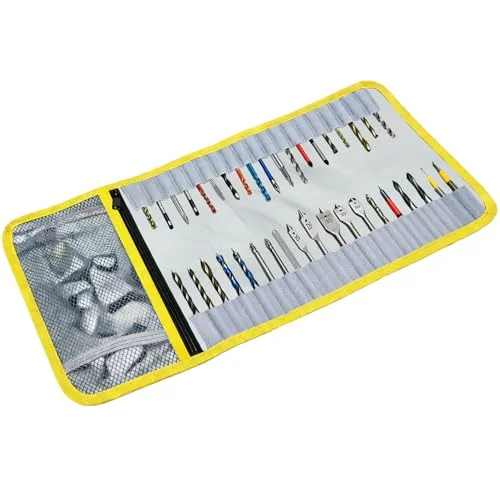 |
Drill Bit Organizer Roll-Up Case – $9.79 Since drill bits can only travel in checked luggage, a zippered roll-up case keeps every bit sorted, cushioned, and easy for a TSA officer to inspect at a glance if your bag gets opened.
|
TSA’s “What Can I Bring?” tool lists drills and drill bits with a plain answer for each bag type: carry-on – No. Checked bags – Yes. There’s no fine print about blade length, bit size, or bluntness the way there is for some other tools. TSA classifies drill bits as sharp, pointed objects capable of causing injury, and it puts them in the same broad “not in the cabin” bucket as ice picks, box cutters, and other pointed hand tools – not because they’re weapons, but because a sharp point that close to other passengers is a screening risk TSA isn’t willing to take a chance on.
Checked baggage doesn’t have that restriction because checked bags aren’t accessible to anyone during the flight. A full set of twist bits, a masonry bit, or a spade bit can all travel in the belly of the plane without issue – TSA’s only real ask is that they’re packed so they don’t become a hazard to the person handling the bag or puncture your other belongings.
Why There’s No Small-Bit Exception
It’s worth calling out directly because it’s the part most guides get vague about: TSA does allow some sharp-adjacent tools in carry-on within a size limit – screwdrivers and wrenches under 7 inches, for example. Drill bits aren’t on that list. The rule as published applies to the category as a whole, not a length or diameter threshold, so a tiny 1/16-inch bit gets the same “checked bag only” answer as a 1/2-inch spade bit or a long auger bit.
The final call at the checkpoint always belongs to the TSA officer on duty, and that discretion cuts one way here: toward being stricter, not more lenient. If a bit somehow makes it through initial screening, it can still be pulled and confiscated during a bag check. Planning around the published rule, rather than hoping an exception gets made, is the only approach that reliably keeps your tools with you.
How to Pack Drill Bits in Checked Luggage
Checked baggage handling is rougher than most people expect – bags get stacked, dropped onto conveyor belts, and tossed into cargo holds. Loose bits rattling around a suitcase can chip their own cutting edges, scratch clothing, or work their way through a soft-sided bag. A few packing habits fix all of that:
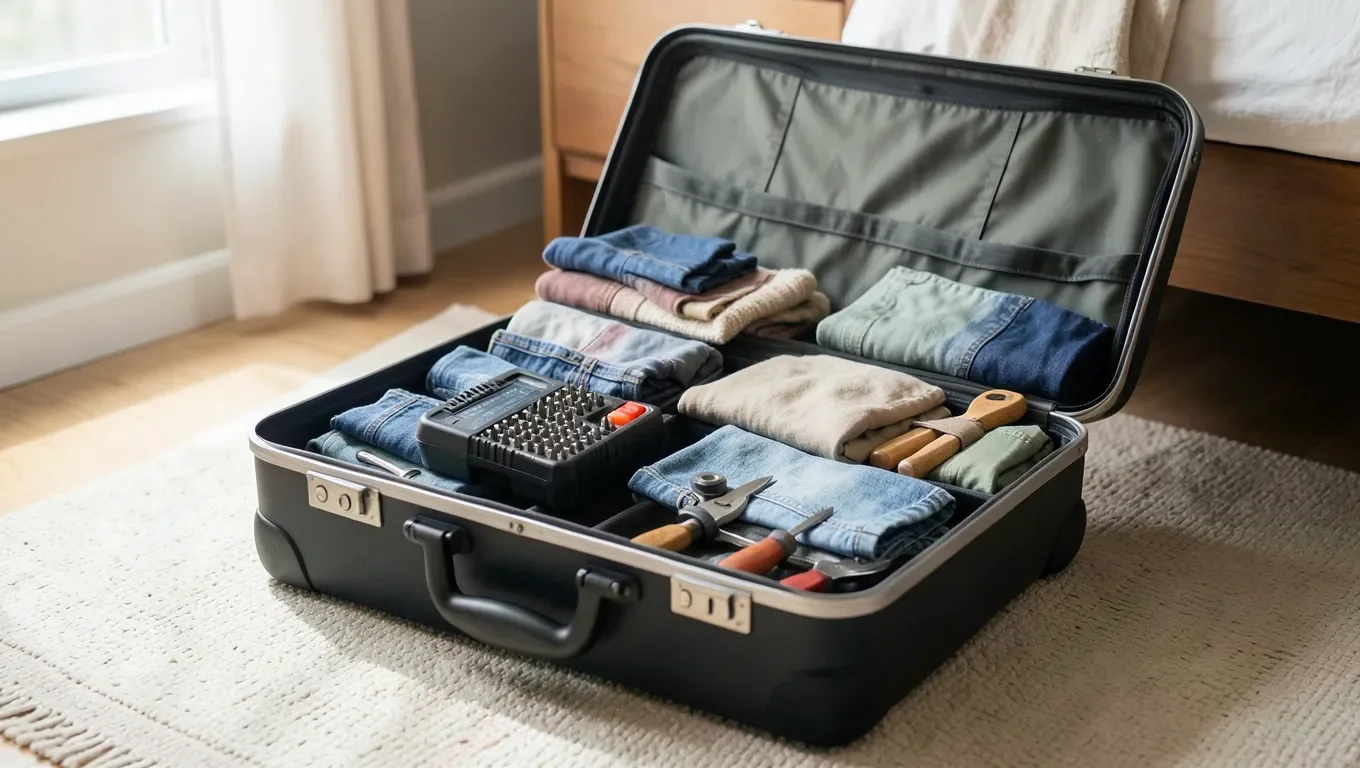
- Keep them in a dedicated case. A roll-up pouch, hard index case, or the bit’s original packaging all work – the point is that each bit has its own slot so tips can’t grind against each other in transit.
- Center the case in the suitcase. Surrounding it with folded clothing on every side absorbs shocks from rough handling far better than packing it against the shell of the bag.
- Skip the loose ziplock bag. It stops bits from scattering, but it does nothing to stop tips from puncturing through the plastic or the bag around it.
- Label sets you’re not using immediately. If a bag gets opened for a manual inspection, a labeled, organized case is faster for an officer to clear than a jumble of loose metal.
What About the Drill Itself?
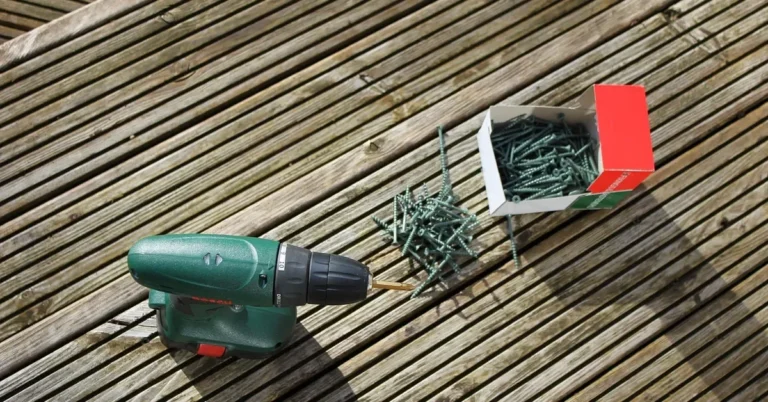
Bringing the drill bits is only half the question – the drill itself follows a related but separate set of rules, mainly around its battery rather than its shape. Cordless drills use lithium-ion batteries, which have their own charge-rating limits and packing requirements that apply whether the battery is installed in the tool or carried as a spare. We cover that in detail in our guide to bringing a drill on a plane, including TSA’s 100Wh battery threshold.
Common Packing Mistakes That Get Bits Pulled or Damaged
Most drill bit confiscations and travel-day frustrations trace back to the same handful of avoidable mistakes:
- Forgetting bits are in a carry-on bag pocket. A set left in a backpack’s tool pocket from a previous trip is the single most common reason bits get pulled at the checkpoint – the bag owner genuinely forgot they were there.
- Packing an entire mixed toolkit loose. Drill bits tossed in with screwdrivers, wrenches, and a tape measure end up sliding around and grinding against each other, which dulls edges over a long trip.
- Assuming a multitool case counts as “checked.” If any part of that case ends up in a carry-on bag by mistake – a common slip when repacking at a layover – the whole case is a problem, not just the drill bits inside it.
- Checking a bag with no padding around a hard case. A rigid plastic drill bit index can crack under the weight of stacked luggage if it’s pressed directly against the suitcase shell instead of cushioned by clothing.
Flying Internationally? The Rule Doesn’t Reset
TSA only governs U.S. departures, but drill bits run into the same checked-bag-only logic almost everywhere. Most national aviation security agencies base their prohibited-items lists on the same underlying guidance TSA does – sharp, pointed tools capable of causing injury are restricted from the cabin regardless of which country’s airport you’re standing in. The practical difference between countries usually isn’t whether drill bits are allowed in carry-on (they typically aren’t), it’s how strictly a given checkpoint enforces edge cases. If your itinerary includes an international connection, checking your outbound and connecting airline’s own baggage policy before you pack removes the guesswork – a bag that clears U.S. security fine can still get flagged again at a connecting airport with different staff and different day-to-day judgment calls.
Drill Bits vs. Other Tools: A Quick TSA Comparison
Seeing drill bits next to other common tools makes the pattern easier to remember while you’re packing.
| Item | Carry-On | Checked Bag | Size Exception? |
|---|---|---|---|
| Drill bits (any type) | No | Yes | None |
| Screwdrivers | Yes, if under 7 inches | Yes | Yes – 7-inch length limit |
| Wrenches/pliers | Yes, if under 7 inches | Yes | Yes – 7-inch length limit |
| Box cutters/utility knives | No | Yes | None |
| Cordless drill (tool only) | Yes | Yes | Battery rules apply separately |
The pattern: anything with a functional cutting or piercing point – drill bits, box cutters, utility blades – is checked-bag only, full stop. Blunt-ended hand tools get a length-based exception. Drill bits never cross into the exception category, no matter how small they are.
FAQ: Drill Bits and Air Travel
Quick answers to the questions we hear most from travelers packing tools.
Can I bring drill bits in a carry-on bag if they’re very small?
No. TSA’s official rule for drill bits has no size exception – even small or dull bits are prohibited in carry-on bags and must go in checked luggage.
Are drill bits allowed in checked luggage?
Yes. TSA permits drill bits in checked bags without restriction. Pack them in a secure case so they don’t shift, chip, or puncture other items during handling.
Can I bring the drill itself in a carry-on bag?
The drill tool is handled by a separate rule than the bits, and lithium-ion battery limits also apply. See our full guide on bringing a drill on a plane for the battery-specific rules.
Will TSA confiscate my drill bits if I accidentally pack them in carry-on?
Most likely, yes. Some checkpoints let you step out and rebook the item in checked baggage if time and airline policy allow, but you shouldn’t count on it – pack bits checked from the start.
Are masonry, spade, or specialty drill bits treated differently than twist bits?
No. TSA’s rule applies to drill bits as a category regardless of type – twist, spade, masonry, auger, and Forstner bits are all carry-on prohibited and checked-bag permitted.
What if I need drill bits right away at my destination and can’t check a bag?
Buying a fresh set locally is usually faster than trying to work around the checked-bag-only rule, especially for a short trip or a single job.
The Bottom Line
Drill bits can absolutely travel with you – they just have to ride in checked luggage, no exceptions for size or type. Pack them in a dedicated case, center it in your suitcase surrounded by clothing, and you’ll avoid both a confiscation at the checkpoint and a chipped bit when you unpack at your destination.
Sponsored / affiliate links. As an Amazon Associate I earn from qualifying purchases. I may earn additional commission from eligible campaigns.