Drill Bit vs Driver Bit: What’s the Real Difference?
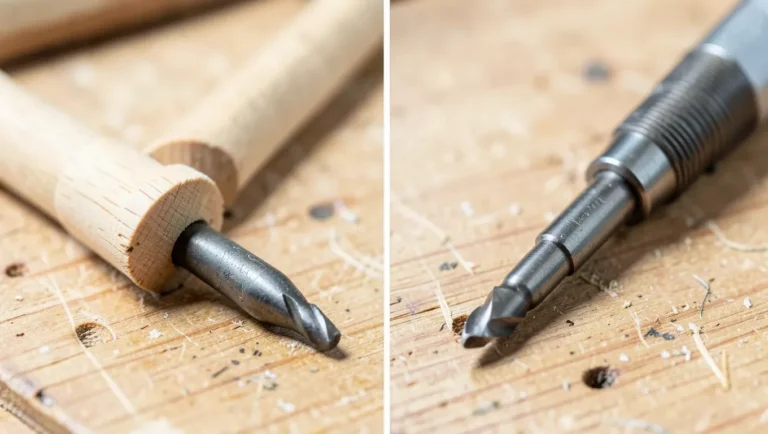
A drill bit cuts a round hole by spinning sharp flutes into wood, metal, or masonry, while a driver bit has no cutting edge at all — it transfers torque into a screw head, and swapping the two roles strips screws or wrecks the bit. Grab the wrong one and you’ll shear a Phillips head or snap a twist bit mid-hole. This guide covers the actual shape differences, the shank type that decides which chuck each one fits, and exactly when to reach for either one.
Quick Answer
A drill bit has a pointed, fluted tip built to cut and remove material to form a hole. A driver bit has a flat or shaped tip (Phillips, flathead, Torx, square) built to grip a screw head and transfer rotational force — it cannot cut. Most driver bits use a 1/4-inch hex shank; most drill bits use a round shank, though hex-shank drill bits exist for quick-change chucks and impact drivers.
What Are Drill Bits and What Do They Do?
Best Drill & Driver Bit Set Pick
Amazon Basics Drill & Driver Multi Bit Set, 100-Piece
One case with both round-shank drill bits and hex-shank driver bits, so you’re never mid-project without the right shape for the job.
- Best for: DIYers who want one case covering drilling and driving without buying two separate sets
- Why we picked it: 100 pieces spans wood, metal, plastic, and masonry bits plus a magnetic driver holder
- Main drawback: Alloy steel bits, not cobalt — expect them to dull faster on hardened steel than a dedicated cobalt set
Compare more drill and driver bit set options
 Option 1 BLACK+DECKER Drill Bit Set/Screwdriver Bit Set Combo, 109-Piece
|
 Option 2 DEWALT Screwdriver Bit Set with Tough Case, 45-Piece
|
 Option 3 CRAFTSMAN Drill Bit Set 60 Pieces, Impact Driver and Screwdriver Bit Set
|
As an Amazon Associate we earn from qualifying purchases.
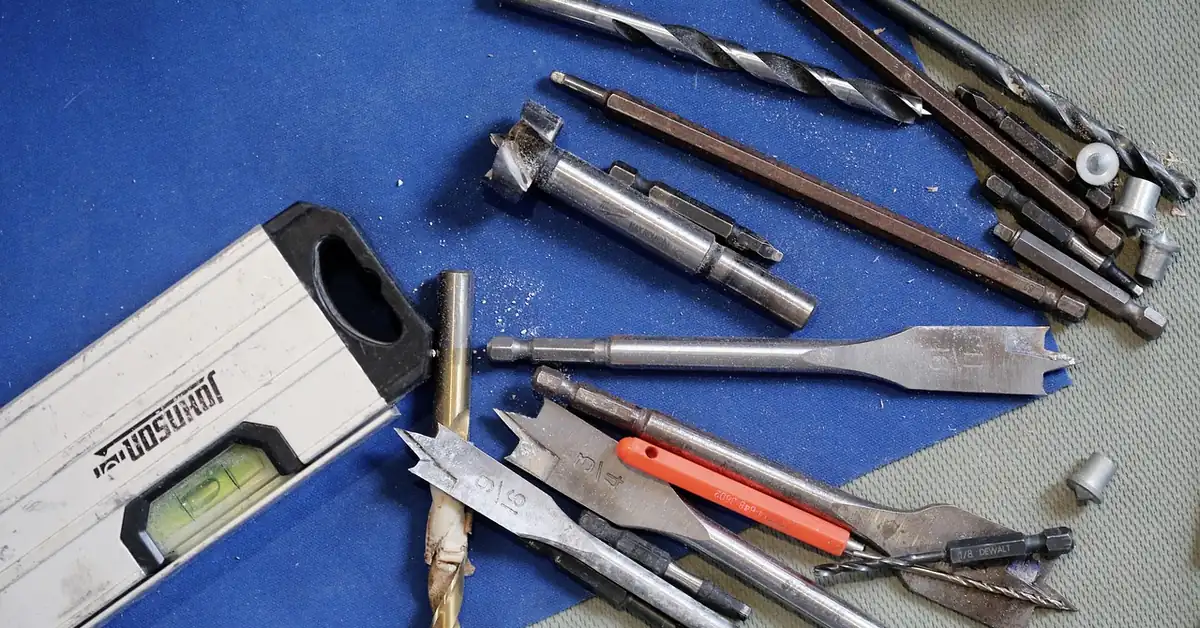
Drill bits are built to bore holes. Each one has a pointed tip and spiral flutes that cut into wood, metal, or plastic as the bit spins at high speed, clearing shavings out through the flutes so the bit doesn’t clog or overheat. The tip angle and flute design determine what material the bit is rated for and how clean the hole comes out. Drill bits are the foundation of most drilling and fastening projects covered on this site.
Types of Drill Bits
Different materials need different drill bits — using the wrong one produces a rough, off-size hole or ruins the bit.
- Twist Drill Bits: The most common type, with a spiral flute for general-purpose use in wood, plastic, and metal. Good default choice for beginners.
- Masonry Drill Bits: A wide, hardened carbide tip built to survive drilling into brick, concrete, or tile without dulling.
- Spade Bits (Paddle Bits): Flat, wide bits for drilling large-diameter holes in wood fast, such as openings for wiring or pipe runs.
- Step Drill Bits: A cone-shaped bit with stepped diameters that drills multiple hole sizes with one tool — a common pick for thin sheet metal.
Drill Bit Materials
The material a drill bit is made from sets its durability, cutting speed, and heat tolerance.
- High-Speed Steel (HSS): The standard for wood, plastic, and softer metals, with moderate heat resistance — a solid starting point for most DIY work.
- Cobalt Steel: Tougher and more heat-resistant than HSS, built for hard metals like stainless steel.
- Titanium-Coated: A hardness coating over HSS that extends bit life and cutting performance, common on bits used in commercial settings.
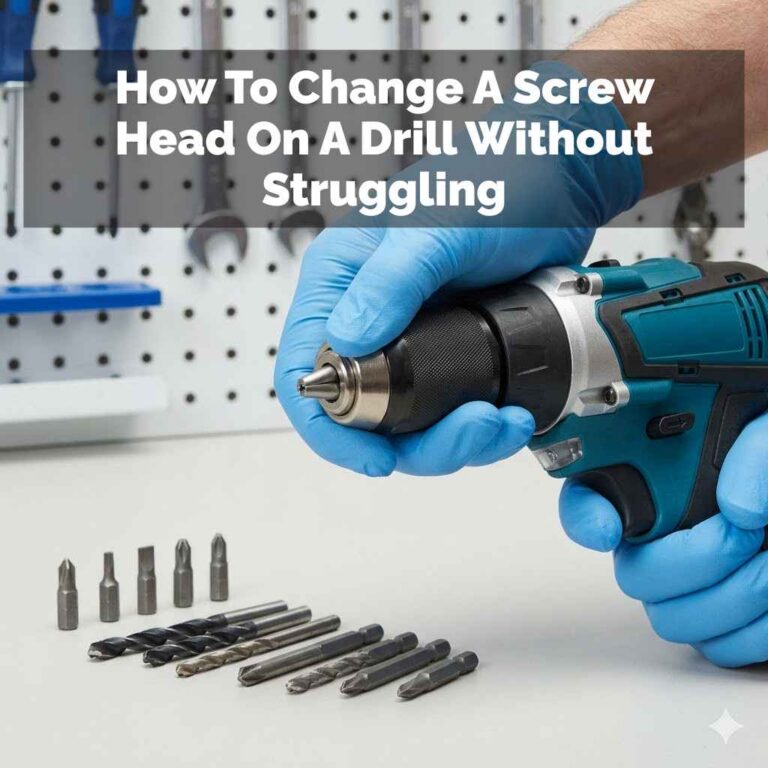
Whichever bit you pick, it only helps if it actually seats in the chuck — see our guide on how to change a drill bit on any cordless drill safely for the step-by-step process, or our walkthrough on changing the chuck on a DeWalt drill if the chuck itself is the problem.
Unpacking Driver Bits and Their Uses
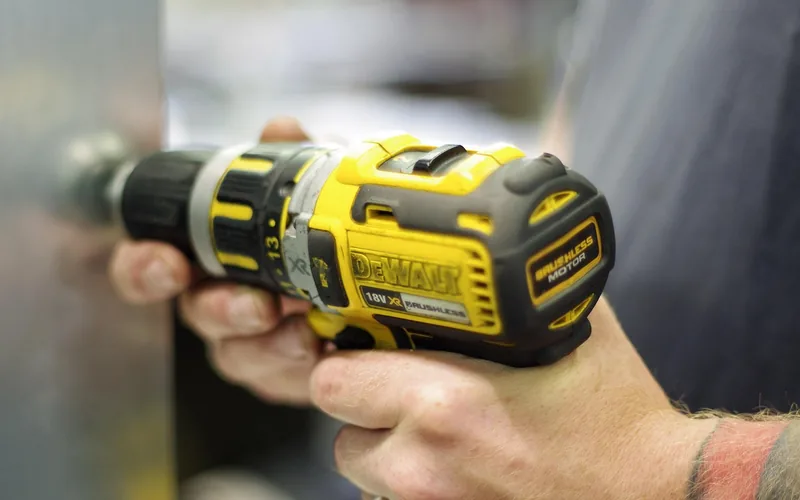
Driver bits drive or remove screws — they never cut a hole. Each one is shaped to match a screw head and chucks into a drill or a dedicated driver.
The tip of a driver bit engages the screw head directly; as the tool spins, the bit transfers torque into the fastener instead of cutting material away. Matching the bit shape to the screw head — flat, Phillips, Torx, or square — keeps the head from stripping and gets a clean, secure drive.
Varieties of Driver Bits
- Phillips Driver Bits: A cross-shaped tip, the most common driver style for general hardware and furniture assembly.
- Flathead Driver Bits: A single flat slot tip for classic slotted screws.
- Square Driver Bits (Robertson): A square tip that resists cam-out (slipping) far better than Phillips, popular in woodworking for its torque transfer.
- Torx Driver Bits (Star): A star-shaped tip that grips tightly and handles higher torque with less risk of stripping — common in automotive and electronics work.
Materials and Features of Driver Bits
- Steel: Most driver bits are steel — strong, durable, and cost-effective for repeated high-torque use.
- Titanium-Coated: Adds wear resistance for high-friction, professional-duty applications.
- Magnetic Tips: Hold the screw to the bit for one-handed starts and fewer dropped fasteners.
Drill Bit vs Driver Bit: Shank Type and Chuck Compatibility
The shank — not just the tip — is the difference most guides skip, and it decides which tool will actually hold the bit. Most driver bits use a 1/4-inch hex shank, a six-sided base built for a hex chuck or quick-change collet on an impact driver: the flat sides stop the bit from spinning in place under high torque. Most drill bits use a round (straight) shank designed for a three-jaw chuck, which grips evenly around a cylindrical shaft but can slip if torque spikes too high.
A standard three-jaw chuck can hold either shank type, which is why a cordless drill/driver can switch between drilling and driving with one tool. A dedicated impact driver’s hex collet, however, only accepts hex-shank bits — a round-shank twist bit simply won’t seat in it. Hex-shank drill bits exist specifically to bridge that gap, and hex-to-round adapters let a round-shank bit chuck into a hex-only tool when needed.
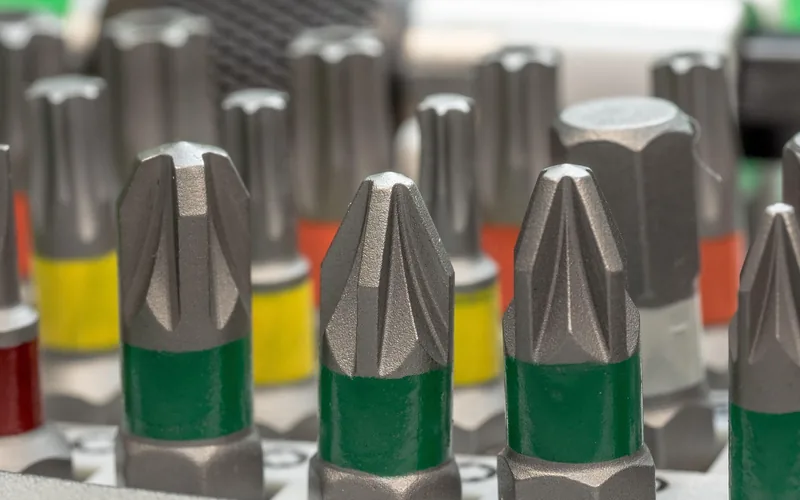
Comparing Drill Bits vs Driver Bits
The core difference is function: a drill bit cuts a hole, a driver bit turns a fastener. But the tip shape, shank type, and material all follow from that one job difference — know the function and the rest falls into place.
Drill bits have a pointed, cutting tip designed to remove material and form an opening. Driver bits have a shaped, non-cutting tip designed to grip a screw head and deliver torque. Because they do different jobs, they’re rarely interchangeable, and forcing one to do the other’s job damages the bit, the fastener, or both. If you’re choosing between a rotary drill and a percussion tool for masonry work, see our comparison of hammer drills vs SDS drills as a related decision.
Key Differences Summarized
| Feature | Drill Bit | Driver Bit |
|---|---|---|
| Function | Cuts and creates holes | Drives or removes screws |
| Tip shape | Pointed, fluted cutting edges | Phillips, flathead, Torx, or square — matched to screw head |
| Typical shank | Round (straight) — some hex-shank versions exist | 1/4″ hex, almost always |
| Best chuck | Three-jaw chuck on a drill | Hex collet on an impact driver, or a three-jaw chuck |
When to Use Each Type
Knowing when to reach for a drill bit versus a driver bit is the first decision on any DIY task.
- Use a Drill Bit: Whenever you need to create a hole — a pilot hole for a picture hook, or holes to join furniture pieces together.
- Use a Driver Bit: Whenever you need to drive or remove a screw — assembling flat-pack furniture, replacing a door hinge, or tightening a loose screw.
Real-World Examples
A couple of common projects show how the two tools actually work together in practice.
- Assembling a Bookshelf: Pre-drill each joint with a drill bit sized slightly smaller than the screw — this keeps the wood from splitting, especially near an edge. Then switch to a driver bit matched to the screw head to fasten the pieces together.
- Hanging a Picture: Mark the hook location, drill a small pilot hole with a drill bit sized for your wall anchor, then switch to a driver bit to drive the hook screw home.
Pre-drilling before driving a screw into hardwood or near a board’s edge is standard practice for a reason: it gives the screw threads a path to follow instead of forcing them to split the grain. Matching the driver bit to the screw head — not forcing a close-but-wrong fit — is what actually prevents stripping; a worn or mismatched bit is the most common cause of a stripped head.
Choosing the Right Tool for the Job
Here’s the short version of picking correctly, in order.
- Decide if you need a hole or a fastener driven: Hole = drill bit. Screw = driver bit. This decides everything else.
- Match the drill bit to the material: Twist bit for wood, masonry bit for brick or tile, or a bit made for metal when drilling metal.
- Match the driver bit to the screw head: Phillips for Phillips, square for square-drive, and so on — the bit must seat fully, not just approximately fit.
- Match the size: Drill bit diameter must match the hole you need; driver bit size must match the screw head exactly.
Essential Tips for Use
- Start slow, then speed up: Drilling — start at low speed until the bit has a solid grip, then increase. Driving — a moderate, steady speed avoids stripping the screw head.
- Apply steady pressure: Too much pressure can snap a bit; too little lets it wander off-mark.
- Keep the bit perpendicular: A drill bit held at an angle produces a crooked, oversized hole.
- Pre-drill in hardwood or near edges: This is what actually prevents splitting, not just careful screwing.
Frequently Asked Questions
Can I use a driver bit as a drill bit?
No. Driver bits have no cutting edge, so they can’t remove material to form a hole — forcing one against wood or metal just burns the tip and damages the fastener you were trying to drive.
Can I use a drill bit as a driver bit?
No. A drill bit’s pointed tip has no flat or shaped surface to grip a screw head, so it slips instead of transferring torque — it can’t drive a screw effectively.
Are there bits that combine drilling and driving?
Yes, a few — a combination pilot/countersink bit drills the pilot hole and countersink in one pass before you switch to a driver bit for the screw. For distinct drilling and driving tasks, though, you still need dedicated bits.
What size drill bit should I use for a given screw?
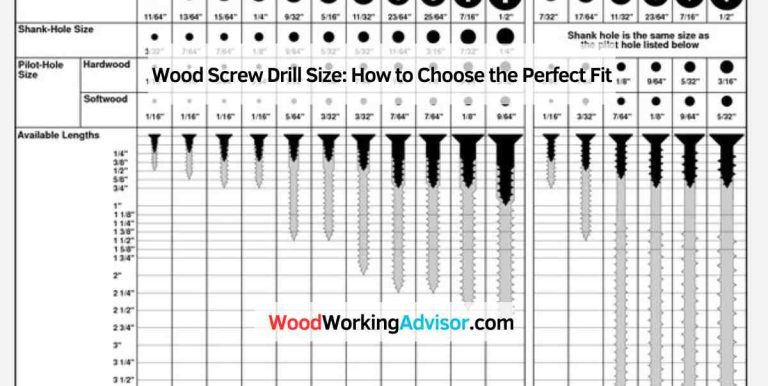
Match the drill bit diameter to the screw’s shank (not the threads) for a pilot hole in hardwood, or slightly smaller in softwood so the threads still bite. A screw size chart or the project instructions will list the exact pilot-hole size.
Why does my driver bit keep stripping the screw head?
Usually a mismatched or worn bit — confirm the bit type and size actually match the screw head, check the bit tip isn’t rounded off, and slow the drill’s speed down. Pre-drilling in hard material also reduces resistance that causes cam-out.
Does a driver bit need a hex shank to work in a regular drill?
No — a three-jaw chuck on a standard drill/driver grips a hex-shank driver bit just fine. Only a dedicated impact driver’s hex collet requires the hex shank; that’s the tool the hex shape was designed for.
Final Thoughts
Drill bits cut holes; driver bits drive screws — and the shank on each one (round for most drill bits, hex for almost all driver bits) is what decides which chuck will actually hold it. Keep a matched set of both, pick the right type for your material or screw head, and you’ll avoid the two most common beginner mistakes: a stripped screw and a snapped bit.
Sponsored / affiliate links. As an Amazon Associate I earn from qualifying purchases. I may earn additional commission from eligible campaigns.